myosin heavy chain 9
Last updated 18 Aug 2020
Meets Patient’s editorial guidelines
- DownloadDownload
- Share
- Language
- Discussion
- Ask Patient
- Audio Version
- Add to preferred sources on Google
The MYH9 gene provides instructions for making a protein called myosin-9. This protein is one part (subunit) of the myosin IIA protein.
Video picks for GenesVideo library
Normal function
The MYH9 gene provides instructions for making a protein called myosin-9. This protein is one part (subunit) of the myosin IIA protein.
There are three forms of myosin II, called myosin IIA, myosin IIB and myosin IIC. They play roles in cell movement (cell motility); maintenance of cell shape; and cytokinesis, which is the step in cell division when the fluid surrounding the nucleus (the cytoplasm) divides to form two separate cells. While some cells use more than one type of myosin II, certain blood cells such as platelets and white blood cells (leukocytes) use only myosin IIA.
Each type of myosin II protein consists of two heavy chains and four light chains. The heavy chains each have two parts: a head region and a tail region. The head region interacts with actin, a protein that is important for cell movement and shape. The long tail region interacts with other proteins, including the tail regions of other myosin proteins.
Conditions referring to this gene or chromosome
Other names
cellular myosin heavy chain, type A
MYH9_HUMAN
myosin heavy chain, non-muscle IIa
myosin, heavy chain 9, non-muscle
myosin-9
NMHC-II-A
NMMHC II-a
NMMHC-A
NMMHC-IIA
NMMHCA
non-muscle myosin heavy chain A
non-muscle myosin heavy chain IIa
nonmuscle myosin heavy chain II-A
Patient picks for Genes

Women's health
Heavy periods
Heavy periods are common. In most cases no cause can be found. In some cases a cause is found - these can include endometriosis, fibroids and other conditions. There are a number of ways of improving heavy periods and making them more manageable. Options include medication to reduce bleeding, use of an intra-uterine system (sometimes known as a hormonal coil) or an operation.
by Dr Philippa Vincent, MRCGP
Drug interactions checker
Can I take Evana heavy period relief and Mefenamic acid together?
Taking these two medicines together significantly increases your risk of serious stomach problems, such as stomach ulcers, bleeding, or irritation of the stomach lining. It can also put extra strain on your kidneys.
Full body strength & conditioning exercises
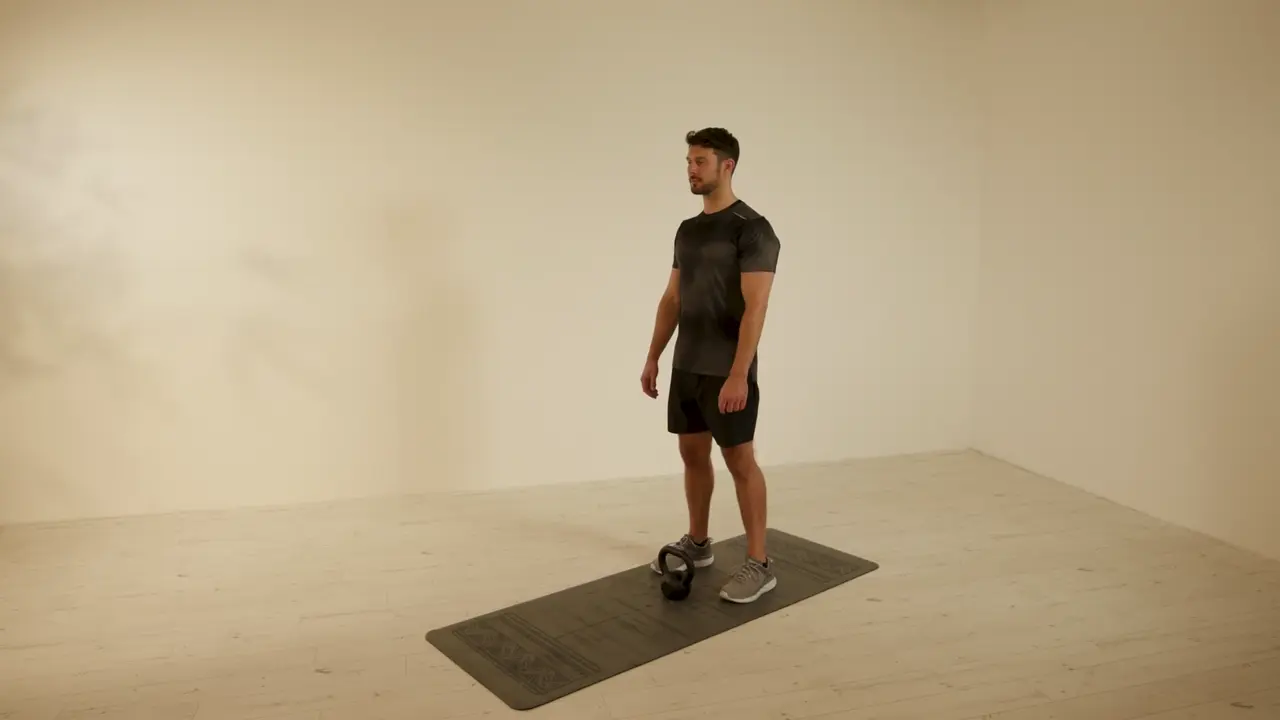
Russian Kettlebell Swing
Improve hip power and glute strength with the Russian Kettlebell Swing. This exercise combines a hip hinge and swing motion, engaging your posterior chain muscles.

Women's health
Is adenomyosis the cause of your heavy, painful periods?
BBC newsreader Naga Munchetty has recently shared her adenomyosis diagnosis after 35 years of not knowing the cause for her severely painful, heavy periods and vomiting. Menstrual cramps are something many of us handle with painkillers, warm baths and a hot water bottle. For some women, though, extremely painful, heavy periods are caused by a lesser-known condition which can have a serious impact on their lives. Adenomyosis is where the tissue that grows on the lining of the uterus - the endometrium - is also present on the inside muscular wall of the uterus. Nobody knows exactly how many are affected, but the NHS estimates it is one in 10 women in the UK.
by Lydia Smith

Women's health
What causes heavy periods and abnormal vaginal bleeding?
Whether you're 13 or 53, abnormal or unexpected vaginal bleeding can be a massive source of stress, worry and confusion. But, while it could be an early sign of uterine or cervical cancer, it may also be a sign of something far more benign. The difficulty is knowing how to tell the difference! We speak to specialist gynae nurse Tracie Miles, from charity The Eve Appeal, to find out what your bleeding might be a symptom of, and when you should be concerned.
by Sarah Graham
Medicine
Norethisterone for painful or heavy periods
Norethisterone is a female hormone treatment. The usual dose is one tablet either two or three times daily. You may be asked to take the tablets regularly each day, or just to take them on certain days of the month. The most common side-effects are feeling bloated, feeling sick (nausea), and headache. These are generally mild in nature.
by Michael Stewart, MRPharmS
Related patient information and medicines
Patient information leaflet
Heavy periods
Heavy periods are common. In most cases no cause can be found. In some cases a cause is found - these can include endometriosis, fibroids and other conditions. Most of the blood loss usually occurs in the first three days of the period. When is a heavy period too heavy. Dr Sarah Jarvis Heavy periods are common. In most cases no cause can be found..

Patient information leaflet
Myeloma
In the case of myeloma, one plasma cell at first becomes cancerous. Dr Krishna Vakharia , 10th April 2025 The National Institute for Health and Care Excellence (NICE) has updated its guidance on assessment for myeloma in all ages including those under 60 years of age if they have persistent bone pain, especially back pain, or an unexplained.
Patient information leaflet
Swollen lymph glands
Swollen lymph glands (also called lymph nodes) are usually a sign that your body is fighting infection, but they can have other causes. Common areas for swollen glands include the neck, under the chin, in the armpits and in the groin. If your glands haven't gone down after 2 weeks, are getting bigger, or you are struggling to ... What are swollen.

Patient information leaflet
Can I take Zopiclone and Alcohol together?
This could mean it takes longer for you to feel sleepy and for the me... Using other medicines Taking multiple medicines. Our Medicines Interaction Checker helps you check whether your prescriptions, over-the-counter medicines, and supplements are safe to take together. Simply search for your medicines to see potential interactions and what to do.

Patient information leaflet
Newborn bloodspot test
Mothers of all newborn babies are offered testing for certain rare but serious health conditions by testing blood taken from the baby's heel. This is the blood spot screening programme and it is also known as the heel prick test. How is the blood test done. This is usually done by a health professional (usually a midwife or health visitor) during.
Patient information leaflet
Can I take Alcohol and Atorvastatin together?
Drinking alcohol while taking atorvastatin can increase the risk of liver problems and a rare but serious muscle condition called rhabdomyolysis. While a small amount of alcohol is usually fine, heavy drinking or bing... Using other medicines Taking multiple medicines. Our Medicines Interaction Checker helps you check whether your prescriptions,.
Further reading and references
- myosin heavy chain 9; MedlinePlus, National Library of Medicine.
- Althaus K, Greinacher A. MYH9-related platelet disorders. Semin Thromb Hemost. 2009 Mar;35(2):189-203. doi: 10.1055/s-0029-1220327. Epub 2009 Apr 30.
- Kunishima S, Saito H. Advances in the understanding of MYH9 disorders. Curr Opin Hematol. 2010 Sep;17(5):405-10. doi: 10.1097/MOH.0b013e32833c069c.
- Sekine T, Konno M, Sasaki S, Moritani S, Miura T, Wong WS, Nishio H, Nishiguchi T, Ohuchi MY, Tsuchiya S, Matsuyama T, Kanegane H, Ida K, Miura K, Harita Y, Hattori M, Horita S, Igarashi T, Saito H, Kunishima S. Patients with Epstein-Fechtner syndromes owing to MYH9 R702 mutations develop progressive proteinuric renal disease. Kidney Int. 2010 Jul;78(2):207-14. doi: 10.1038/ki.2010.21. Epub 2010 Mar 3.
Share your thoughts or experiences with others in our patient communities.
Simple access to trusted treatments and health services online.
Common conditions
Get help with common conditions through the NHS, without a GP appointment.





Sign up to the Patient newsletter
Your weekly dose of clear, trustworthy health advice - written to help you feel informed, confident and in control.
By subscribing you accept our Privacy Policy. You can unsubscribe at any time. We never sell your data.