nuclear receptor subfamily 3 group C member 2
Last updated 18 Apr 2023
Meets Patient’s editorial guidelines
- DownloadDownload
- Share
- Language
- Discussion
- Ask Patient
- Audio Version
- Add to preferred sources on Google
The NR3C2 gene provides instructions for making a protein called the mineralocorticoid receptor. This protein is important in regulating the amount of sodium in the body. Sodium regulation plays a role in blood pressure control and fluid balance. Certain hormones called mineralocorticoids attach (bind) to and turn on (activate) the mineralocorticoid receptor. Aldosterone is one mineralocorticoid that activates the mineralocorticoid receptor. The activated mineralocorticoid receptor acts as a transcription factor, which is a protein that binds to specific regions of DNA and helps control the activity (transcription) of particular genes.
Video picks for GenesVideo library
Normal function
The NR3C2 gene provides instructions for making a protein called the mineralocorticoid receptor. This protein is important in regulating the amount of sodium in the body. Sodium regulation plays a role in blood pressure control and fluid balance. Certain hormones called mineralocorticoids attach (bind) to and turn on (activate) the mineralocorticoid receptor. Aldosterone is one mineralocorticoid that activates the mineralocorticoid receptor. The activated mineralocorticoid receptor acts as a transcription factor, which is a protein that binds to specific regions of DNA and helps control the activity (transcription) of particular genes.
The mineralocorticoid receptor regulates specialized proteins in the cell membrane that control the transport of sodium or potassium into cells. In response to signals that sodium levels in the body are low, the mineralocorticoid receptor increases the number and activity of these proteins at the cell membrane, especially in certain kidney cells. One of these proteins transports sodium into the cell, while another protein simultaneously transports sodium out of the cell and potassium into the cell. These proteins help keep sodium in the body through a process called reabsorption and remove potassium from the body through a process called secretion.
Conditions referring to this gene or chromosome
Other names
aldosterone receptor
FLJ41052
MCR
MCR_HUMAN
MGC133092
mineralocorticoid receptor
mineralocorticoid receptor 1
mineralocorticoid receptor delta
MLR
MR
NR3C2VIT
nuclear receptor subfamily 3, group C, member 2
Patient picks for Genes

Tests and investigations
Blood groups and types
ABO and rhesus are both types of antigens found on the surface of red blood cells. There are lots of other types but these are the most important.
by Dr Rosalyn Adleman, MRCGP
Pregnancy
Caesarean section
A caesarean section (C-section) may be planned (elective caesarean section) or unplanned (including emergency or crash caesarean sections).
by Dr Colin Tidy, MRCGP
Infections
Clostridioides difficile
Infection with Clostridioides difficile (sometimes just called 'C. diff') most commonly occurs in people who have recently had a course of antibiotics and are in hospital. Symptoms can range from mild diarrhoea to a life-threatening inflammation of the bowel. No treatment may be needed in mild cases except drinking plenty of fluids. However, treatment with specific antibiotics is needed in more severe cases.
by Dr Hayley Willacy, FRCGP

Health news
Flu season starts early: UKHSA urges eligible groups to get vaccinated
The UK Health Security Agency (UKHSA) is urging everyone eligible for a free flu vaccination to book their appointment as soon as possible, as flu activity continues to rise across England. The latest surveillance data show that this year’s flu season has started earlier than usual, with a sharp increase in cases among children and signs of growing spread in the wider community.
by Thomas Andrew Porteus, MBCS
Infections
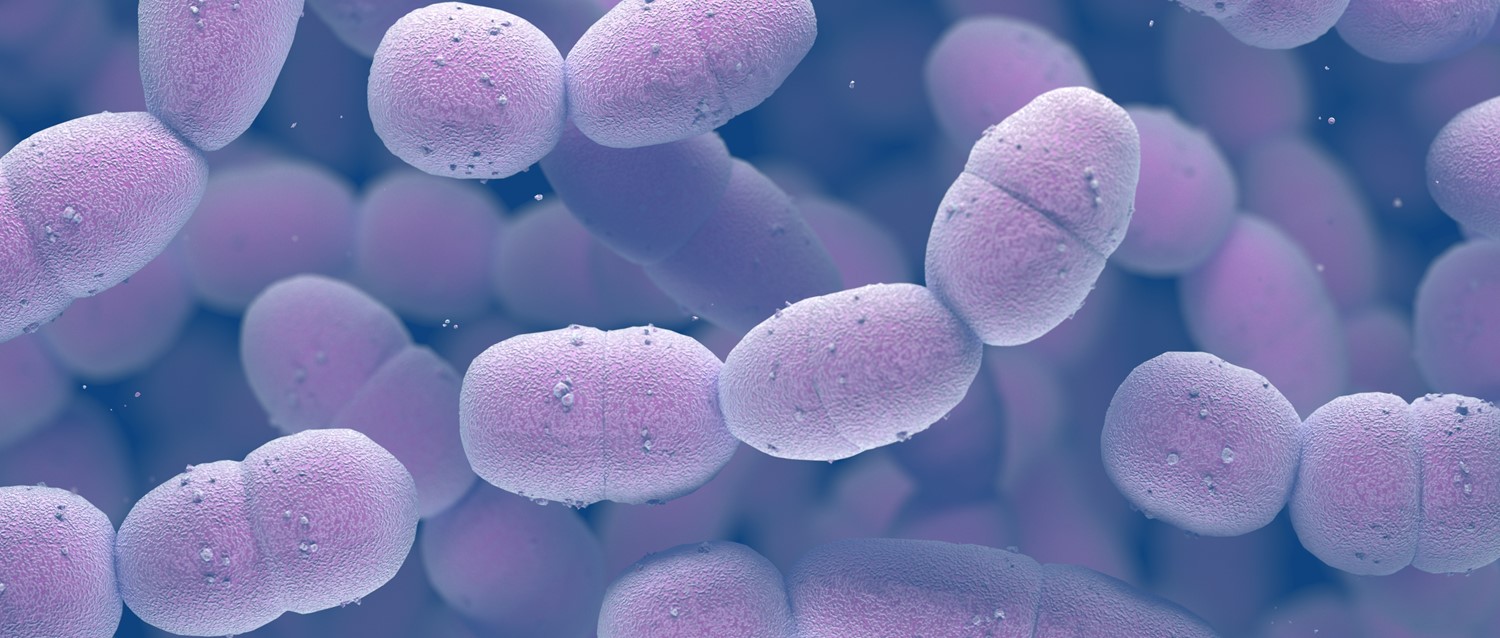
Strep A: What is invasive Group A streptococcus?
Parents have been warned by health officials to be aware of the infections strep A can cause, after the deaths of several children in the UK from it. While most people don't become very ill, the highly contagious bacteria that causes the infection can cause serious illness and can be fatal.
by Lydia Smith
Infections
Strep A
Strep A, or Group A streptococcus, is a common type of bacteria, which has been recognised as a cause of infections for many years. Most Group A streptococcus infections are mild, but in rare cases, these can cause serious illness and even death.
by Dr Colin Tidy, MRCGP
Related patient information and medicines

Patient information leaflet
Neuroblastoma
Neuroblastoma is a cancer affecting developing nerve cells. Neuroblastoma is a rare cancer and most often occurs in children under 5 years old. Neuroblastoma often starts in the tummy (abdomen) but can spread to other parts of the body, especially bones, liver and skin. The treatments for neuroblastoma include surgery, chemotherapy and.

Patient information leaflet
Breast cancer
Breast cancer is the most common cancer in women. Most cases occur in women over the age of 50 but breast cancer can occur in younger women. Over 3 out of 4 women diagnosed with breast cancer are still a... What is breast cancer. What is breast cancer? | Patient Explainers Breast cancer is the most common cancer in women. Most cases occur in women.

Patient information leaflet
Wilms' tumour
A Wilms' tumour is a type of kidney cancer. Wilms' tumours can appear in older children and adults but this is very rare. A Wilms' tumour is also known as a nephroblastoma Wilm's tumour is the most common type of kidney cancer in children but is very rare. About 80 children are diagnosed with a Wilms' tumour each year in the UK. The most common.

Patient information leaflet
Immunisation for flu
All viruses have evolved to try and increase their own numbers constantly by infe... Expert scientists and the World Health Organization (WHO) monitor flu viruses throughout the world and predict which flu strains they think are going to be the most active each year and therefore which strains are to be included in the current year's vaccine. This.

Patient information leaflet
BRCA genes
There are a few known gene changes (mutations) that can increase the risk of certain cancers, and tests available for some of them, including BRCA1. The BRCA1 and BRCA2 genes normally protect against certain cancers, particularly breast cancer and ovarian cancer. If there is a mutation in one of these genes then this may mean that the protection.

Patient information leaflet
Dystonia
A dystonia is a lasting or frequently recurring and unwanted (involuntary) muscle contraction. It can affect one or more muscles in the body. There is no cure; however, there are different types of treatment which can help. These vary with the type of dystonia that you have. What is dystonia. A dystonia is lasting unwanted (involuntary) muscle.
Further reading and references
- nuclear receptor subfamily 3 group C member 2; MedlinePlus, National Library of Medicine.
- Chen SY, Bhargava A, Mastroberardino L, Meijer OC, Wang J, Buse P, Firestone GL, Verrey F, Pearce D. Epithelial sodium channel regulated by aldosterone-induced protein sgk. Proc Natl Acad Sci U S A. 1999 Mar 2;96(5):2514-9. doi: 10.1073/pnas.96.5.2514.
- Geller DS, Farhi A, Pinkerton N, Fradley M, Moritz M, Spitzer A, Meinke G, Tsai FT, Sigler PB, Lifton RP. Activating mineralocorticoid receptor mutation in hypertension exacerbated by pregnancy. Science. 2000 Jul 7;289(5476):119-23. doi: 10.1126/science.289.5476.119.
- Kolla V, Litwack G. Transcriptional regulation of the human Na/K ATPase via the human mineralocorticoid receptor. Mol Cell Biochem. 2000 Jan;204(1-2):35-40. doi: 10.1023/a:1007009700377.
- Martinez F, Mansego ML, Escudero JC, Redon J, Chaves FJ. Association of a mineralocorticoid receptor gene polymorphism with hypertension in a Spanish population. Am J Hypertens. 2009 Jun;22(6):649-55. doi: 10.1038/ajh.2009.39. Epub 2009 Mar 26.
- Pujo L, Fagart J, Gary F, Papadimitriou DT, Claes A, Jeunemaitre X, Zennaro MC. Mineralocorticoid receptor mutations are the principal cause of renal type 1 pseudohypoaldosteronism. Hum Mutat. 2007 Jan;28(1):33-40. doi: 10.1002/humu.20371.
- Rafestin-Oblin ME, Souque A, Bocchi B, Pinon G, Fagart J, Vandewalle A. The severe form of hypertension caused by the activating S810L mutation in the mineralocorticoid receptor is cortisone related. Endocrinology. 2003 Feb;144(2):528-33. doi: 10.1210/en.2002-220708.
- Riepe FG, Finkeldei J, de Sanctis L, Einaudi S, Testa A, Karges B, Peter M, Viemann M, Grotzinger J, Sippell WG, Fejes-Toth G, Krone N. Elucidating the underlying molecular pathogenesis of NR3C2 mutants causing autosomal dominant pseudohypoaldosteronism type 1. J Clin Endocrinol Metab. 2006 Nov;91(11):4552-61. doi: 10.1210/jc.2006-1161. Epub 2006 Sep 5.
- van Leeuwen N, Caprio M, Blaya C, Fumeron F, Sartorato P, Ronconi V, Giacchetti G, Mantero F, Fernandes-Rosa FL, Simian C, Peyrard S, Zitman FG, Penninx BW, de Kloet ER, Azizi M, Jeunemaitre X, Derijk RH, Zennaro MC. The functional c.-2G>C variant of the mineralocorticoid receptor modulates blood pressure, renin, and aldosterone levels. Hypertension. 2010 Nov;56(5):995-1002. doi: 10.1161/HYPERTENSIONAHA.110.155630. Epub 2010 Sep 20.
- Viengchareun S, Le Menuet D, Martinerie L, Munier M, Pascual-Le Tallec L, Lombes M. The mineralocorticoid receptor: insights into its molecular and (patho)physiological biology. Nucl Recept Signal. 2007 Nov 30;5:e012. doi: 10.1621/nrs.05012.
Share your thoughts or experiences with others in our patient communities.
Simple access to trusted treatments and health services online.
Common conditions
Get help with common conditions through the NHS, without a GP appointment.





Sign up to the Patient newsletter
Your weekly dose of clear, trustworthy health advice - written to help you feel informed, confident and in control.
By subscribing you accept our Privacy Policy. You can unsubscribe at any time. We never sell your data.