programmed cell death 10
Last updated 18 Aug 2020
Meets Patient’s editorial guidelines
- DownloadDownload
- Share
- Language
- Discussion
- Ask Patient
- Audio Version
- Add to preferred sources on Google
The PDCD10 gene (also known as CCM3) provides instructions for making a protein that appears to play a role in the structure of blood vessels. While the exact function of the PDCD10 protein is unclear, studies suggest that it works with other proteins to help strengthen the interactions between cells and limit leakage from blood vessels. This protein is also thought to be involved in pathways that signal cells to self-destruct (undergo apoptosis) when they have completed a certain number of cell divisions or accumulated errors in their DNA.
Video picks for GenesVideo library
Normal function
The PDCD10 gene (also known as CCM3) provides instructions for making a protein that appears to play a role in the structure of blood vessels. While the exact function of the PDCD10 protein is unclear, studies suggest that it works with other proteins to help strengthen the interactions between cells and limit leakage from blood vessels. This protein is also thought to be involved in pathways that signal cells to self-destruct (undergo apoptosis) when they have completed a certain number of cell divisions or accumulated errors in their DNA.
Conditions referring to this gene or chromosome
Other names
apoptosis-related protein 15
CCM3
cerebral cavernous malformation 3
PDC10_HUMAN
TFAR15
Patient picks for Genes
Surgery and procedures
Death or brain damage from anaesthesia
The risk of dying in the operating theatre under anaesthetic is extremely small. For a healthy person having planned surgery, around 1 person may die for every 100,000 general anaesthetics given. Brain damage as a result of having an anaesthetic is so rare that the risk has not been put into numbers.
by Dr Philippa Vincent, MRCGP

Cancer
Liver cancer deaths are rising - what you need to know
Liver cancer deaths have risen by more than a quarter over the past decade. That’s why we’re helping raise awareness of liver cancer alongside Liver UK. We want more people to recognise the symptoms and understand the risk factors, so they can take action early.
by Claire Kenny

Chest and lungs
Asthma deaths in England and Wales highest in a decade
Deaths from asthma attacks in England and Wales are at the highest level in a decade.
by Ashwin Bhandari
Allergies, blood and immune system
Polycythaemia rubra vera
Polycythaemia rubra vera (PRV) is a myeloproliferative disorder, which means the bone marrow makes too many blood cells. It is also sometimes just called polycythaemia (PV). There is an abnormally high number of red blood cells in your blood. You may also have an abnormally high number of platelets and white blood cells.
by Dr Hayley Willacy, FRCGP
Allergies, blood and immune system
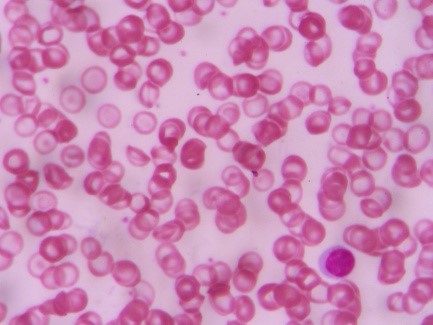
Sickle cell disease
Sickle cell disease (SCD) is a serious, inherited condition affecting the blood and various organs in the body. It affects the red blood cells, causing episodes of 'sickling', which produce episodes of pain and other symptoms. In between episodes of sickling, people with SCD are normally well. Long-term complications can occur. Good treatment, started early in life, can prevent complications. So, early diagnosis and specialist treatment are advised for SCD. Sickle cell trait is not the same as sickle cell disease.
by Dr Hayley Willacy, FRCGP
Allergies, blood and immune system
Mastocytosis and mast cell disorders
A mast cell is a type of white blood cell. There are several forms of mastocytosis. In one, there are too many mast cells in the body: in another the number of mast cells is normal but they are too active.
by Dr Laurence Knott
Related patient information and medicines

Patient information leaflet
Acute lymphoblastic leukaemia
Acute lymphoblastic leukaemia (ALL) is a condition where the bone marrow makes large numbers of abnormal immature lymphocytes. The immature cells are called lymphoblasts. Most children with ALL - about 7-8 in 10 cases - can be cured. The outlook (prognosis) for children has improved greatly over a period of 20 years or so. Children aged between 1.
Patient information leaflet
Death or brain damage from anaesthesia
The risk of dying in the operating theatre under anaesthetic is extremely small. For a healthy person having planned surgery, around 1 person may die for every 100,000 general anaesthetics given. The risk of developing brain damage as a result of an anaesthetic is extremely small. Brain damage is caused by the death or damage of brain cells. This.

Patient information leaflet
Children's cancers
Childhood cancer is rare and is much less common than cancer in adults. There are many different type of cancer that can affect children and childhood cancers can cause many different symptoms. Even if a cure is not possible, a course o... What is the outcome (prognosis). Even though cancer is very uncommon in children, it is the most common cause.

Patient information leaflet
Cervical cancer
If the cells that make up the cervix multiply abnormally, you develop cervical cancer (cancer of the cervix). What is cervical cancer. What is cervical cancer? | Patient Explainers If the cells that make up the cervix multiply abnormally, you develop cervical cancer (cancer of the cervix). Cervical cancer is the fourteenth most common type of.

Patient information leaflet
Immunisation for flu
This is reviewed each year. The aim is to protect people who are more likely to develop complications from flu. People in these groups can get the flu vaccine as part of the national flu programme, free of charge. For the 2025-26 flu season Anyone in the following groups can receive the flu vaccine as part of the national programme: People aged 65.

Patient information leaflet
Penile cancer
Penile cancer is a cancer that develops on the penis. A cancerous (malignant) tumour starts from one abnormal cell. The exact reason why a cell becomes cancerous is unclear. It is thought that something damages or alters certain genes in the cell. This makes the cell abnormal and multiply 'out of control'. See the separate leaflet called Causes of.
Further reading and references
- programmed cell death 10; MedlinePlus, National Library of Medicine.
- Bergametti F, Denier C, Labauge P, Arnoult M, Boetto S, Clanet M, Coubes P, Echenne B, Ibrahim R, Irthum B, Jacquet G, Lonjon M, Moreau JJ, Neau JP, Parker F, Tremoulet M, Tournier-Lasserve E; Societe Francaise de Neurochirurgie. Mutations within the programmed cell death 10 gene cause cerebral cavernous malformations. Am J Hum Genet. 2005 Jan;76(1):42-51. doi: 10.1086/426952. Epub 2004 Nov 12.
- Craig HD, Gunel M, Cepeda O, Johnson EW, Ptacek L, Steinberg GK, Ogilvy CS, Berg MJ, Crawford SC, Scott RM, Steichen-Gersdorf E, Sabroe R, Kennedy CT, Mettler G, Beis MJ, Fryer A, Awad IA, Lifton RP. Multilocus linkage identifies two new loci for a mendelian form of stroke, cerebral cavernous malformation, at 7p15-13 and 3q25.2-27. Hum Mol Genet. 1998 Nov;7(12):1851-8. doi: 10.1093/hmg/7.12.1851.
- Guclu B, Ozturk AK, Pricola KL, Bilguvar K, Shin D, O'Roak BJ, Gunel M. Mutations in apoptosis-related gene, PDCD10, cause cerebral cavernous malformation 3. Neurosurgery. 2005 Nov;57(5):1008-13. doi: 10.1227/01.neu.0000180811.56157.e1.
- Liquori CL, Berg MJ, Squitieri F, Ottenbacher M, Sorlie M, Leedom TP, Cannella M, Maglione V, Ptacek L, Johnson EW, Marchuk DA. Low frequency of PDCD10 mutations in a panel of CCM3 probands: potential for a fourth CCM locus. Hum Mutat. 2006 Jan;27(1):118. doi: 10.1002/humu.9389.
- Plummer NW, Zawistowski JS, Marchuk DA. Genetics of cerebral cavernous malformations. Curr Neurol Neurosci Rep. 2005 Sep;5(5):391-6. doi: 10.1007/s11910-005-0063-7.
- Verlaan DJ, Roussel J, Laurent SB, Elger CE, Siegel AM, Rouleau GA. CCM3 mutations are uncommon in cerebral cavernous malformations. Neurology. 2005 Dec 27;65(12):1982-3. doi: 10.1212/01.wnl.0000188903.75144.49.
- Voss K, Stahl S, Schleider E, Ullrich S, Nickel J, Mueller TD, Felbor U. CCM3 interacts with CCM2 indicating common pathogenesis for cerebral cavernous malformations. Neurogenetics. 2007 Nov;8(4):249-56. doi: 10.1007/s10048-007-0098-9. Epub 2007 Jul 27.
Share your thoughts or experiences with others in our patient communities.
Simple access to trusted treatments and health services online.
Common conditions
Get help with common conditions through the NHS, without a GP appointment.





Sign up to the Patient newsletter
Your weekly dose of clear, trustworthy health advice - written to help you feel informed, confident and in control.
By subscribing you accept our Privacy Policy. You can unsubscribe at any time. We never sell your data.