pyruvate dehydrogenase E1 subunit alpha 1
Last updated 5 Jul 2022
Meets Patient’s editorial guidelines
- DownloadDownload
- Share
- Language
- Discussion
- Ask Patient
- Audio Version
- Add to preferred sources on Google
The PDHA1 gene provides instructions for making a protein called E1 alpha. The E1 alpha protein is a piece (a subunit) of a larger protein: two E1 alpha proteins combine with two copies of another protein called E1 beta (produced from the PDHB gene) to form the E1 enzyme. This enzyme, also known as pyruvate dehydrogenase, is a component of a group of proteins called the pyruvate dehydrogenase complex.
Video picks for GenesVideo library
Normal function
The PDHA1 gene provides instructions for making a protein called E1 alpha. The E1 alpha protein is a piece (a subunit) of a larger protein: two E1 alpha proteins combine with two copies of another protein called E1 beta (produced from the PDHB gene) to form the E1 enzyme. This enzyme, also known as pyruvate dehydrogenase, is a component of a group of proteins called the pyruvate dehydrogenase complex.
The pyruvate dehydrogenase complex plays an important role in the pathways that convert the energy from food into a form that cells can use. This complex converts a molecule called pyruvate, which is formed from the breakdown of carbohydrates, into another molecule called acetyl-CoA. The E1 enzyme performs one part of this chemical reaction. The conversion of pyruvate is essential to begin the series of chemical reactions that produces adenosine triphosphate (ATP), the cell's main energy source.
Conditions referring to this gene or chromosome
Other names
ODPA_HUMAN
PDHA
PDHCE1A
PDHE1-A type I
PHE1A
pyruvate dehydrogenase (lipoamide) alpha 1
pyruvate dehydrogenase alpha 1
pyruvate dehydrogenase complex, E1-alpha polypeptide 1
pyruvate dehydrogenase E1 component subunit alpha, somatic form, mitochondrial
Patient picks for Genes

Children's health
Alpha-1 antitrypsin deficiency
Alpha-1 antitrypsin deficiency is an inherited genetic condition. A genetic condition is one that can be passed on from parents through genes. In alpha-1 antitrypsin deficiency the result of a genetic abnormality leads to lung and, in some people, liver damage. Lung symptoms are the most common and include shortness of breath, cough and wheezing. Symptoms can worsen over time. At present, there is no cure for alpha-1 antitrypsin deficiency. Treatment aims at slowing down the progression of the disease.
by Dr Philippa Vincent, MRCGP
Treatment and medication
Alpha-blockers
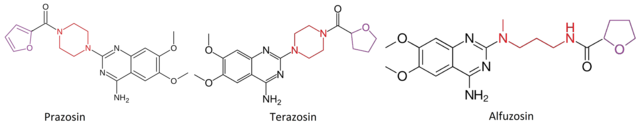
Alpha-blockers are medicines that are mainly used to treat high blood pressure (hypertension) and problems with passing urine in men who have enlargement of the prostate gland. Prostate gland enlargement is also called benign prostatic hyperplasia (BPH).
by Dr Doug McKechnie, MRCGP
Medicine
Indoramin - an alpha-blocker
Indoramin is prescribed for two different medical conditions: 20 mg strength tablets are prescribed for men with prostate problems, and 25 mg strength tablets are prescribed for people with high blood pressure. You are advised not to drink alcohol while you are on indoramin. Do not drive and do not use tools or machines if you feel tired or dizzy.
by Michael Stewart, MRPharmS

Medicine
Prazosin - an alpha-blocker
Your first dose of prazosin may make you feel dizzy or faint, or start sweating. Take your first dose at bedtime and remain lying down until these symptoms have completely passed. Prazosin can cause dizziness which may affect your ability to drive. Make sure your reactions are normal before you drive and before you use tools or machines.
by Michael Stewart, MRPharmS

Medicine
Terazosin - an alpha-blocker
Take terazosin once every day. Your first dose of terazosin may make you feel dizzy or faint, or start sweating. Take your first dose at bedtime and remain lying down until these symptoms have completely passed. Terazosin can cause dizziness which may affect your ability to drive. Make sure your reactions are normal before you drive and before you use tools or machines.
by Michael Stewart, MRPharmS
Medicine
Phenoxybenzamine - an alpha-blocker
Adults will normally start with one capsule a day. This dose may then be increased over the next few days. It is common to feel dizzy or light-headed initially. This should soon settle. You may be given other medicines to take alongside phenoxybenzamine.
by Michael Stewart, MRPharmS
Related patient information and medicines

Patient information leaflet
Liver function tests
Alpha-... Copper/caeruloplasmin Wilson's disease (measures of copper management by the body). Alpha-1 antitrypsin Alpha-1 antitrypsin deficiency (a hormone involved in protecting liver and lung cells from injury). Clotting factors Blood clotting tests (particularly if there is a suspicion that your blood is not clotting well or you have severe.

Patient information leaflet
Anaemia
Conditions where there are haemoglobin abnormalities such as sickle cell anaemia Sickle cell disease or thalassaemia Thalassaemi... And problems with the chemicals (or enzymes) that help the blood cell do its job, such as G6PD deficiency and pyruvate kinase deficiency. Another set of conditions may arise from your immune system attacking your own.

Patient information leaflet
Blood in semen
Haematospermia means there is blood in the semen. Usually there are no other symptoms such as pain. In men under 40 years old it is usually harmless and resolves without any treatment. However, it can also be caused by a number of conditions that need investigations and treatment. How common is blood in semen. Blood in semen (haematospermia) is.

Patient information leaflet
Testicular cancer
Testicular cancer is a cancer that arises from a testicle (testis). Around half of all cases occur in men aged under 35 but testicular cancer rarel... Another useful test is the marker blood test. The tumour markers commonly tested for are alpha-fetoprotein (AFP), beta human chorionic gonadotrophin (beta-hCG), lactic dehydrogenase (LDH) and.
Patient information leaflet
Alpha-1 antitrypsin deficiency
Alpha-1 antitrypsin deficiency is an inherited genetic condition. A genetic condition is one that can be passed on from parents through genes. In alpha-1 antitrypsin deficiency the result of a genetic abnormality leads to lung and, in some people, liver damage. T... What is alpha-1 antitrypsin. Alpha-1 antitrypsin (A1AT) is a protein made by cells.
Patient information leaflet
Biological medicines for rheumatoid arthritis
Biological medicines are a newer type of medicine, used to ease the symptoms of rheumatoid arthritis and reduce the damaging effect of the disease on the joints. They are usually prescribed when you have tried older medicines called disease-modifying antirheumatic drugs (DMARDs) and these have not worked so well. If a biological medicine is going.
Further reading and references
- pyruvate dehydrogenase E1 subunit alpha 1; MedlinePlus, National Library of Medicine.
- Chun K, MacKay N, Petrova-Benedict R, Federico A, Fois A, Cole DE, Robertson E, Robinson BH. Mutations in the X-linked E1 alpha subunit of pyruvate dehydrogenase: exon skipping, insertion of duplicate sequence, and missense mutations leading to the deficiency of the pyruvate dehydrogenase complex. Am J Hum Genet. 1995 Mar;56(3):558-69.
- Ganetzky R, McCormick EM, Falk MJ. Primary Pyruvate Dehydrogenase Complex Deficiency Overview. 2021 Jun 17. In: Adam MP, Bick S, Mirzaa GM, Wallace SE, Amemiya A, editors. GeneReviews(R) [Internet]. Seattle (WA): University of Washington, Seattle; 1993-2026. Available from http://www.ncbi.nlm.nih.gov/books/NBK571223/
- Imbard A, Boutron A, Vequaud C, Zater M, de Lonlay P, de Baulny HO, Barnerias C, Mine M, Marsac C, Saudubray JM, Brivet M. Molecular characterization of 82 patients with pyruvate dehydrogenase complex deficiency. Structural implications of novel amino acid substitutions in E1 protein. Mol Genet Metab. 2011 Dec;104(4):507-16. doi: 10.1016/j.ymgme.2011.08.008. Epub 2011 Aug 18.
- Lissens W, De Meirleir L, Seneca S, Liebaers I, Brown GK, Brown RM, Ito M, Naito E, Kuroda Y, Kerr DS, Wexler ID, Patel MS, Robinson BH, Seyda A. Mutations in the X-linked pyruvate dehydrogenase (E1) alpha subunit gene (PDHA1) in patients with a pyruvate dehydrogenase complex deficiency. Hum Mutat. 2000;15(3):209-19. doi: 10.1002/(SICI)1098-1004(200003)15:33.0.CO;2-K.
- Patel MS, Korotchkina LG, Sidhu S. Interaction of E1 and E3 components with the core proteins of the human pyruvate dehydrogenase complex. J Mol Catal B Enzym. 2009 Nov 1;61(1-2):2-6. doi: 10.1016/j.molcatb.2009.05.001.
Share your thoughts or experiences with others in our patient communities.
Simple access to trusted treatments and health services online.
Common conditions
Get help with common conditions through the NHS, without a GP appointment.





Sign up to the Patient newsletter
Your weekly dose of clear, trustworthy health advice - written to help you feel informed, confident and in control.
By subscribing you accept our Privacy Policy. You can unsubscribe at any time. We never sell your data.