ryanodine receptor 1
Last updated 25 Apr 2023
Meets Patient’s editorial guidelines
- DownloadDownload
- Share
- Language
- Discussion
- Ask Patient
- Audio Version
- Add to preferred sources on Google
The RYR1 gene provides instructions for making a protein called ryanodine receptor 1 (also called the RYR1 channel). This protein is part of a group of related proteins called ryanodine receptors, which form channels that, when turned on (activated), release positively charged calcium atoms (ions) from storage within cells. RYR1 channels play a critical role in muscles used for movement (skeletal muscles).
Video picks for GenesVideo library
Normal function
The RYR1 gene provides instructions for making a protein called ryanodine receptor 1 (also called the RYR1 channel). This protein is part of a group of related proteins called ryanodine receptors, which form channels that, when turned on (activated), release positively charged calcium atoms (ions) from storage within cells. RYR1 channels play a critical role in muscles used for movement (skeletal muscles).
For the body to move normally, skeletal muscles must tense (contract) and relax in a coordinated way. Muscle contractions are triggered by an increase in the concentration of calcium ions inside muscle cells.
RYR1 channels are located in the membrane surrounding a structure in muscle cells called the sarcoplasmic reticulum. This structure stores calcium ions when muscles are at rest. In response to certain signals, the RYR1 channel releases calcium ions from the sarcoplasmic reticulum into the cell fluid. The resulting increase in calcium ion concentration in muscle cells stimulates muscles to contract, allowing the body to move. The process by which electrical signals trigger muscle contraction is called excitation-contraction (E-C) coupling.
Conditions referring to this gene or chromosome
Other names
CCD
MHS
MHS1
PPP1R137
ryanodine receptor 1 (skeletal)
ryanodine receptor type1
RYDR
RYR
RYR-1
RYR1_HUMAN
sarcoplasmic reticulum calcium release channel
skeletal muscle ryanodine receptor
Skeletal muscle-type ryanodine receptor
SKRR
Patient picks for Genes

PID Q&A
Does PID cause bleeding?
Dr Sarah Jarvis MBE Symptoms may develop quickly. You can become quite ill over a few days. Sometimes symptoms are mild and develop slowly. For example, you may just have a mild abdominal pain that may 'grumble on' for weeks. In some cases no symptoms develop and you do not know that you are infected. However, you are still at risk of complications even if you have no symptoms at first. [https://patient.info/health/pelvic-pain-in-women/pelvic-inflammatory-disease#nav-1](https://patient.info/health/pelvic-pain-in-women/pelvic-inflammatory-disease#nav-1)
by Dr Sarah Jarvis

Medicine
Irbesartan - an angiotensin receptor blocker
Take irbesartan once each day. You can take the tablets before or after meals. Side-effects are usually mild. They include feeling dizzy and mild stomach upset. Keep your regular appointments with your doctor to have your blood pressure measured. Some painkillers interfere with irbesartan, so ask a pharmacist for advice before you buy any medicines.
by Michael Stewart, MRPharmS
Medicine
Candesartan - an angiotensin receptor blocker
Take candesartan once each day. You can take the tablets either before or after a meal. Any side-effects are usually mild. They include headache and feeling dizzy. Some painkillers may interfere with candesartan and increase the risk of side-effects, so ask a pharmacist for advice before you buy any medicines.
by Michael Stewart, MRPharmS

Medicine
Valsartan - an angiotensin receptor blocker
You can take valsartan either before or after a meal. Any side-effects are usually mild. The most common side-effect is dizziness. Some painkillers may interfere with valsartan and increase the risk of side-effects, so ask a pharmacist for advice before you buy any medicines.
by Michael Stewart, MRPharmS

Breast cancer
How often is breast cancer misdiagnosed?
Dr Sarah Jarvis MBE Finding out the stage of the cancer, the grade of the cells and the receptor status of the cancer helps doctors to advise on the best treatment options. It also gives a reasonable indication of outlook. [https://patient.info/health/breast-cancer-leaflet#nav-5](https://patient.info/health/breast-cancer-leaflet#nav-5)
by Dr Sarah Jarvis

Medicine
Olmesartan - an angiotensin receptor blocker
Take olmesartan once each day. You can take your doses either before or after a meal. Keep your regular appointments with your doctor to have your blood pressure measured. Some painkillers can interfere with olmesartan and increase the risk of side-effects, so ask a pharmacist for advice before you buy any medicines 'over the counter'.
by Michael Stewart, MRPharmS
Related patient information and medicines
Patient information leaflet
Dilated cardiomyopathy
Dilated cardiomyopathy is a condition where the heart muscle becomes stretched and thin. The heart becomes enlarged (dilates) and pumps blood less well. Symptoms vary according to severity and the treatment depends on the type of symptoms and whether any complications develop. Some forms of dilated cardiomyopathy run in families. A normal heart.
Patient information leaflet
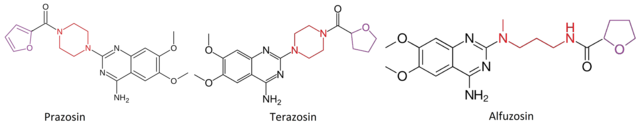
Alpha-blockers
Alpha-blockers are medicines that are mainly used to treat high blood pressure (hypertension) and problems with passing urine in men who have enlargement of the prostate gland. Prostate gland enlargement is also called benign prostatic hyperplasia (BPH). What are alpha-blockers used for. In the past, some alpha-blockers were also used to treat.

Patient information leaflet
Heart failure
If. As a general rule, you will often be admitted to hospital if you have acute heart failure, whereas if you have chronic heart failure you will probably have tests done as an outpatient. If you have chronic heart failure, it is possible to develop acute heart failure if matters suddenly become worse. Heart failure is also divided into types.

Patient information leaflet
Mastocytosis and mast cell disorders
If the condition is severe, surgery to remove the spleen (splenectomy), medicines that have an effect on the immune system (such as interferon), bone marrow transplant or... Dr Sarah Jarvis , 28th September 2021 Midostaurin for treating advanced systemic mastocytosis The National Institute for Health and Care Excellence (NICE) has brought out new.

Patient information leaflet
Myasthenia gravis
Myasthenia gravis (MG) is a condition where muscles become easily tired and weak. It is due to a problem with how the nerves stimulate the muscles to tighten (contract). The muscles around the eyes are commonly affected first. What causes myasthenia gravis. Myasthenia gravis is an autoimmune disease. This means that the immune system The immune.

Patient information leaflet
IgA nephropathy
IgA nephropathy is a condition in which a protein causes damage to the kidneys. The protein is called immunoglobulin A or IgA. Nephropathy means an illness that damages the kidney. The main job of the kidneys is to clear waste materials from the body and maintain a normal balance of fluids and chemicals in the body. The kidneys also have other.
Further reading and references
- ryanodine receptor 1; MedlinePlus, National Library of Medicine.
- Amburgey K, Bailey A, Hwang JH, Tarnopolsky MA, Bonnemann CG, Medne L, Mathews KD, Collins J, Daube JR, Wellman GP, Callaghan B, Clarke NF, Dowling JJ. Genotype-phenotype correlations in recessive RYR1-related myopathies. Orphanet J Rare Dis. 2013 Aug 6;8:117. doi: 10.1186/1750-1172-8-117.
- Avila G. Intracellular Ca2+ dynamics in malignant hyperthermia and central core disease: established concepts, new cellular mechanisms involved. Cell Calcium. 2005 Feb;37(2):121-7. doi: 10.1016/j.ceca.2004.08.001.
- Clarke NF, Waddell LB, Cooper ST, Perry M, Smith RL, Kornberg AJ, Muntoni F, Lillis S, Straub V, Bushby K, Guglieri M, King MD, Farrell MA, Marty I, Lunardi J, Monnier N, North KN. Recessive mutations in RYR1 are a common cause of congenital fiber type disproportion. Hum Mutat. 2010 Jul;31(7):E1544-50. doi: 10.1002/humu.21278.
- Jungbluth H. Central core disease. Orphanet J Rare Dis. 2007 May 15;2:25. doi: 10.1186/1750-1172-2-25.
- Jungbluth H. Multi-minicore Disease. Orphanet J Rare Dis. 2007 Jul 13;2:31. doi: 10.1186/1750-1172-2-31.
- Lyfenko AD, Ducreux S, Wang Y, Xu L, Zorzato F, Ferreiro A, Meissner G, Treves S, Dirksen RT. Two central core disease (CCD) deletions in the C-terminal region of RYR1 alter muscle excitation-contraction (EC) coupling by distinct mechanisms. Hum Mutat. 2007 Jan;28(1):61-8. doi: 10.1002/humu.20409.
- Lyfenko AD, Goonasekera SA, Dirksen RT. Dynamic alterations in myoplasmic Ca2+ in malignant hyperthermia and central core disease. Biochem Biophys Res Commun. 2004 Oct 1;322(4):1256-66. doi: 10.1016/j.bbrc.2004.08.031.
- Riazi S, Biesecker LG, Rosenberg H, Dirksen RT. Nonsyndromic Malignant Hyperthermia Susceptibility. 2003 Dec 19 [updated 2025 Aug 7]. In: Adam MP, Bick S, Mirzaa GM, Wallace SE, Amemiya A, editors. GeneReviews(R) [Internet]. Seattle (WA): University of Washington, Seattle; 1993-2026. Available from http://www.ncbi.nlm.nih.gov/books/NBK1146/
- Riazi S, Kraeva N, Hopkins PM. Malignant Hyperthermia in the Post-Genomics Era: New Perspectives on an Old Concept. Anesthesiology. 2018 Jan;128(1):168-180. doi: 10.1097/ALN.0000000000001878.
- Robinson R, Carpenter D, Shaw MA, Halsall J, Hopkins P. Mutations in RYR1 in malignant hyperthermia and central core disease. Hum Mutat. 2006 Oct;27(10):977-89. doi: 10.1002/humu.20356.
- Rossi AE, Dirksen RT. Sarcoplasmic reticulum: the dynamic calcium governor of muscle. Muscle Nerve. 2006 Jun;33(6):715-31. doi: 10.1002/mus.20512.
- Treves S, Anderson AA, Ducreux S, Divet A, Bleunven C, Grasso C, Paesante S, Zorzato F. Ryanodine receptor 1 mutations, dysregulation of calcium homeostasis and neuromuscular disorders. Neuromuscul Disord. 2005 Oct;15(9-10):577-87. doi: 10.1016/j.nmd.2005.06.008.
- Wu S, Ibarra MC, Malicdan MC, Murayama K, Ichihara Y, Kikuchi H, Nonaka I, Noguchi S, Hayashi YK, Nishino I. Central core disease is due to RYR1 mutations in more than 90% of patients. Brain. 2006 Jun;129(Pt 6):1470-80. doi: 10.1093/brain/awl077. Epub 2006 Apr 18.
- Zhou H, Jungbluth H, Sewry CA, Feng L, Bertini E, Bushby K, Straub V, Roper H, Rose MR, Brockington M, Kinali M, Manzur A, Robb S, Appleton R, Messina S, D'Amico A, Quinlivan R, Swash M, Muller CR, Brown S, Treves S, Muntoni F. Molecular mechanisms and phenotypic variation in RYR1-related congenital myopathies. Brain. 2007 Aug;130(Pt 8):2024-36. doi: 10.1093/brain/awm096. Epub 2007 May 4.
- Zorzato F, Jungbluth H, Zhou H, Muntoni F, Treves S. Functional effects of mutations identified in patients with multiminicore disease. IUBMB Life. 2007 Jan;59(1):14-20. doi: 10.1080/15216540601187803.
Share your thoughts or experiences with others in our patient communities.
Simple access to trusted treatments and health services online.
Common conditions
Get help with common conditions through the NHS, without a GP appointment.





Sign up to the Patient newsletter
Your weekly dose of clear, trustworthy health advice - written to help you feel informed, confident and in control.
By subscribing you accept our Privacy Policy. You can unsubscribe at any time. We never sell your data.