transmembrane and coiled-coil domains 1
Last updated 18 Aug 2020
Meets Patient’s editorial guidelines
- DownloadDownload
- Share
- Language
- Discussion
- Ask Patient
- Audio Version
- Add to preferred sources on Google
The TMCO1 gene provides instructions for making a protein that forms specialized structures called channels through which positively charged calcium atoms (calcium ions) flow. The protein is found in the membrane of a cell structure called the endoplasmic reticulum, which acts as a storage center for calcium ions. When there is too much calcium in the endoplasmic reticulum, four TMCO1 proteins come together to form a channel that releases the excess calcium into the surrounding fluid inside the cell (cytoplasm).
Video picks for GenesVideo library
Normal function
The TMCO1 gene provides instructions for making a protein that forms specialized structures called channels through which positively charged calcium atoms (calcium ions) flow. The protein is found in the membrane of a cell structure called the endoplasmic reticulum, which acts as a storage center for calcium ions. When there is too much calcium in the endoplasmic reticulum, four TMCO1 proteins come together to form a channel that releases the excess calcium into the surrounding fluid inside the cell (cytoplasm).
The TMCO1 protein helps regulate the balance of calcium ions inside the endoplasmic reticulum. Calcium acts as a signal for many cellular functions including cell growth and division and gene activity. The proper balance of these ions in cells and in cell compartments is important for the development and function of various tissues and organs.
Conditions referring to this gene or chromosome
Other names
TMCC4
Patient picks for Genes

Pregnancy
Multiple pregnancy
In a multiple pregnancy, there is more than one baby growing in the womb (uterus) at the same time. Being pregnant with twins is the most common example. Both mother and babies need extra monitoring during pregnancy as the risks are higher than in a singleton pregnancy.
by Dr Toni Hazell, FRCGP

Treatment and medication
Check your medicines for interactions
Use this medicine and drug interaction checker to see whether your medicines, supplements, vitamins, foods, or certain health conditions may interact with each other. It can help you understand potential risks, avoid unwanted side effects, and decide when it’s important to speak to a pharmacist, GP, or other healthcare professional. The tool is suitable for checking both prescription and over-the-counter medicines, as well as common supplements and herbal remedies. Open in a new window

Sexual health
Should you change your contraception to the coil or implant?
Fewer women in England are using the pill compared to ten years ago. More and more are turning to long-acting reversible contraceptives (LARCs), including the copper or the hormonal coil, the implant or the injectable contraceptive. We explore why this might be and look at the pros and cons of these longer-term options for birth control.
by Lydia Smith

Sexual health
Intrauterine contraceptive device
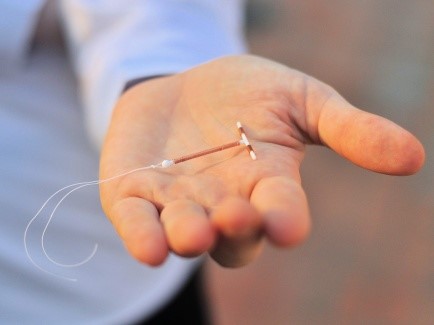
An intrauterine device (IUD) is a small device made from plastic and copper which sits inside the womb (uterus). It is also known as the coil.
by Dr Rosalyn Adleman, MRCGP

Sexual health
Should you consider the copper coil for emergency contraception?
If you need emergency contraception, you should be aware of all of your options. The most effective method is also the least known: the copper coil, or intrauterine device (IUD).
by Milly Evans

Pregnancy
Cervical insufficiency and suture
Cervical insufficiency (sometimes called cervical incompetence) occurs when the neck of the womb (the cervix) softens, shortens and opens without any other symptoms of labour. This may be in the second trimester or early in the third, leading to premature delivery of the baby. Cervical suture - also called cervical cerclage or cervical stitch - is a stitch placed in/around the cervix. This is to try to prevent late miscarriage or premature birth in women who are felt to be at high risk of cervical insufficiency.
by Dr Hayley Willacy, FRCGP
Related patient information and medicines
Patient information leaflet
Intrauterine contraceptive device
The coil

Patient information leaflet
6-in-1 vaccine
Including DTaP, polio, Hib and Hep B immunisations

Patient information leaflet
Type 1 diabetes

Patient information leaflet
Alpha-1 antitrypsin deficiency
Patient information leaflet
Long-acting reversible contraceptives
LARCs

Patient information leaflet
Sweat test
Further reading and references
- transmembrane and coiled-coil domains 1; MedlinePlus, National Library of Medicine.
- Alanay Y, Erguner B, Utine E, Hacariz O, Kiper PO, Taskiran EZ, Percin F, Uz E, Sagiroglu MS, Yuksel B, Boduroglu K, Akarsu NA. TMCO1 deficiency causes autosomal recessive cerebrofaciothoracic dysplasia. Am J Med Genet A. 2014 Feb;164A(2):291-304. doi: 10.1002/ajmg.a.36248. Epub 2013 Nov 5.
- Burdon KP, Macgregor S, Hewitt AW, Sharma S, Chidlow G, Mills RA, Danoy P, Casson R, Viswanathan AC, Liu JZ, Landers J, Henders AK, Wood J, Souzeau E, Crawford A, Leo P, Wang JJ, Rochtchina E, Nyholt DR, Martin NG, Montgomery GW, Mitchell P, Brown MA, Mackey DA, Craig JE. Genome-wide association study identifies susceptibility loci for open angle glaucoma at TMCO1 and CDKN2B-AS1. Nat Genet. 2011 Jun;43(6):574-8. doi: 10.1038/ng.824. Epub 2011 May 1.
- Michael Yates T, Ng OH, Offiah AC, Willoughby J, Berg JN; DDD Study; Johnson DS. Cerebrofaciothoracic dysplasia: Four new patients with a recurrent TMCO1 pathogenic variant. Am J Med Genet A. 2019 Jan;179(1):43-49. doi: 10.1002/ajmg.a.60678. Epub 2018 Dec 17.
- Pehlivan D, Karaca E, Aydin H, Beck CR, Gambin T, Muzny DM, Bilge Geckinli B, Karaman A, Jhangiani SN; Centers for Mendelian Genomics; Gibbs RA, Lupski JR. Whole-exome sequencing links TMCO1 defect syndrome with cerebro-facio-thoracic dysplasia. Eur J Hum Genet. 2014 Sep;22(9):1145-8. doi: 10.1038/ejhg.2013.291. Epub 2014 Jan 15.
- van Koolwijk LM, Ramdas WD, Ikram MK, Jansonius NM, Pasutto F, Hysi PG, Macgregor S, Janssen SF, Hewitt AW, Viswanathan AC, ten Brink JB, Hosseini SM, Amin N, Despriet DD, Willemse-Assink JJ, Kramer R, Rivadeneira F, Struchalin M, Aulchenko YS, Weisschuh N, Zenkel M, Mardin CY, Gramer E, Welge-Lussen U, Montgomery GW, Carbonaro F, Young TL; DCCT/EDIC Research Group; Bellenguez C, McGuffin P, Foster PJ, Topouzis F, Mitchell P, Wang JJ, Wong TY, Czudowska MA, Hofman A, Uitterlinden AG, Wolfs RC, de Jong PT, Oostra BA, Paterson AD; Wellcome Trust Case Control Consortium 2; Mackey DA, Bergen AA, Reis A, Hammond CJ, Vingerling JR, Lemij HG, Klaver CC, van Duijn CM. Common genetic determinants of intraocular pressure and primary open-angle glaucoma. PLoS Genet. 2012;8(5):e1002611. doi: 10.1371/journal.pgen.1002611. Epub 2012 May 3.
- Wang QC, Zheng Q, Tan H, Zhang B, Li X, Yang Y, Yu J, Liu Y, Chai H, Wang X, Sun Z, Wang JQ, Zhu S, Wang F, Yang M, Guo C, Wang H, Zheng Q, Li Y, Chen Q, Zhou A, Tang TS. TMCO1 Is an ER Ca(2+) Load-Activated Ca(2+) Channel. Cell. 2016 Jun 2;165(6):1454-1466. doi: 10.1016/j.cell.2016.04.051. Epub 2016 May 19.
Share your thoughts or experiences with others in our patient communities.
Simple access to trusted treatments and health services online.
Common conditions
Get help with common conditions through the NHS, without a GP appointment.





Sign up to the Patient newsletter
Your weekly dose of clear, trustworthy health advice - written to help you feel informed, confident and in control.
By subscribing you accept our Privacy Policy. You can unsubscribe at any time. We never sell your data.