tRNA splicing endonuclease subunit 34
Last updated 18 Aug 2020
Meets Patient’s editorial guidelines
- DownloadDownload
- Share
- Language
- Discussion
- Ask Patient
- Audio Version
- Add to preferred sources on Google
The TSEN34 gene provides instructions for making one part (subunit) of an enzyme called the tRNA splicing endonuclease complex. This complex helps process several types of RNA molecules, which are chemical cousins of DNA.
Video picks for GenesVideo library
Normal function
The TSEN34 gene provides instructions for making one part (subunit) of an enzyme called the tRNA splicing endonuclease complex. This complex helps process several types of RNA molecules, which are chemical cousins of DNA.
The tRNA splicing endonuclease complex is particularly important for the normal processing of a form of RNA known as transfer RNA (tRNA). tRNA molecules help assemble protein building blocks called amino acids into full-length proteins. However, before they can assemble proteins, tRNAs must be processed into mature molecules. In particular, regions called introns need to be removed from some tRNAs for the molecules to be functional. The tRNA splicing endonuclease complex recognizes and then removes introns to help produce mature tRNA molecules.
Studies suggest that the tRNA splicing endonuclease complex may also be involved in processing another form of RNA known as messenger RNA (mRNA). mRNA serves as a genetic blueprint for making proteins. Researchers suspect that the tRNA splicing endonuclease complex cuts (cleaves) one end of mRNA molecules so a string of adenines (one of the building blocks of RNA) can be added. This process is known as polyadenylation, and the string of adenines is known as a poly(A) tail. The poly(A) tail signals the stopping point for protein production and protects mRNA from being broken down before protein production occurs.
Conditions referring to this gene or chromosome
Other names
LENG5
SEN34
SEN34_HUMAN
SEN34L
tRNA splicing endonuclease 34
tRNA splicing endonuclease 34 homolog (S. cerevisiae)
TSEN34 tRNA splicing endonuclease subunit
Patient picks for Genes

The sex and relationships podcast
Victims and Villains I The Sex and Relationships Podcast I S1E6
Clare and Janet explore the relationship issues that lead to arguments and how to do conflict better. Dip into some of things Clare and Janet chat about in this episode: 00:43 Shouting, crying, slamming doors, walking away, silence - common reactions to arguments but what’s really going on in conflict? What are you really fighting for? 13:30 So what to do about conflict in relationships? How to understand conflict through Karpman's Drama Triangle 23:24 Why having some ‘me’ time is really important for improving relationships. 26:56 Janet’s 10 minute exercise to help you manage relationship issues and arguments better. 34:45 Clare and Janet’s top tips Want to know more? If you want to hear more about why it’s so important for your relationships to have ‘me’ time listen to episode 9 Me-topia: [https://www.youtube.com/watch?v=_OeNvaVV6Hg](https://www.youtube.com/watch?v=_OeNvaVV6Hg) Visit our website The Sex and Relationships Podcast for more information on the issues discussed in this episode: [https://thesexandrelationshipspodcast.com/](https://thesexandrelationshipspodcast.com/) You can also Ask Clare a question or suggest a topic for future episodes. Follow us on social media: Instagram: [https://www.instagram.com/s3x_and_relationships_podcast/profilecard/?igsh=MXIza3BxeWg3OTJxOA%3D%3D](https://www.instagram.com/s3x_and_relationships_podcast/profilecard/?igsh=MXIza3BxeWg3OTJxOA%3D%3D) Facebook: [https://www.facebook.com/people/The-Sex-and-Relationships-Podcast-With-Therapists-Clare-Janet/61558082319934/](https://www.facebook.com/people/The-Sex-and-Relationships-Podcast-With-Therapists-Clare-Janet/61558082319934/) About The Sex and Relationships Podcast: This podcast is for anyone looking for information or help with their sex lives or relationships. Your hosts Clare Prendergast and Janet Eccles are sex and relationship therapists. In each episode they chat about common problems they see in the therapy room and draw on their years of experience to give you some insights, advice and top tips to help guide you through your relationships and sex lives.

The sex and relationships podcast
From Bliss to Blame I The Sex and Relationships Podcast I S2E5
Have you ever found yourself thinking, ‘What on earth was I doing? This person is all wrong for me’, when only a few months ago they seemed perfect? How did that feeling of bliss when you’re finishing each other’s sentences and laughing at the same jokes turn to irritation, resentment and blaming them for everything that’s wrong? Clare and Aileen help you understand the natural cycle from falling-in-love bliss to relationship blame, why it happens, and how to navigate your way through it. Dip into some of the things Clare and Aileen chat about in this episode: 03:51 What’s happening to our bodies during the bliss phase 10:54 Difference – the good, the bad and the ugly 17:35 The danger of confiding in people who agree with you 20:49 Tips for navigating through the bliss to blame phases 23:50 Esther Perel – many different marriages within the same marriage 26:08 Tips on better communication 28:03 Has this relationship come to the end of the road? 34:22 Tips on how to have honest conversations with partners and friends Want to know more? If you want to hear more about what to do when sexual attraction starts to fade in a relationship listen to Episode 7 “Lust or Bust” from Season 1: [https://www.youtube.com/watch?v=oczHRWuev30&list=PLx6Nf3acNljjvrnko9zfaOBzGCQxLrTic&index=7](https://www.youtube.com/watch?v=oczHRWuev30&list=PLx6Nf3acNljjvrnko9zfaOBzGCQxLrTic&index=7) Visit our website The Sex and Relationships Podcast for more information on the issues discussed in this episode: [https://thesexandrelationshipspodcast.com/](https://thesexandrelationshipspodcast.com/) You can also Ask Clare a question or suggest a topic for future episodes. Follow us on social media: Instagram: [https://www.instagram.com/s3x_and_relationships_podcast/profilecard/?igsh=MXIza3BxeWg3OTJxOA%3D%3D](https://www.instagram.com/s3x_and_relationships_podcast/profilecard/?igsh=MXIza3BxeWg3OTJxOA%3D%3D) Facebook: [https://www.facebook.com/people/The-Sex-and-Relationships-Podcast-With-Therapists-Clare-Janet/61558082319934/](https://www.facebook.com/people/The-Sex-and-Relationships-Podcast-With-Therapists-Clare-Janet/61558082319934/) About the Sex and Relationships Podcast This podcast is for anyone looking for information or help with their sex lives or relationships. In this season your hosts Clare Prendergast and Aileen Gonsalves deep dive into the world of relationships to give you insights, advice and top tips to help guide you through your relationships. Your hosts Clare Prendergast is a sex and relationships therapist and draws on her knowledge and years of experience in the therapy room to give you help and guidance. Aileen Gonsalves is fascinated in human behaviour and drawing on her many years in the theatre has developed the unique Gonsalves Method which helps people be more present and develop authentic connections with those around them.

The sex and relationships podcast
Losing It! I The Sex and Relationships Podcast I S1E4
Why erectile dysfunction doesn’t have to be the catastrophe you might think it is. Clare and Janet discuss ways to help with erection problems. Dip into some of things Clare and Janet chat about in this episode: 03:35 What might be causing erection problems? 08:34 So what help is at hand? What’s on the market to help you get an erection. Stress No More 12:16 Ideas on what you can do for yourself. Why Kegels exercises are good to do. 16:52 Can watching too much porn can cause problems with erections when having sex? 19:35 How to deal with stress and anxiety caused by unreliable erections. 24:36 Exercise ideas for you on your own or with a partner to help bring on an orgasm or increase sexual pleasure. 31:24 Clare and Janet’s top tips Want to know more? Visit our website The Sex and Relationships Podcast for more information on the issues discussed in this episode: [https://thesexandrelationshipspodcast.com/](https://thesexandrelationshipspodcast.com/) You can also Ask Clare a question or suggest a topic for future episodes. Follow us on social media: Instagram: [https://www.instagram.com/s3x_and_relationships_podcast/profilecard/?igsh=MXIza3BxeWg3OTJxOA%3D%3D](https://www.instagram.com/s3x_and_relationships_podcast/profilecard/?igsh=MXIza3BxeWg3OTJxOA%3D%3D) Facebook: [https://www.facebook.com/people/The-Sex-and-Relationships-Podcast-With-Therapists-Clare-Janet/61558082319934/](https://www.facebook.com/people/The-Sex-and-Relationships-Podcast-With-Therapists-Clare-Janet/61558082319934/) About The Sex and Relationships Podcast: This podcast is for anyone looking for information or help with their sex lives or relationships. Your hosts Clare Prendergast and Janet Eccles are sex and relationship therapists. In each episode they chat about common problems they see in the therapy room and draw on their years of experience to give you some insights, advice and top tips to help guide you through your relationships and sex lives.
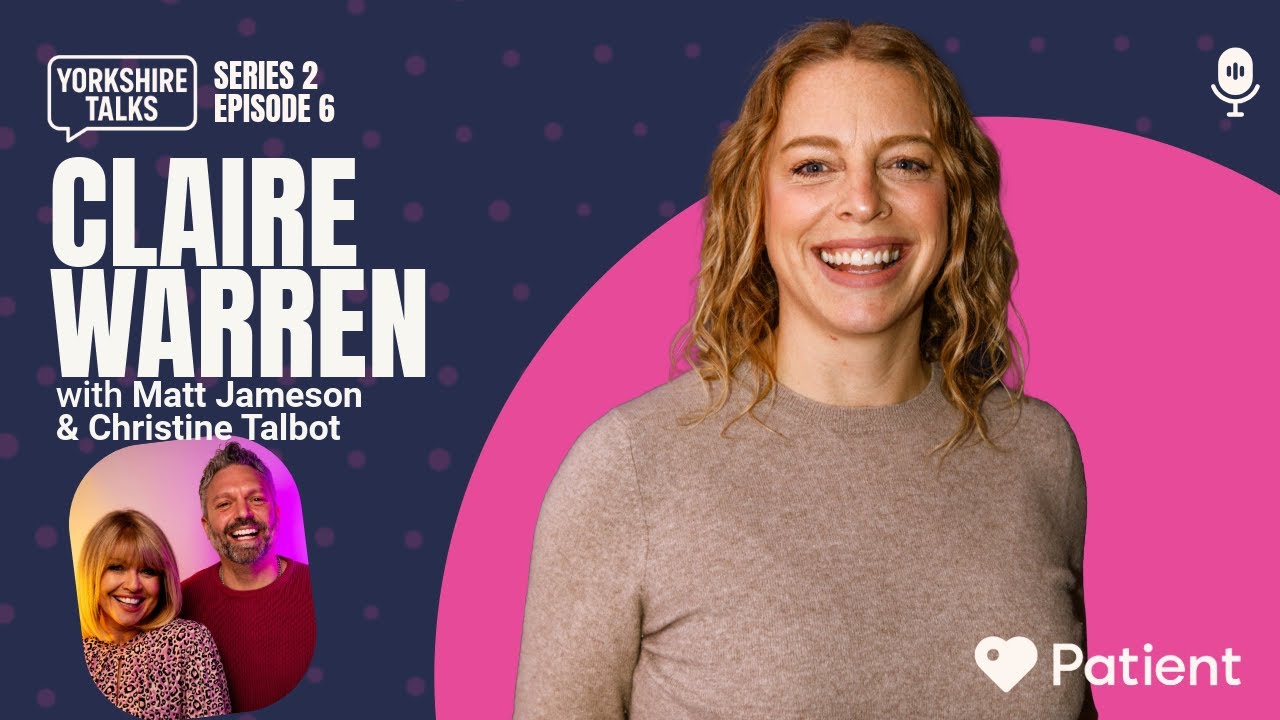
Yorkshire talks series 2
Claire Warren: Motherhood, Mum Guilt & Keeping It Real
She’s an award-winning content creator whose honest, hilarious take on motherhood has struck a chord with parents everywhere — earning her over half a million followers online. Meet Claire Warren, better known as My Kinda Mum on Instagram and Facebook. A former radio producer and PR manager, Claire joins Matt and Christine to chat about how she found her way into content creation, what really goes on behind the scenes, and why this completely unexpected career shift has transformed her life as a mum of two young children. 👶 From gentle parenting to mum guilt This refreshingly down-to-earth conversation dives into: The realities of modern motherhood Letting go of perfection (and the guilt that comes with it) The pressure to “do it all” — and why it’s okay not to Embracing the wonderfully British chaos of family life It’s honest, funny and deeply reassuring — the kind of chat that will have parents everywhere sighing with relief and thinking: “Thank goodness… this is normal.” 💬 You’ll laugh, nod along, and feel seen. Once you listen, trust us — you’ll be hooked. 🔗 Find Claire on Instagram & Facebook @MyKindaMum, or explore more of her work here: 👉 [https://www.mykindamum.com/links](https://www.mykindamum.com/links) 🔔 Don’t forget to like, subscribe and share with a fellow parent who needs this one. #ParentingPodcast #MyKindaMum #MumLife #MotherhoodUnfiltered #GentleParenting #yorkshiretalks 00:00:00 - From High-Flying Career to Motherhood's Unexpected Challenges 00:03:01 - Pivoting from Broadcast to Relatable Parenting Content 00:06:11 - Navigating Modern Parenting and Finding Comedy in Challenges 00:12:42 - The Power of Authenticity: Tackling Mum Guilt Online 00:16:34 - Balancing Family Life, Work, and Online Trolling 00:22:43 - The Art of Comedy and Addressing Motherhood's Deeper Issues 00:27:57 - From Merchandise to Innovative Underwear for Mums 00:32:41 - The Joy of Fan Encounters and Local Linguistic Quirks

The sexual health series
Gonorrhoea - Symptoms, testing and treatment
Gonorrhoea is an infection affecting mainly the genital areas. It can also affect the throat and eyes. Very occasionally the infection can spread to other parts of the body. In this video, you'll find out more about gonorrhoea, including the symptoms, how it gets tested, treatments and if it can cause any complications. *Design and video production by Cáit Hanstock, Georgia Townsend, and the team at Wowvi.* Visit our website to find out more: [https://patient.info/sexual-health/sexually-transmitted-infections-leaflet/gonorrhoea](https://patient.info/sexual-health/sexually-transmitted-infections-leaflet/gonorrhoea) #gonorrhea #sexualhealtheducation 00:00 - 00:29 - Introduction to Dr Krishna and the sexual health series 00:36 - 00:47 - What is gonorrhoea? 00:49 - 01:11 - What are the symptoms of gonorrhoea? 01:13 - 01:33 - How can gonorrhoea be treated? 01:34 - 02:17 - How do you get tested for gonorrhoea? 02:18 - 03:10 - What complications are there for gonorrhoea?
by Dr Krishna Vakharia, MRCGP

The sex and relationships podcast
Me-Topia I The Sex and Relationships Podcast I S1E9
If you always come last on the priority list, it’s time to learn why ‘Being Selfish for the Team’ helps everyone. Janet and Clare discuss the vital positives of self care on your life and relationship. Dip into some of things Clare and Janet chat about in this episode: 01:47 Why making time for ‘me’ is not selfish, it’s very important for your well-being, your relationship with yourself and our relationships with others. 08:00 Where our attitudes towards self-care often come from. 11:55 Are your needs being met? Damian Hughes Maslow's Hierarchy of Needs 16:35 Being selfish for the team. Why women’s desire and energy for sex often disappears if we are not looking after ourselves properly. 22:34 Ideas for self-care Want to know more? If you’re interested to know more about how the lack of self-care can affect sex and relationships check out episode 6 Victims and Villains: [https://www.youtube.com/watch?v=jr1FjQHl4CA](https://www.youtube.com/watch?v=jr1FjQHl4CA) ..and episode 5 The Big O... Oh No: [https://www.youtube.com/watch?v=aKjkrT9PRpc](https://www.youtube.com/watch?v=aKjkrT9PRpc) Visit our website The Sex and Relationships Podcast for more information on the issues discussed in this episode: [https://thesexandrelationshipspodcast.com/](https://thesexandrelationshipspodcast.com/) You can also Ask Clare a question or suggest a topic for future episodes. Follow us on social media: Instagram: [https://www.instagram.com/s3x_and_relationships_podcast/profilecard/?igsh=MXIza3BxeWg3OTJxOA%3D%3D](https://www.instagram.com/s3x_and_relationships_podcast/profilecard/?igsh=MXIza3BxeWg3OTJxOA%3D%3D) Facebook: [https://www.facebook.com/people/The-Sex-and-Relationships-Podcast-With-Therapists-Clare-Janet/61558082319934/](https://www.facebook.com/people/The-Sex-and-Relationships-Podcast-With-Therapists-Clare-Janet/61558082319934/) About The Sex and Relationships Podcast: This podcast is for anyone looking for information or help with their sex lives or relationships. Your hosts Clare Prendergast and Janet Eccles are sex and relationship therapists. In each episode they chat about common problems they see in the therapy room and draw on their years of experience to give you some insights, advice and top tips to help guide you through your relationships and sex lives.
Related patient information and medicines

Patient information leaflet
Premature babies
Your baby is considered to have: A low birth weight if they weigh less than 2500 g (5 lb) A very low birth weight if they weigh less than 1500 g (3 lb) An extremely low birth weight if they weigh less than 1000 g (2 lb) Recent research by the pregnancy charity Tommy's found that in the UK: About 8% of births in the UK are preterm. That is around.

Patient information leaflet
Antiphospholipid syndrome
Early diagnosis is important to try to prevent serious complications. Pregnancy and antiphospholipid syndrome Pregnant women with APS are at high risk of complications Pregnancy complications. If you are pregnant and have APS, you will need to have some of your antenatal care under the supervision of a doctor who specialises in pregnancy and.

Patient information leaflet
Premature labour
In premature labour you start having regular contractions before 37 completed weeks of pregnancy. National Institute for Health and Care Excellence standard The National Institute for Health and Care Excellence (NICE) has published new 'quality standards' for doctors about the care they should offer to women who are in possible or premature.

Patient information leaflet
Weight loss surgery
In the UK, the National Institute for Health and Care Excellence (NICE) has produced some guidance to help doctors decide if someone may be suitable for weight loss surgery on the NHS. To be considered for weight loss surgery, you need: To have a BMI of 40 or more, or have a BMI between 35-40 plus a health problem that could be improved if you.

Patient information leaflet
Labour
It normally happens any time between 37 and 42 weeks of pregnancy, on average around the 40th week. There are three 'stages' of labour; the first involves regular muscle contractions that pull the neck of the womb (cervix) wide open, the second involves contractions and pushing which move the baby down through the birth canal (vagina) and out.

Patient information leaflet
Cervical insufficiency and suture
Some women who have cervical insufficiency do notice vague symptoms, which can include: Pelvic pressure. Period pain-type cramping. Vaginal discharge Vaginal discharge that increases in volume, becomes wetter or changes from clear, white, or light yellow to pink or bloody. Losing the mucus plug from the neck of the womb (cervix). Most women with.
Further reading and references
- tRNA splicing endonuclease subunit 34; MedlinePlus, National Library of Medicine.
- Bailey KA, Aldinger KA. Mutations in the tRNA splicing endonuclease complex cause pontocerebellar hypoplasia. Clin Genet. 2009 May;75(5):427-8. doi: 10.1111/j.1399-0004.2009.01186_3.x. No abstract available.
- Budde BS, Namavar Y, Barth PG, Poll-The BT, Nurnberg G, Becker C, van Ruissen F, Weterman MA, Fluiter K, te Beek ET, Aronica E, van der Knaap MS, Hohne W, Toliat MR, Crow YJ, Steinling M, Voit T, Roelenso F, Brussel W, Brockmann K, Kyllerman M, Boltshauser E, Hammersen G, Willemsen M, Basel-Vanagaite L, Krageloh-Mann I, de Vries LS, Sztriha L, Muntoni F, Ferrie CD, Battini R, Hennekam RC, Grillo E, Beemer FA, Stoets LM, Wollnik B, Nurnberg P, Baas F. tRNA splicing endonuclease mutations cause pontocerebellar hypoplasia. Nat Genet. 2008 Sep;40(9):1113-8. doi: 10.1038/ng.204.
- Namavar Y, Barth PG, Kasher PR, van Ruissen F, Brockmann K, Bernert G, Writzl K, Ventura K, Cheng EY, Ferriero DM, Basel-Vanagaite L, Eggens VR, Krageloh-Mann I, De Meirleir L, King M, Graham JM Jr, von Moers A, Knoers N, Sztriha L, Korinthenberg R; PCH Consortium; Dobyns WB, Baas F, Poll-The BT. Clinical, neuroradiological and genetic findings in pontocerebellar hypoplasia. Brain. 2011 Jan;134(Pt 1):143-56. doi: 10.1093/brain/awq287. Epub 2010 Oct 15.
Share your thoughts or experiences with others in our patient communities.
Simple access to trusted treatments and health services online.
Common conditions
Get help with common conditions through the NHS, without a GP appointment.





Sign up to the Patient newsletter
Your weekly dose of clear, trustworthy health advice - written to help you feel informed, confident and in control.
By subscribing you accept our Privacy Policy. You can unsubscribe at any time. We never sell your data.