VRK serine/threonine kinase 1
Last updated 18 Aug 2020
Meets Patient’s editorial guidelines
- DownloadDownload
- Share
- Language
- Discussion
- Ask Patient
- Audio Version
- Add to preferred sources on Google
The VRK1 gene provides instructions for making a protein called VRK serine/threonine kinase 1. This protein is active in cells throughout the body.
Video picks for GenesVideo library
Normal function
The VRK1 gene provides instructions for making a protein called VRK serine/threonine kinase 1. This protein is active in cells throughout the body.
VRK serine/threonine kinase 1 plays a critical role in directing cell growth and division. This protein regulates several transcription factors, which are proteins that control the activity of genes by attaching (binding) to specific regions of DNA. VRK serine/threonine kinase 1 has a particularly important role in regulating a transcription factor called p53 (which is produced from the TP53 gene). The p53 protein repairs damaged DNA, regulates cell division, and prevents the formation of cancerous tumours. VRK serine/threonine kinase 1 stabilizes and activates the p53 protein and controls the levels of p53 in the nucleus.
Studies suggest that VRK serine/threonine kinase 1 has several additional functions. This protein is involved in the assembly of the nuclear envelope, which is a structure that surrounds the nucleus and acts as a barrier between the nucleus and the rest of the cell. The nuclear envelope protects the DNA contained in the nucleus and regulates the movement of molecules into and out of the nucleus. VRK serine/threonine kinase 1 is also thought to play a role in the organisation of chromatin. Chromatin is the complex of DNA and protein that packages DNA into chromosomes. Both the assembly of the nuclear envelope and the proper organisation of chromatin are necessary for normal cell division.
Researchers speculate that VRK serine/threonine kinase 1 may be involved in the development and maintenance of the nervous system, but its role is not well understood.
Conditions referring to this gene or chromosome
Other names
MGC117401
MGC138280
MGC142070
vaccinia related kinase 1
vaccinia virus B1R-related kinase 1
vaccinia-related kinase-1
VRK1_HUMAN
Patient picks for Genes

STI
How do you get genital warts?
Dr Sarah Jarvis MBE The virus is passed on by sexual contact. You need close skin-to-skin contact to pass on the virus. This means that you do not necessarily need to have penetrative sex to pass on infection. Sharing sex toys may also pass on infection. Very rarely, anogenital warts may be passed on from hand warts. They may also rarely be passed on to a baby when a woman gives birth. [https://patient.info/health/sexually-transmitted-infections-leaflet/anogenital-warts#nav-1](https://patient.info/health/sexually-transmitted-infections-leaflet/anogenital-warts#nav-1)
by Dr Sarah Jarvis

PID Q&A
Does PID cause bleeding?
Dr Sarah Jarvis MBE Symptoms may develop quickly. You can become quite ill over a few days. Sometimes symptoms are mild and develop slowly. For example, you may just have a mild abdominal pain that may 'grumble on' for weeks. In some cases no symptoms develop and you do not know that you are infected. However, you are still at risk of complications even if you have no symptoms at first. [https://patient.info/health/pelvic-pain-in-women/pelvic-inflammatory-disease#nav-1](https://patient.info/health/pelvic-pain-in-women/pelvic-inflammatory-disease#nav-1)
by Dr Sarah Jarvis

Contraceptive implant
Can you get pregnant when you have the implant?
Dr Rosemary Leonard Only around 1 in 3,000 sexually active women using the implant will become pregnant each year, often because they were actually pregnant at the time of insertion. This is the lowest contraceptive failure rate of any method, including sterilisation (male or female). In fact in most studies of the implant, no women became pregnant at all. For more information on the contraceptive implant, go to [https://patient.info/health/long-acting-reversible-contraceptives-larc/contraceptive-implant](https://patient.info/health/long-acting-reversible-contraceptives-larc/contraceptive-implant)
by Dr Rosemary Leonard MBE, MRCGP
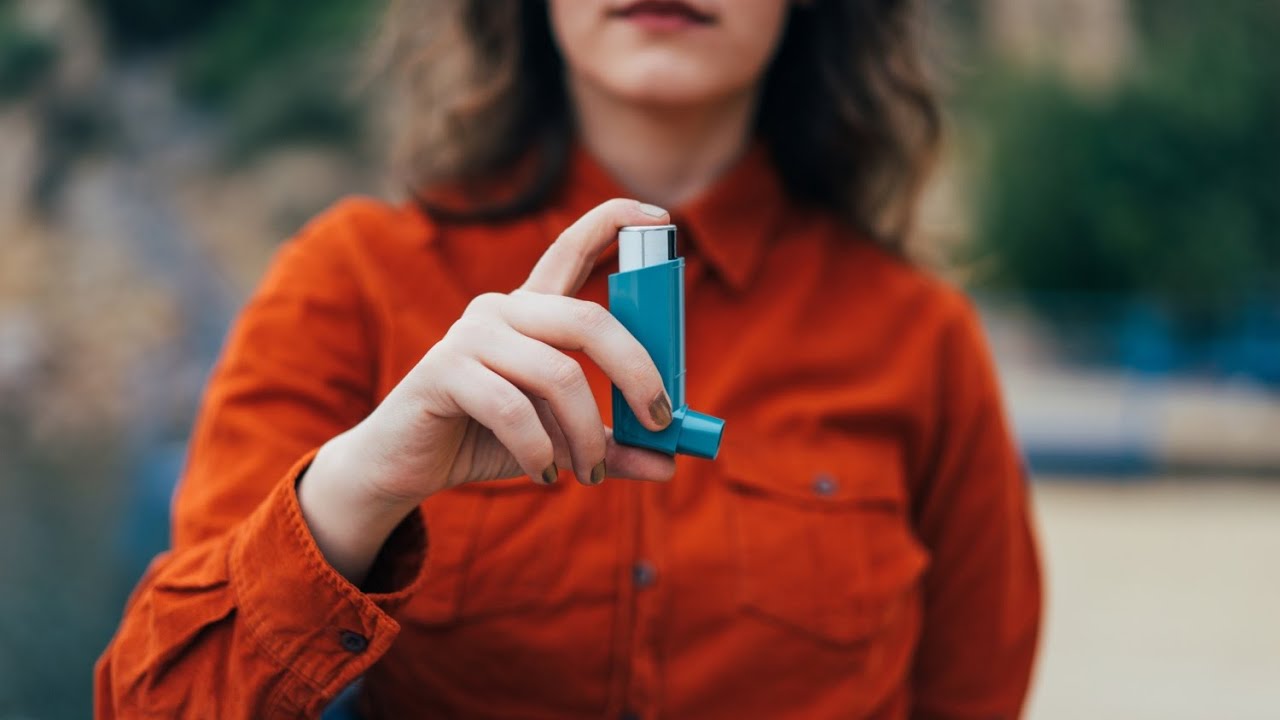
Asthma & COPD
How do I know if I have asthma?
Dr Sarah Jarvis MBE The common symptoms are cough and wheeze. You may also become breathless and develop a feeling of chest tightness. Symptoms can range from mild to severe between different people and at different times in the same person. Each episode of symptoms may last just an hour or so, or persist for days or weeks unless treated. [https://patient.info/health/asthma-leaflet#nav-1](https://patient.info/health/asthma-leaflet#nav-1)
by Dr Sarah Jarvis

The sex and relationships podcast
From Bliss to Blame I The Sex and Relationships Podcast I S2E5
Have you ever found yourself thinking, ‘What on earth was I doing? This person is all wrong for me’, when only a few months ago they seemed perfect? How did that feeling of bliss when you’re finishing each other’s sentences and laughing at the same jokes turn to irritation, resentment and blaming them for everything that’s wrong? Clare and Aileen help you understand the natural cycle from falling-in-love bliss to relationship blame, why it happens, and how to navigate your way through it. Dip into some of the things Clare and Aileen chat about in this episode: 03:51 What’s happening to our bodies during the bliss phase 10:54 Difference – the good, the bad and the ugly 17:35 The danger of confiding in people who agree with you 20:49 Tips for navigating through the bliss to blame phases 23:50 Esther Perel – many different marriages within the same marriage 26:08 Tips on better communication 28:03 Has this relationship come to the end of the road? 34:22 Tips on how to have honest conversations with partners and friends Want to know more? If you want to hear more about what to do when sexual attraction starts to fade in a relationship listen to Episode 7 “Lust or Bust” from Season 1: [https://www.youtube.com/watch?v=oczHRWuev30&list=PLx6Nf3acNljjvrnko9zfaOBzGCQxLrTic&index=7](https://www.youtube.com/watch?v=oczHRWuev30&list=PLx6Nf3acNljjvrnko9zfaOBzGCQxLrTic&index=7) Visit our website The Sex and Relationships Podcast for more information on the issues discussed in this episode: [https://thesexandrelationshipspodcast.com/](https://thesexandrelationshipspodcast.com/) You can also Ask Clare a question or suggest a topic for future episodes. Follow us on social media: Instagram: [https://www.instagram.com/s3x_and_relationships_podcast/profilecard/?igsh=MXIza3BxeWg3OTJxOA%3D%3D](https://www.instagram.com/s3x_and_relationships_podcast/profilecard/?igsh=MXIza3BxeWg3OTJxOA%3D%3D) Facebook: [https://www.facebook.com/people/The-Sex-and-Relationships-Podcast-With-Therapists-Clare-Janet/61558082319934/](https://www.facebook.com/people/The-Sex-and-Relationships-Podcast-With-Therapists-Clare-Janet/61558082319934/) About the Sex and Relationships Podcast This podcast is for anyone looking for information or help with their sex lives or relationships. In this season your hosts Clare Prendergast and Aileen Gonsalves deep dive into the world of relationships to give you insights, advice and top tips to help guide you through your relationships. Your hosts Clare Prendergast is a sex and relationships therapist and draws on her knowledge and years of experience in the therapy room to give you help and guidance. Aileen Gonsalves is fascinated in human behaviour and drawing on her many years in the theatre has developed the unique Gonsalves Method which helps people be more present and develop authentic connections with those around them.

Risks of diabetes
What can someone with type 1 diabetes do to stop their glucose going too high?
Dr Sarah Jarvis MBE For more information on continuous glucose monitoring, go to [https://patient.info/health/type-1-diabetes/features/continuous-glucose-monitoring-in-type-1-diabetes](https://patient.info/health/type-1-diabetes/features/continuous-glucose-monitoring-in-type-1-diabetes)
by Dr Sarah Jarvis
Related patient information and medicines

Patient information leaflet
Glycogen storage disorders
Glycogen storage disorders are a group of inherited diseases. They result from a problem with one of the proteins (known as enzymes) involved in the conversion of glucose to glycogen, or the breakdown of glycogen back into glucose. They mostly tend to affect your liver and muscles. Most are diagnosed in childhood. Symptoms include weakness,.

Patient information leaflet
Mouth cancer
Diagnosing mouth cancer Your healthcare professional may suspect mouth cancer if you have a lesion in your mouth (such as a sore, an ulcer or a lump) which has not healed for 3 wee... Dr Krishna Vakharia , 16th October 2023 The National Institute for Health and Care Excellence (NICE) has recommended that a person should receive a diagnosis or.

Patient information leaflet
Muscular dystrophy
See separate leaflet called Duchenne Muscular Dystrophy for more details Duchenne muscular dystrophy. Becker's muscular dystrophy (BMD) BMD is similar in many ways to DMD, but is less severe. Also, if a child has delayed motor milestones ... MD may be diagnosed using one or more of the following tests: A blood test Blood tests for creatine kinase.
Patient information leaflet
Primary liver cancer
Primary liver cancer is uncommon in the UK but is common in other parts of the world. In the UK, most cases develop as a complication of scarring of the liver (cirrhosis). The rest of this leaflet is only about primary liver cancer. In particular, it is about hepatocellular carcinoma, the most c... There are new medicines being developed for the.

Patient information leaflet
Liver function tests
The usual liver function tests typically include the following: Bilirubin. Albumin. Total protein. Low levels of total protein can sometimes be seen in severe liver disease, in conditions of severe prot... What does an abnormal ALT (SGPT), AST (SGOT) or creatine kinase level mean. These substances are also called transferases. Abnormal liver.

Patient information leaflet
Telogen effluvium
Telogen effluvium (hair loss) is a condition where more than normal amounts of hair fall out. There is a general 'thinning' of the hair. Unlike some other hair and scalp conditions, it is temporary and the hair growth usually recovers. What is telogen effluvium. Telogen effluvium is rapid hair loss that is caused by stress or a change to your.
Further reading and references
- VRK serine/threonine kinase 1; MedlinePlus, National Library of Medicine.
- Gonzaga-Jauregui C, Lotze T, Jamal L, Penney S, Campbell IM, Pehlivan D, Hunter JV, Woodbury SL, Raymond G, Adesina AM, Jhangiani SN, Reid JG, Muzny DM, Boerwinkle E, Lupski JR, Gibbs RA, Wiszniewski W. Mutations in VRK1 associated with complex motor and sensory axonal neuropathy plus microcephaly. JAMA Neurol. 2013 Dec;70(12):1491-8. doi: 10.1001/jamaneurol.2013.4598.
- Kang TH, Park DY, Kim W, Kim KT. VRK1 phosphorylates CREB and mediates CCND1 expression. J Cell Sci. 2008 Sep 15;121(Pt 18):3035-41. doi: 10.1242/jcs.026757. Epub 2008 Aug 19.
- Klerkx EP, Lazo PA, Askjaer P. Emerging biological functions of the vaccinia-related kinase (VRK) family. Histol Histopathol. 2009 Jun;24(6):749-59. doi: 10.14670/HH-24.749.
- Najmabadi H, Hu H, Garshasbi M, Zemojtel T, Abedini SS, Chen W, Hosseini M, Behjati F, Haas S, Jamali P, Zecha A, Mohseni M, Puttmann L, Vahid LN, Jensen C, Moheb LA, Bienek M, Larti F, Mueller I, Weissmann R, Darvish H, Wrogemann K, Hadavi V, Lipkowitz B, Esmaeeli-Nieh S, Wieczorek D, Kariminejad R, Firouzabadi SG, Cohen M, Fattahi Z, Rost I, Mojahedi F, Hertzberg C, Dehghan A, Rajab A, Banavandi MJ, Hoffer J, Falah M, Musante L, Kalscheuer V, Ullmann R, Kuss AW, Tzschach A, Kahrizi K, Ropers HH. Deep sequencing reveals 50 novel genes for recessive cognitive disorders. Nature. 2011 Sep 21;478(7367):57-63. doi: 10.1038/nature10423.
- Nichols RJ, Wiebe MS, Traktman P. The vaccinia-related kinases phosphorylate the N' terminus of BAF, regulating its interaction with DNA and its retention in the nucleus. Mol Biol Cell. 2006 May;17(5):2451-64. doi: 10.1091/mbc.e05-12-1179. Epub 2006 Feb 22.
- Renbaum P, Kellerman E, Jaron R, Geiger D, Segel R, Lee M, King MC, Levy-Lahad E. Spinal muscular atrophy with pontocerebellar hypoplasia is caused by a mutation in the VRK1 gene. Am J Hum Genet. 2009 Aug;85(2):281-9. doi: 10.1016/j.ajhg.2009.07.006. Epub 2009 Jul 30.
- Valbuena A, Lopez-Sanchez I, Lazo PA. Human VRK1 is an early response gene and its loss causes a block in cell cycle progression. PLoS One. 2008 Feb 20;3(2):e1642. doi: 10.1371/journal.pone.0001642.
- Valbuena A, Sanz-Garcia M, Lopez-Sanchez I, Vega FM, Lazo PA. Roles of VRK1 as a new player in the control of biological processes required for cell division. Cell Signal. 2011 Aug;23(8):1267-72. doi: 10.1016/j.cellsig.2011.04.002. Epub 2011 Apr 14.
- Vega FM, Sevilla A, Lazo PA. p53 Stabilization and accumulation induced by human vaccinia-related kinase 1. Mol Cell Biol. 2004 Dec;24(23):10366-80. doi: 10.1128/MCB.24.23.10366-10380.2004.
Share your thoughts or experiences with others in our patient communities.
Simple access to trusted treatments and health services online.
Common conditions
Get help with common conditions through the NHS, without a GP appointment.





Sign up to the Patient newsletter
Your weekly dose of clear, trustworthy health advice - written to help you feel informed, confident and in control.
By subscribing you accept our Privacy Policy. You can unsubscribe at any time. We never sell your data.