WT1 transcription factor
Last updated 27 Oct 2023
Meets Patient’s editorial guidelines
- DownloadDownload
- Share
- Language
- Discussion
- Ask Patient
- Audio Version
- Add to preferred sources on Google
The WT1 gene provides instructions for making a protein that is necessary for the development of the kidneys and gonads (ovaries in females and testes in males) before birth. After birth, WT1 protein activity is limited to a structure known as the glomerulus, which filters blood through the kidneys. The WT1 protein plays a role in cell growth, the process by which cells mature to perform specific functions (differentiation), and the self-destruction of cells (apoptosis). To carry out these functions, the WT1 protein regulates the activity of other genes by attaching (binding) to specific regions of DNA. On the basis of this action, the WT1 protein is called a transcription factor.
Video picks for GenesVideo library
Normal function
The WT1 gene provides instructions for making a protein that is necessary for the development of the kidneys and gonads (ovaries in females and testes in males) before birth. After birth, WT1 protein activity is limited to a structure known as the glomerulus, which filters blood through the kidneys. The WT1 protein plays a role in cell growth, the process by which cells mature to perform specific functions (differentiation), and the self-destruction of cells (apoptosis). To carry out these functions, the WT1 protein regulates the activity of other genes by attaching (binding) to specific regions of DNA. On the basis of this action, the WT1 protein is called a transcription factor.
Conditions referring to this gene or chromosome
Other names
WIT-2
WT1_HUMAN
WT33
Patient picks for Genes
Heart health and blood vessels
Dilated cardiomyopathy causes: what are the risk factors?
Having dilated cardiomyopathy means that your heart muscle is weakened, which affects how your heart pumps blood around your body. There are a wide range of dilated cardiomyopathy causes, including genetics, other health conditions, alcohol consumption and a poor diet. While we can't control some of these risk factors, we can make positive lifestyle changes to reduce our risk of developing dilated cardiomyopathy.
by Amberley Davis

Cancer
Breast cancer facts and risk factors
Most cases of breast cancer occur by chance. However, breast cancer does occur more often than usual in some families because of their genetic makeup.
by Dr Colin Tidy, MRCGP

Treatment and medication
What factors are causing antimicrobial resistance?
Following a recent study by health economists at the University of Manchester and the University of Southern Denmark, the tremendous pressure GPs are currently working under has been linked to increasing broad-spectrum antibiotic prescribing in England. Because excess antibiotic prescribing has been closely linked to antibiotic resistance, there are concerns that these higher prescribing levels may be contributing to antimicrobial resistance.
by Emily Jane Bashforth

Type 1 diabetes
Is type 1 diabetes hereditary?
Dr Partha Kar Although type 1 diabetes is not an inherited disease, there is some genetic factor. A first-degree relative (sister, brother, son, daughter) of someone with type 1 diabetes has about a 1 in 16 chance of developing type 1 diabetes. For more information on type 1 diabetes, go to [https://patient.info/health/type-1-diabetes](https://patient.info/health/type-1-diabetes)
by Dr Partha Kar, FRCP

High blood pressure
What is high blood pressure?
Dr Yassir Javaid High blood pressure happens when the force on the walls of blood vessels (caused by the blood within them) is more than normal. This means the heart has to work harder and the blood vessels are under more strain, making it a major risk factor for heart disease, stroke and other serious conditions. Healthcare professionals sometimes call high blood pressure 'hypertension'. [https://patient.info/health/high-blood-pressure-hypertension](https://patient.info/health/high-blood-pressure-hypertension)
by Dr Yassir Javaid, MRCGP

Breast cancer types, detection and risks
What are the risk factors for breast cancer?
Dr Sarah Jarvis MBE Although breast cancer can develop for no apparent reason, there are certain risk factors which increase the chance that breast cancer will develop. [https://patient.info/health/breast-cancer-leaflet](https://patient.info/health/breast-cancer-leaflet)
by Dr Sarah Jarvis
Related patient information and medicines

Patient information leaflet
Acute lymphoblastic leukaemia
The main treatment is chemotherapy, sometimes combined with radiotherapy. Stem cell transplant (SCT) is sometimes performed. The exact treatment regime used in each case (the medicines used, doses, length of treatment, etc) takes into account various factors. In... Stem cell transplantation (SCT) SCT - sometimes called bone marrow transplantation.
Patient information leaflet
Anticoagulants
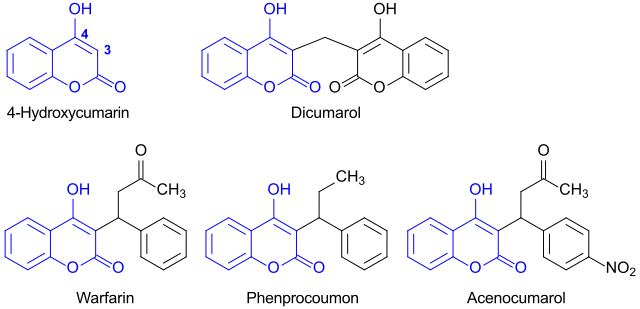
Anticoagulants are medicines that prevent the blood from clotting as quickly or as effectively as normal. In 2021, the UK's National Institute for Health and Care Excellence (NICE) recommended that DOACs should be the preferred option for AF, instead of warfarin. These activated pla... There are 13 known clotting factors which are called by their.

Patient information leaflet
Haemophilia
Haemophilia is a rare bleeding disorder that affects your ability to make a clot. The blood contains substances called clotting factors that work with platelets to form a clot. When you injure yourself the clot stops you bleeding. Haemophilia is a condition where there is a deficiency of clotting factors, so people with this condition usually have.

Patient information leaflet
Blood clotting tests
Blood clotting tests are used to diagnose and assess bleeding problems and to monitor people who take warfarin or other anticoagulant medicines. You may be advised to have blood clotting tests: If you have a suspected bleeding disorder. For example, if you bleed a lot after cuts, or if you bruise easily. If you have certain liver diseases that can.

Patient information leaflet
Can I take Apixaban and Rybelsus together?
These two medicines work in different ways and do not typically interfere with how the other is absorbed, broken down, or removed from the body. Why this happens Apixaban is an anticoagulant (blood thinner) that works by blocking a clotting factor called Factor Xa. Rybelsus is a GLP-1 receptor agonist used for type 2 diabetes that mimics a natural.

Patient information leaflet
Thrombophilia
These blood clots can cause problems such as deep vein thrombosis (DVT) or pulmonary embolism. The clotting cascade makes the blood solidify into a clot, which sticks to the injured part of the blood vessel. Small particles in the blood, called platelets, also help to form the clot. There may be too much of a clotting factor, or too little of a.
Further reading and references
- WT1 transcription factor; MedlinePlus, National Library of Medicine.
- Al-Hussain T, Ali A, Akhtar M. Wilms tumor: an update. Adv Anat Pathol. 2014 May;21(3):166-73. doi: 10.1097/PAP.0000000000000017.
- Andrade JG, Guaragna MS, Soardi FC, Guerra-Junior G, Mello MP, Maciel-Guerra AT. Clinical and genetic findings of five patients with WT1-related disorders. Arq Bras Endocrinol Metabol. 2008 Nov;52(8):1236-43. doi: 10.1590/s0004-27302008000800006.
- Ariyaratana S, Loeb DM. The role of the Wilms tumour gene (WT1) in normal and malignant haematopoiesis. Expert Rev Mol Med. 2007 May 24;9(14):1-17. doi: 10.1017/S1462399407000336.
- Deng C, Dai R, Li X, Liu F. Genetic variation frequencies in Wilms' tumor: A meta-analysis and systematic review. Cancer Sci. 2016 May;107(5):690-9. doi: 10.1111/cas.12910. Epub 2016 Mar 18.
- Heathcott RW, Morison IM, Gubler MC, Corbett R, Reeve AE. A review of the phenotypic variation due to the Denys-Drash syndrome-associated germline WT1 mutation R362X. Hum Mutat. 2002 Apr;19(4):462. doi: 10.1002/humu.9031.
- Miller-Hodges E, Hohenstein P. WT1 in disease: shifting the epithelial-mesenchymal balance. J Pathol. 2012 Jan;226(2):229-40. doi: 10.1002/path.2977. Epub 2011 Sep 29.
- Salvatorelli L, Parenti R, Leone G, Musumeci G, Vasquez E, Magro G. Wilms tumor 1 (WT1) protein: Diagnostic utility in pediatric tumors. Acta Histochem. 2015 May-Jun;117(4-5):367-78. doi: 10.1016/j.acthis.2015.03.010. Epub 2015 Apr 14.
- Suri M, Kelehan P, O'neill D, Vadeyar S, Grant J, Ahmed SF, Tolmie J, McCann E, Lam W, Smith S, Fitzpatrick D, Hastie ND, Reardon W. WT1 mutations in Meacham syndrome suggest a coelomic mesothelial origin of the cardiac and diaphragmatic malformations. Am J Med Genet A. 2007 Oct 1;143A(19):2312-20. doi: 10.1002/ajmg.a.31924.
- Yang L, Han Y, Suarez Saiz F, Minden MD. A tumor suppressor and oncogene: the WT1 story. Leukemia. 2007 May;21(5):868-76. doi: 10.1038/sj.leu.2404624. Epub 2007 Mar 15.
Share your thoughts or experiences with others in our patient communities.
Simple access to trusted treatments and health services online.
Common conditions
Get help with common conditions through the NHS, without a GP appointment.





Sign up to the Patient newsletter
Your weekly dose of clear, trustworthy health advice - written to help you feel informed, confident and in control.
By subscribing you accept our Privacy Policy. You can unsubscribe at any time. We never sell your data.