What does it mean to have a genetic predisposition to a disease?
Meets Patient’s editorial guidelines
- DownloadDownload
- Share
- Language
- Discussion
- Ask Patient
- Audio Version
- Add to preferred sources on Google
A genetic predisposition (sometimes also called genetic susceptibility) is an increased likelihood of developing a particular disease based on a person's genetic makeup. A genetic predisposition results from specific genetic variations that are often inherited from a parent. These genetic changes contribute to the development of a disease but do not directly cause it. Some people with a predisposing genetic variation will never get the disease while others will, even within the same family.
Video picks for Understanding geneticsVideo library
Overview
A genetic predisposition (sometimes also called genetic susceptibility) is an increased likelihood of developing a particular disease based on a person's genetic makeup. A genetic predisposition results from specific genetic variations that are often inherited from a parent. These genetic changes contribute to the development of a disease but do not directly cause it. Some people with a predisposing genetic variation will never get the disease while others will, even within the same family.
Genetic variations can have large or small effects on the likelihood of developing a particular disease. For example, certain variants (also called mutations) in the BRCA1 or BRCA2 genes greatly increase a person's risk of developing breast cancer and ovarian cancer. Particular variations in other genes, such as BARD1 and BRIP1, appear to have a much smaller impact on a person's breast cancer risk.
Current research is focused on identifying genetic changes that have a small effect on disease risk but are common in the general population. Although each of these variations only slightly increases a person's risk, having changes in several different genes may combine to increase disease risk significantly. Changes in many genes, each with a small effect, may underlie susceptibility to many common diseases, including cancer, obesity, diabetes, heart disease, and mental illness. Researchers are working to calculate an individual’s estimated risk for developing a common disease based on the combination of variants in many genes across their genome. This measure, known as the polygenic risk score, is expected to help guide healthcare decisions in the future.
In people with a genetic predisposition, the risk of disease can depend on multiple factors in addition to an identified genetic change. These include other genetic factors (sometimes called modifiers) as well as lifestyle and environmental factors. Diseases that are caused by a combination of factors are described as multifactorial. Although a person's genetic makeup cannot be altered, some lifestyle and environmental modifications (such as having more frequent disease screenings and maintaining a healthy weight) may be able to reduce disease risk in people with a genetic predisposition.
Patient picks for Understanding genetics

Allergies, blood and immune system
What does the new treatment for sickle cell disease mean for sickle cell patients?
It has been over 20 years since the last breakthrough in the treatment of sickle cell disease. Now a new antibody-based drug has been approved that can significantly reduce the number of episodes of severe pain experienced by patients. What does this step mean for the 15,000 people living with sickle cell disorder in the UK?
by Amberley Davis

Healthy living
What does it mean to be intersex?
While you may have heard the word 'intersex', it can be difficult understanding what it means unless you have done some reading around the topic. Simply put, it is when there is a difference between the inside and outside genitals.
by Emily Jane Bashforth

Podcasts
Losing it!
Why losing your erection doesn’t have to be the catastrophe you might think it is. Clare and Janet discuss ways to help with erection problems.
by Thomas Andrew Porteus, MBCS
Yorkshire talks series 3
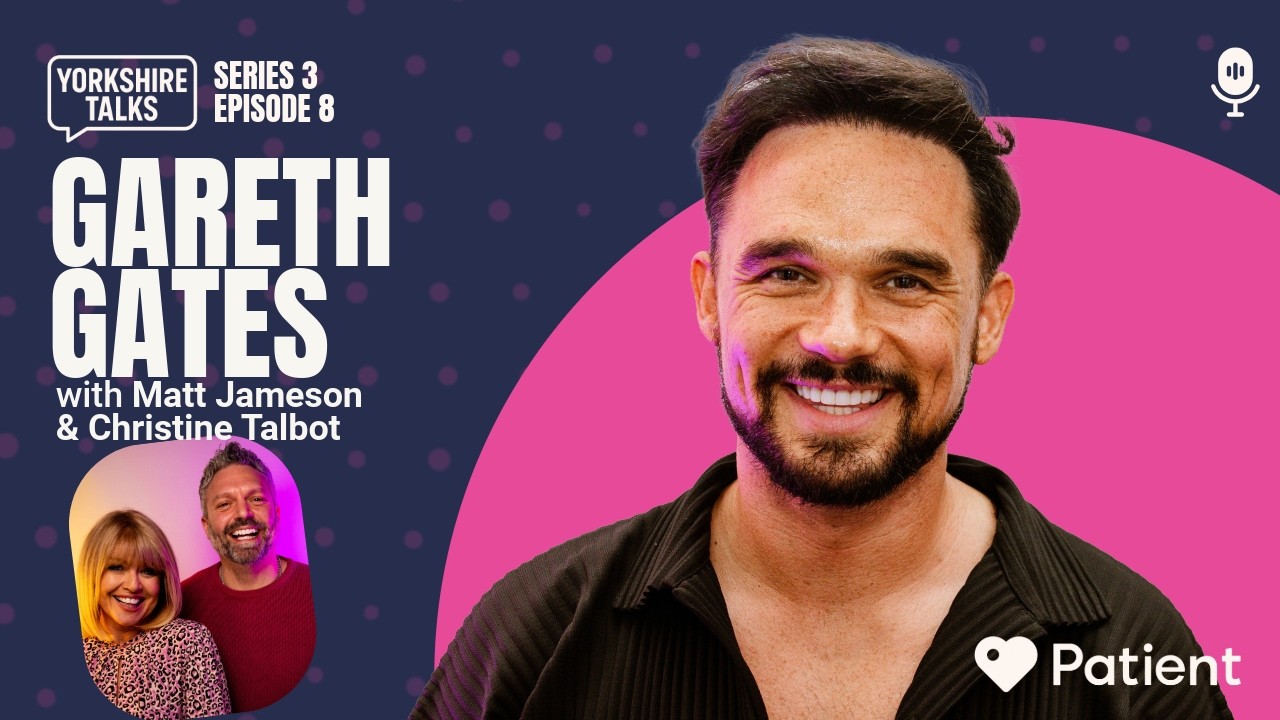
Gareth Gates: "I believed I was defective — my stammer was my superpower" | Yorkshire Talks
In our final episode of Series Three, our Yorkshire Talks guest is former Pop Idol star, producer and performer Gareth Gates. Bradford lad Gareth was first interviewed by Christine for a YTV talent show for young people nearly 30 years ago — so this episode was a bit of a reunion. Now all grown up, Gareth joins Matt and Christine to talk openly and honestly about his journey: from being bullied at school and living with a debilitating stammer, to reaching the final of the very first Pop Idol and having his whole life changed overnight. Gareth explains how taking part in the McGuire Programme has helped him manage his stammer, and how his experiences have shaped the work he does today. He also chats about his role in Boyband in the Buff, currently touring, his journey into becoming a music producer and entrepreneur, and his exciting new project — Speechless, a musical about stammering, due to hit the stage next year. Now a dad himself, with a daughter the same age he was when he first found fame, Gareth reflects on the last few decades with warmth, honesty and plenty of Yorkshire humour. 🎙️ It's a fascinating, funny and incredibly inspiring conversation — one you won't want to miss. If you enjoy the episode, don't forget to LIKE, SUBSCRIBE and leave us a comment. Follow Gareth: 📸 Instagram: @gareth_gates See Gareth on tour: 🎭 Boyband in the Buff is currently on tour. Find tour dates here: [paste official tour dates link] See Gareth in Beauty and the Beast: ✨ Gareth stars as the Beast in Beauty and the Beast at the Britannia Pier, Great Yarmouth, 8–31 December: britannia-pier.co.uk Follow the hosts: Matt Jameson: @matt_d_jameson Christine Talbot: @christineetalbot Yorkshire Talks is presented by Christine Talbot and Matt Jameson, and produced by Simon Fogal at Chapter 81 Studios in Leeds. Proudly sponsored by Patient.info.
Women's health
What it’s like to have pelvic inflammatory disease
Pelvic inflammatory disease (PID), an infection of a woman's reproductive organs affecting the womb, Fallopian tubes and ovaries, is a devastating condition that can cause chronic pain and infertility. The common condition predominantly affects women who are sexually active between the ages of 15 and 24.
by Karen Gordon

General health and lifestyle
Ideas, Concerns and Expectations - a guide to filling in your GP’s online form
Booking a GP appointment has changed. Instead of waiting on the phone line at 8am, many people now complete an online consultation form through their practice website. At first glance, it may feel like another bureaucratic hurdle. But in fact, these forms are designed to help you, and your GP team, get to the heart of your problem more quickly. The way you fill them in makes a real difference. When you provide clear, thoughtful information, it not only helps the practice decide whether something is urgent, but also ensures you are directed to the right person in the wider primary care team. That might be your GP - but it could just as easily be a nurse, a pharmacist, a physiotherapist, or another professional who can meet your needs sooner. One of the simplest tools to guide you is known as Ideas, Concerns and Expectations, or ICE.
by Thomas Andrew Porteus, MBCS
Related patient information and medicines

Patient information leaflet
Huntington's disease
Huntington's disease is a genetically inherited condition that causes parts of the brain and nervous system to stop working properly over time. It is a slowly progressive condition that interferes with the movements of your body, thinking and judgement, and can lead to a change in your behaviour. Huntington's disease is a genetically inherited.

Patient information leaflet
Genetic testing
Genetic testing is a type of medical test that identifies changes in chromosomes, genes or proteins. Genetic tests examine a person's DNA in a variety of ways to assess a person's genetic health. They are all designed to identify a particular gene that may cause a genetic disorder. What is genetic testing. Genetic testing is a type of medical test.
Patient information leaflet
Kawasaki disease
Kawasaki disease is a rare condition that affects small to medium-sized blood vessels in the body. There seems to be some genetic t... For example, parents of children with Kawasaki disease are more likely to have had the condition themselves during childhood. Also, brothers and sisters have an increased risk of developing the condition. So, a.

Patient information leaflet
Polycystic kidney disease
Polycystic kidney disease (PKD) causes many fluid-filled sacs (cysts) to develop in the kidneys. The most common type of PKD is an inherited condition called autosomal dominant polycystic kidney disease (ADPKD). The two common problems th... These usually cause no problems and are not due to polycystic kidney disease. Polycystic kidney disease is.
Patient information leaflet
Crohn's disease
Crohn's disease is a condition that causes inflammation of the wall of the gut (gastrointestinal tract). What is Crohn's disease. About 3 in 20 people with Crohn's disease have a close relative who also has it. One theory is that a germ may trigger the immune system to cause inflammation in parts of the gut (gastrointestinal tract) in people who.

Patient information leaflet
Wilson's disease
Wilson's disease is a genetic disorder in which copper builds up in the body, mainly in the liver and brain. Without any treatment, the build-up of copper can cause serious symptoms. It is a rare inherited disorder that affects about 1 in 30,000 people. It is named after Dr Samuel Wilson who fi... How is Wilson's disease inherited. Wilson's.
Further reading and references
- What does it mean to have a genetic predisposition to a disease?; MedlinePlus, National Library of Medicine.
Share your thoughts or experiences with others in our patient communities.
Simple access to trusted treatments and health services online.
Common conditions
Get help with common conditions through the NHS, without a GP appointment.





Sign up to the Patient newsletter
Your weekly dose of clear, trustworthy health advice - written to help you feel informed, confident and in control.
By subscribing you accept our Privacy Policy. You can unsubscribe at any time. We never sell your data.