What is the Precision Medicine Initiative?
Meets Patient’s editorial guidelines
- DownloadDownload
- Share
- Language
- Discussion
- Ask Patient
- Audio Version
- Add to preferred sources on Google
The Precision Medicine Initiative is a long-term research endeavor, involving the National Institutes of Health (NIH) and multiple other research centers, which aims to understand how a person's genetics, environment, and lifestyle can help determine the best approach to prevent or treat disease.
Video picks for Understanding geneticsVideo library
Overview
The Precision Medicine Initiative is a long-term research endeavor, involving the National Institutes of Health (NIH) and multiple other research centers, which aims to understand how a person's genetics, environment, and lifestyle can help determine the best approach to prevent or treat disease.
The Precision Medicine Initiative has both short-term and long-term goals. The short-term goals involve expanding precision medicine in the area of cancer research. Researchers at the National Cancer Institute (NCI) hope to use an increased knowledge of the genetics and biology of cancer to find new, more effective treatments for various forms of this disease. The long-term goals of the Precision Medicine Initiative focus on bringing precision medicine to all areas of health and healthcare on a large scale. To this end, the NIH has launched a study, known as the All of Us Research Program, which involves a group (cohort) of at least 1 million volunteers from around the United States. Participants are providing genetic data, biological samples, and other information about their health. To encourage open data sharing, participants can access their health information, as well as research that uses their data, during the study. Researchers can use these data to study a large range of diseases, with the goals of better predicting disease risk, understanding how diseases occur, and finding improved diagnosis and treatment strategies.
Patient picks for Understanding genetics
Treatment and medication
What happens when medicines interact
All my patients seem to know the rule about not drinking when you're on antibiotics - the trouble is, it isn't a rule! In fact, it's safe to drink some alcohol when you're taking most kinds of antibiotics (the antibiotic you should never drink with is metronidazole, also known as Flagyl®, by the way).
by Dr Sarah Jarvis
Treatment and medication
Making sure your medicine is safe at home
If you've ever rummaged through the back of your medicine cabinet for painkillers, you may find half-finished packs of tablets you took for a bad back some time ago, or a bottle medicine you opened a few weeks back. For #MedSafetyWeek we have a look at what you need to know about making sure your medications are safe and effective to take.
by Victoria Raw
Treatment and medication
What to do if your medication isn't available
If you take medicine then you're no stranger to regularly picking up a prescription - but what happens when it isn't available? There are many reasons why medicine may become unavailable and it's important you know what to do if this happens to your prescription.
by Victoria Raw

Treatment and medication
What is dialectical behavioural therapy (DBT)?
Adults with diagnoses characterised by emotional dysregulation (such as borderline personality disorder) run a much higher risk of self-harm and death from suicide. For people with these diagnoses, evidence-based therapies like DBT can be life-saving.
by Ellie Broughton
Treatment and medication
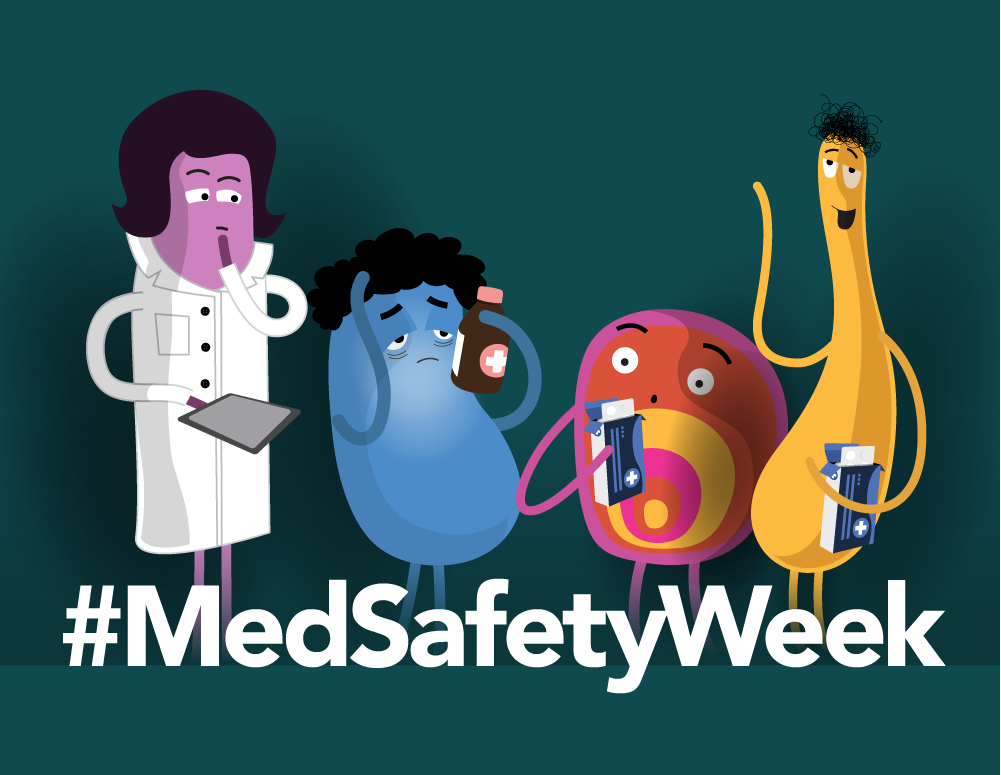
What is #MedSafetyWeek and MHRA Yellow Card scheme?
If you had a bad reaction to a medicine or medical device, or suspected it was unsafe in any way, would you know how to report it? For this #MedSafetyWeek we find out about the MHRA Yellow Card scheme - a quick and simple way of reporting suspected problems with medicine in the UK. A small action from you can keep our medicines reliable, and prevent others from future harm.
by Victoria Raw
Treatment and medication
Medicines for urinary urgency and incontinence
Urinary urgency is a symptom where you have a sudden urgent desire to pass urine and you are not able to put off going to the toilet. If you leak urine before you go to the toilet this is called incontinence. For more information see Lower Urinary Tract Symptoms in Men and Lower Urinary Tract Symptoms in Women.
by Dr Toni Hazell, FRCGP
Related patient information and medicines
Patient information leaflet
Biological medicines for rheumatoid arthritis
Biological medicines are a newer type of medicine, used to ease the symptoms of rheumatoid arthritis and reduce the damaging effect of the disease on the joints. They are usually prescribed when you have tried older medicines called disease-modifying antirheumatic drugs (DMARDs) and these have not worked so well. If a biological medicine is going.
Patient information leaflet
Extended-spectrum beta-lactamases
Extended-spectrum beta-lactamases (ESBLs) have so far only been reported in certain bacteria called Gram-negative bacterial infections. What are extended-spectrum beta-lactamases. Extended-spectrum beta-lactamases (ESBLs) are chemicals (enzymes) that can be made by some germs (bacteria). The ESBLs can make some antibiotics ineffective. This makes.
Patient information leaflet
Medicines for urinary urgency and incontinence
This has the effect of relaxing the bladder muscles. Editor's note Dr Krishna Vakharia , 13th September 2024 Vibegron for treating symptoms of overactive bladder syndrome The National Institute for Health and Care Excellence (NICE) is recommending Vibegron as an option for treating the symptoms of overactive bladder syndrome in adults. It is only.
Patient information leaflet
Antibiotics
Antibiotics are medicines that treat bacterial infections, but they don’t affect viruses (like colds or flu). Using the right antibiotic correctly and completing the full course helps ensure recovery and prevent resistance. Key points Antibiotics are medicines used to treat or prevent bacterial infections - they do not work against viral.
Patient information leaflet
Bupropion for quitting smoking
If you want to stop smoking, taking bupropion (trade name Zyban®) roughly doubles your chance of success. What is bupropion. Bupropion (Zyban®) Bupropion tablets for help stopping smoking is a medicine that was first developed to treat depression. It was found that it helped smokers to stop smoking. It seems to relieve the withdrawal symptoms that.
Patient information leaflet
Cannabis-based medicinal products
Since a change in the law in 2018, some cannabis-based medicines have been available on prescription in the UK. However, there is only evidence of benefit for treating a small number of conditions. Many cannabis-based products are also available to buy online, without a prescription, but the quality and content of these products is not known. Some.
Further reading and references
- What is the Precision Medicine Initiative?; MedlinePlus, National Library of Medicine.
Share your thoughts or experiences with others in our patient communities.
Simple access to trusted treatments and health services online.
Common conditions
Get help with common conditions through the NHS, without a GP appointment.





Sign up to the Patient newsletter
Your weekly dose of clear, trustworthy health advice - written to help you feel informed, confident and in control.
By subscribing you accept our Privacy Policy. You can unsubscribe at any time. We never sell your data.