Is the probability of having twins determined by genetics?
Meets Patient’s editorial guidelines
- DownloadDownload
- Share
- Language
- Discussion
- Ask Patient
- Audio Version
- Add to preferred sources on Google
The likelihood of conceiving twins is a complex trait, meaning that it is affected by multiple genetic and environmental factors, depending on the type of twins. The two types of twins are classified as monozygotic and dizygotic.
Video picks for Understanding geneticsVideo library
Overview
The likelihood of conceiving twins is a complex trait, meaning that it is affected by multiple genetic and environmental factors, depending on the type of twins. The two types of twins are classified as monozygotic and dizygotic.
Monozygotic (MZ) twins, also called identical twins, occur when a single egg cell is fertilized by a single sperm cell. The resulting zygote splits into two very early in development, leading to the formation of two separate embryos. MZ twins occur in 3 to 4 per 1,000 births worldwide. Research suggests that most cases of MZ twinning are not caused by genetic factors. However, a few families with a larger-than-expected number of MZ twins have been reported, which indicates that genetics may play a role. It is possible that genes involved in sticking cells together (cell adhesion) may contribute to MZ twinning, although this hypothesis has not been confirmed. Most of the time, the cause of MZ twinning is unknown.
Dizygotic (DZ) twins, also called fraternal twins, occur when two egg cells are each fertilized by a different sperm cell in the same menstrual cycle. DZ twins are about twice as common as MZ twins, and they are much more likely to run in families. Compared to the general population, having DZ twins is about two times more likely if a close relative (for example, a sister) has had DZ twins.
DZ twinning is thought to be a result of hyperovulation, which is the release of more than one egg in a single menstrual cycle. To explain how DZ twinning can run in families, researchers have looked for genetic factors that increase the chance of hyperovulation. However, studies examining the contributions of specific genes have had mixed and conflicting results. Few specific genes in humans have been definitively linked with hyperovulation or an increased probability of DZ twinning.
Other factors known to influence the chance of having DZ twins include the mother’s age, ethnic background, diet, body type, and number of other children. Assisted reproductive technologies such as in vitro fertilization (IVF) are also associated with an increased frequency of DZ twins.
Patient picks for Understanding genetics

Pregnancy
Multiple pregnancy
In a multiple pregnancy, there is more than one baby growing in the womb (uterus) at the same time. Being pregnant with twins is the most common example. Both mother and babies need extra monitoring during pregnancy as the risks are higher than in a singleton pregnancy.
by Dr Toni Hazell, FRCGP

Podcasts
The parental minefield
How often have you said something quite ordinary to a parent, or they’ve said something to you and suddenly the room feels like it’s about to explode? Welcome to the parental nightmare. It’s not just about conflict, it’s about what’s hidden underneath these relationships – family secrets, unspoken stories, patterns of behaviour passed from one generation to the next. In this episode Clare and Aileen explore the complex, often lifelong, relationship we have with our parents and discuss practical strategies to help you navigate this important relationship.
by Thomas Andrew Porteus, MBCS
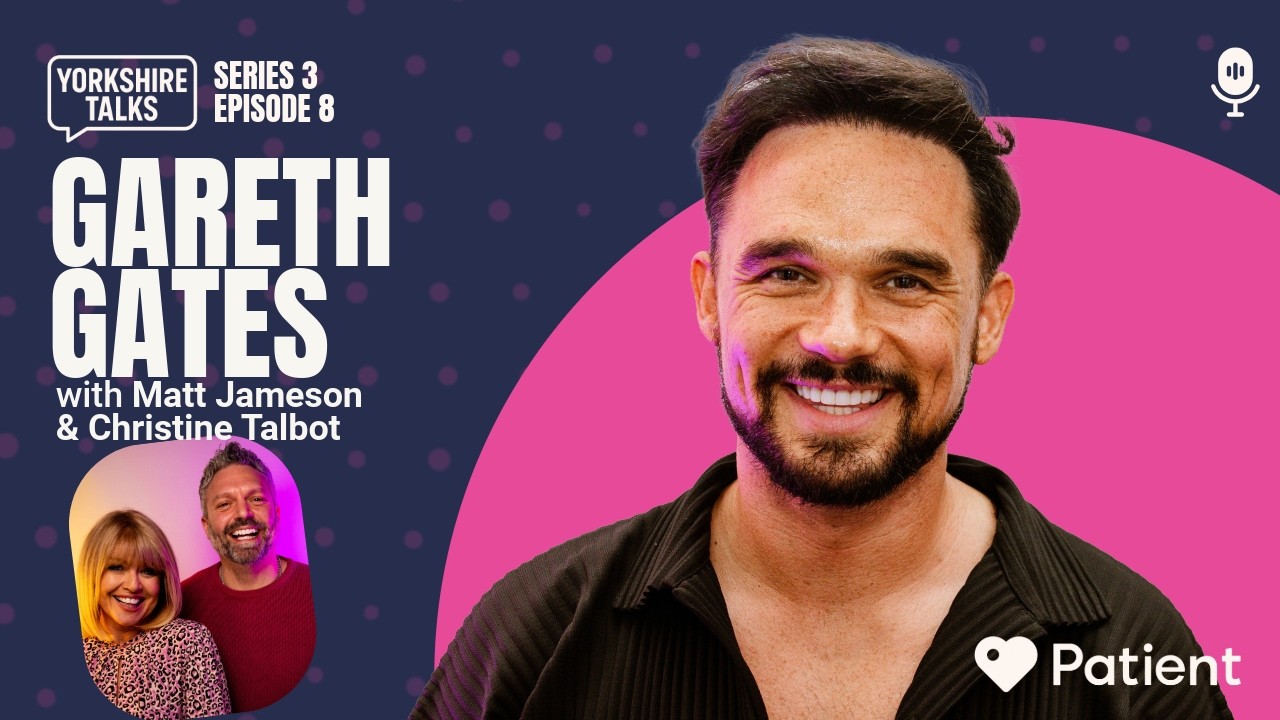
Yorkshire talks series 3
Gareth Gates: "I believed I was defective — my stammer was my superpower" | Yorkshire Talks
In our final episode of Series Three, our Yorkshire Talks guest is former Pop Idol star, producer and performer Gareth Gates. Bradford lad Gareth was first interviewed by Christine for a YTV talent show for young people nearly 30 years ago — so this episode was a bit of a reunion. Now all grown up, Gareth joins Matt and Christine to talk openly and honestly about his journey: from being bullied at school and living with a debilitating stammer, to reaching the final of the very first Pop Idol and having his whole life changed overnight. Gareth explains how taking part in the McGuire Programme has helped him manage his stammer, and how his experiences have shaped the work he does today. He also chats about his role in Boyband in the Buff, currently touring, his journey into becoming a music producer and entrepreneur, and his exciting new project — Speechless, a musical about stammering, due to hit the stage next year. Now a dad himself, with a daughter the same age he was when he first found fame, Gareth reflects on the last few decades with warmth, honesty and plenty of Yorkshire humour. 🎙️ It's a fascinating, funny and incredibly inspiring conversation — one you won't want to miss. If you enjoy the episode, don't forget to LIKE, SUBSCRIBE and leave us a comment. Follow Gareth: 📸 Instagram: @gareth_gates See Gareth on tour: 🎭 Boyband in the Buff is currently on tour. Find tour dates here: [paste official tour dates link] See Gareth in Beauty and the Beast: ✨ Gareth stars as the Beast in Beauty and the Beast at the Britannia Pier, Great Yarmouth, 8–31 December: britannia-pier.co.uk Follow the hosts: Matt Jameson: @matt_d_jameson Christine Talbot: @christineetalbot Yorkshire Talks is presented by Christine Talbot and Matt Jameson, and produced by Simon Fogal at Chapter 81 Studios in Leeds. Proudly sponsored by Patient.info.

Podcasts
What is sex anyway?
Sex is everywhere, right? Clare and Janet kick off the season by discussing the fundamentals about sex… why do we do it and what is it for?!
by Thomas Andrew Porteus, MBCS
Podcasts
Beyond human
Have you’ve ever felt transformed after a walk by the sea or in the woods? Have you’ve ever found yourself reaching for the biscuit tin when anxious rather than hungry, or noticed how your pet knows when you are feeling low? This podcast is for you. Clare and Aileen take you on a tour of some of those relationships we often don’t think about but matter deeply. From pets and nature to time, food and even life and the divine, these relationships have the ability to shape our lives, comfort us, challenge us and sometimes reveal parts of ourselves we didn’t know were there.
by Thomas Andrew Porteus, MBCS
Podcasts
Making work work
Work can take up so much of our waking hours but how often do we look at our relationship with work. Are you a workaholic or just going through the motions? Does it inspire or drain you? What about the people we work with: colleagues, managers and those unrequited crushes or unwanted attentions? When it comes to work, things can get complicated. Clare and Aileen delve into the tangled world of work to help you think about your relationship with work and give tips on how to navigate those complex relationships in the workplace.
by Thomas Andrew Porteus, MBCS
Related patient information and medicines
Patient information leaflet
Multiple pregnancy
Being pregnant with twins is the most common example. It immediately starts dividing, quickly increasing the number of cells. ... If you are expecting twins or more you are likely to be offered a tour of the baby units at the hospital where you plan to give birth. There is a small chance they could be amongst the one third of identical twin.
Patient information leaflet
Anorexia nervosa
Dr Sarah Jarvis MBE, GP and Clinical Director of Patient.info Anorexia nervosa is an eating disorder. Find out more here: [https://patient.info/health/eating-disorders/a... All sorts of emotions, feelings and attitudes may contribute to causing anorexia. Genetics Some studies of families with identical twins showed that if one twin has anorexia.

Patient information leaflet
Pre-eclampsia
This is assumed to trigger the release of substances that then affect the mother's blood vessels... There is a genetic component to pre-eclampsia, HELLP syndrome and eclampsia - this might be to do with the genetics of mother or of the baby (and the placenta). These conditions are also more common if you are having twins or more , and in a.

Patient information leaflet
Infertility treatments
Dr Krishna Vakharia , 16th October 2023 The National Institute for Health and Care Excellence (NICE) has recommended for those people specifically affected by treatment that could damage their ovaries and cause infertility, could be considered for surgery that removes and... Possible complications of infertility treatments Multiple pregnancy Twins.
Patient information leaflet
Feeding premature babies
This ... Once the baby's guts are more developed or settled, then tube-feeding can gradually replace TPN. Feeding problems in premature babies Feeding more than one baby If you are having twins or triplets or more then they are more likely to be born early. The feeding principles are all exactly the same, but the logistics can be more challenging..

Patient information leaflet
Premature labour
These may be taken as tablets, or given through a drip: To buy time while yo... In women having twins (or more babies) Tocolytics are not routinely recommended for women having twins or triplets because it is not clear that they are beneficial for the babies in that situation. Prevention In some circumstances, particularly if you have had a baby.
Further reading and references
- Is the probability of having twins determined by genetics?; MedlinePlus, National Library of Medicine.
- Boomsma DI. The Genetics of Human DZ Twinning. Twin Res Hum Genet. 2020 Apr;23(2):74-76. doi: 10.1017/thg.2020.15. Epub 2020 May 8. PMID: 32383427.
- Duffy DL, Martin NG. The Heritability of Twinning in Seven Large Historic Pedigrees. Twin Res Hum Genet. 2022 Apr;25(2):63-66. doi: 10.1017/thg.2022.14. Epub 2022 May 20. PMID: 35593089.
- Mbarek H, Steinberg S, Nyholt DR, Gordon SD, Miller MB, McRae AF, Hottenga JJ, Day FR, Willemsen G, de Geus EJ, Davies GE, Martin HC, Penninx BW, Jansen R, McAloney K, Vink JM, Kaprio J, Plomin R, Spector TD, Magnusson PK, Reversade B, Harris RA, Aagaard K, Kristjansson RP, Olafsson I, Eyjolfsson GI, Sigurdardottir O, Iacono WG, Lambalk CB, Montgomery GW, McGue M, Ong KK, Perry JR, Martin NG, Stefánsson H, Stefánsson K, Boomsma DI. Identification of Common Genetic Variants Influencing Spontaneous Dizygotic Twinning and Female Fertility. Am J Hum Genet. 2016 May 5;98(5):898-908. doi: 10.1016/j.ajhg.2016.03.008. Epub 2016 Apr 28. PubMed: 27132594.
- Monden C, Pison G, Smits J. Twin Peaks: more twinning in humans than ever before. Hum Reprod. 2021 May 17;36(6):1666-1673. doi: 10.1093/humrep/deab029. PubMed: 33709110. Free full-text available from PubMed Central: PMC8129593.
- van Dongen J, Hubers N, Boomsma DI. New insights into the (epi)genetics of twinning. Hum Reprod. 2024 Jan 5;39(1):35-42. doi: 10.1093/humrep/dead131. PMID: 38052159. Free full-text available from PubMed Central: PMC10767898.
Share your thoughts or experiences with others in our patient communities.
Simple access to trusted treatments and health services online.
Common conditions
Get help with common conditions through the NHS, without a GP appointment.





Sign up to the Patient newsletter
Your weekly dose of clear, trustworthy health advice - written to help you feel informed, confident and in control.
By subscribing you accept our Privacy Policy. You can unsubscribe at any time. We never sell your data.