
How to get rid of trapped wind: home remedies that work
Peer reviewed by Dr Colin Tidy, MRCGPAuthored by Josh AldermanOriginally published 6 Nov 2025
Meets Patient’s editorial guidelines
- DownloadDownload
- Share
- Language
- Discussion
- Ask Patient
- Audio Version
- Add to preferred sources on Google
Most people experience trapped wind from time to time. It’s that bloated, uncomfortable feeling in your stomach or chest that just won’t shift. It’s usually harmless, but it can be embarrassing and sometimes quite painful.
The good news is that a few simple home remedies and lifestyle tweaks can make a big difference.
Video picks for General digestive healthVideo library
Trapped wind happens when gas builds up in your digestive system. This can come from swallowing air when you eat or drink, or as a by-product of digestion when food breaks down in your gut.
Knowing what causes trapped wind can help you choose the right remedies to get rid of it.
Trapped wind remedies
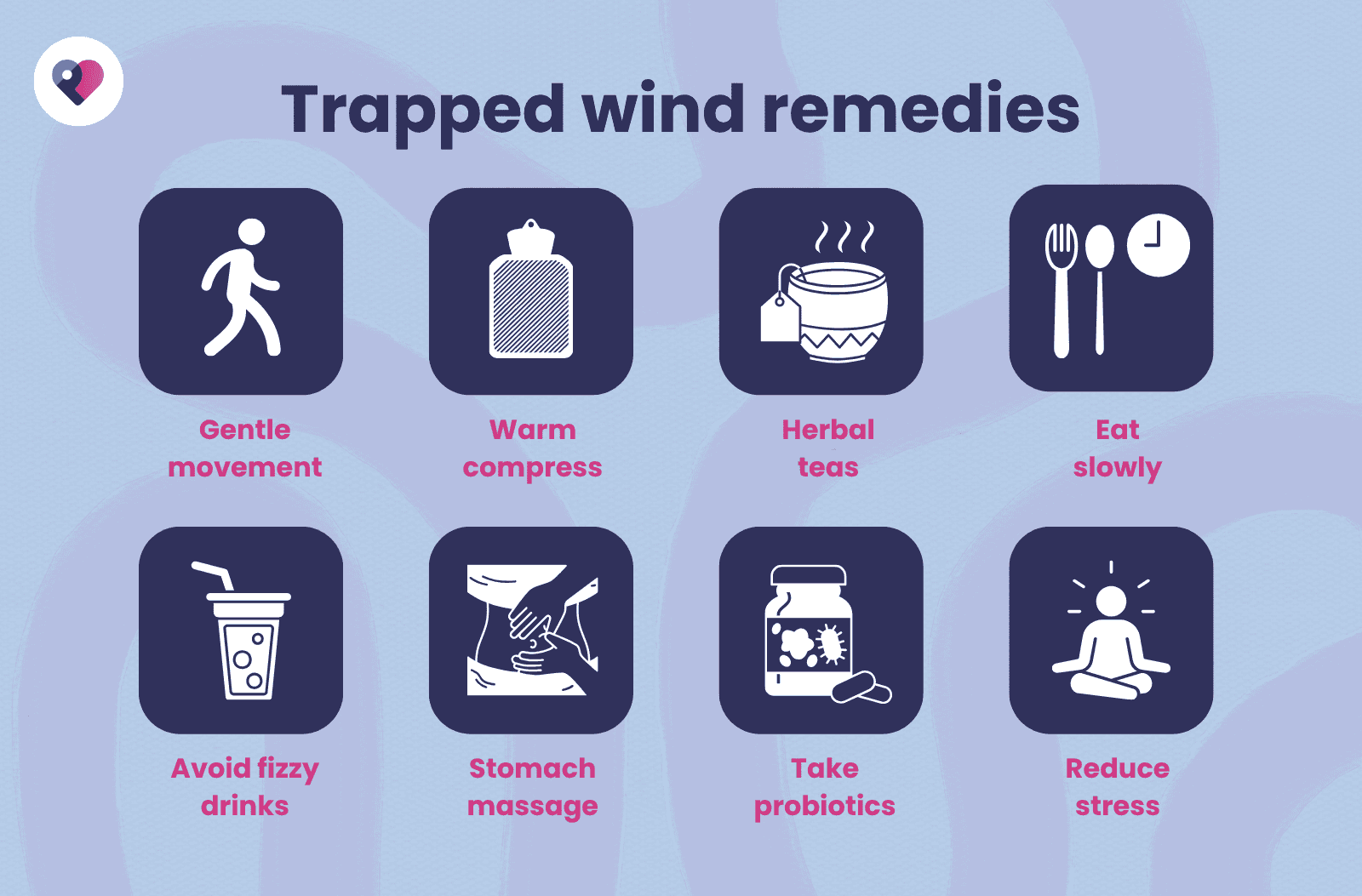
Home remedies for trapped wind
1. Gentle movement
Light exercise such as walking or stretching can help move gas through your digestive tract, providing quick relief. Yoga poses such as ‘wind-relieving pose’ - aptly named - can be particularly effective.
Even a short 10-minute walk after meals can help your body process food and reduce bloating.
2. Warm compress
A warm compress or hot water bottle placed on your stomach can help relax your muscles and reduce discomfort.
The warmth improves blood flow to the area, making it easier for gas to move through your gut.1
3. Herbal teas
Certain herbal teas are known for easing digestive discomfort. Peppermint, chamomile, fennel, and ginger teas can help relax your digestive system and reduce bloating.2
Sip slowly after meals for the best results.
4. Avoiding fizzy drinks and chewing gum
Carbonated drinks introduce extra air into your digestive system, while chewing gum can cause you to swallow air. Both can worsen trapped wind and bloating.
Try replacing fizzy drinks with still water and skip the gum if you’re prone to bloating.
5. Eating more slowly
Rushing your meals or eating on the go means you’re likely swallowing air along with your food. Take smaller bites, chew thoroughly, and try not to talk while eating.
This simple change can reduce the amount of air in your digestive system.
6. Massaging your abdomen
Gently massaging your abdomen in a circular motion can encourage trapped gas to move through your intestines.
Start on the lower right side of your stomach and move up, across, and down again in the direction of your colon.
7. Adjusting your diet
If you frequently experience trapped wind, consider keeping a food diary to identify triggers, and adjust your diet accordingly. Reducing your intake of high-fibre foods, dairy, or artificial sweeteners - such as sorbitol - may also help.3
You might also try smaller, more frequent meals rather than large ones, which can be easier for your body to digest.
8. Probiotics
Probiotics are live bacteria that support gut health and may reduce symptoms such as bloating and trapped wind, particularly in people with IBS.
You can find probiotics in yoghurts, fermented foods such as kefir or sauerkraut, or in supplement form.
9. Over-the-counter remedies
If lifestyle changes aren’t enough, over-the-counter products containing simeticone (an anti-foaming agent) can help break down gas bubbles in your gut, making them easier to pass.
Speak to your pharmacist about which options are suitable for you.
10. Managing anxiety
Stress and anxiety can affect your digestive system, sometimes worsening trapped wind.
Relaxation techniques such as deep breathing, mindfulness, or gentle exercise can help calm your digestive system and reduce symptoms.
When to see a doctor for trapped wind
Trapped wind is usually nothing to worry about, but if your symptoms are frequent, severe, or accompanied by other issues like weight loss, being sick (vomiting), or changes in your bowel habits, speak to your doctor.
These could be signs of an underlying digestive condition such as IBS, coeliac disease, or an infection.
Summary
Trapped wind can often be relieved with simple home remedies. Moving your body, warm compresses, and herbal teas such as peppermint or ginger help ease bloating and move trapped gas through your digestive system.
Eating slowly, avoiding fizzy drinks, and gentle abdominal massage can also reduce discomfort.
If your symptoms persist or you’re unsure what’s causing them, speak with a healthcare professional for advice.
Managing trapped wind effectively is often about understanding your body - and giving your digestive system the support it needs to function smoothly.
Further reading
Patient picks for General digestive health
Diet and nutrition
What is your gut microbiome?
Let’s talk about something small that has a big impact on your health - the gut microbiome. This hidden universe of microbes plays an important role in your wellbeing. How you treat these tiny residents can make a world of difference to how you feel.
by Victoria Raw
Digestive health
What is the link between IBS and anxiety?
Irritable bowel syndrome (IBS) can cause a combination of tummy cramps, diarrhoea, bloating and constipation. It's a long-term health condition that can affect your quality of life. Although changing your diet and taking certain medicines can help, poor mental health and IBS symptoms can mutually aggravate each other.
by Victoria Raw

Signs and symptoms
Trapped wind, gas and bloating
Trapped wind is common and happens when gas builds up in the stomach or intestines, causing bloating, burping, or farting. Everyone has a certain amount of gas in the gut but for some people, larger amounts of gas are produced.
by Dr Hayley Willacy, FRCGP

General health and lifestyle
How does IBS affect people at work?
Balancing work with irritable bowel syndrome (IBS) can pose great challenges, particularly as IBS is often linked to anxiety and stress. IBS symptoms can take a real toll on a person's physical and mental well-being, especially when they might require accommodations but feel too embarrassed to confide in colleagues or employers who don't understand.
by Emily Jane Bashforth

Eye health
How to look after your eyes while working from home
Eye strain has become increasingly common following advances in technology. 95% of households now own at least one mobile phone - yet just a generation (25 years) ago, more than 5 in 6 households didn't have a single mobile between them. As for computers, household ownership has increased from 27% in 1995 to almost 90% today. We're spending more time staring at screens, possibly more than ever now that many employees are working from home. However, it's important we don't let our eyes suffer as a result.
by Emily Jane Bashforth

General health and lifestyle
How has working from home affected our mental health?
There was a time when working from home simply wasn't an option for many of us. However, the past 18 months have represented a huge shift in the way businesses operate. As a result, many of us now find ourselves in a world of hybrid and flexible working. But what has working from home done to our mental health?
by Emily Jane Bashforth
About the authorView full bio
Authored by

Josh Alderman
SEO Executive
BA (Hons) Media and Print Journalism
Josh is an SEO executive at Patient with over 4 years experience working within the healthcare sphere.
About the reviewerView full bio

Dr Colin Tidy, MRCGP
General Practitioner, Medical Author
MBBS, MRCGP, MRCP (Paediatrics), DCH
Dr Colin Tidy is an NHS Doctor, based in Oxfordshire.
Article history
Article also available in English, German, Spanish, French, Italian, Portuguese, Hindi, Hebrew, Arabic, and Swedish.
Next review due: 6 Nov 2025
6 Nov 2025 | Originally published
Authored by:
Josh AldermanPeer reviewed by
Dr Colin Tidy, MRCGP
Share your thoughts or experiences with others in our patient communities.
Sign up to the Patient newsletter
Your weekly dose of clear, trustworthy health advice - written to help you feel informed, confident and in control.
By subscribing you accept our Privacy Policy. You can unsubscribe at any time. We never sell your data.