
How an underactive thyroid affects fertility
Peer reviewed by Dr Sarah JarvisAuthored by Allie AndersonOriginally published 21 Dec 2017
Meets Patient’s editorial guidelines
- DownloadDownload
- Share
- Language
- Discussion
- Ask Patient
- Audio Version
- Add to preferred sources on Google
Most people would be forgiven for assuming that a woman's ability to fall pregnant is determined by what goes on in her reproductive organs. But there’s an important group of hormones that have a far greater influence on fertility than they're given credit for. We should be looking for clues not down below, but in the neck - at the thyroid.
This small, butterfly-shaped gland that sits just behind the Adam's apple is important for female reproduction, both before conception and throughout pregnancy.
Explore treatment for an underactive thyroid
Get expert healthcare advice from the comfort of home. Complete a quick online consultation, available 24/7, with your request reviewed by a UK-registered clinician. Next day delivery available on eligible treatments.

Video picks for FertilityVideo library
Your thyroid gland
The thyroid gland produces two hormones: thyroxine (sometimes called T4) and triiodothyronine (T3). Among other things, the thyroid hormones regulate metabolism.
The most common thyroid disorder is an underactive thyroid gland, known as hypothyroidism, where the gland doesn't produce enough thyroxine. It's usually diagnosed after an abnormally high reading on a thyroid-stimulating hormone (TSH) blood test.
Typically, hypothyroidism manifests in quite vague symptoms, like tiredness, depression, weight gain and sensitivity to cold; generally, people feel a bit run down, as though things have just slowed down, and this can have an indirect affect on reproduction.
"An underactive thyroid gland makes everything in the body a bit more sluggish, and that includes the way the ovaries work, and probably the health of the very early pregnancy," explains Dr Karen Morton, consultant gynaecologist and obstetrician for Dr Morton's - the medical helpline.
But the link between fertility and thyroid function is, in fact, more direct than many people think.
Thyroid health and fertility
Hypothyroidism can interact with other important processes that are responsible for making and releasing two crucial reproductive hormones: follicle-stimulating hormone (FSH) and luteinising hormone (LH).
In women, FSH - as the name suggests - stimulates the follicles of the ovary to grow in preparation for releasing an egg, while LH helps to regulate the menstrual cycle and ovulation. An imbalance of these hormones affects ovulation and is a major cause of female fertility problems.
Hypothyroidism can have a direct effect on these hormones: a deficiency in thyroxine leads to lower levels of FSH and LH in the blood.
Some studies have found that subfertile women - those who haven't conceived after a year of regular, unprotected sex - tend to have higher levels of TSH and increased rates of hypothyroidism than women who conceive without difficulty. In addition, pregnancy rates tend to be lower in women with raised TSH levels.
Once a woman falls pregnant, the thyroid's job continues by contributing to the normal growth of the baby in a number of ways, including the transfer of crucial thyroxine from the mother to the baby through the placenta.
"Thyroid hormones affect the growth of your baby's brain early on during the pregnancy," adds Simon Pearce, professor of endocrinology at the University of Newcastle. "Abnormal circulating thyroid hormone levels in the mother during pregnancy are associated with poor pregnancy outcomes such as miscarriage."
When should treatment be considered?
Thankfully, hypothyroidism can be treated very simply, by taking daily medication called levothyroxine that replaces the thyroxine (T4) hormone your body isn't producing sufficiently. The problem is that often, subfertile women don't know they might have an underactive thyroid gland, and many doctors don't look for it.
Dr Jane Stewart, secretary of the British Fertility Society, explains that when hypothyroidism has the effect of reducing fertility, physical symptoms will typically be present - and it's those symptoms that prompt doctors to investigate thyroid function.
"Hypothyroidism may result in menstrual irregularities and reduced fertility because of reduced ovulation [but] it would usually be clinically evident, and if appropriately replaced those effects would be reversed," she says. "Consequently, screening for thyroid problems for fertility purposes is not recommended."
However, as Professor Pearce highlights, symptoms of hypothyroidism are nonspecific, usually develop over several years and could indicate any number of other medical problems. "One study showed that 20% of people with fully normal thyroid blood tests had four or more symptoms of thyroid underactivity," he says.
As such, he suggests that doctors adopt a strategy of "aggressive case finding" when a woman is having unexplained fertility problems.
That means if you've had any hint of a thyroid problem before, if anyone in your family has had a thyroid problem, or if you have a disease that puts you at risk of a thyroid problem - for instance type 1 diabetes or coeliac disease - then you should definitely have a thyroid blood test before pregnancy."
Women with a history of miscarriage or any other obstetric problem should also be investigated, he says.
Optimising thyroid health for conception and beyond
Women with diagnosed hypothyroidism who are planning a pregnancy should have their thyroid hormone and TSH levels checked and, if required, their treatment adjusted.
"We like the thyroxine level to be a bit higher during pregnancy than in the non-pregnant situation, and the same applies with trying to get pregnant," says Dr Morton.
She also recommends all women have a thyroid function test if they've been trying to get pregnant for more than six months, even though the NHS does not endorse routine fertility-related thyroid testing.
A 2015 study makes the case for universal thyroid screening for women who are subfertile or experience recurrent early pregnancy loss, concluding that the risks of "significant effects on reproduction from to conception to birth ... can be significantly reduced if not ameliorated".
That may be a way off, but women struggling to get pregnant should adopt a healthy diet and lifestyle - whether or not they have or suspect a thyroid problem. And if they do, a good starting point is to talk with their GP.
Patient picks for Fertility

Hormones
How to tell if you have an underactive thyroid
Hypothyroidism - an underactive thyroid gland - can result in everything from weight gain to depression, and according to the NHS affects one in 70 women and one in 1,000 men. We talk to a GP about effective diagnosis and treatment.
by Julian Turner
Healthy living
How modern life affects your weight - beyond diet and exercise
If our bodies are designed to regulate our weight, why are more people living with obesity than ever before? Our genes haven't changed significantly over recent decades, but our environment, lifestyles, and individual biology all influence how our bodies regulate hunger, burn energy, and store fat. Understanding these factors can help explain why managing weight is more difficult for some people than others, even when they're trying to make healthier choices.
by Dr Caroline Butler

Sexual health
Video: How does PID affect fertility?
Whether the cause of your pelvic inflammatory disease is as a result of an STI or not, you're bound to have a lot of questions about your condition. Our experts are here to help.
by Dr Sarah Jarvis
Hormones
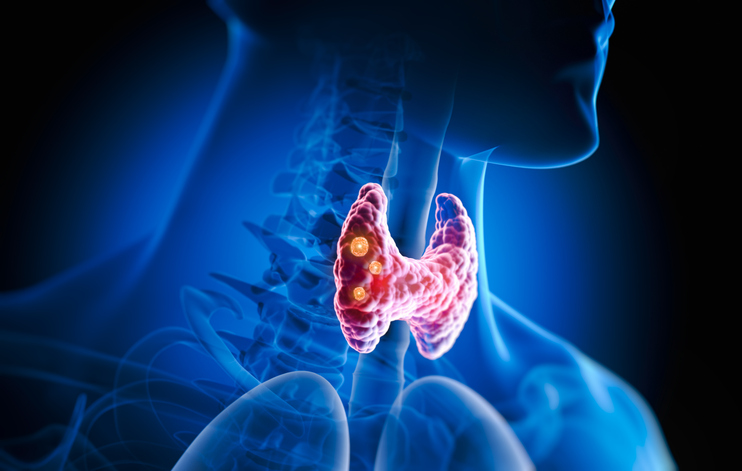
Underactive thyroid gland
If you have an underactive thyroid gland, the condition is called hypothyroidism. In hypothyroidism, there is a reduced level of thyroid hormone in the body. This can cause various symptoms, the most common being tiredness, weight gain, constipation, aches, dry skin, lifeless hair and feeling cold. Treatment usually involves taking a daily tablet of thyroid hormone to replace the missing thyroxine. Treatment works very well for most people with hypothyroidism but is required for life.
by Dr Colin Tidy, MRCGP

Hormones
Thyroid and parathyroid problems
This leaflet gives a brief overview of the thyroid and parathyroid glands and the common medical problems which can occur with these.
by Dr Caroline Wiggins, MRCGP
Hormones
Goitre
A goitre (pronounced goy-ter, sometimes spelt as 'goiter') is an enlarged thyroid gland. This gives you a lump at the front of your neck. Some people with a goitre have an underactive or overactive thyroid gland. This means that they make too much or too little thyroid hormone. There are various causes of goitre and treatment depends on the cause.
by Dr Rachel Hudson, MRCGP
About the authorView full bio
Authored by

Allie Anderson
Freelance Journalist
NCTJ
Allie Anderson is an NCTJ-qualified journalist with many years of experience writing and editing for a range of publishers.
About the reviewerView full bio

Dr Sarah Jarvis
Clinical Consultant
MA (Cantab), BM, BCh (Oxon), DRCOG, FRCGP, MBE
After training in medicine at Cambridge and Oxford, Dr Sarah Jarvis MBE became a GP.
Article history
Article also available in English, German, Spanish, French, Italian, Portuguese, Hindi, Hebrew, Arabic, and Swedish.
21 Dec 2017 | Originally published
Authored by:
Allie AndersonPeer reviewed by
Dr Sarah Jarvis
Share your thoughts or experiences with others in our patient communities.
Sign up to the Patient newsletter
Your weekly dose of clear, trustworthy health advice - written to help you feel informed, confident and in control.
By subscribing you accept our Privacy Policy. You can unsubscribe at any time. We never sell your data.