What it's really like to live with rosacea
Peer reviewed by Dr Sarah JarvisAuthored by Abi MillarOriginally published 22 Jun 2018
Meets Patient’s editorial guidelines
- DownloadDownload
- Share
- Language
- Discussion
- Ask Patient
- Audio Version
- Add to preferred sources on Google
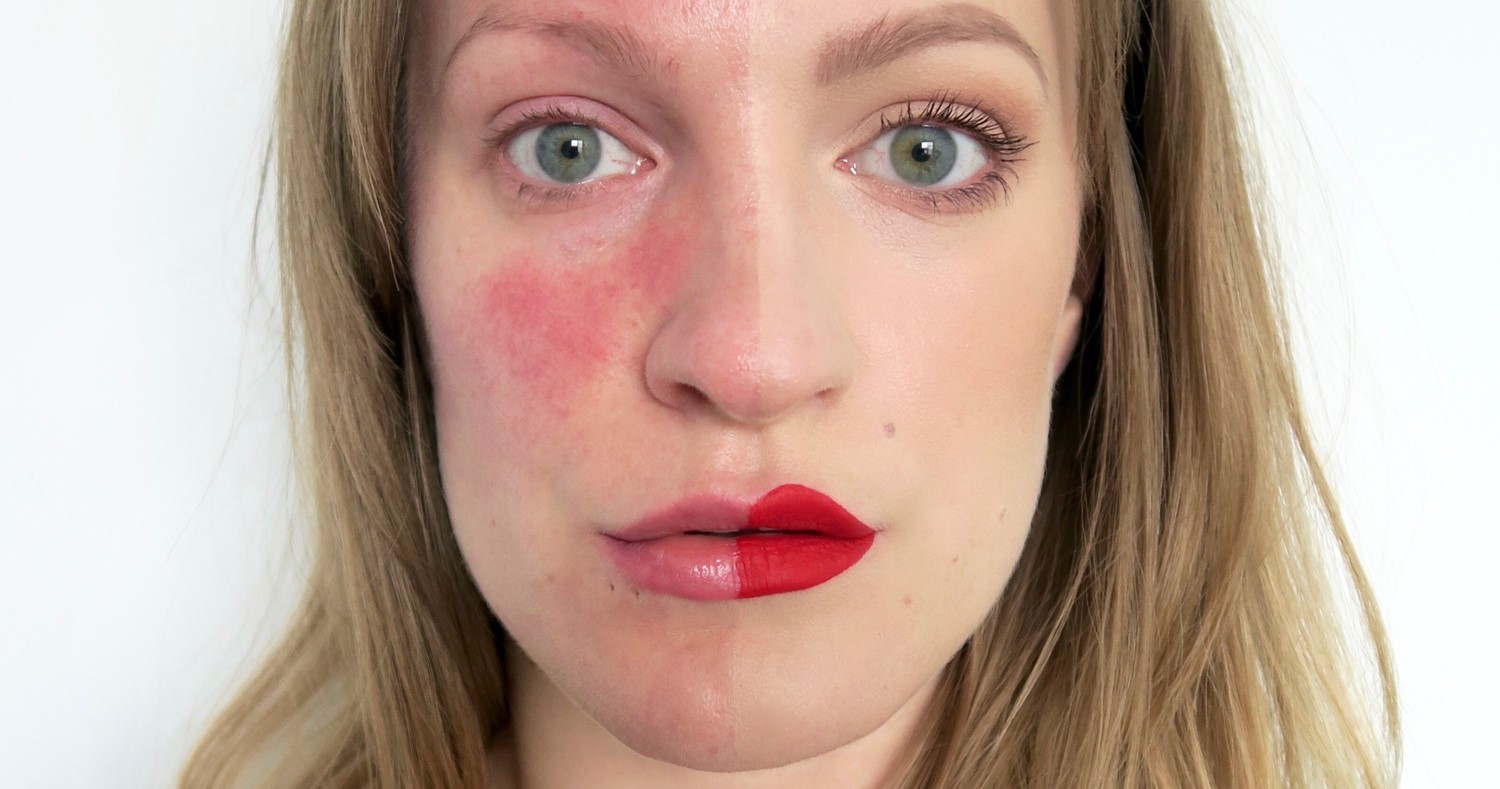
When Lex Gillies was 21, she went to the doctor with symptoms she describes as 'unbearable'. Over the previous three years, her always-sensitive skin had become increasingly prone to flushing, and that flushing was taking longer to go down.
Explore rosacea treatments
Get expert healthcare advice from the comfort of home. Complete a quick online consultation, available 24/7, with your request reviewed by a UK-registered clinician. Next day delivery available on eligible treatments.

Video picks for Skin rashesVideo library
"I began to get pustules wherever the redness appeared and my skin became so dry that it would flake and crack," she says. "The doctor knew as soon as I walked in that I had rosacea - a word I had never even heard before - and he prescribed a metronidazole cream, which my skin hated, and a thick emollient cream."
Lex was suffering with a common inflammatory skin condition, characterised by facial skin sensitivity, redness, burning sensations and small red bumps known as papules. While rosacea can affect anybody, it is most commonly seen in fair-skinned individuals between 30 and 60 years old.
Women are more likely to develop the condition than men (one UK study placed the proportion of female sufferers at 61.5%) but men may be affected more severely. Men are more prone, for instance, to rhinophyma - a thickening of the skin of the nose.
For Lex, who was young to be dealing with rosacea, the diagnosis came as a serious blow.
"I think I was quite unlucky with my first doctor: he was dismissive of the way that my rosacea made me feel and told me that if I was serious about treating my rosacea I would remove every potential trigger immediately," she says. "Telling a young girl at university that she should stop drinking alcohol, eat healthily, stop wearing make-up, get eight hours of sleep a night, and avoid stressful situations is not realistic! I wish that I'd known that I could ask for another doctor if I didn't feel that the current one was working out for me. Later experiences with doctors showed me that they could be empathetic, understanding and really helpful."
Lex Gillies
Managing the condition
Now 33, Lex is an ambassador for the British Skin Foundation and writes about living with rosacea (and nail art) in her blog Talonted Lex. Although she is not 'cured' - rosacea, unfortunately, is a chronic condition - she has made a number of lifestyle changes and has learnt what exacerbates her symptoms.
"I have drastically altered my diet, my drinking habits, my skincare and make-up routine, and made impactful changes to my everyday habits," she says. "The biggest change for me was finding my triggers. It can be a laborious and seemingly endless task, but once you know what your skin loves and hates, you can start to make sensible and realistic choices."
Although the cause of rosacea is unknown, it is thought to stem from a number of factors: genetic predisposition, coupled with undefined environmental and inflammatory triggers that cause the blood vessels in the face to readily dilate. The exact triggers vary from person to person, but can include alcohol, stress, temperature, hot drinks and spicy foods.
According to Dr Anjali Mahto, consultant dermatologist and British Skin Foundation spokesperson, there are various ways of reducing symptom severity.
"Oral antibiotics, topical treatments, anti-flushing medication and laser therapies can all treat rosacea but must be used under the guidance of your dermatologist or doctor," she says. "It's extremely important to use sunscreen daily to help manage your rosacea, as UV radiation is one of the common triggers. Ideally, an SPF of 50 should be worn that provides broad-spectrum UVA and UVB protection. Avoid using perfumed soaps and use an emollient as an alternative. It's best to stick to unperfumed moisturiser too."
Lex found it helpful to take photos to compare the severity of flare-ups, cross-referencing these with a list of everything that may have had an impact on her skin.
"It can be overwhelming to see a list of potential triggers, but remember that you do not have to completely eliminate these things," she says. "For example, now that I know how my skin reacts to using hair straighteners, I make sure that I leave enough time between doing my hair and leaving the house so that my redness has a chance to calm down. There are ways to work around most of your triggers so you don't see them as completely forbidden."
"It does not define you"
Despite managing her condition well, she adds that rosacea has profoundly affected her psychologically. She is not the only one in this position: one American survey found that 75% of respondents with rosacea had seen a knock-on effect on their self-esteem, and 56% reported that they had felt robbed of pleasure or happiness.
"I used to be a very confident person who was thrilled to be the centre of attention. Rosacea destroyed my self-confidence and changed me into someone I didn't recognise when I look in the mirror," says Lex. "It can be difficult to explain to other people how much a condition like rosacea can affect your psychological well-being but, for me, this has been the biggest obstacle to overcome and one I still struggle with."
Lex now endeavours to help others in her position, through writing information, advice, recommendations and reviews. Her blog also includes links for those who wish to ask her further questions, or just want to vent to someone who understands.
"The most important piece of advice I always give to others is that rosacea does not define you," she says. "Although it feels all-encompassing, it is not the most interesting or important thing about you. You are still the person you were before rosacea - you just look a little different."
Patient picks for Skin rashes

Allergies, blood and immune system
What it's like to have lupus
You may have heard of lupus, but if someone asked you about this poorly understood condition, would you know enough to answer? It's estimated that lupus affects approximately one in 1,000 people in the UK and 5 million people worldwide. And many more cases remain undiagnosed due to poor awareness of the condition and a lack of specialist referrals.
by Karen Gordon

General health and lifestyle
Book a Pharmacy First online consultation
NHS Pharmacy First is a new scheme from the Government and NHS in England. It allows patients to get treatment, including prescription medications where necessary, for common conditions without t... Through NHS Pharmacy First, My Local Surgery offers fast, free private online consultations with an NHS pharmacist for quick diagnosis and.
by Thomas Andrew Porteus, MBCS

Signs and symptoms
What does living with chronic pain really feel like?
Nearly half of the UK population - around 28 million adults - lives with some form of chronic pain. With chronic pain described as 'a major cause of disability and distress', what exactly is causing so many people to live in constant pain, and how does it impact on their everyday lives?
by Sarah Graham
Treatment and medication
What it's like to be on the organ transplant waiting list
Lisa Ebdon, a recruiter from Warwickshire, does not come across as seriously ill. She goes to work, walks the dog and enjoys running with her daughter Lily. As she explains, it's only when she takes off her glasses that most people realise what she's dealing with. "People are shocked and surprised when they find out that I need a liver transplant. Then I take off my glasses and they see the 'yellows' of my eyes," she says.
by Abi Millar

General health and lifestyle
Ideas, Concerns and Expectations - a guide to filling in your GP’s online form
Booking a GP appointment has changed. Instead of waiting on the phone line at 8am, many people now complete an online consultation form through their practice website. At first glance, it may feel like another bureaucratic hurdle. But in fact, these forms are designed to help you, and your GP team, get to the heart of your problem more quickly. The way you fill them in makes a real difference. When you provide clear, thoughtful information, it not only helps the practice decide whether something is urgent, but also ensures you are directed to the right person in the wider primary care team. That might be your GP - but it could just as easily be a nurse, a pharmacist, a physiotherapist, or another professional who can meet your needs sooner. One of the simplest tools to guide you is known as Ideas, Concerns and Expectations, or ICE.
by Thomas Andrew Porteus, MBCS
Podcasts
Making work work
Work can take up so much of our waking hours but how often do we look at our relationship with work. Are you a workaholic or just going through the motions? Does it inspire or drain you? What about the people we work with: colleagues, managers and those unrequited crushes or unwanted attentions? When it comes to work, things can get complicated. Clare and Aileen delve into the tangled world of work to help you think about your relationship with work and give tips on how to navigate those complex relationships in the workplace.
by Thomas Andrew Porteus, MBCS
About the authorView full bio
Authored by

Abi Millar
Freelance Journalist
BA (Hons), MA
Abi is a freelance journalist with a special interest in health and medicine writing.
About the reviewerView full bio

Dr Sarah Jarvis
Clinical Consultant
MA (Cantab), BM, BCh (Oxon), DRCOG, FRCGP, MBE
After training in medicine at Cambridge and Oxford, Dr Sarah Jarvis MBE became a GP.
Article history
Article also available in English, German, Spanish, French, Italian, Portuguese, Hindi, Hebrew, Arabic, and Swedish.
22 Jun 2018 | Originally published
Authored by:
Abi MillarPeer reviewed by
Dr Sarah Jarvis
Share your thoughts or experiences with others in our patient communities.
Sign up to the Patient newsletter
Your weekly dose of clear, trustworthy health advice - written to help you feel informed, confident and in control.
By subscribing you accept our Privacy Policy. You can unsubscribe at any time. We never sell your data.