17 alpha-hydroxylase/17,20-lyase deficiency
Last updated 27 Oct 2023
Meets Patient’s editorial guidelines
- DownloadDownload
- Share
- Language
- Discussion
- Ask Patient
- Audio Version
- Add to preferred sources on Google
17 alpha(α)-hydroxylase/17,20-lyase deficiency is a condition that affects the function of certain hormone-producing glands called the gonads (ovaries in females and testes in males) and the adrenal glands. The gonads direct sexual development before birth and during puberty and are important for reproduction. The adrenal glands, which are located on top of the kidneys, regulate the production of certain hormones, including those that control salt levels in the body. People with 17α-hydroxylase/17,20-lyase deficiency have an imbalance of many of the hormones that are made in these glands. 17α-hydroxylase/17,20-lyase deficiency is one of a group of disorders, known as congenital adrenal hyperplasias, that impair hormone production and disrupt sexual development and maturation.
Video picks for Genetic conditionsVideo library
Description
17 alpha(α)-hydroxylase/17,20-lyase deficiency is a condition that affects the function of certain hormone-producing glands called the gonads (ovaries in females and testes in males) and the adrenal glands. The gonads direct sexual development before birth and during puberty and are important for reproduction. The adrenal glands, which are located on top of the kidneys, regulate the production of certain hormones, including those that control salt levels in the body. People with 17α-hydroxylase/17,20-lyase deficiency have an imbalance of many of the hormones that are made in these glands. 17α-hydroxylase/17,20-lyase deficiency is one of a group of disorders, known as congenital adrenal hyperplasias, that impair hormone production and disrupt sexual development and maturation.
Hormone imbalances lead to the characteristic signs and symptoms of 17α-hydroxylase/17,20-lyase deficiency, which include high blood pressure (hypertension), low levels of potassium in the blood (hypokalemia), and abnormal sexual development. The severity of the features varies. Two forms of the condition are recognized: complete 17α-hydroxylase/17,20-lyase deficiency, which is more severe, and partial 17α-hydroxylase/17,20-lyase deficiency, which is typically less so.
Males and females are affected by disruptions to sexual development differently. Females (who have two X chromosomes) with 17α-hydroxylase/17,20-lyase deficiency are born with normal external female genitalia; however, the internal reproductive organs, including the uterus and ovaries, may be underdeveloped. Women with complete 17α-hydroxylase/17,20-lyase deficiency do not develop secondary sex characteristics, such as breasts and pubic hair, and do not menstruate (amenorrhea). Women with partial 17α-hydroxylase/17,20-lyase deficiency may develop some secondary sex characteristics; menstruation is typically irregular or absent. Either form of the disorder results in an inability to conceive a baby (infertility).
In affected individuals who are chromosomally male (having an X and a Y chromosome), problems with sexual development lead to abnormalities of the external genitalia. The most severely affected are born with characteristically female external genitalia and are generally raised as females. However, because they do not have female internal reproductive organs, these individuals have amenorrhea and do not develop female secondary sex characteristics. These individuals have testes, but they are abnormally located in the abdomen (undescended). Sometimes, complete 17α-hydroxylase/17,20-lyase deficiency leads to external genitalia that do not look clearly male or clearly female. Males with partial 17α-hydroxylase/17,20-lyase deficiency may have a small penis (micropenis), the opening of the urethra on the underside of the penis (hypospadias), or a scrotum divided into two lobes (bifid scrotum). Males with either complete or partial 17α-hydroxylase/17,20-lyase deficiency are also infertile.
Inheritance patterns
The source lists the following possible inheritance patterns: Autosomal recessive. More than one pattern can apply in different cases.
Related genes
Other names
17-alpha-hydroxylase deficiency
17-alpha-hydroxylase-deficient congenital adrenal hyperplasia
Adrenal hyperplasia V
Combined 17 alpha-hydroxylase/17,20-lyase deficiency
Congenital adrenal hyperplasia due to 17-alpha-hydroxylase deficiency
Congenital adrenal hyperplasia type 5
Deficiency of steroid 17-alpha-monooxygenase
Patient picks for Genetic conditions

Diet and nutrition
Vitamin C: benefits, sources, and deficiency
Most of us know vitamin C is good for us, but do you know all the ways that this essential nutrient benefits your health? Here you can find out how easy it is to get enough vitamin C, as well as what happens when you consume too little and too much.
by Lynn Stephen

Healthy living
Zinc deficiency, excess and supplementation
Zinc is needed for many of the chemical reactions which are going on inside us all the time at micro-level. We get zinc from our diets but not getting enough can cause a wide variety of symptoms, some of which are very vague.
by Dr Toni Hazell, FRCGP
Allergies, blood and immune system
Folic acid deficiency
A normal balanced diet contains enough folic acid. However, a folic acid deficiency may cause anaemia and sometimes other symptoms.
by Dr Rosalyn Adleman, MRCGP

Children's health
Alpha-1 antitrypsin deficiency
Alpha-1 antitrypsin deficiency is an inherited genetic condition. A genetic condition is one that can be passed on from parents through genes. In alpha-1 antitrypsin deficiency the result of a genetic abnormality leads to lung and, in some people, liver damage. Lung symptoms are the most common and include shortness of breath, cough and wheezing. Symptoms can worsen over time. At present, there is no cure for alpha-1 antitrypsin deficiency. Treatment aims at slowing down the progression of the disease.
by Dr Philippa Vincent, MRCGP
Treatment and medication
Alpha-blockers
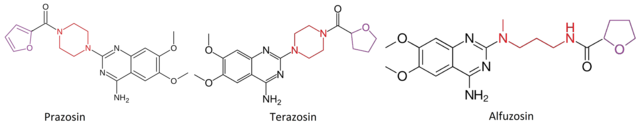
Alpha-blockers are medicines that are mainly used to treat high blood pressure (hypertension) and problems with passing urine in men who have enlargement of the prostate gland. Prostate gland enlargement is also called benign prostatic hyperplasia (BPH).
by Dr Doug McKechnie, MRCGP
Healthy living
Vitamin C deficiency
Vitamin C cannot be made by the human body and so is an essential component of the diet. It is needed for the health and repair of various tissues in the body, including skin, bone, teeth and cartilage. Persistent lack of dietary vitamin C in can lead to a condition called scurvy. Symptoms of scurvy include easy bruising, easy bleeding and joint and muscle pains. Vitamin C deficiency can be treated with supplements of vitamin C and a diet rich in vitamin C.
by Dr Philippa Vincent, MRCGP
Related patient information and medicines

Patient information leaflet
Liver function tests
Liver function tests are a set of blood tests commonly done to check on the health of your liver. Changes in liver function tests give a clue as to whether your liver is under strain, inflamed, infected or diseased, and how badly. The pattern of the liver function tests can give a clue to the cause and can allow early detection of unsuspected.

Patient information leaflet
Free or reduced cost prescriptions
Certain people can get an exemption certific... Also, anyone needing regular prescriptions may save money by buying a Prescription Prepayment Certificate. Note : this leaflet only applies to England because prescriptions are free to all in Northern Ireland, Scotland and Wales. It also only gives a brief summary of free or reduced cost.

Patient information leaflet
Thalassaemia
If your bones are severely affected, you may need specialist ... The long-term outlook depends on how well complications can be prevented, particularly the iron overload. As with BTM, you will need regular check-ups and specialist advice, to monitor the anaemia and prevent complications. Another possible treatment for the anaemia is a medication.

Patient information leaflet
Find out if you are eligible for a free NHS flu vaccination
Open the flu jab Is the flu vaccine free for you this winter. The flu vaccine is free on the NHS for people most likely to get seriously ill from flu, and for those who could easily pass it on to someone at risk. Whether you qualify depends on your age, your health, and a few other things such as being pregnant or caring for someone. The groups.
Patient information leaflet
Psoriatic arthritis
Psoriatic arthritis causes inflammation, pain and swelling of joints in some people who have psoriasis. For example, inflammation may also affect tendons and ligaments. In some cases, affected joints become damaged which can cause disability. Treatments include medication to ease pain, and medication to slow down the progression of the disease..

Patient information leaflet
Salivary gland stones
These stones are small and form from chemicals in the saliva. A stone can cause a blockage of the flow of spit (saliva), which can lead to pain and swelling of the affected salivary gland. The reason why these stones form is not known. Sometimes a stone comes out into the mouth on its own, or with a gentle massage. However, a small procedure may.
Further reading and references
- 17 alpha-hydroxylase/17,20-lyase deficiency; MedlinePlus, National Library of Medicine.
- Kim YM, Kang M, Choi JH, Lee BH, Kim GH, Ohn JH, Kim SY, Park MS, Yoo HW. A review of the literature on common CYP17A1 mutations in adults with 17-hydroxylase/17,20-lyase deficiency, a case series of such mutations among Koreans and functional characteristics of a novel mutation. Metabolism. 2014 Jan;63(1):42-9. doi: 10.1016/j.metabol.2013.08.015. Epub 2013 Oct 18.
- Marsh CA, Auchus RJ. Fertility in patients with genetic deficiencies of cytochrome P450c17 (CYP17A1): combined 17-hydroxylase/17,20-lyase deficiency and isolated 17,20-lyase deficiency. Fertil Steril. 2014 Feb;101(2):317-22. doi: 10.1016/j.fertnstert.2013.11.011.
- Miller WL. The syndrome of 17,20 lyase deficiency. J Clin Endocrinol Metab. 2012 Jan;97(1):59-67. doi: 10.1210/jc.2011-2161. Epub 2011 Nov 9.
- Rosa S, Steigert M, Lang-Muritano M, l'Allemand D, Schoenle EJ, Biason-Lauber A. Clinical, genetic and functional characteristics of three novel CYP17A1 mutations causing combined 17alpha-hydroxylase/17,20-lyase deficiency. Horm Res Paediatr. 2010;73(3):198-204. doi: 10.1159/000284362. Epub 2010 Mar 3.
Share your thoughts or experiences with others in our patient communities.
Simple access to trusted treatments and health services online.
Common conditions
Get help with common conditions through the NHS, without a GP appointment.





Sign up to the Patient newsletter
Your weekly dose of clear, trustworthy health advice - written to help you feel informed, confident and in control.
By subscribing you accept our Privacy Policy. You can unsubscribe at any time. We never sell your data.