Adolescent idiopathic scoliosis
Last updated 7 Nov 2023
Meets Patient’s editorial guidelines
- DownloadDownload
- Share
- Language
- Discussion
- Ask Patient
- Audio Version
- Add to preferred sources on Google
Adolescent idiopathic scoliosis is an abnormal curvature of the spine that appears in late childhood or adolescence. Instead of growing straight, the spine develops a side-to-side curvature, usually in an elongated "S" or "C" shape; the bones of the spine are also slightly twisted or rotated.
Video picks for Genetic conditionsVideo library
Description
Adolescent idiopathic scoliosis is an abnormal curvature of the spine that appears in late childhood or adolescence. Instead of growing straight, the spine develops a side-to-side curvature, usually in an elongated "S" or "C" shape; the bones of the spine are also slightly twisted or rotated.
Adolescent idiopathic scoliosis appears during the adolescent growth spurt, a time when children are growing rapidly. In many cases the abnormal spinal curve is stable, although in some children the curve is progressive (meaning it becomes more severe over time). For unknown reasons, severe and progressive curves occur more frequently in girls than in boys. However, mild spinal curvature is equally common in girls and boys.
Mild scoliosis generally does not cause pain, problems with movement, or difficulty breathing. It may only be diagnosed if it is noticed during a regular physical examination or a scoliosis screening at school. The most common signs of the condition include a tilt or unevenness (asymmetry) in the shoulders, hips, or waist, or having one leg that appears longer than the other. A small percentage of affected children develop more severe, pronounced spinal curvature.
Scoliosis can occur as a feature of other conditions, including a variety of genetic syndromes. However, adolescent idiopathic scoliosis typically occurs by itself, without signs and symptoms affecting other parts of the body.
Inheritance patterns
The source lists the following possible inheritance patterns: Pattern unknown. More than one pattern can apply in different cases.
Other names
AIS
Late onset idiopathic scoliosis
Patient picks for Genetic conditions
Bones, joints and muscles
Scoliosis and kyphosis
Scoliosis is a back condition that causes the (back) spine to curve to the side - either left or right. Most cases develop in children between the ages of 9 and 14 years during the growth spurt of puberty. Scoliosis is usually mild and needs no treatment. For more severe cases treatments include specific exercises, a back brace or occasionally surgery to straighten the spine. A very pronounced front-to-back curve is called a kyphosis, which does not usually need treatment.
by Dr Colin Tidy, MRCGP
Children's health
Juvenile idiopathic arthritis
Juvenile idiopathic arthritis is a condition in which persisting joint inflammation first occurs in children under the age of 16 years. Affected joints become painful and swollen, and can become damaged. Juvenile idiopathic arthritis cannot generally be cured but there are effective treatments. These help symptoms, prevent any long-standing joint problems, and can lead to remission.
by Dr Doug McKechnie, MRCGP
Brain and nerves
Idiopathic intracranial hypertension
In idiopathic intracranial hypertension there is raised pressure within the skull (raised intracranial pressure), which puts pressure on the brain. Idiopathic means that the cause of this raised pressure is unknown. The main symptoms are headache and loss of sight (visual loss). It mostly affects women of childbearing age who are overweight or obese. Treatment is aimed at preventing permanent visual loss and includes treatment with medicines. Brain surgery (neurosurgery) may also be used. For many people, a combination of medical and surgical treatment can help to control their symptoms well.
by Dr Doug McKechnie, MRCGP
Signs and symptoms
Idiopathic oedema
Idiopathic oedema is the term for fluid retention which it not caused by a known medical condition. It is most common in women and can sometimes worsen as you get older. Although there is no cure for idiopathic oedema, having a healthy diet which is low in salt can make a real difference. Support stockings and regular exercise are also beneficial.
by Dr Colin Tidy, MRCGP

Constipation
How to treat constipation in children
Dr Sarah Jarvis MBE Constipation is a very common problem for children. For most children, constipation means passing hard stools (faeces), with difficulty, less often than normal. Regular soiling (often mistaken for runny diarrhoea) may indicate that a child has bad constipation with impaction (a blockage of faeces). Where no particular disease or illness is the cause of the constipation, it is called idiopathic constipation. It is important that constipation be recognised early to prevent it from becoming a long-term (chronic) problem. [https://patient.info/health/constipation/constipation-in-children](https://patient.info/health/constipation/constipation-in-children)
by Dr Sarah Jarvis
Related patient information and medicines
Patient information leaflet
Scoliosis and kyphosis
Scoliosis is a back condition that causes the (back) spine to curve to the side - either left or right. Most cases develop in children between the ages of 9 and 14 years during the growth spurt of puberty. What are the causes of... Adolescent kyphosis, is known as Scheuermann's disease.This type of kyphosis is caused by the wedging together in a.

Patient information leaflet
Turner syndrome
Ear problems Hearing impairment is common and can be due to persistent (chronic) ear infections or deterioration of the nerves. 'Thinning' of the bones This is also known as osteoporosis Osteoporosis. It may occur later in life as a complication of a lack of oestrogen if oestrogen treatment is not started early enough or taken continuously..

Patient information leaflet
Marfan syndrome
Marfan syndrome can affect the connective tissue in different parts of your body, including your heart, blood vessels, eyes and skeleton. Marfan syndrome is rare and is thought to affect about 1 in 3,000 to 1 in 5,000 people. It affects males and females equally. It is usually painless and causes no health problems. More than 6 out of 10 people.
Patient information leaflet
Back pain in children
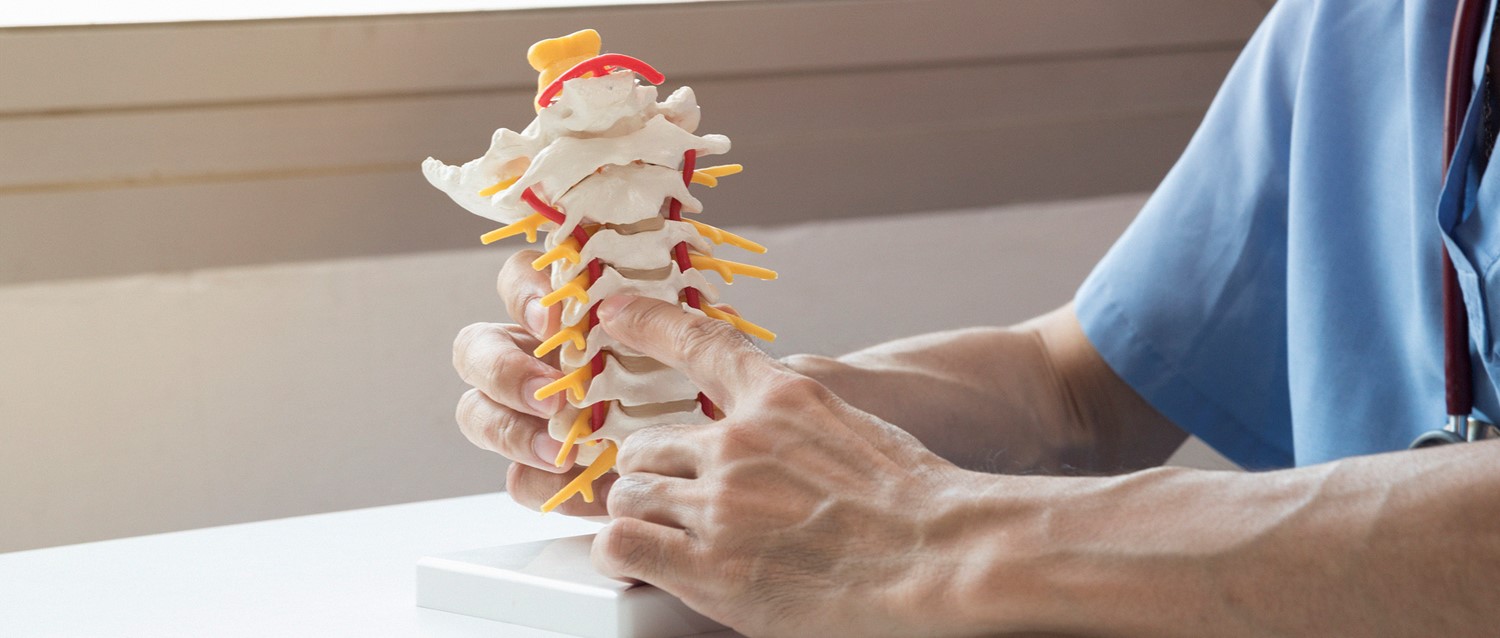
Retroperitoneal infection - infection underneath the peritoneum, the membrane lining the abdominal cavity. Rarely, tumours of the bone or spinal cord. Congenital disorders - conditions your child is born with (for example, scoliosis Scoliosis and kyphosis , which can be congenital or can come on later in life). Diseases affecting the whole body -.
Patient information leaflet
Back and spine pain
It will also direct you to pages with more detailed information on the different conditions that can cause back pain. Dr Sarah Jarvis MBE Back pain is pain that is felt anywhere from the bottom of the neck to your bottom. It can range from mild and fleeting to s... Shingles: Shingles Shingles is a common infection, which can cause pain before any.
Patient information leaflet
Hiatus hernia
Operations around the stomach and gullet can make you more likely to get the para-oesophageal type of hiatus hernia. You are also more likely to get this type if your spine or rib cage is more curved than usual. For example, people with scoliosis or kyphosis Scoliosis and kyphosis. There is a rare type of hiatus hernia which occurs in newborn.
Further reading and references
- Adolescent idiopathic scoliosis; MedlinePlus, National Library of Medicine.
- Altaf F, Gibson A, Dannawi Z, Noordeen H. Adolescent idiopathic scoliosis. BMJ. 2013 Apr 30;346:f2508. doi: 10.1136/bmj.f2508. No abstract available.
- Burwell RG, Dangerfield PH, Moulton A, Grivas TB, Cheng JC. Whither the etiopathogenesis (and scoliogeny) of adolescent idiopathic scoliosis? Incorporating presentations on scoliogeny at the 2012 IRSSD and SRS meetings. Scoliosis. 2013 Feb 28;8(1):4. doi: 10.1186/1748-7161-8-4.
- Hresko MT. Clinical practice. Idiopathic scoliosis in adolescents. N Engl J Med. 2013 Feb 28;368(9):834-41. doi: 10.1056/NEJMcp1209063. No abstract available.
- Miller NH. Idiopathic scoliosis: cracking the genetic code and what does it mean? J Pediatr Orthop. 2011 Jan-Feb;31(1 Suppl):S49-52. doi: 10.1097/BPO.0b013e318202bfe2.
- Sharma S, Gao X, Londono D, Devroy SE, Mauldin KN, Frankel JT, Brandon JM, Zhang D, Li QZ, Dobbs MB, Gurnett CA, Grant SF, Hakonarson H, Dormans JP, Herring JA, Gordon D, Wise CA. Genome-wide association studies of adolescent idiopathic scoliosis suggest candidate susceptibility genes. Hum Mol Genet. 2011 Apr 1;20(7):1456-66. doi: 10.1093/hmg/ddq571. Epub 2011 Jan 7.
- Wise CA, Gao X, Shoemaker S, Gordon D, Herring JA. Understanding genetic factors in idiopathic scoliosis, a complex disease of childhood. Curr Genomics. 2008 Mar;9(1):51-9. doi: 10.2174/138920208783884874.
Share your thoughts or experiences with others in our patient communities.
Simple access to trusted treatments and health services online.
Common conditions
Get help with common conditions through the NHS, without a GP appointment.





Sign up to the Patient newsletter
Your weekly dose of clear, trustworthy health advice - written to help you feel informed, confident and in control.
By subscribing you accept our Privacy Policy. You can unsubscribe at any time. We never sell your data.