Congenital bilateral absence of the vas deferens
Last updated 21 Mar 2023
Meets Patient’s editorial guidelines
- DownloadDownload
- Share
- Language
- Discussion
- Ask Patient
- Audio Version
- Add to preferred sources on Google
Congenital bilateral absence of the vas deferens occurs in males when the tubes that carry sperm out of the testes (the vas deferens) fail to develop properly. Although the testes usually develop and function normally, sperm cannot be transported through the vas deferens to become part of semen. As a result, men with this condition are unable to father children (infertile) unless they use assisted reproductive technologies. This condition has not been reported to affect sex drive or sexual performance.
Video picks for Genetic conditionsVideo library
Description
Congenital bilateral absence of the vas deferens occurs in males when the tubes that carry sperm out of the testes (the vas deferens) fail to develop properly. Although the testes usually develop and function normally, sperm cannot be transported through the vas deferens to become part of semen. As a result, men with this condition are unable to father children (infertile) unless they use assisted reproductive technologies. This condition has not been reported to affect sex drive or sexual performance.
This condition can occur alone or as a sign of cystic fibrosis, an inherited disease of the mucus glands. Cystic fibrosis causes progressive damage to the respiratory system and chronic digestive system problems. Many men with congenital bilateral absence of the vas deferens do not have the other characteristic features of cystic fibrosis; however, some men with this condition may experience mild respiratory or digestive problems.
Inheritance patterns
The source lists the following possible inheritance patterns: Autosomal recessive. More than one pattern can apply in different cases.
Related genes
Other names
Absence of vas deferens
Absent vasa
CAVD
CBAVD
Congenital absence of vas deferens
Congenital aplasia of vas deferens
Congenital bilateral absence of vas deferens
Patient picks for Genetic conditions

Treatment and medication
The experiences of a vasectomised vasectomy surgeon
I can’t remember exactly how I got involved doing vasectomies. The outgoing senior partner used to do them at the practice I joined as a GP and I think as the new boy I was just expected to take over. I was packed off to the local vasectomy clinic to be trained.
by Dr Laurence Knott

Bones, joints and muscles
Scoliosis and kyphosis
Scoliosis is a back condition that causes the (back) spine to curve to the side - either left or right. Most cases develop in children between the ages of 9 and 14 years during the growth spurt of puberty. Scoliosis is usually mild and needs no treatment. For more severe cases treatments include specific exercises, a back brace or occasionally surgery to straighten the spine. A very pronounced front-to-back curve is called a kyphosis, which does not usually need treatment.
by Dr Colin Tidy, MRCGP

Chest and lungs
Pneumothorax
A pneumothorax is sometimes called a "collapsed lung" and it describes the condition in which air has become trapped next to a lung. Many cases occur without warning, particularly in healthy young men. Some develop as a complication of a chest injury or a lung disease. The most common symptom is a sudden sharp chest pain followed by pains on breathing in. Some people become breathless. In most cases, the pneumothorax clears without needing treatment. The trapped air of a large pneumothorax may need to be removed if it causes breathing difficulty. An operation is needed in some cases.
by Dr Philippa Vincent, MRCGP

Children's health
Club foot
Club foot (also called talipes equinovarus is a deformity of the foot and ankle that a baby can be born with. It is not clear exactly what causes club foot. In most cases, it is diagnosed by the typical appearance of a baby's foot after they are born. The Ponseti method is a widely used treatment for club foot. This treatment gives good results for most children. If it doesn't work, surgery can help.
by Dr Doug McKechnie, MRCGP

Brain and nerves
Absence seizures
Absence seizures usually occur only in children and young people. Most people with this type of epilepsy grow out of it by the time they are adults. This leaflet discusses only the type of epilepsy with typical absence seizures. There are other types of 'atypical' absence seizures not dealt with in this leaflet.
by Dr Doug McKechnie, MRCGP

Brain and nerves
What is vascular parkinsonism and what are the other types of parkinsonism
Parkinsonism is a general term that is used to describe a set of movement problems similar to those seen in Parkinson’s disease. There are a number of possible causes but the most common cause of parkinsonism is Parkinson's disease. Parkinsonism can cause severe problems with basic everyday activities.
by Dr Colin Tidy, MRCGP
Related patient information and medicines

Patient information leaflet
Epididymo-orchitis
Epididymo-orchitis is an inflammation of the epididymis and/or testicle. Testis - epididymitis and orchitis Testis with explanation of epididymitis and orchitis Causes of epididymo-orchitis In boys who have not reached puberty,... Causes of infection include the following: A complication from a urine infection Germs (bacteria) such as E. coli E..

Patient information leaflet
Congenital heart disease
Congenital heart disease is a condition where an abnormality (defect) develops in the heart before birth. There are a number of types of congenital heart defect. What is congenital heart disease. Abnormalities or defects of the heart which develop before birth are together (collectively) called congenital heart disease. Some of these are listed in.

Patient information leaflet
Hydrocele in infants
A hydrocele is a collection of fluid in the scrotum, sometimes found in newborn boys. Most hydroceles go down within the first few months of life in babies and so do not need treatment. If a hydrocele persists then a small operation can usually cure the problem. The normal scrotum and testes The scrotum is normally loose, soft and fleshy. It holds.
Patient information leaflet
Ventricular septal defect
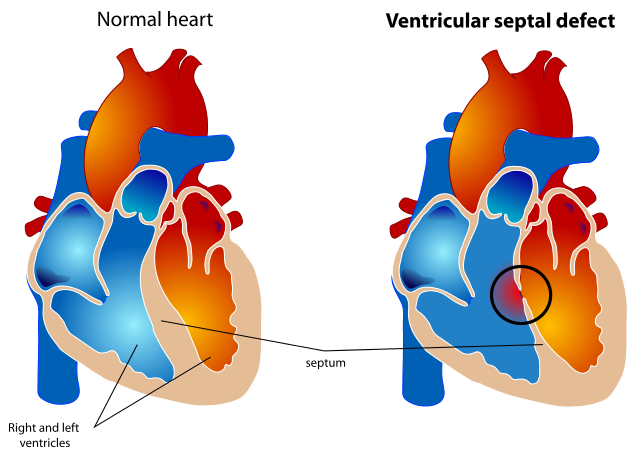
Ventricular septal defect (VSD) is a gap or defect in the septum between the heart's two lower chambers (ventricles). The septum is a wall that separates the heart's right and left side of the heart. Septal defects ar... About 8 babies in every 1,000 born will have a problem with their heart or major blood vessels. Of these, half will have a VSD.

Patient information leaflet
Coarctation of the aorta
Coarctation of the aorta is a type of congenital heart disease where there is a narrowing in part of the aorta, the main artery that leaves the left side of the heart. Normal heart detail Cross-section diagram of a normal heart PatientPicksPlaceholder Heart - lung circulation heart - lung circulation What is coarctation of the aorta. Congenital.

Patient information leaflet
Infertility treatments
Dr Krishna Vakharia , 16th October 2023 The National Institute for Health and Care Excellence (NICE) has recommended for those people specifically affected by treatment that could damage their ovaries and cause infertility, could be considered for surgery that removes and preserves their ovaries, and reimplant this tissue to offer a chance of.
Further reading and references
- Congenital bilateral absence of the vas deferens; MedlinePlus, National Library of Medicine.
- Cuppens H, Cassiman JJ. CFTR mutations and polymorphisms in male infertility. Int J Androl. 2004 Oct;27(5):251-6. doi: 10.1111/j.1365-2605.2004.00485.x.
- Daudin M, Bieth E, Bujan L, Massat G, Pontonnier F, Mieusset R. Congenital bilateral absence of the vas deferens: clinical characteristics, biological parameters, cystic fibrosis transmembrane conductance regulator gene mutations, and implications for genetic counseling. Fertil Steril. 2000 Dec;74(6):1164-74. doi: 10.1016/s0015-0282(00)01625-3.
- de Souza DAS, Faucz FR, Pereira-Ferrari L, Sotomaior VS, Raskin S. Congenital bilateral absence of the vas deferens as an atypical form of cystic fibrosis: reproductive implications and genetic counseling. Andrology. 2018 Jan;6(1):127-135. doi: 10.1111/andr.12450. Epub 2017 Dec 7.
- Gilljam M, Moltyaner Y, Downey GP, Devlin R, Durie P, Cantin AM, Zielenski J, Tullis DE. Airway inflammation and infection in congenital bilateral absence of the vas deferens. Am J Respir Crit Care Med. 2004 Jan 15;169(2):174-9. doi: 10.1164/rccm.200304-558OC. Epub 2003 Oct 9.
- Jarzabek K, Zbucka M, Pepinski W, Szamatowicz J, Domitrz J, Janica J, Wolczynski S, Szamatowicz M. Cystic fibrosis as a cause of infertility. Reprod Biol. 2004 Jul;4(2):119-29.
- Nick JA, Rodman DM. Manifestations of cystic fibrosis diagnosed in adulthood. Curr Opin Pulm Med. 2005 Nov;11(6):513-8. doi: 10.1097/01.mcp.0000183052.56728.76.
- Noone PG, Knowles MR. 'CFTR-opathies': disease phenotypes associated with cystic fibrosis transmembrane regulator gene mutations. Respir Res. 2001;2(6):328-32. doi: 10.1186/rr82. Epub 2001 Aug 9.
- Samli H, Samli MM, Yilmaz E, Imirzalioglu N. Clinical, andrological and genetic characteristics of patients with congenital bilateral absence of vas deferens (CBAVD). Arch Androl. 2006 Nov-Dec;52(6):471-7. doi: 10.1080/01485010600691993.
- Savant A, Bojanowski CM, Upadia J. Cystic Fibrosis. 2001 Mar 26 [updated 2026 Oct 1]. In: Adam MP, Bick S, Mirzaa GM, Wallace SE, Amemiya A, editors. GeneReviews(R) [Internet]. Seattle (WA): University of Washington, Seattle; 1993-2026. Available from http://www.ncbi.nlm.nih.gov/books/NBK1250/
Share your thoughts or experiences with others in our patient communities.
Simple access to trusted treatments and health services online.
Common conditions
Get help with common conditions through the NHS, without a GP appointment.





Sign up to the Patient newsletter
Your weekly dose of clear, trustworthy health advice - written to help you feel informed, confident and in control.
By subscribing you accept our Privacy Policy. You can unsubscribe at any time. We never sell your data.