Congenital dyserythropoietic anaemia
Last updated 4 Mar 2025
Meets Patient’s editorial guidelines
- DownloadDownload
- Share
- Language
- Discussion
- Ask Patient
- Audio Version
- Add to preferred sources on Google
Congenital dyserythropoietic anaemia (CDA) is a rare group of inherited blood disorders that affects the development of red blood cells. In people with CDA, immature red blood cells do not develop into normal, mature cells. As a result, affected individuals have a significant reduction in the number of functional red blood cells (anaemia). The term "dyserythropoietic" refers to the abnormal red blood cell shape that occurs in people with this condition. People with CDA typically have mild to moderate anaemia. In some cases, affected individuals have severe anaemia that may require frequent blood transfusions to replenish the supply of red blood cells.
Video picks for Genetic conditionsVideo library
Description
Congenital dyserythropoietic anaemia (CDA) is a rare group of inherited blood disorders that affects the development of red blood cells. In people with CDA, immature red blood cells do not develop into normal, mature cells. As a result, affected individuals have a significant reduction in the number of functional red blood cells (anaemia). The term "dyserythropoietic" refers to the abnormal red blood cell shape that occurs in people with this condition. People with CDA typically have mild to moderate anaemia. In some cases, affected individuals have severe anaemia that may require frequent blood transfusions to replenish the supply of red blood cells.
The signs and symptoms of CDA can include tiredness (fatigue), weakness, yellowing of the skin and eyes (jaundice), and an enlarged liver and spleen (hepatosplenomegaly). CDA also causes the body to absorb too much iron (iron overload), which can damage tissues and organs.
There are multiple types of CDA. Each type has a different genetic cause and distinct but overlapping patterns of signs and symptoms.
CDA type I is characterised by moderate to severe anaemia that typically begins in childhood or adolescence, although the condition can be detected before birth in some cases. In addition to the signs and symptoms common to all types of CDA, individuals with CDA type I can have skeletal issues, including short stature or abnormalities of the fingers or toes.
The anaemia associated with CDA type II can range from mild to severe, and it usually develops in adolescence or early adulthood. Individuals with CDA type II may develop hard deposits in the gallbladder called gallstones in addition to the usual signs and symptoms of CDA.
CDA type III can result in anaemia that ranges from mild to severe, depending on the genetic cause, and typically begins in infancy or childhood. Some people with CDA type III do not receive a diagnosis until later in life because they have very mild symptoms. In some cases, individuals with CDA type III develop a blood disorder known as monoclonal gammopathy, which can lead to a cancer of white blood cells (multiple myeloma). Some people with CDA type III have eye abnormalities that can cause vision impairment.
CDA type IV is characterised by moderate to severe anaemia that typically develops early in life, although the condition can be detected before birth in some cases. Affected individuals can have extensive swelling caused by fluid accumulation before birth (hydrops fetalis). In addition to the signs and symptoms that are common to all types of CDA, individuals with CDA type IV often have short stature.
Inheritance patterns
The source lists the following possible inheritance patterns: Autosomal recessive; Autosomal dominant+1 affected parent. More than one pattern can apply in different cases.
Related genes
Other names
Anaemia, dyserythropoietic, congenital
CDA
congenital dyserythropoietic anaemia
Patient picks for Genetic conditions
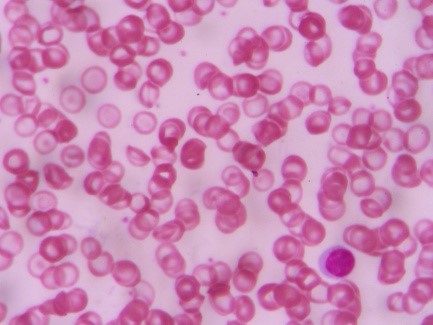
Allergies, blood and immune system
Sickle cell disease
Sickle cell disease (SCD) is a serious, inherited condition affecting the blood and various organs in the body. It affects the red blood cells, causing episodes of 'sickling', which produce episodes of pain and other symptoms. In between episodes of sickling, people with SCD are normally well. Long-term complications can occur. Good treatment, started early in life, can prevent complications. So, early diagnosis and specialist treatment are advised for SCD. Sickle cell trait is not the same as sickle cell disease.
by Dr Hayley Willacy, FRCGP

Allergies, blood and immune system
Anaemia
Anaemia means that you have fewer red blood cells than normal or you have less haemoglobin than normal in each red blood cell. In either case, a reduced amount of oxygen is carried around in the bloodstream.
by Dr Hayley Willacy, FRCGP
Allergies, blood and immune system
Iron-deficiency anaemia
Iron-deficiency anaemia is a common type of anaemia that is caused by a lack of iron. Symptoms include pale skin and lack of energy. A low level of iron, leading to anaemia, can result from various causes. Some are more serious than others.
by Dr Rachel Hudson, MRCGP
Allergies, blood and immune system
Macrocytosis and macrocytic anaemia
Macrocytosis refers to red blood cells which are larger than normal. It does not cause any symptoms in itself.
by Dr Philippa Vincent, MRCGP

Allergies, blood and immune system
Signs you may have anaemia
It's usual to feel a little tired and run-down from time to time. But if the feeling continues, or is excessive, you may need to speak with your doctor. One common cause of feeling run-down is anaemia. Here we look at the signs and symptoms, whether you might be susceptible, and what to do next.
by Victoria Raw

Allergies, blood and immune system
Folic acid deficiency
A normal balanced diet contains enough folic acid. However, a folic acid deficiency may cause anaemia and sometimes other symptoms.
by Dr Rosalyn Adleman, MRCGP
Related patient information and medicines

Patient information leaflet
Hereditary spherocytosis
Hereditary spherocytosis (HS) is an inherited condition of red blood cells. The disease can be mild and go unrecognised in some people. What is hereditary spherocytosis. Hereditary spherocytosis (HS) is an inherited condition that affects your red blood cells. The red blood cells are those that carry oxygen around the body. What are the features.

Patient information leaflet
Sickle cell trait
If you inherit a gene from one of your parents, called a sickle cell gene, you have a condition called sickle cell trait. If you inherit a sickle cell gene from both parents, you get a double dose of... Sickle cell trait means having one gene for a condition called sickle cell disease (SCD) Sickle cell disease. Sickle cell blood test Sickle cell.

Patient information leaflet
Porphyria
Erythropoietic protoporphyria. Congenital erythropoietic porphyria (also known as Günther's disease). Mixed porphyrias This type of porphyria can lead to symptoms of both acute porphyria and cutaneous porphyria. The body then uses some of the excess stored iron to make new red b... Congenital erythropoietic porphyria This is a very rare form of.
Patient information leaflet
Sickle cell disease
Sickle cell trait is not the same as sickle cell disease. Sickle cell disease Sickle cell disease (SCD) is a serious group of conditions which are inherited (genetic). It affects the red blood cells in the blood. Sickle cell anaemia is the name of a specific form of sickle cell disease in which there are two sickle cell genes (see below). What is.
Patient information leaflet
Anaemia
Anaemia means that you have fewer red blood cells than normal or you have less haemoglobin than normal in each red blood cell. In either case, a reduced amount of oxygen is carried around in the bloodstream. Anaemia types and causes Iron-deficiency anaemia Lack of iron is the most common type of anaemia in the UK. This is called iron-deficiency.
Patient information leaflet
Iron-deficiency anaemia
Iron-deficiency anaemia is a common type of anaemia that is caused by a lack of iron. Symptoms include pale skin and lack of energy. For example, there is an increased risk of having a low-birth-weight baby, preterm (premature) delivery and postnatal depression. Low iron reserves in the baby may also lead to anaemia in the newborn baby. Causes of.
Further reading and references
- Congenital dyserythropoietic anaemia; MedlinePlus, National Library of Medicine.
- Denecke J, Marquardt T. Congenital dyserythropoietic anemia type II (CDAII/HEMPAS): where are we now? Biochim Biophys Acta. 2009 Sep;1792(9):915-20. doi: 10.1016/j.bbadis.2008.12.005. Epub 2008 Dec 25.
- Dgany O, Avidan N, Delaunay J, Krasnov T, Shalmon L, Shalev H, Eidelitz-Markus T, Kapelushnik J, Cattan D, Pariente A, Tulliez M, Cretien A, Schischmanoff PO, Iolascon A, Fibach E, Koren A, Rossler J, Le Merrer M, Yaniv I, Zaizov R, Ben-Asher E, Olender T, Lancet D, Beckmann JS, Tamary H. Congenital dyserythropoietic anemia type I is caused by mutations in codanin-1. Am J Hum Genet. 2002 Dec;71(6):1467-74. doi: 10.1086/344781. Epub 2002 Nov 14.
- Heimpel H, Anselstetter V, Chrobak L, Denecke J, Einsiedler B, Gallmeier K, Griesshammer A, Marquardt T, Janka-Schaub G, Kron M, Kohne E. Congenital dyserythropoietic anemia type II: epidemiology, clinical appearance, and prognosis based on long-term observation. Blood. 2003 Dec 15;102(13):4576-81. doi: 10.1182/blood-2003-02-0613. Epub 2003 Aug 21.
- Heimpel H, Schwarz K, Ebnother M, Goede JS, Heydrich D, Kamp T, Plaumann L, Rath B, Roessler J, Schildknecht O, Schmid M, Wuillemin W, Einsiedler B, Leichtle R, Tamary H, Kohne E. Congenital dyserythropoietic anemia type I (CDA I): molecular genetics, clinical appearance, and prognosis based on long-term observation. Blood. 2006 Jan 1;107(1):334-40. doi: 10.1182/blood-2005-01-0421. Epub 2005 Sep 1.
- Heimpel H. Congenital dyserythropoietic anemias: epidemiology, clinical significance, and progress in understanding their pathogenesis. Ann Hematol. 2004 Oct;83(10):613-21. doi: 10.1007/s00277-004-0892-5. Epub 2004 Jul 20.
- Iolascon A, Andolfo I, Russo R. Congenital dyserythropoietic anemias. Blood. 2020 Sep 10;136(11):1274-1283. doi: 10.1182/blood.2019000948.
- Olijnik AA, Roy NBA, Scott C, Marsh JA, Brown J, Lauschke K, Ask K, Roberts N, Downes DJ, Brolih S, Johnson E, Xella B, Proven M, Hipkiss R, Ryan K, Frisk P, Makk J, Stattin EM, Sadasivam N, McIlwaine L, Hill QA, Renella R, Hughes JR, Gibbons RJ, Groth A, McHugh PJ, Higgs DR, Buckle VJ, Babbs C. Genetic and functional insights into CDA-I prevalence and pathogenesis. J Med Genet. 2021 Mar;58(3):185-195. doi: 10.1136/jmedgenet-2020-106880. Epub 2020 Jun 9.
- Renella R, Wood WG. The congenital dyserythropoietic anemias. Hematol Oncol Clin North Am. 2009 Apr;23(2):283-306. doi: 10.1016/j.hoc.2009.01.010.
- Russo R, Iolascon A, Andolfo I, Marra R, Rosato BE. Updates on clinical and laboratory aspects of hereditary dyserythropoietic anemias. Int J Lab Hematol. 2024 Aug;46(4):595-605. doi: 10.1111/ijlh.14307. Epub 2024 May 15.
- Russo R, Marra R, Andolfo I, De Rosa G, Rosato BE, Manna F, Gambale A, Raia M, Unal S, Barella S, Iolascon A. Characterization of Two Cases of Congenital Dyserythropoietic Anemia Type I Shed Light on the Uncharacterized C15orf41 Protein. Front Physiol. 2019 May 22;10:621. doi: 10.3389/fphys.2019.00621. eCollection 2019.
- Sandstrom H, Wahlin A. Congenital dyserythropoietic anemia type III. Haematologica. 2000 Jul;85(7):753-7.
- Schwarz K, Iolascon A, Verissimo F, Trede NS, Horsley W, Chen W, Paw BH, Hopfner KP, Holzmann K, Russo R, Esposito MR, Spano D, De Falco L, Heinrich K, Joggerst B, Rojewski MT, Perrotta S, Denecke J, Pannicke U, Delaunay J, Pepperkok R, Heimpel H. Mutations affecting the secretory COPII coat component SEC23B cause congenital dyserythropoietic anemia type II. Nat Genet. 2009 Aug;41(8):936-40. doi: 10.1038/ng.405. Epub 2009 Jun 28.
- Tamary H, Dgany O, Proust A, Krasnov T, Avidan N, Eidelitz-Markus T, Tchernia G, Genevieve D, Cormier-Daire V, Bader-Meunier B, Ferrero-Vacher C, Munzer M, Gruppo R, Fibach E, Konen O, Yaniv I, Delaunay J. Clinical and molecular variability in congenital dyserythropoietic anaemia type I. Br J Haematol. 2005 Aug;130(4):628-34. doi: 10.1111/j.1365-2141.2005.05642.x.
- Tamary H, Dgany O. Congenital Dyserythropoietic Anemia Type I. 2009 Apr 21 [updated 2021 Jul 29]. In: Adam MP, Bick S, Mirzaa GM, Wallace SE, Amemiya A, editors. GeneReviews(R) [Internet]. Seattle (WA): University of Washington, Seattle; 1993-2026. Available from http://www.ncbi.nlm.nih.gov/books/NBK5313/
- Wickramasinghe SN, Wood WG. Advances in the understanding of the congenital dyserythropoietic anaemias. Br J Haematol. 2005 Nov;131(4):431-46. doi: 10.1111/j.1365-2141.2005.05757.x.
Share your thoughts or experiences with others in our patient communities.
Simple access to trusted treatments and health services online.
Common conditions
Get help with common conditions through the NHS, without a GP appointment.





Sign up to the Patient newsletter
Your weekly dose of clear, trustworthy health advice - written to help you feel informed, confident and in control.
By subscribing you accept our Privacy Policy. You can unsubscribe at any time. We never sell your data.