kinesin family member 23
Last updated 4 Mar 2025
Meets Patient’s editorial guidelines
- DownloadDownload
- Share
- Language
- Discussion
- Ask Patient
- Audio Version
- Add to preferred sources on Google
The KIF23 gene provides instructions for making a protein that is part of the kinesin family of proteins. Many proteins in the kinesin family are essential for transporting materials within cells. Kinesin proteins function like freight trains that transport cargo along a track-like system made from structures called microtubules. Some kinesins also help maintain microtubules. As well as functioning like a track, microtubules make up the structural framework of cells and help cells move.
Video picks for GenesVideo library
Normal function
The KIF23 gene provides instructions for making a protein that is part of the kinesin family of proteins. Many proteins in the kinesin family are essential for transporting materials within cells. Kinesin proteins function like freight trains that transport cargo along a track-like system made from structures called microtubules. Some kinesins also help maintain microtubules. As well as functioning like a track, microtubules make up the structural framework of cells and help cells move.
The KIF23 protein plays an important role in cytokinesis, which is the stage during cell division in which dividing cells separate from one another. Specifically, this protein attaches (binds) with the protein produced from the RACGAP1 gene to form a complex called centralspindlin, which is a critical regulator of cytokinesis.
Conditions referring to this gene or chromosome
Other names
CHO1
KNSL5
MKLP-1
MKLP1
Patient picks for Genes

Podcasts
The parental minefield
How often have you said something quite ordinary to a parent, or they’ve said something to you and suddenly the room feels like it’s about to explode? Welcome to the parental nightmare. It’s not just about conflict, it’s about what’s hidden underneath these relationships – family secrets, unspoken stories, patterns of behaviour passed from one generation to the next. In this episode Clare and Aileen explore the complex, often lifelong, relationship we have with our parents and discuss practical strategies to help you navigate this important relationship.
by Thomas Andrew Porteus, MBCS

Children's health
Pearson syndrome: how one family learned to live in the present
Pearson syndrome is a rare and serious mitochondrial disorder that typically affects infants and young children. There is currently no cure, and it is usually life-threatening. We follow one family’s journey of living with the condition, exploring how it shapes their everyday lives, the challenges they face, and what it truly means to cherish every moment.
by Victoria Raw
Podcasts
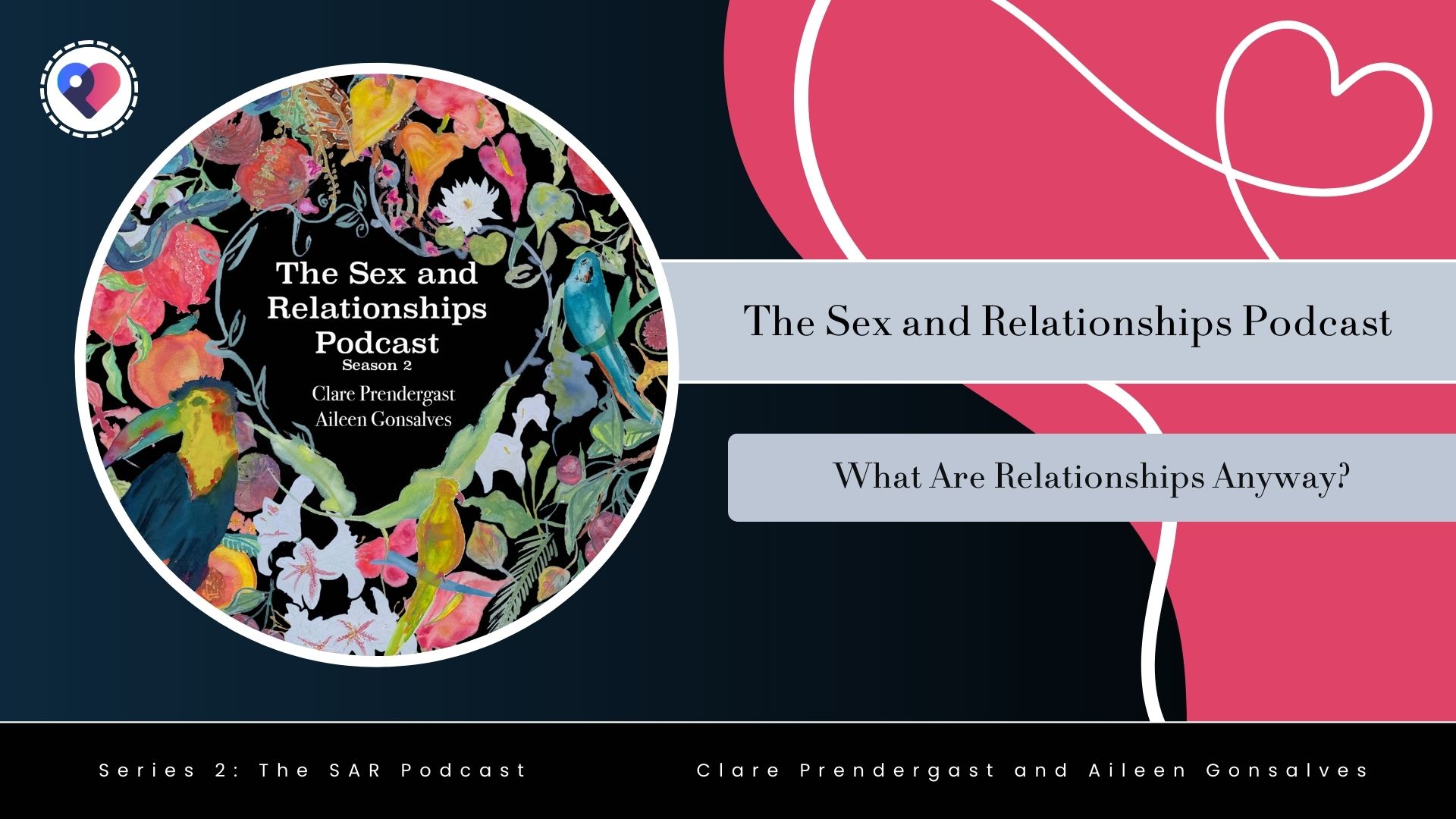
What are relationships anyway?
Relationships – what are they? We often think of relationships as intimate with a partner and yet we actually have hundreds of relationships with friends, family, at work, at play even with nature and beyond. Clare and Aileen kick off the season by discussing the breadth of relationships.
by Thomas Andrew Porteus, MBCS

Mental health
Not quite 'back to normal': a guide to post-pandemic family healing
When news broke in late 2019 of a virus spreading rapidly across the globe, the word ‘unprecedented’ quickly became part of everyday vocabulary in the months that followed. The outbreak of Covid-19 marked the world’s most significant public health crisis in at least a century, shaking the foundations of the one place we usually feel most secure - the home. It is no surprise that years of disrupted routines have left a lasting mark on the family unit. From the sudden loss of support networks to the blurring of boundaries between home, school, and work, the pandemic reshaped how families function. We spoke with a psychotherapist to explore these long-term psychological ripples and why reflecting on that period is essential for understanding - and healing - the family dynamic today.
by Victoria Raw

Infections
Should you and your family get the meningitis vaccination?
Meningitis is a serious condition, but it is not caused by one bug - bacteria, viruses and even fungi can lead to infection. Thankfully, there are meningitis vaccinations available.
by Danny Chadburn

COVID-19
COVID-19: how to support vulnerable friends and family during the coronavirus pandemic
Current coronavirus lockdown measures are especially challenging for older people and those with mental health issues and underlying health conditions. We look at how to support vulnerable loved ones during the COVID-19 pandemic.
by Sally Turner
Related patient information and medicines
Patient information leaflet
Polycystic kidney disease
Polycystic kidney disease (PKD) causes many fluid-filled sacs (cysts) to develop in the kidneys. The most common type of PKD is an inherited condition called autosomal dominant polycystic kidney disease (ADPKD). With ADPKD. Until recently, screening by using an ultrasound scan was ... However, some doctors recommend ultrasound scans every five.

Patient information leaflet
Dystonia
A dystonia is a lasting or frequently recurring and unwanted (involuntary) muscle contraction. It can affect one or more muscles in the body. Th... Secondary dystonia Secondary means the dystonia has been caused by another condition or by something which has happened to you. It is not caused by your genetic make-up. Some neurological conditions.
Patient information leaflet
Muscular dystrophy
Muscular dystrophy is an inherited (genetic) disorder causing muscle weakness. There are different types of muscular dystrophy, which vary as to how severe they are, ranging from very mild to severe. The different types also vary as to what age they begin. What is muscular dystrophy. Muscular dystrophy (MD) is the name given to a group of.
Patient information leaflet
Alcohol use disorder
Many people drink alcohol. For some, alcohol is something that they enjoy in moderation. Wha... Alcohol use disorder means drinking alcohol in a way that causes harm. If you or a family member has alcohol use disorder then treatment and support can be provided to help you or your family member reduce or stop drinking alcohol. Alcohol use disorder.
Patient information leaflet
Huntington's disease
What causes Huntington's disease. Huntington's disease is caused by a defective gene that you inherit from your parents. Huntington's disease is an autosomal dominant condition, meaning you can inherit the disease from just one of your parents. If one of your parents has a faulty copy of the gene, there is a 50:50 chance that each child they have.

Patient information leaflet
Albinism
Albinism is a rare inherited (genetic) condition which reduces the amount of of melanin pigment in the skin, hair and/or eyes. ... Approximately 1 in 17,000 people in Europe and the USA have one of the types of albinism, although in some parts of the world it is more common than this. The genes for occulocutaneous albinism (OCA) are located on.
Further reading and references
- kinesin family member 23; MedlinePlus, National Library of Medicine.
- Iolascon A, Andolfo I, Russo R. Congenital dyserythropoietic anemias. Blood. 2020 Sep 10;136(11):1274-1283. doi: 10.1182/blood.2019000948.
- Liljeholm M, Irvine AF, Vikberg AL, Norberg A, Month S, Sandstrom H, Wahlin A, Mishima M, Golovleva I. Congenital dyserythropoietic anemia type III (CDA III) is caused by a mutation in kinesin family member, KIF23. Blood. 2013 Jun 6;121(23):4791-9. doi: 10.1182/blood-2012-10-461392. Epub 2013 Apr 9.
- Mendez M, Moreno-Carralero MI, Peri VL, Camacho-Galan R, Bosch-Benitez JM, Huerta-Aragones J, Sanchez-Calero-Guilarte J, Moreno-Risco MB, Alonso-Dominguez JM, Moran-Jimenez MJ. Congenital dyserythropoietic anemia types Ib, II, and III: novel variants in the CDIN1 gene and functional study of a novel variant in the KIF23 gene. Ann Hematol. 2021 Feb;100(2):353-364. doi: 10.1007/s00277-020-04319-5. Epub 2020 Nov 7.
- Russo R, Iolascon A, Andolfo I, Marra R, Rosato BE. Updates on clinical and laboratory aspects of hereditary dyserythropoietic anemias. Int J Lab Hematol. 2024 Aug;46(4):595-605. doi: 10.1111/ijlh.14307. Epub 2024 May 15.
Share your thoughts or experiences with others in our patient communities.
Simple access to trusted treatments and health services online.
Common conditions
Get help with common conditions through the NHS, without a GP appointment.





Sign up to the Patient newsletter
Your weekly dose of clear, trustworthy health advice - written to help you feel informed, confident and in control.
By subscribing you accept our Privacy Policy. You can unsubscribe at any time. We never sell your data.