Familial restrictive cardiomyopathy
Last updated 30 Sept 2025
Meets Patient’s editorial guidelines
- DownloadDownload
- Share
- Language
- Discussion
- Ask Patient
- Audio Version
- Add to preferred sources on Google
Familial restrictive cardiomyopathy is a genetic form of heart disease. For the heart to beat normally, the heart (cardiac) muscle must contract and relax in a coordinated way. Oxygen-rich blood from the lungs travels first through the upper chambers of the heart (the atria), and then to the lower chambers of the heart (the ventricles).
Video picks for Genetic conditionsVideo library
Description
Familial restrictive cardiomyopathy is a genetic form of heart disease. For the heart to beat normally, the heart (cardiac) muscle must contract and relax in a coordinated way. Oxygen-rich blood from the lungs travels first through the upper chambers of the heart (the atria), and then to the lower chambers of the heart (the ventricles).
In people with familial restrictive cardiomyopathy, the heart muscle is stiff and cannot fully relax after each contraction. Impaired muscle relaxation causes blood to back up in the atria and lungs, which reduces the amount of blood in the ventricles.
Familial restrictive cardiomyopathy can appear anytime from childhood to adulthood. The first signs and symptoms of this condition in children are failure to gain weight and grow at the expected rate (failure to thrive), extreme tiredness (fatigue), and fainting. Children who are severely affected may also have abnormal swelling or puffiness (edema), increased blood pressure, an enlarged liver, an abnormal buildup of fluid in the abdominal cavity (ascites), and lung congestion. Some children with familial restrictive cardiomyopathy do not have any obvious signs or symptoms, but they may die suddenly due to heart failure. Without treatment, the majority of affected children survive only a few years after they are diagnosed.
Adults with familial restrictive cardiomyopathy typically first develop shortness of breath, fatigue, and a reduced ability to exercise. Some individuals have an irregular heart beat (arrhythmia) and may also experience a sensation of fluttering or pounding in the chest (palpitations) and dizziness. Abnormal blood clots are commonly seen in adults with this condition. Without treatment, approximately one-third of adults with familial restrictive cardiomyopathy do not survive more than five years after diagnosis.
Inheritance patterns
The source lists the following possible inheritance patterns: Autosomal dominant. More than one pattern can apply in different cases.
Related genes
Other names
Cardiomyopathy, restrictive
RCM
Patient picks for Genetic conditions
Heart health and blood vessels
Dilated cardiomyopathy
Dilated cardiomyopathy is a condition where the heart muscle becomes stretched and thin. The heart becomes enlarged (dilates) and pumps blood less well. Symptoms vary according to severity and the treatment depends on the type of symptoms and whether any complications develop. Some forms of dilated cardiomyopathy run in families.
by Dr Doug McKechnie, MRCGP

Heart health and blood vessels
Is cardiomyopathy genetically inherited?
Around one in 250 people are affected by cardiomyopathy, a group of conditions that affect the structure of the heart. Cardiomyopathy can be caused by other heart and circulatory conditions, but some cardiomyopathies can also be inherited.
by Lydia Smith

Heart health and blood vessels
Dilated cardiomyopathy causes: what are the risk factors?
Having dilated cardiomyopathy means that your heart muscle is weakened, which affects how your heart pumps blood around your body. There are a wide range of dilated cardiomyopathy causes, including genetics, other health conditions, alcohol consumption and a poor diet. While we can't control some of these risk factors, we can make positive lifestyle changes to reduce our risk of developing dilated cardiomyopathy.
by Amberley Davis
Heart health and blood vessels
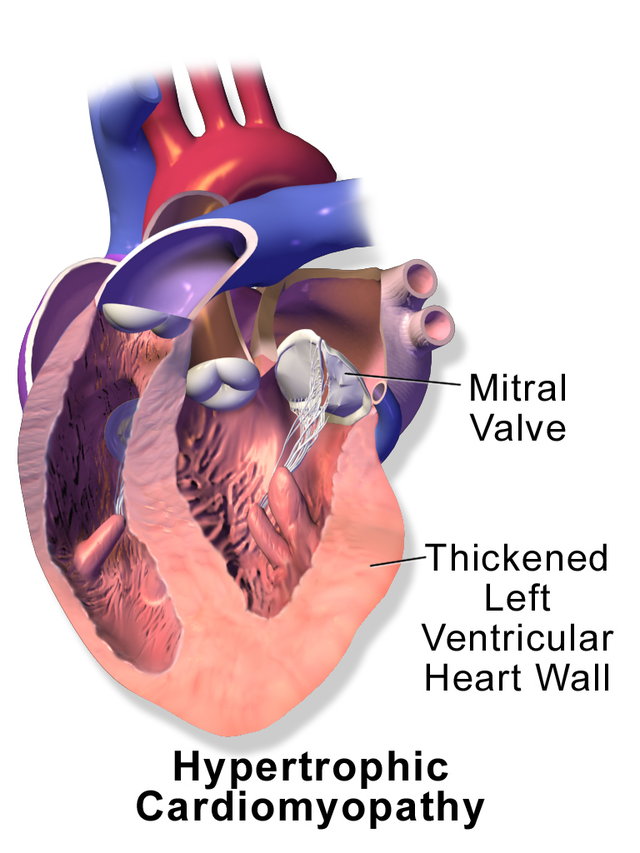
Hypertrophic cardiomyopathy
In hypertrophic cardiomyopathy the heart muscle becomes thickened (hypertrophies) in parts of the heart. In the normal heart, the muscle cells are regular and patterned. In hypertrophic cardiomyopathy the cells of the heart muscle become irregular and disordered.
by Dr Colin Tidy, MRCGP

Heart health and blood vessels
How to manage stress when living with cardiomyopathy
Living with a long-term condition such as cardiomyopathy can be challenging and easily lead to stress, whether it is about ongoing health problems or treatments, lifestyle changes or the future. Left unchecked, however, stress can exacerbate many health problems.
by Lydia Smith

Heart health and blood vessels
Familial hypercholesterolaemia
Familial hypercholesterolaemia is inherited high cholesterol. It is a condition where you have a very high cholesterol level in your blood.
by Dr Colin Tidy, MRCGP
Related patient information and medicines

Patient information leaflet
Heart disease
Cardio... There are several types: Hypertrophic cardiomyopathy Hypertrophic cardiomyopathy. Dilated cardiomyopathy Dilated cardiomyopathy. Restrictive cardiomyopathy: this is a rare form of cardiomyopathy in which the heart muscle is not able to relax completely between heartbeats. Arrhythmogenic right ventricular cardiomyopathy: this is rare and.
Patient information leaflet
Dilated cardiomyopathy
Dilated cardiomyopathy is a condition where the heart muscle becomes stretched and thin. The heart becomes enlarged (dilates) and pumps blood less well. Dilated cardiomyopathy is uncommon, but it is the most common type of cardiomyopathy. Another possibility is that an unknown viral infection may be responsible. About one in four people with.

Patient information leaflet
Haemochromatosis
'Scarring' (cirrhosis) of the liver Cirrhosis. Disease of the heart muscle (cardiomyopathy) Dilated cardiomyopathy. Most of these symptoms are found in other disorders and so diagnosis can be difficult. Haemochromatosis is an autosomal recessive disorder. ... Heart disease -for example it can lead to the heart muscles becoming weak ( dilated.

Patient information leaflet
Sarcoidosis
Damage to your lungs, caused by sarcoidosis, may also cause changes in the right side of your... This is known as cor pulmonale and can lead to heart failure Heart failure if left untreated. Your heart can also become generally enlarged in sarcoidosis, known as cardiomyopathy. This means that your heart cannot beat as strongly or effectively and.
Patient information leaflet
Hypertrophic cardiomyopathy
In hypertrophic cardiomyopathy the heart muscle becomes thickened (hypertrophies) in parts of the heart. In the normal heart, the muscle cells are regular and patterned. Hypertrophic cardiomyopathy is a disease in which the heart muscle becomes thickened. A Doppler ultrasound scan can also show if there is any turb... Family screening Your.

Patient information leaflet
Duchenne muscular dystrophy
In the later stag... This type of treatment has improved over recent years, which has helped to improve the quality of life and outlook for people with DMD. Heart (cardiac) complications Teenagers and adults with DMD may develop a heart problem called cardiomyopathy Dilated cardiomyopathy , which means weakness of the heart muscle. With DMD, the.
Further reading and references
- Familial restrictive cardiomyopathy; MedlinePlus, National Library of Medicine.
- Elliott P, Andersson B, Arbustini E, Bilinska Z, Cecchi F, Charron P, Dubourg O, Kuhl U, Maisch B, McKenna WJ, Monserrat L, Pankuweit S, Rapezzi C, Seferovic P, Tavazzi L, Keren A. Classification of the cardiomyopathies: a position statement from the European Society Of Cardiology Working Group on Myocardial and Pericardial Diseases. Eur Heart J. 2008 Jan;29(2):270-6. doi: 10.1093/eurheartj/ehm342. Epub 2007 Oct 4.
- Kaski JP, Syrris P, Burch M, Tome-Esteban MT, Fenton M, Christiansen M, Andersen PS, Sebire N, Ashworth M, Deanfield JE, McKenna WJ, Elliott PM. Idiopathic restrictive cardiomyopathy in children is caused by mutations in cardiac sarcomere protein genes. Heart. 2008 Nov;94(11):1478-84. doi: 10.1136/hrt.2007.134684. Epub 2008 May 8.
- Mogensen J, Arbustini E. Restrictive cardiomyopathy. Curr Opin Cardiol. 2009 May;24(3):214-20. doi: 10.1097/hco.0b013e32832a1d2e. No abstract available.
- Muchtar E, Blauwet LA, Gertz MA. Restrictive Cardiomyopathy: Genetics, Pathogenesis, Clinical Manifestations, Diagnosis, and Therapy. Circ Res. 2017 Sep 15;121(7):819-837. doi: 10.1161/CIRCRESAHA.117.310982.
- Nihoyannopoulos P, Dawson D. Restrictive cardiomyopathies. Eur J Echocardiogr. 2009 Dec;10(8):iii23-33. doi: 10.1093/ejechocard/jep156.
- Sen-Chowdhry S, Syrris P, McKenna WJ. Genetics of restrictive cardiomyopathy. Heart Fail Clin. 2010 Apr;6(2):179-86. doi: 10.1016/j.hfc.2009.11.005.
- Xu Q, Dewey S, Nguyen S, Gomes AV. Malignant and benign mutations in familial cardiomyopathies: insights into mutations linked to complex cardiovascular phenotypes. J Mol Cell Cardiol. 2010 May;48(5):899-909. doi: 10.1016/j.yjmcc.2010.03.005. Epub 2010 Mar 16.
Share your thoughts or experiences with others in our patient communities.
Simple access to trusted treatments and health services online.
Common conditions
Get help with common conditions through the NHS, without a GP appointment.





Sign up to the Patient newsletter
Your weekly dose of clear, trustworthy health advice - written to help you feel informed, confident and in control.
By subscribing you accept our Privacy Policy. You can unsubscribe at any time. We never sell your data.