Lactose intolerance
Last updated 3 Apr 2025
Meets Patient’s editorial guidelines
- DownloadDownload
- Share
- Language
- Discussion
- Ask Patient
- Audio Version
- Add to preferred sources on Google
Lactose intolerance is a condition that makes it difficult to digest lactose, a sugar found in milk and several other dairy products. Lactose is normally broken down by an enzyme called lactase, which is produced by cells in the lining of the small intestine. Lack or loss of lactase has both genetic and non-genetic causes.
Video picks for Genetic conditionsVideo library
Description
Lactose intolerance is a condition that makes it difficult to digest lactose, a sugar found in milk and several other dairy products. Lactose is normally broken down by an enzyme called lactase, which is produced by cells in the lining of the small intestine. Lack or loss of lactase has both genetic and non-genetic causes.
Congenital lactase deficiency, also called congenital alactasia, is a disorder in which infants are unable to break down the lactose in breast milk or formula. This form of lactose intolerance results in very severe diarrhea. If affected infants are not given a lactose-free infant formula, they may experience severe dehydration and weight loss.
Lactose intolerance in adulthood can be caused by the reduced production of lactase after infancy (lactase nonpersistence). If individuals with lactose intolerance consume lactose-containing dairy products, they may experience abdominal pain, bloating, flatulence, nausea, and diarrhea beginning 30 minutes to 2 hours later.
Most people with lactase nonpersistence retain some lactase activity and can include varying amounts of lactose in their diets without experiencing symptoms. Often, affected individuals have difficulty digesting fresh milk but can eat certain dairy products such as cheese or yogurt without discomfort. These foods are made using fermentation processes that break down much of the lactose in milk.
Inheritance patterns
The source lists the following possible inheritance patterns: Autosomal dominant; Autosomal recessive. More than one pattern can apply in different cases.
Related genes
Other names
Alactasia
Hypolactasia
Lactose malabsorption
Milk sugar intolerance
Patient picks for Genetic conditions

Allergies, blood and immune system
Lactose intolerance
Lactose intolerance is a condition in which the body has difficulty digesting lactose. Lactose is a sugar found in milk and other dairy foods. People with lactose intolerance may get diarrhoea, stomach pains and bloating if they drink milk or eat dairy foods. Some people are born with a tendency to develop lactose intolerance; others get it as a result of gastroenteritis or chemotherapy. The treatment is mainly to avoid lactose.
by Dr Doug McKechnie, MRCGP

Allergies, blood and immune system
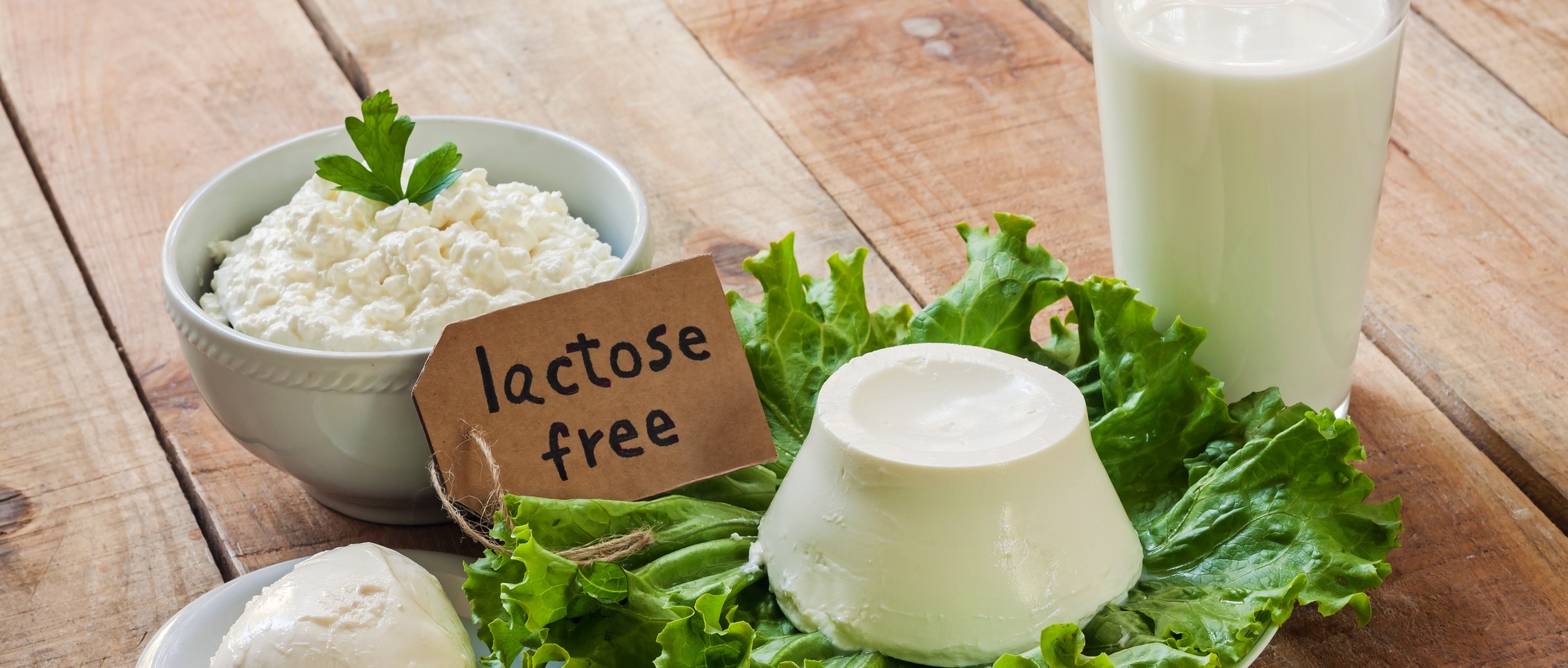
Is it cow's milk allergy or lactose intolerance?
The supermarket chiller aisles are bursting with lactose-free and dairy milk substitutes these days. There's never been more choice for what to put on your cornflakes. But many people confuse the terms 'lactose intolerance' and 'cow's milk allergy'. So what's the difference?
by Dr Jennifer Kelly, MRCGP
Allergies, blood and immune system
What can you eat if you're lactose intolerant?
Lactose intolerance is a condition in which there is not enough lactase in the body. Lactase is the chemical (enzyme) that breaks down (digests) 'milk sugar' (lactose) in the body. It is common in adults and it can vary in severity.
by Dr Jan Sambrook, MRCGP

Allergies, blood and immune system
Food allergy and intolerance
Food allergy and food intolerance are not the same thing. The following leaflet explores the difference between them, their causes, and how they are diagnosed and managed.
by Dr Hayley Willacy, FRCGP

Allergies, blood and immune system
What is the difference between allergy and intolerance?
Make no mistake - food allergies can be deadly, and they're on the rise. The tiniest exposure to something you have a severe allergy to can be fatal so it's important to be aware of the signs of an allergic reaction to food.
by Dr Sarah Jarvis
Allergies, blood and immune system
Cow's milk protein allergy
Cow's milk protein allergy is one of the most common food allergies seen in children. It is most commonly seen during the first year of life. Many children who have been allergic to cow's milk protein become tolerant to it by the time they are 5 years old.
by Dr Hayley Willacy, FRCGP
Related patient information and medicines
Patient information leaflet
Lactose intolerance
Lactose intolerance is a condition in which the body has difficulty digesting lactose. Lactose is a sugar found in milk and other dairy foods. People with lactose intolerance may get diarrhoea, stomach pains and bloating if they drink milk or eat dairy foods. Some people are born with a tendency to develop lactose intolerance; others get it as a.

Patient information leaflet
Left-side abdominal pain in children
Fluids are important but food is not necessary if the child is not hungry See the separate leaflets call... Lactose intolerance This can lead to bloating, tummy pain, wind and watery stools after drinking milk or any food containing dairy. Lactose intolerance often occurs for a few days or weeks after a bout of vomiting or diarrhoea. The condition.

Patient information leaflet
Recurrent abdominal pain in children
Lactose intolerance Lactose intolerance : this is a common digestive problem where the body is unable to digest lactose, a sugar mainly found in milk and (to a lesser extent) other dairy products. The child complains of symptoms within a few hours of eating food that contains lactose. ...mmy pain and feeling sick (nausea)Lactose intolerance comes.

Patient information leaflet
Bottle-feeding your baby
Lactose-free formula This formula is intended only for babies who are lactose-intolerant. This means they can't absorb lactose (a sugar found in milk and dairy products) because they are deficient in the enzyme lactase which is needed to break it down. True lactose intolerance is rare in babies. This is as yo... Symptoms of lactose intolerance.
Patient information leaflet
Food allergy and intolerance
Examples of food intolerance Lactose intolerance This causes diarrhoea and tummy (abdominal) symptoms (bloating and pain) after milk is drunk or dairy products are eaten. It happens because of a deficiency of lactase, an enzyme in the body that digests the sugar in milk (lactose). Unless lactose is broken down, the body cannot absorb it. See the.

Patient information leaflet
Diarrhoea
Diarrhoea is when you have loose or watery poo more often than usual. Lactose intolerance can sometimes occur. Lactose intolerance Lactose intolerance can sometimes occur for a period of time after infectious diarrhoea. This is known as secondary or acquired lactose intolerance. This leads to lack of an enzyme (chemical) called lactase that is.
Further reading and references
- Lactose intolerance; MedlinePlus, National Library of Medicine.
- Harrington LK, Mayberry JF. A re-appraisal of lactose intolerance. Int J Clin Pract. 2008 Oct;62(10):1541-6. doi: 10.1111/j.1742-1241.2008.01834.x.
- He T, Venema K, Priebe MG, Welling GW, Brummer RJ, Vonk RJ. The role of colonic metabolism in lactose intolerance. Eur J Clin Invest. 2008 Aug;38(8):541-7. doi: 10.1111/j.1365-2362.2008.01966.x.
- Heine RG, AlRefaee F, Bachina P, De Leon JC, Geng L, Gong S, Madrazo JA, Ngamphaiboon J, Ong C, Rogacion JM. Lactose intolerance and gastrointestinal cow's milk allergy in infants and children - common misconceptions revisited. World Allergy Organ J. 2017 Dec 12;10(1):41. doi: 10.1186/s40413-017-0173-0. eCollection 2017.
- Heyman MB; Committee on Nutrition. Lactose intolerance in infants, children, and adolescents. Pediatrics. 2006 Sep;118(3):1279-86. doi: 10.1542/peds.2006-1721.
- Ingram CJ, Mulcare CA, Itan Y, Thomas MG, Swallow DM. Lactose digestion and the evolutionary genetics of lactase persistence. Hum Genet. 2009 Jan;124(6):579-91. doi: 10.1007/s00439-008-0593-6. Epub 2008 Nov 26.
- Jarvela IE. Molecular genetics of adult-type hypolactasia. Ann Med. 2005;37(3):179-85. doi: 10.1080/07853890510007359.
- Lomer MC, Parkes GC, Sanderson JD. Review article: lactose intolerance in clinical practice--myths and realities. Aliment Pharmacol Ther. 2008 Jan 15;27(2):93-103. doi: 10.1111/j.1365-2036.2007.03557.x. Epub 2007 Oct 23.
- Robayo-Torres CC, Nichols BL. Molecular differentiation of congenital lactase deficiency from adult-type hypolactasia. Nutr Rev. 2007 Feb;65(2):95-8. doi: 10.1111/j.1753-4887.2007.tb00286.x.
- Segurel L, Bon C. On the Evolution of Lactase Persistence in Humans. Annu Rev Genomics Hum Genet. 2017 Aug 31;18:297-319. doi: 10.1146/annurev-genom-091416-035340. Epub 2017 Apr 19.
- Storhaug CL, Fosse SK, Fadnes LT. Country, regional, and global estimates for lactose malabsorption in adults: a systematic review and meta-analysis. Lancet Gastroenterol Hepatol. 2017 Oct;2(10):738-746. doi: 10.1016/S2468-1253(17)30154-1. Epub 2017 Jul 7.
- Torniainen S, Freddara R, Routi T, Gijsbers C, Catassi C, Hoglund P, Savilahti E, Jarvela I. Four novel mutations in the lactase gene (LCT) underlying congenital lactase deficiency (CLD). BMC Gastroenterol. 2009 Jan 22;9:8. doi: 10.1186/1471-230X-9-8.
Share your thoughts or experiences with others in our patient communities.
Simple access to trusted treatments and health services online.
Common conditions
Get help with common conditions through the NHS, without a GP appointment.





Sign up to the Patient newsletter
Your weekly dose of clear, trustworthy health advice - written to help you feel informed, confident and in control.
By subscribing you accept our Privacy Policy. You can unsubscribe at any time. We never sell your data.