Otopalatodigital syndrome type 1
Last updated 28 Jul 2021
Meets Patient’s editorial guidelines
- DownloadDownload
- Share
- Language
- Discussion
- Ask Patient
- Audio Version
- Add to preferred sources on Google
Otopalatodigital syndrome type 1 is a disorder primarily involving abnormalities in skeletal development. It is a member of a group of related conditions called otopalatodigital spectrum disorders, which also includes otopalatodigital syndrome type 2, frontometaphyseal dysplasia, Melnick-Needles syndrome, and terminal osseous dysplasia. In general, these disorders involve hearing loss caused by malformations in the tiny bones in the ears (ossicles), problems in the development of the roof of the mouth (palate), and skeletal abnormalities involving the fingers or toes (digits).
Video picks for Genetic conditionsVideo library
Description
Otopalatodigital syndrome type 1 is a disorder primarily involving abnormalities in skeletal development. It is a member of a group of related conditions called otopalatodigital spectrum disorders, which also includes otopalatodigital syndrome type 2, frontometaphyseal dysplasia, Melnick-Needles syndrome, and terminal osseous dysplasia. In general, these disorders involve hearing loss caused by malformations in the tiny bones in the ears (ossicles), problems in the development of the roof of the mouth (palate), and skeletal abnormalities involving the fingers or toes (digits).
Otopalatodigital syndrome type 1 is usually the mildest of the otopalatodigital spectrum disorders. People with this condition usually have characteristic facial features including wide-set and downward-slanting eyes; prominent brow ridges; and a broad, flat nose. Affected individuals have abnormalities of the fingers and toes, such as blunt, square-shaped (spatulate) fingertips; shortened thumbs and big toes; unusually long second toes; and a wide gap between the first and second toes (known as a sandal gap). Affected individuals also have hearing loss.
Infants with otopalatodigital syndrome type 1 may be born with an opening in the roof of the mouth (a cleft palate). Individuals with this condition often have fewer teeth than normal (hypodontia). They may have mild abnormal curvature (bowing) of their limbs, and limited range of motion in some joints. People with otopalatodigital syndrome type 1 may be somewhat shorter than other members of their family.
Females with otopalatodigital syndrome type 1 often have more variable signs and symptoms compared to affected males, with females typically having fewer signs and symptoms.
Inheritance patterns
The source lists the following possible inheritance patterns: X-linked. More than one pattern can apply in different cases.
Related genes
Other names
Cranioorodigital syndrome
Faciopalatoosseous syndrome
FPO
OPD syndrome, type 1
Oto-palato-digital syndrome, type I
Taybi syndrome
Patient picks for Genetic conditions
Diabetes
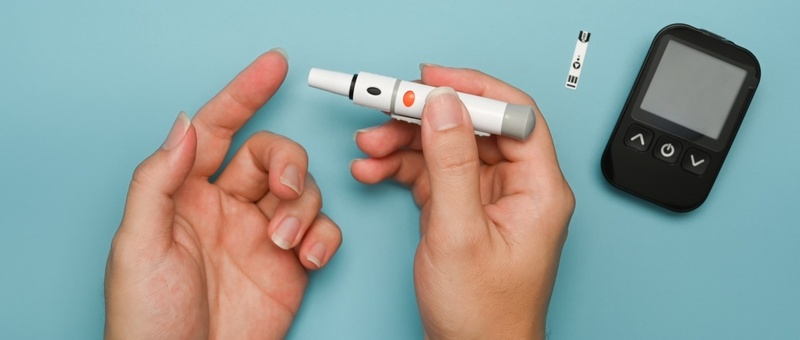
MHRA approves teplizumab to delay progression of type 1 diabetes
Teplizumab (Tzield) has been approved by the Medicines and Healthcare products Regulatory Agency (MHRA) to help delay the onset of Stage 3 type 1 diabetes (T1D). Read on to see what this means if you are prescribed teplizumab and what it does for you.
by Lawrence Higgins

Diabetes
Continuous glucose monitoring in type 1 diabetes
Type 1 and type 2 diabetes are both potentially serious conditions which should always be taken seriously. They’re both diagnosed on the basis of high blood sugar. But in other respects they are very, very different. Type 2 is largely down to lifestyle – getting type 1 is absolutely nothing to do with whether you eat too much sugar, carry excess weight or don’t exercise enough. People with type 2 diabetes often never need insulin – those with type 1 need it from day one. Many people with type 2 diabetes never need treatment that carries a risk of disabling low blood sugar (hypoglycaemia) – people with type 1 live with this risk every day. As a result, many people with type 2 never need to check their blood sugar several times a day – for people with type 1, it’s a highly unwelcome occupational hazard.
by Dr Sarah Jarvis
Diabetes
Slowdown in type 2 diabetes cases
Some countries have seen a fall in new cases of type 2 diabetes according to a new review of the current evidence.
by Milly Evans

Diabetes
Can diet drinks cause type 2 diabetes?
We're all used to the headlines about the 'global epidemic' of type 2 diabetes. We should all know that completely unlike type 1 diabetes, getting type 2 diabetes is largely about lifestyle.
by Dr Sarah Jarvis

Diabetes
Signs of type 2 diabetes found in children as young as eight
The early signs of type 2 diabetes are visible in children as young as eight years old, according to new research.
by Milly Evans

Bones, joints and muscles
Hypermobility spectrum disorders
Hypermobility spectrum disorders include all people with what used to be called joint hypermobility syndrome, and before that benign joint hypermobility syndrome. Anyone who has symptoms as a result of having hypermobile joints, but who does not have all the features of Ehlers-Danlos syndrome, has a hypermobility spectrum disorder. These problems mainly affect children and young adolescents with extra-flexible (hypermobile) joints who develop pain on exercise, which persists when they rest. These conditions can have a major impact on school and sporting life. Whilst they do not usually cause long-term harm, they can be associated with injuries and can sometimes persist into adulthood. Treatment is aimed at increasing muscle strength and joint resilience without causing injury.
by Dr Colin Tidy, MRCGP
Related patient information and medicines

Patient information leaflet
Ehlers-Danlos syndrome
The Ehlers-Danlos syndromes (EDS) are a group of conditions that affect the stretchiness and strength of supporting tissues in the body, including skin, joints, blood vessels and internal organs. What are the Ehlers-Danlos syndromes. The Ehlers Danlos syndromes (EDS) are a group of conditions which are usually (although not always) inherited from.

Patient information leaflet
Postural tachycardia syndrome
Postural tachycardia syndrome (PoTS) is an abnormal response of your body when you are upright (usually when standing). Your heart rate increases too much after getting up from lying or sitting down. It is caused by a problem with the nervous system which controls the autonomic functions in the body. This part of the nervous system is called the.

Patient information leaflet
Type 1 diabetes
Type 1 diabetes is the type of diabetes that typically develops in children and in young adults. In type 1 diabetes the body stops making insulin and the blood sugar (glucose) level goes very high. Treatment to control the blood glucose level is with insulin injections... What is type 1 diabetes. Dr Parta Kar Type 1 diabetes is the type of.

Patient information leaflet
Down's syndrome
Down's syndrome (also known as Down syndrome) is a genetic chromosome problem. Someone with Down's syndrome has an extra copy of chromosome 21 in the cells of their body. All people with Down's syndrome have some degree of learning disability. Down's syndrome may be detected before birth (prenatally) or after birth (postnatally). It cannot be.

Patient information leaflet
Cri du chat syndrome
Cri du chat syndrome is a chromosome problem caused by a missing piece of chromosome 5. The syndrome is called cri du chat (French for cry of the cat) because affected babies often have a high-pitched cry. Not all babies with the missing piece of chromosome 5 will develop cri du chat syndrome. Cri du chat syndrome may cause a variety of.
Patient information leaflet
Gilbert's syndrome
Gilbert's syndrome is due to an inherited defect in processing bilirubin in the liver. ...s constitutional hepatic dysfunction - is a condition where the liver does not process bilirubin very wellIt is more common in men than in women, and in people with diabetes (especially type 1 diabetes Type 1 diabetes ). However, Gilbert's syndrome may have.
Further reading and references
- Otopalatodigital syndrome type 1; MedlinePlus, National Library of Medicine.
- Hidalgo-Bravo A, Pompa-Mera EN, Kofman-Alfaro S, Gonzalez-Bonilla CR, Zenteno JC. A novel filamin A D203Y mutation in a female patient with otopalatodigital type 1 syndrome and extremely skewed X chromosome inactivation. Am J Med Genet A. 2005 Jul 15;136(2):190-3. doi: 10.1002/ajmg.a.30792.
- Joksic I, Cuturilo G, Jurisic A, Djuricic S, Peterlin B, Mijovic M, Karadzov ON, Egic A, Milovanovic Z. Otopalatodigital Syndrome Type I: Novel Characteristics and Prenatal Manifestations in two Siblings. Balkan J Med Genet. 2019 Dec 21;22(2):83-88. doi: 10.2478/bjmg-2019-0024. eCollection 2019 Dec.
- Moutton S, Fergelot P, Naudion S, Cordier MP, Sole G, Guerineau E, Hubert C, Rooryck C, Vuillaume ML, Houcinat N, Deforges J, Bouron J, Deves S, Le Merrer M, David A, Genevieve D, Giuliano F, Journel H, Megarbane A, Faivre L, Chassaing N, Francannet C, Sarrazin E, Stattin EL, Vigneron J, Leclair D, Abadie C, Sarda P, Baumann C, Delrue MA, Arveiler B, Lacombe D, Goizet C, Coupry I. Otopalatodigital spectrum disorders: refinement of the phenotypic and mutational spectrum. J Hum Genet. 2016 Aug;61(8):693-9. doi: 10.1038/jhg.2016.37. Epub 2016 May 19.
- Robertson S, Wade E. FLNA-Related Otopalatodigital Spectrum Disorders. 2005 Nov 30 [updated 2025 Jun 26]. In: Adam MP, Bick S, Mirzaa GM, Wallace SE, Amemiya A, editors. GeneReviews(R) [Internet]. Seattle (WA): University of Washington, Seattle; 1993-2026. Available from http://www.ncbi.nlm.nih.gov/books/NBK1393/
- Robertson SP, Twigg SR, Sutherland-Smith AJ, Biancalana V, Gorlin RJ, Horn D, Kenwrick SJ, Kim CA, Morava E, Newbury-Ecob R, Orstavik KH, Quarrell OW, Schwartz CE, Shears DJ, Suri M, Kendrick-Jones J, Wilkie AO; OPD-spectrum Disorders Clinical Collaborative Group. Localized mutations in the gene encoding the cytoskeletal protein filamin A cause diverse malformations in humans. Nat Genet. 2003 Apr;33(4):487-91. doi: 10.1038/ng1119. Epub 2003 Mar 3.
- Robertson SP. Otopalatodigital syndrome spectrum disorders: otopalatodigital syndrome types 1 and 2, frontometaphyseal dysplasia and Melnick-Needles syndrome. Eur J Hum Genet. 2007 Jan;15(1):3-9. doi: 10.1038/sj.ejhg.5201654. Epub 2006 Aug 23.
Share your thoughts or experiences with others in our patient communities.
Simple access to trusted treatments and health services online.
Common conditions
Get help with common conditions through the NHS, without a GP appointment.





Sign up to the Patient newsletter
Your weekly dose of clear, trustworthy health advice - written to help you feel informed, confident and in control.
By subscribing you accept our Privacy Policy. You can unsubscribe at any time. We never sell your data.