Spinal and bulbar muscular atrophy
Last updated 18 Aug 2020
Meets Patient’s editorial guidelines
- DownloadDownload
- Share
- Language
- Discussion
- Ask Patient
- Audio Version
- Add to preferred sources on Google
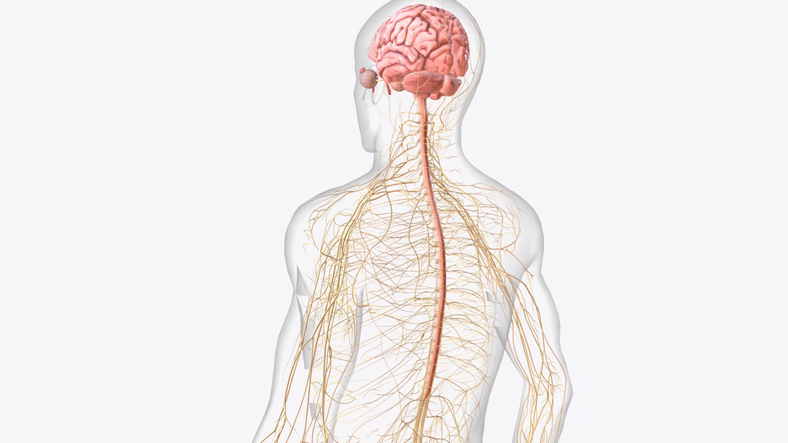
Spinal and bulbar muscular atrophy, also known as Kennedy disease, is a disorder of specialized nerve cells that control muscle movement (motor neurons). These nerve cells originate in the spinal cord and the part of the brain that is connected to the spinal cord (the brainstem).
Video picks for Genetic conditionsVideo library
Description
Spinal and bulbar muscular atrophy, also known as Kennedy disease, is a disorder of specialized nerve cells that control muscle movement (motor neurons). These nerve cells originate in the spinal cord and the part of the brain that is connected to the spinal cord (the brainstem).
Spinal and bulbar muscular atrophy mainly affects males and is characterised by muscle weakness and wasting (atrophy) that usually begins in adulthood and worsens slowly over time. Muscle wasting in the arms and legs results in cramping; leg muscle weakness can also lead to difficulty walking and a tendency to fall. Certain muscles in the face and throat (bulbar muscles) are also affected, which causes progressive problems with swallowing and speech. Additionally, muscle twitches (fasciculations) are common. Some males with the disorder experience unusual breast development (gynecomastia) and may be unable to father a child (infertile).
Inheritance patterns
The source lists the following possible inheritance patterns: X-linked recessive. More than one pattern can apply in different cases.
Related genes
Other names
Bulbospinal muscular atrophy, X-linked
KD
Kennedy disease
Kennedy spinal and bulbar muscular atrophy
Kennedy's disease
SBMA
X-linked spinal and bulbar muscular atrophy
Patient picks for Genetic conditions

Bones, joints and muscles
Axial spondyloarthritis
Axial spondyloarthritis (also known as axSpA or axial SpA) is a painful, chronic arthritis that mainly affects the joints of the spine, and also the joints connecting each side of the base of the spine with the pelvis (sacroiliac joints). It can also affect other joints in the body, as well as tendons and ligaments. It is divided into: 1) Ankylosing spondylitis. 2) Non radiographic axial spondyloarthritis.
by Dr Philippa Vincent, MRCGP

Children's health
Duchenne muscular dystrophy
Duchenne muscular dystrophy is a condition which causes progressive muscle weakness. It starts in childhood and may be noticed when a child has difficulty standing up, climbing or running. It is a genetic condition and can be inherited. It usually affects only boys, although girls may carry the Duchenne gene. Boys with Duchenne muscular dystrophy should have regular reviews and physiotherapy from childhood. They are likely to need increasing help and treatments.
by Dr Philippa Vincent, MRCGP

Bones, joints and muscles
Spinal disc problems
Spinal discs are also called intervertebral discs. There is a spinal disc between each bone (vertebra) in your spine. This keeps the vertebrae separated and acts as a shock absorber. As we get older the spinal discs gradually become damaged and this can cause problems such as back pain. Other problems affecting the spinal discs include a slipped disc or, much more rarely, infection (discitis).
by Dr Hayley Willacy, FRCGP

Bones, joints and muscles
Muscular dystrophy
Muscular dystrophy is an inherited (genetic) disorder causing muscle weakness. There are different types of muscular dystrophy, which vary as to how severe they are, ranging from very mild to severe. The different types also vary as to what age they begin. If muscular dystrophy is suspected, tests can help to make an accurate diagnosis. Other people in the family can also be tested to see if they have a muscular dystrophy gene. Muscular dystrophy cannot be cured but there are various treatments which can help.
by Dr Doug McKechnie, MRCGP

Tests and investigations
CT scan
Note: the information below is a general guide only. The arrangements, and the way tests are performed, may vary between different hospitals. Always follow the instructions given by your doctor or local hospital.
by Dr Rachel Hudson, MRCGP

Bones, joints and muscles
Spinal stenosis
Spinal stenosis is a term used to describe a narrowing of your spinal canal. The narrowing may not cause any symptoms. However, the narrowing may progress to cause squeezing (compression) of your spinal nerves or compression of your spine. Spinal stenosis causes back pain and leg pain. Most often it occurs when you walk. Weakness of the legs may make you feel unsteady. This may affect both legs or just one leg. Spinal stenosis affecting the cervical spine in your neck may also cause pain and weakness in the shoulders and arms. Spinal stenosis can often be treated by simple measures such as medicines for pain relief, keeping as active as you can and losing weight if you are overweight. Sometimes steroid injections or surgery are suggested if simple measures are not successful.
by Dr Rosalyn Adleman, MRCGP
Related patient information and medicines
Patient information leaflet
Motor neurone disease
Motor neurone disease (MND) is a neurological condition causes a progressive weakness and wasting of many of the muscles in the body. There are various types of motor neurone disease. This leaflet is mainly about amyotrophic lateral sclerosis (ALS), which is the most common type of motor neurone disease. Although there is no cure for motor neurone.

Patient information leaflet
Baby-led weaning
In the UK, Department of Health guidelines recommend the introduction of solid food 'at around 6 months', but that as individual development of babies varies widely, the recommended 'range' of ages is not before 4 months (17 weeks) of age, and not later than 6 months. Read our feature on Spinal Muscular Atrophy Spinal muscular atrophy to see the.

Patient information leaflet
Muscle weakness
This leaflet looks at types of muscle weakness and discusses the wide range of problems which can cause them. Spinal cord compression Tumours in the brain can als... Other uncommon nerve conditions : Multiple sclerosis (MS) : This is caused by damage to nerves in the brain and spinal cord and can cause sudden paralysis of a muscle. Guillain-Barré.

Patient information leaflet
Diabetic amyotrophy
Diabetic amyotrophy is a complication of diabetes mellitus. It affects the thighs, hips, buttocks and legs, causing pain and muscle wasting. What is diabetic amyotrophy. Diabetic amyotrophy is a complication of diabetes mellitus Diabetes. It causes a loss of muscle bulk due to damage to the motor nerve which activates those muscles. It is also.

Patient information leaflet
Planning to become pregnant
Pregnant women need a good supply of folic acid to help. Folic acid tablets in early pregnancy reduce the risk of having a baby born with a spinal cord problem such as spina bifida. Women with a higher risk of having a child with a spinal cord problem need to take 5 mg a day - this is only available on prescription. Women on medication for high.

Patient information leaflet
Polio and polio vaccine
Polio (poliomyelitis), is a serious illness that can be debilitating and life-threatening. There is no cure but thanks to vaccinations, the illness is rare. What is polio. Polio (poliomyelitis) is a serious illness caused by a virus called poliovirus. Polio mainly affects children under 5 years of age. It is a ... Those who have paralytic polio.
Further reading and references
- Spinal and bulbar muscular atrophy; MedlinePlus, National Library of Medicine.
- Atsuta N, Watanabe H, Ito M, Banno H, Suzuki K, Katsuno M, Tanaka F, Tamakoshi A, Sobue G. Natural history of spinal and bulbar muscular atrophy (SBMA): a study of 223 Japanese patients. Brain. 2006 Jun;129(Pt 6):1446-55. doi: 10.1093/brain/awl096. Epub 2006 Apr 18.
- Finsterer J. Bulbar and spinal muscular atrophy (Kennedy's disease): a review. Eur J Neurol. 2009 May;16(5):556-61. doi: 10.1111/j.1468-1331.2009.02591.x.
- Finsterer J. Perspectives of Kennedy's disease. J Neurol Sci. 2010 Nov 15;298(1-2):1-10. doi: 10.1016/j.jns.2010.08.025. Epub 2010 Sep 16.
- Katsuno M, Banno H, Suzuki K, Adachi H, Tanaka F, Sobue G. Clinical features and molecular mechanisms of spinal and bulbar muscular atrophy (SBMA). Adv Exp Med Biol. 2010;685:64-74. doi: 10.1007/978-1-4419-6448-9_6.
- La Spada A. Spinal and Bulbar Muscular Atrophy. 1999 Feb 26 [updated 2026 Jan 8]. In: Adam MP, Bick S, Mirzaa GM, Wallace SE, Amemiya A, editors. GeneReviews(R) [Internet]. Seattle (WA): University of Washington, Seattle; 1993-2026. Available from http://www.ncbi.nlm.nih.gov/books/NBK1333/
- Monks DA, Rao P, Mo K, Johansen JA, Lewis G, Kemp MQ. Androgen receptor and Kennedy disease/spinal bulbar muscular atrophy. Horm Behav. 2008 May;53(5):729-40. doi: 10.1016/j.yhbeh.2007.12.009. Epub 2008 Jan 5.
- Poletti A, Negri-Cesi P, Martini L. Reflections on the diseases linked to mutations of the androgen receptor. Endocrine. 2005 Dec;28(3):243-62. doi: 10.1385/ENDO:28:3:243.
- Schmidt BJ, Greenberg CR, Allingham-Hawkins DJ, Spriggs EL. Expression of X-linked bulbospinal muscular atrophy (Kennedy disease) in two homozygous women. Neurology. 2002 Sep 10;59(5):770-2. doi: 10.1212/wnl.59.5.770.
Share your thoughts or experiences with others in our patient communities.
Simple access to trusted treatments and health services online.
Common conditions
Get help with common conditions through the NHS, without a GP appointment.





Sign up to the Patient newsletter
Your weekly dose of clear, trustworthy health advice - written to help you feel informed, confident and in control.
By subscribing you accept our Privacy Policy. You can unsubscribe at any time. We never sell your data.