T-cell immunodeficiency, congenital alopecia, and nail dystrophy
Last updated 18 Aug 2020
Meets Patient’s editorial guidelines
- DownloadDownload
- Share
- Language
- Discussion
- Ask Patient
- Audio Version
- Add to preferred sources on Google
T-cell immunodeficiency, congenital alopecia, and nail dystrophy is a type of severe combined immunodeficiency (SCID), which is a group of disorders characterised by an almost total lack of immune protection from foreign invaders such as bacteria and viruses. People with this form of SCID are missing functional immune cells called T cells, which normally recognise and attack foreign invaders to prevent infection. Without functional T cells, affected individuals develop repeated and persistent infections starting early in life. The infections result in slow growth and can be life-threatening; without effective treatment, most affected individuals live only into infancy or early childhood.
Video picks for Genetic conditionsVideo library
Description
T-cell immunodeficiency, congenital alopecia, and nail dystrophy is a type of severe combined immunodeficiency (SCID), which is a group of disorders characterised by an almost total lack of immune protection from foreign invaders such as bacteria and viruses. People with this form of SCID are missing functional immune cells called T cells, which normally recognise and attack foreign invaders to prevent infection. Without functional T cells, affected individuals develop repeated and persistent infections starting early in life. The infections result in slow growth and can be life-threatening; without effective treatment, most affected individuals live only into infancy or early childhood.
T-cell immunodeficiency, congenital alopecia, and nail dystrophy also affects growth of the hair and nails. Congenital alopecia refers to an absence of hair that is apparent from birth. Affected individuals have no scalp hair, eyebrows, or eyelashes. Nail dystrophy is a general term that describes malformed fingernails and toenails; in this condition, the nails are often ridged, pitted, or abnormally curved.
Researchers have described abnormalities of the brain and spinal cord (central nervous system) in at least two cases of this condition. However, it is not yet known whether central nervous system abnormalities are a common feature of T-cell immunodeficiency, congenital alopecia, and nail dystrophy.
Inheritance patterns
The source lists the following possible inheritance patterns: Autosomal recessive. More than one pattern can apply in different cases.
Related genes
Other names
Alymphoid cystic thymic dysgenesis
Congenital alopecia and nail dystrophy associated with severe functional T-cell immunodeficiency
Pignata Guarino syndrome
Winged helix deficiency
Patient picks for Genetic conditions
Skin, nail and hair health
Alopecia areata
Alopecia areata is a condition where patches of hair loss develop, usually on the head. In some cases, total baldness develops. Usually the hair regrows after several months. In some cases, the hair loss is permanent. Treatments to promote hair regrowth work in some cases, but often the hair regrows of its own accord.
by Dr Philippa Vincent, MRCGP
Skin, nail and hair health
Nail psoriasis
Psoriasis is a persistent (chronic) skin condition which tends to flare up from time to time. About half of the people who have psoriasis also have changes affecting their nails. Psoriatic nail disease is very variable in appearance and severity. Psoriasis affecting the nails can be mild and not need any treatment. More severe nail psoriasis is often difficult to treat but modern treatments can be effective.
by Dr Doug McKechnie, MRCGP
Tests and investigations
CT scan
Note: the information below is a general guide only. The arrangements, and the way tests are performed, may vary between different hospitals. Always follow the instructions given by your doctor or local hospital.
by Dr Rachel Hudson, MRCGP
Skin, nail and hair health
Why do we have nails?
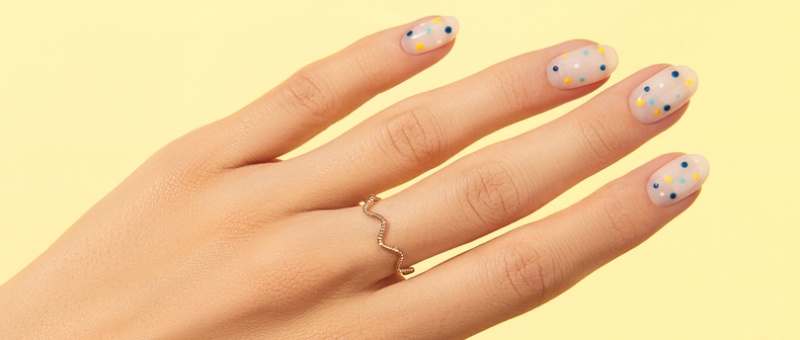
Strictly speaking, unless your survival depends on the ability to pick fruit from the lower branches of trees, you don't actually need nails. Sure, fingernails are useful things to have when you want to pop open a tube of Pringles or find out whether you've won the lottery without hunting around for a coin. But they are not essential for life in the same way as, say, the lungs are. Fingernails can be looked on as a little gift from evolution that you can spray with sparkle or simply chew on when you are anxious, but they are not vital for human existence. Similarly, toenails have their uses, but if you didn't have them, you'd get by.
by Dr Laurence Knott
Skin, nail and hair health
Fungal nail infection
Fungal infection of nails (tinea unguium) is common, particularly in toenails in the elderly. The infection causes thickened and unsightly nails which sometimes become painful. Medication often works well to clear the infection but you may need to take medication for several months or longer.
by Dr Philippa Vincent, MRCGP

Treatment and medication
Check your medicines for interactions
Use this medicine and drug interaction checker to see whether your medicines, supplements, vitamins, foods, or certain health conditions may interact with each other. It can help you understand potential risks, avoid unwanted side effects, and decide when it’s important to speak to a pharmacist, GP, or other healthcare professional. The tool is suitable for checking both prescription and over-the-counter medicines, as well as common supplements and herbal remedies. Open in a new window
Related patient information and medicines
Patient information leaflet
Alopecia areata
Alopecia areata is an 'autoimmune disease'. This is one of those conditions where the body's immune system, which usually fights off germs, acc... Tiny cells in the immune system, called T cells, gather around the base of a hair follicle and try to kill it. People with alopecia areata have a slightly higher-than-average chance of developing other.
Patient information leaflet
Nail psoriasis
Psoriasis is a persistent (chronic) skin condition which tends to flare up from time to time. Psoriatic nail disease is very variable in appearance and severity. Psoriasis affecting the nails can be mild and not need any treatment. What is nail psoriasis. Psoriatic nail disease is a type of psoriasis. It is not caused by infection and you cannot.
Patient information leaflet
HIV and AIDs
Preventing HIV by having safer sex and avoiding the sharing of needles is key, but if you develop HIV infection, early diagnosis and treatment are life-saving. [https://patient.info/health/sexually-transmitted-infections-leaflet/hiv-and-aids](https://patient.info/health/sexually-transmitted-infections-leaflet/hiv-and-aids) What is HIV. HIV stands.
Patient information leaflet
CT scan
Note : the information below is a general guide only. The arrangements, and the way tests are performed, may vary between different hospitals. Always follow the instructions given by your doctor or local hospital. What is a CT scan. A CT scan is a specialised X-ray test. It can give quite clear pictures of the inside of your body. In particular,.
Patient information leaflet
Epidermoid and pilar cysts
Epidermoid and pilar cysts are commonly referred to as 'sebaceous cysts' (pronounced 'seb-ay-shuss'). They are overgrowths of skin cells (called keratin) held together in a little capsule, or sac. They are harmless smooth lumps just under the surface of the skin. They are not cancerous and do not require removal unless they are bothering you by.
Patient information leaflet
Fungal nail infection
Fungal infection of nails (tinea unguium) is common, particularly in toenails in the elderly. The infection causes thickened and unsightly nails which sometimes become painful. What does a fungal nail infection look like. This photo shows the typical appearance of fungal infection of the toenails: Tinea unguium fungal nail infection This photo.
Further reading and references
- T-cell immunodeficiency, congenital alopecia, and nail dystrophy; MedlinePlus, National Library of Medicine.
- Adriani M, Martinez-Mir A, Fusco F, Busiello R, Frank J, Telese S, Matrecano E, Ursini MV, Christiano AM, Pignata C. Ancestral founder mutation of the nude (FOXN1) gene in congenital severe combined immunodeficiency associated with alopecia in southern Italy population. Ann Hum Genet. 2004 May;68(Pt 3):265-8. doi: 10.1046/j.1529-8817.2004.00091.x.
- Amorosi S, D'Armiento M, Calcagno G, Russo I, Adriani M, Christiano AM, Weiner L, Brissette JL, Pignata C. FOXN1 homozygous mutation associated with anencephaly and severe neural tube defect in human athymic Nude/SCID fetus. Clin Genet. 2008 Apr;73(4):380-4. doi: 10.1111/j.1399-0004.2008.00977.x.
- Amorosi S, Vigliano I, Del Giudice E, Panico L, Maruotti GM, Fusco A, Quarantelli M, Ciccone C, Ursini MV, Martinelli P, Pignata C. Brain alteration in a Nude/SCID fetus carrying FOXN1 homozygous mutation. J Neurol Sci. 2010 Nov 15;298(1-2):121-3. doi: 10.1016/j.jns.2010.08.066.
- Frank J, Pignata C, Panteleyev AA, Prowse DM, Baden H, Weiner L, Gaetaniello L, Ahmad W, Pozzi N, Cserhalmi-Friedman PB, Aita VM, Uyttendaele H, Gordon D, Ott J, Brissette JL, Christiano AM. Exposing the human nude phenotype. Nature. 1999 Apr 8;398(6727):473-4. doi: 10.1038/18997. No abstract available.
- Pignata C, Fiore M, Guzzetta V, Castaldo A, Sebastio G, Porta F, Guarino A. Congenital Alopecia and nail dystrophy associated with severe functional T-cell immunodeficiency in two sibs. Am J Med Genet. 1996 Oct 16;65(2):167-70. doi: 10.1002/(SICI)1096-8628(19961016)65:23.0.CO;2-O.
- Pignata C, Fusco A, Amorosi S. Human clinical phenotype associated with FOXN1 mutations. Adv Exp Med Biol. 2009;665:195-206.
- Pignata C. A lesson for unraveling complex aspects of novel immunodeficiencies from the human equivalent of the nude/SCID phenotype. J Hematother Stem Cell Res. 2002 Apr;11(2):409-14. doi: 10.1089/152581602753658592.
- Vigliano I, Gorrese M, Fusco A, Vitiello L, Amorosi S, Panico L, Ursini MV, Calcagno G, Racioppi L, Del Vecchio L, Pignata C. FOXN1 mutation abrogates prenatal T-cell development in humans. J Med Genet. 2011 Jun;48(6):413-6. doi: 10.1136/jmg.2011.089532. Epub 2011 Apr 19.
Share your thoughts or experiences with others in our patient communities.
Simple access to trusted treatments and health services online.
Common conditions
Get help with common conditions through the NHS, without a GP appointment.





Sign up to the Patient newsletter
Your weekly dose of clear, trustworthy health advice - written to help you feel informed, confident and in control.
By subscribing you accept our Privacy Policy. You can unsubscribe at any time. We never sell your data.