aldehyde dehydrogenase 18 family member A1
Last updated 5 Aug 2021
Meets Patient’s editorial guidelines
- DownloadDownload
- Share
- Language
- Discussion
- Ask Patient
- Audio Version
- Add to preferred sources on Google
The ALDH18A1 gene provides instructions for making a protein known as P5CS. This protein is found in cell structures called mitochondria, which are the energy-producing centers of cells. P5CS appears to be important for mitochondrial function, and it plays a role in the formation (synthesis) of the protein building block (amino acid) proline.
Video picks for GenesVideo library
Normal function
The ALDH18A1 gene provides instructions for making a protein known as P5CS. This protein is found in cell structures called mitochondria, which are the energy-producing centers of cells. P5CS appears to be important for mitochondrial function, and it plays a role in the formation (synthesis) of the protein building block (amino acid) proline.
The formation of proline is a multi-step process that converts the amino acid glutamate to the amino acid proline. The P5CS protein carries out the first step in this process by converting the amino acid glutamate to glutamate 5-semialdehyde. Subsequent steps convert this intermediate product to the amino acid proline. The conversion of glutamate to proline is important in maintaining a supply of the amino acids needed for protein production and for energy transfer within the cell.
Conditions referring to this gene or chromosome
Other names
GSAS
PYCS
pyrroline-5-carboxylate synthetase (glutamate gamma-semialdehyde synthetase)
Patient picks for Genes

Children's health
Pearson syndrome: how one family learned to live in the present
Pearson syndrome is a rare and serious mitochondrial disorder that typically affects infants and young children. There is currently no cure, and it is usually life-threatening. We follow one family’s journey of living with the condition, exploring how it shapes their everyday lives, the challenges they face, and what it truly means to cherish every moment.
by Victoria Raw

Podcasts
The parental minefield
How often have you said something quite ordinary to a parent, or they’ve said something to you and suddenly the room feels like it’s about to explode? Welcome to the parental nightmare. It’s not just about conflict, it’s about what’s hidden underneath these relationships – family secrets, unspoken stories, patterns of behaviour passed from one generation to the next. In this episode Clare and Aileen explore the complex, often lifelong, relationship we have with our parents and discuss practical strategies to help you navigate this important relationship.
by Thomas Andrew Porteus, MBCS

Mental health
Not quite 'back to normal': a guide to post-pandemic family healing
When news broke in late 2019 of a virus spreading rapidly across the globe, the word ‘unprecedented’ quickly became part of everyday vocabulary in the months that followed. The outbreak of Covid-19 marked the world’s most significant public health crisis in at least a century, shaking the foundations of the one place we usually feel most secure - the home. It is no surprise that years of disrupted routines have left a lasting mark on the family unit. From the sudden loss of support networks to the blurring of boundaries between home, school, and work, the pandemic reshaped how families function. We spoke with a psychotherapist to explore these long-term psychological ripples and why reflecting on that period is essential for understanding - and healing - the family dynamic today.
by Victoria Raw

Medicine
Calcium and ergocalciferol tablets
Calcium and ergocalciferol tablets are a mineral and vitamin D supplement. The tablets promote bone strength and help to prevent 'thinning' of the bones (osteoporosis). The usual dose is one tablet each day. Chew or crush the tablet before swallowing.
by Michael Stewart, MRPharmS

Podcasts
What are relationships anyway?
Relationships – what are they? We often think of relationships as intimate with a partner and yet we actually have hundreds of relationships with friends, family, at work, at play even with nature and beyond. Clare and Aileen kick off the season by discussing the breadth of relationships.
by Thomas Andrew Porteus, MBCS
COVID-19
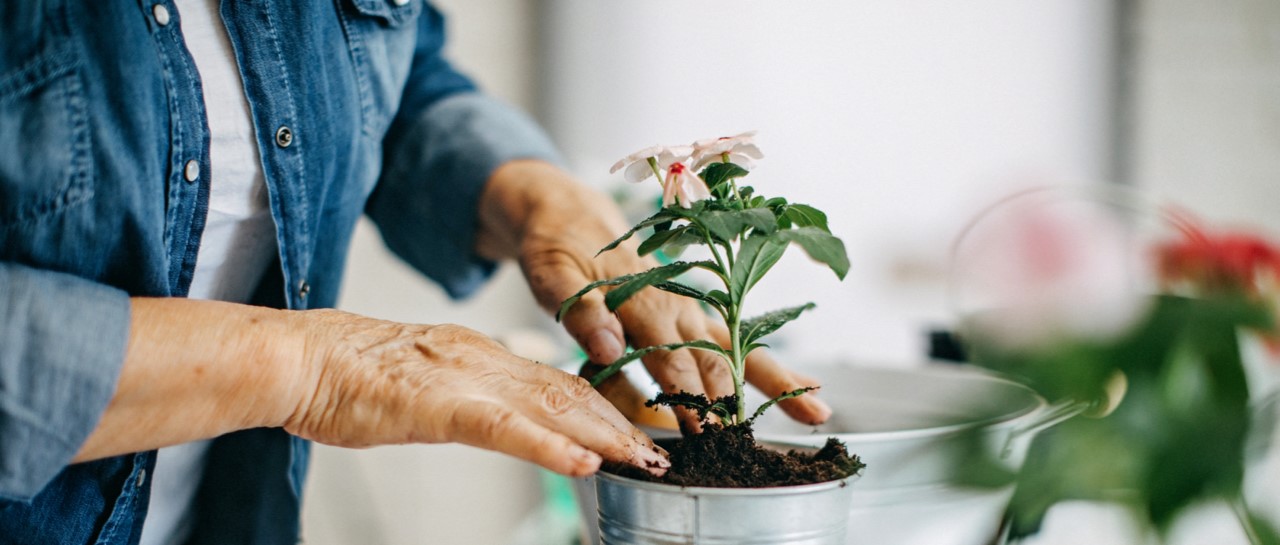
COVID-19: how to support vulnerable friends and family during the coronavirus pandemic
Current coronavirus lockdown measures are especially challenging for older people and those with mental health issues and underlying health conditions. We look at how to support vulnerable loved ones during the COVID-19 pandemic.
by Sally Turner
Related patient information and medicines

Patient information leaflet
Albinism
Albinism is a rare inherited (genetic) condition which reduces the amount of of melanin pigment in the skin, hair and/or eyes. People with albinism are often pale, with light-coloured irises. However, there are many types of albinism and people can be affected to different degrees. Hair that is very light blonde, brown, or reddish. Eyes that are.
Patient information leaflet
Anorexia nervosa
Anorexia nervosa is an eating disorder. A person with anorexia nervosa feels compelled to control and lose weight and often finds that food dominates their life. What is anorexia nervosa. Dr Sarah Jarvis MBE, GP and Clinical Director of Patient.info Anorexia nervosa is an eating disorder. A person with anorexia nervosa deliberately loses weight.

Patient information leaflet
Free or reduced cost prescriptions
Some people automatically get free prescriptions. Certain people can get an exemption certificate to obtain free prescriptions. Also, anyone needing regular prescriptions may save money by buying a Prescription Prepayment Certificate. Note : this leaflet only applies to England because prescriptions are free to all in Northern Ireland, Scotland.

Patient information leaflet
Newborn bloodspot test
Mothers of all newborn babies are offered testing for certain rare but serious health conditions by testing blood taken from the baby's heel. This is the blood spot screening programme and it is also known as the heel prick test. Medium-chain acyl-Co-A dehydrogenase deficiency (MCADD)- this is a very rare, but potentially life-threatening,.
Patient information leaflet
Glaucoma
The term 'open-angle' refers to the angle formed in the eye between the outer edge of the iris and sclera. In COAG this is normal, whereas in acute angle-closure glaucoma, which is a much less common condition, it is narrowed or blocked off. Acute angle-closure glaucoma is a medical emergency. It usually leads to severe eye pain and blurred.

Patient information leaflet
Planning to become pregnant
The aim is to plan ahead to reduce the risk of any harm to the baby and to reduce the risk of pregnancy complications. Women on regular medication, or who have a long-term medical condition, may need to seek medical advice to discuss any changes which may need to be made. There is a summary checklist at the end of the leaflet. The general advice.
Further reading and references
- aldehyde dehydrogenase 18 family member A1; MedlinePlus, National Library of Medicine.
- Bicknell LS, Pitt J, Aftimos S, Ramadas R, Maw MA, Robertson SP. A missense mutation in ALDH18A1, encoding Delta1-pyrroline-5-carboxylate synthase (P5CS), causes an autosomal recessive neurocutaneous syndrome. Eur J Hum Genet. 2008 Oct;16(10):1176-86. doi: 10.1038/ejhg.2008.91. Epub 2008 May 14.
- Coutelier M, Goizet C, Durr A, Habarou F, Morais S, Dionne-Laporte A, Tao F, Konop J, Stoll M, Charles P, Jacoupy M, Matusiak R, Alonso I, Tallaksen C, Mairey M, Kennerson M, Gaussen M, Schule R, Janin M, Morice-Picard F, Durand CM, Depienne C, Calvas P, Coutinho P, Saudubray JM, Rouleau G, Brice A, Nicholson G, Darios F, Loureiro JL, Zuchner S, Ottolenghi C, Mochel F, Stevanin G. Alteration of ornithine metabolism leads to dominant and recessive hereditary spastic paraplegia. Brain. 2015 Aug;138(Pt 8):2191-205. doi: 10.1093/brain/awv143. Epub 2015 May 29.
- Fischer-Zirnsak B, Escande-Beillard N, Ganesh J, Tan YX, Al Bughaili M, Lin AE, Sahai I, Bahena P, Reichert SL, Loh A, Wright GD, Liu J, Rahikkala E, Pivnick EK, Choudhri AF, Kruger U, Zemojtel T, van Ravenswaaij-Arts C, Mostafavi R, Stolte-Dijkstra I, Symoens S, Pajunen L, Al-Gazali L, Meierhofer D, Robinson PN, Mundlos S, Villarroel CE, Byers P, Masri A, Robertson SP, Schwarze U, Callewaert B, Reversade B, Kornak U. Recurrent De Novo Mutations Affecting Residue Arg138 of Pyrroline-5-Carboxylate Synthase Cause a Progeroid Form of Autosomal-Dominant Cutis Laxa. Am J Hum Genet. 2015 Sep 3;97(3):483-92. doi: 10.1016/j.ajhg.2015.08.001. Epub 2015 Aug 27.
- Panza E, Escamilla-Honrubia JM, Marco-Marin C, Gougeard N, De Michele G, Morra VB, Liguori R, Salviati L, Donati MA, Cusano R, Pippucci T, Ravazzolo R, Nemeth AH, Smithson S, Davies S, Hurst JA, Bordo D, Rubio V, Seri M. ALDH18A1 gene mutations cause dominant spastic paraplegia SPG9: loss of function effect and plausibility of a dominant negative mechanism. Brain. 2016 Jan;139(Pt 1):e3. doi: 10.1093/brain/awv247. Epub 2015 Aug 21. No abstract available.
- Zampatti S, Castori M, Fischer B, Ferrari P, Garavelli L, Dionisi-Vici C, Agolini E, Wischmeijer A, Morava E, Novelli G, Haberle J, Kornak U, Brancati F. De Barsy Syndrome: a genetically heterogeneous autosomal recessive cutis laxa syndrome related to P5CS and PYCR1 dysfunction. Am J Med Genet A. 2012 Apr;158A(4):927-31. doi: 10.1002/ajmg.a.35231. Epub 2012 Mar 12. No abstract available.
Share your thoughts or experiences with others in our patient communities.
Simple access to trusted treatments and health services online.
Common conditions
Get help with common conditions through the NHS, without a GP appointment.





Sign up to the Patient newsletter
Your weekly dose of clear, trustworthy health advice - written to help you feel informed, confident and in control.
By subscribing you accept our Privacy Policy. You can unsubscribe at any time. We never sell your data.