aldehyde dehydrogenase 7 family member A1
Last updated 18 Aug 2020
Meets Patient’s editorial guidelines
- DownloadDownload
- Share
- Language
- Discussion
- Ask Patient
- Audio Version
- Add to preferred sources on Google
The ALDH7A1 gene is a member of the aldehyde dehydrogenase (ALDH) gene family. These genes provide instructions for producing enzymes that alter molecules called aldehydes. The ALDH7A1 gene provides instructions for making an enzyme called α-aminoadipic semialdehyde (α-AASA) dehydrogenase, also known as antiquitin. Within the cell, antiquitin is found in the internal fluid of the cell (cytosol) and in the nucleus. This enzyme is involved in the breakdown of the protein building block (amino acid) lysine in the brain. In one step in the breakdown of lysine to other molecules, antiquitin facilitates the conversion of α-aminoadipic semialdehyde to α-aminoadipate. The breakdown of lysine in the brain is necessary for energy production and to produce other needed molecules.
Video picks for GenesVideo library
Normal function
The ALDH7A1 gene is a member of the aldehyde dehydrogenase (ALDH) gene family. These genes provide instructions for producing enzymes that alter molecules called aldehydes. The ALDH7A1 gene provides instructions for making an enzyme called α-aminoadipic semialdehyde (α-AASA) dehydrogenase, also known as antiquitin. Within the cell, antiquitin is found in the internal fluid of the cell (cytosol) and in the nucleus. This enzyme is involved in the breakdown of the protein building block (amino acid) lysine in the brain. In one step in the breakdown of lysine to other molecules, antiquitin facilitates the conversion of α-aminoadipic semialdehyde to α-aminoadipate. The breakdown of lysine in the brain is necessary for energy production and to produce other needed molecules.
Conditions referring to this gene or chromosome
Other names
AL7A1_HUMAN
aldehyde dehydrogenase 7 family, member A1
aldehyde dehydrogenase 7A1
antiquitin
antiquitin 1
ATQ1
EPD
PDE
Patient picks for Genes

Children's health
Pearson syndrome: how one family learned to live in the present
Pearson syndrome is a rare and serious mitochondrial disorder that typically affects infants and young children. There is currently no cure, and it is usually life-threatening. We follow one family’s journey of living with the condition, exploring how it shapes their everyday lives, the challenges they face, and what it truly means to cherish every moment.
by Victoria Raw

Podcasts
The parental minefield
How often have you said something quite ordinary to a parent, or they’ve said something to you and suddenly the room feels like it’s about to explode? Welcome to the parental nightmare. It’s not just about conflict, it’s about what’s hidden underneath these relationships – family secrets, unspoken stories, patterns of behaviour passed from one generation to the next. In this episode Clare and Aileen explore the complex, often lifelong, relationship we have with our parents and discuss practical strategies to help you navigate this important relationship.
by Thomas Andrew Porteus, MBCS

Mental health
Not quite 'back to normal': a guide to post-pandemic family healing
When news broke in late 2019 of a virus spreading rapidly across the globe, the word ‘unprecedented’ quickly became part of everyday vocabulary in the months that followed. The outbreak of Covid-19 marked the world’s most significant public health crisis in at least a century, shaking the foundations of the one place we usually feel most secure - the home. It is no surprise that years of disrupted routines have left a lasting mark on the family unit. From the sudden loss of support networks to the blurring of boundaries between home, school, and work, the pandemic reshaped how families function. We spoke with a psychotherapist to explore these long-term psychological ripples and why reflecting on that period is essential for understanding - and healing - the family dynamic today.
by Victoria Raw
Medicine
Calcium and ergocalciferol tablets
Calcium and ergocalciferol tablets are a mineral and vitamin D supplement. The tablets promote bone strength and help to prevent 'thinning' of the bones (osteoporosis). The usual dose is one tablet each day. Chew or crush the tablet before swallowing.
by Michael Stewart, MRPharmS
Podcasts
What are relationships anyway?
Relationships – what are they? We often think of relationships as intimate with a partner and yet we actually have hundreds of relationships with friends, family, at work, at play even with nature and beyond. Clare and Aileen kick off the season by discussing the breadth of relationships.
by Thomas Andrew Porteus, MBCS
COVID-19
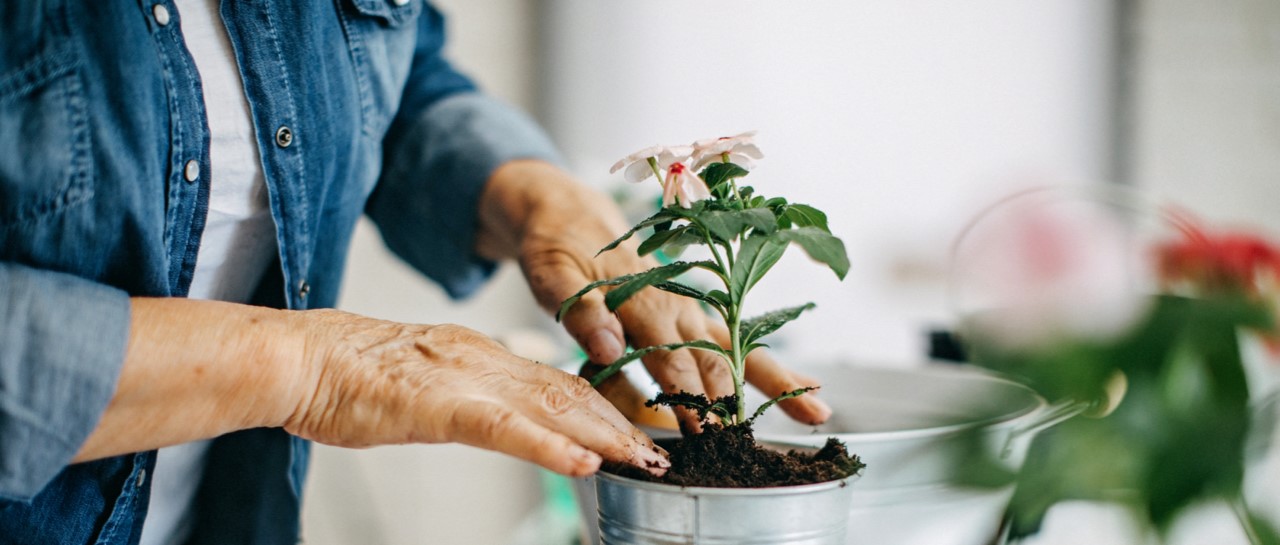
COVID-19: how to support vulnerable friends and family during the coronavirus pandemic
Current coronavirus lockdown measures are especially challenging for older people and those with mental health issues and underlying health conditions. We look at how to support vulnerable loved ones during the COVID-19 pandemic.
by Sally Turner
Related patient information and medicines

Patient information leaflet
Albinism
Albinism is a rare inherited (genetic) condition which reduces the amount of of melanin pigment in the skin, hair and/or eyes. People with albinism are often pale, with light-coloured irises. Types of albinism Albinism is divided into OCA (which is more common and has many form... Oculocutaneous albinism (OCA) Seven forms of OCA are now recognised.

Patient information leaflet
Testicular cancer
Testicular cancer is a cancer that arises from a testicle (testis). Around half of all cases occur in men aged under 35 but testicular cancer rarel... Another useful test is the marker blood test. The tumour markers commonly tested for are alpha-fetoprotein (AFP), beta human chorionic gonadotrophin (beta-hCG), lactic dehydrogenase (LDH) and.
Patient information leaflet
Newborn bloodspot test
Mothers of all newborn babies are offered testing for certain rare but serious health conditions by testing blood taken from the baby's heel. This is the blood spot screening programme and it is also known as the heel prick test. Medium-chain acyl-Co-A dehydrogenase deficiency (MCADD)- this is a very rare, but potentially life-threatening,.

Patient information leaflet
Planning to become pregnant
The aim is to plan ahead to reduce the risk of any harm to the baby and to reduce the risk of pregnancy complications. Women on regular medication, or who have a long-term medical condition, may need to seek medical advice to discuss any changes which may need to be made. There is a summary checklist at the end of the leaflet. However women who.

Patient information leaflet
Breast cancer in men
However, breast cancer can ... Men who are not aware of this may not consider cancer as a possibility, so they might delay seeing their doctor if they develop a breast lump. Whatever your gender, it is very important to see a doctor as soon as possible if you develop a lump in your breast. What is breast cancer. Cancer is a condition where cells.
Patient information leaflet
Alcohol use disorder
Some people can find it very difficult to control, or stop, their drinking. What is alcohol use disorder. Alcohol use disorder means drinking alcohol in a way that causes harm. If you or a family member has alcohol use disorder then treatment and support can be provided to help you or your family member reduce or stop drinking alcohol. Alcohol use.
Further reading and references
- aldehyde dehydrogenase 7 family member A1; MedlinePlus, National Library of Medicine.
- Bok LA, Struys E, Willemsen MA, Been JV, Jakobs C. Pyridoxine-dependent seizures in Dutch patients: diagnosis by elevated urinary alpha-aminoadipic semialdehyde levels. Arch Dis Child. 2007 Aug;92(8):687-9. doi: 10.1136/adc.2006.103192. Epub 2006 Nov 6.
- Fong WP, Cheng CH, Tang WK. Antiquitin, a relatively unexplored member in the superfamily of aldehyde dehydrogenases with diversified physiological functions. Cell Mol Life Sci. 2006 Dec;63(24):2881-5. doi: 10.1007/s00018-006-6089-4.
- Kanno J, Kure S, Narisawa A, Kamada F, Takayanagi M, Yamamoto K, Hoshino H, Goto T, Takahashi T, Haginoya K, Tsuchiya S, Baumeister FA, Hasegawa Y, Aoki Y, Yamaguchi S, Matsubara Y. Allelic and non-allelic heterogeneities in pyridoxine dependent seizures revealed by ALDH7A1 mutational analysis. Mol Genet Metab. 2007 Aug;91(4):384-9. doi: 10.1016/j.ymgme.2007.02.010. Epub 2007 Apr 11.
- Mills PB, Struys E, Jakobs C, Plecko B, Baxter P, Baumgartner M, Willemsen MA, Omran H, Tacke U, Uhlenberg B, Weschke B, Clayton PT. Mutations in antiquitin in individuals with pyridoxine-dependent seizures. Nat Med. 2006 Mar;12(3):307-9. doi: 10.1038/nm1366. Epub 2006 Feb 19.
- Pearl PL, Taylor JL, Trzcinski S, Sokohl A. The pediatric neurotransmitter disorders. J Child Neurol. 2007 May;22(5):606-16. doi: 10.1177/0883073807302619.
- Plecko B, Paul K, Paschke E, Stoeckler-Ipsiroglu S, Struys E, Jakobs C, Hartmann H, Luecke T, di Capua M, Korenke C, Hikel C, Reutershahn E, Freilinger M, Baumeister F, Bosch F, Erwa W. Biochemical and molecular characterization of 18 patients with pyridoxine-dependent epilepsy and mutations of the antiquitin (ALDH7A1) gene. Hum Mutat. 2007 Jan;28(1):19-26. doi: 10.1002/humu.20433.
Share your thoughts or experiences with others in our patient communities.
Simple access to trusted treatments and health services online.
Common conditions
Get help with common conditions through the NHS, without a GP appointment.





Sign up to the Patient newsletter
Your weekly dose of clear, trustworthy health advice - written to help you feel informed, confident and in control.
By subscribing you accept our Privacy Policy. You can unsubscribe at any time. We never sell your data.