ALG6 alpha-1,3-glucosyltransferase
Last updated 5 Jul 2022
Meets Patient’s editorial guidelines
- DownloadDownload
- Share
- Language
- Discussion
- Ask Patient
- Audio Version
- Add to preferred sources on Google
The ALG6 gene provides instructions for making an enzyme that is involved in a process called glycosylation. Glycosylation is a process by which sugar molecules (oligosaccharides) are attached to proteins and fats. Oligosaccharides are made up of many sugar molecules that are attached to one another in a stepwise process forming a complex chain. Glycosylation modifies proteins so they can perform a wider variety of functions. The enzyme produced from the ALG6 gene transfers a simple sugar called glucose to the growing oligosaccharide. Once the correct number of sugar molecules are linked together, the oligosaccharide is attached to a protein or fat.
Video picks for GenesVideo library
Normal function
The ALG6 gene provides instructions for making an enzyme that is involved in a process called glycosylation. Glycosylation is a process by which sugar molecules (oligosaccharides) are attached to proteins and fats. Oligosaccharides are made up of many sugar molecules that are attached to one another in a stepwise process forming a complex chain. Glycosylation modifies proteins so they can perform a wider variety of functions. The enzyme produced from the ALG6 gene transfers a simple sugar called glucose to the growing oligosaccharide. Once the correct number of sugar molecules are linked together, the oligosaccharide is attached to a protein or fat.
Conditions referring to this gene or chromosome
Other names
asparagine-linked glycosylation 6 homolog (S. cerevisiae, alpha-1,3-glucosyltransferase)
asparagine-linked glycosylation 6 homolog (yeast, alpha-1,3-glucosyltransferase)
asparagine-linked glycosylation 6, alpha-1,3-glucosyltransferase homolog
asparagine-linked glycosylation protein 6 homolog
dol-P-Glc:Man(9)GlcNAc(2)-PP-Dol alpha-1,3-glucosyltransferase
dolichyl pyrophosphate Man9GlcNAc2 alpha-1,3-glucosyltransferase
dolichyl pyrophosphate Man9GlcNAc2 alpha-1,3-glucosyltransferase precursor
dolichyl-P-Glc:Man(9)GlcNAc(2)-PP-dolichol alpha- 1->3-glucosyltransferase
dolichyl-P-Glc:Man9GlcNAc2-PP-dolichyl glucosyltransferase
dolichyl-P-Glc:Man9GlcNAc2-PP-dolichylglucosyltransferase
Man(9)GlcNAc(2)-PP-Dol alpha-1,3-glucosyltransferase
Patient picks for Genes
Treatment and medication
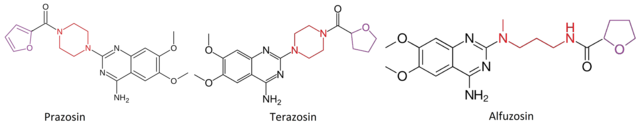
Alpha-blockers
Alpha-blockers are medicines that are mainly used to treat high blood pressure (hypertension) and problems with passing urine in men who have enlargement of the prostate gland. Prostate gland enlargement is also called benign prostatic hyperplasia (BPH).
by Dr Doug McKechnie, MRCGP

Children's health
Alpha-1 antitrypsin deficiency
Alpha-1 antitrypsin deficiency is an inherited genetic condition. A genetic condition is one that can be passed on from parents through genes. In alpha-1 antitrypsin deficiency the result of a genetic abnormality leads to lung and, in some people, liver damage. Lung symptoms are the most common and include shortness of breath, cough and wheezing. Symptoms can worsen over time. At present, there is no cure for alpha-1 antitrypsin deficiency. Treatment aims at slowing down the progression of the disease.
by Dr Philippa Vincent, MRCGP
Medicine
Indoramin - an alpha-blocker
Indoramin is prescribed for two different medical conditions: 20 mg strength tablets are prescribed for men with prostate problems, and 25 mg strength tablets are prescribed for people with high blood pressure. You are advised not to drink alcohol while you are on indoramin. Do not drive and do not use tools or machines if you feel tired or dizzy.
by Michael Stewart, MRPharmS
Medicine
Prazosin - an alpha-blocker
Your first dose of prazosin may make you feel dizzy or faint, or start sweating. Take your first dose at bedtime and remain lying down until these symptoms have completely passed. Prazosin can cause dizziness which may affect your ability to drive. Make sure your reactions are normal before you drive and before you use tools or machines.
by Michael Stewart, MRPharmS
Medicine
Terazosin - an alpha-blocker
Take terazosin once every day. Your first dose of terazosin may make you feel dizzy or faint, or start sweating. Take your first dose at bedtime and remain lying down until these symptoms have completely passed. Terazosin can cause dizziness which may affect your ability to drive. Make sure your reactions are normal before you drive and before you use tools or machines.
by Michael Stewart, MRPharmS
Medicine
Phenoxybenzamine - an alpha-blocker
Adults will normally start with one capsule a day. This dose may then be increased over the next few days. It is common to feel dizzy or light-headed initially. This should soon settle. You may be given other medicines to take alongside phenoxybenzamine.
by Michael Stewart, MRPharmS
Related patient information and medicines

Patient information leaflet
Liver function tests
Changes in liver function tests give a clue as to whether your liver is under strain, infl... Liver function Liver function The liver is a factory for the production and breakdown of carbohydrates, fats, proteins, hormones and other essential body chemicals, and helps dispose of waste products. An isolated rise in un. What does an abnormal.
Patient information leaflet
Liver failure
This is called chronic liver disease. See the separate leaflet called Cirrhosis for further information. Liver failure can also develop rapidly over just a few days (acute liver failure). How common is liver failure. Acute liver failure is very uncommon: In England , there were 688 liver transplants, 28 in Scotland, 69 in Wales and 24 in Northern.

Patient information leaflet
Chronic prostatitis
For chronic prostatitis/CPPS , possible treatments may include the following: Antibiotics - these may be ... It may be that some antibiotics have anti-inflammatory properties as well or that they may clear some germs (bacteria) that are difficult to find when your urine is tested. Alpha-blockers Alpha-blockers - are medicines that are used to.

Patient information leaflet
Down's syndrome screening
The rest of this leaflet concentrates on screening for Down's syndrome and the diagnosis of Down's syndrome during pregnancy, before the baby is born. What is the difference ... What Down's syndrome screening tests are available? 10-14 weeks - combined test The standard test for Down's syndrome includes a combination of a nuchal translucency scan.

Patient information leaflet
High blood pressure
Healthcare professionals sometimes call high blood pressure 'hypertension'. [https://patient.info/health/high-blood-pressure-hypertension](https://patient.info/health/high-blood-pressure-hypertension) Understanding a blood pressure reading Blood pressure readings are given as two numbers, eg 130/80. A blood test to ... A heart tracing, called an.

Patient information leaflet
Can I take Carbocisteine and Omega-3 together?
Omega-3 fatty acids are nutrients used by the body for various functions, including heart and brain health. Using othe... Our Medicines Interaction Checker helps you check whether your prescriptions, over-the-counter medicines, and supplements are safe to take together. Simply search for your medicines to see potential interactions and what to do.
Further reading and references
- ALG6 alpha-1,3-glucosyltransferase; MedlinePlus, National Library of Medicine.
- Grunewald S, Imbach T, Huijben K, Rubio-Gozalbo ME, Verrips A, de Klerk JB, Stroink H, de Rijk-van Andel JF, Van Hove JL, Wendel U, Matthijs G, Hennet T, Jaeken J, Wevers RA. Clinical and biochemical characteristics of congenital disorder of glycosylation type Ic, the first recognized endoplasmic reticulum defect in N-glycan synthesis. Ann Neurol. 2000 Jun;47(6):776-81.
- Imbach T, Burda P, Kuhnert P, Wevers RA, Aebi M, Berger EG, Hennet T. A mutation in the human ortholog of the Saccharomyces cerevisiae ALG6 gene causes carbohydrate-deficient glycoprotein syndrome type-Ic. Proc Natl Acad Sci U S A. 1999 Jun 8;96(12):6982-7. doi: 10.1073/pnas.96.12.6982.
- Sparks SE, Krasnewich DM. Congenital Disorders of N-Linked Glycosylation and Multiple Pathway Overview - RETIRED CHAPTER, FOR HISTORICAL REFERENCE ONLY. 2005 Aug 15 [updated 2017 Jan 12]. In: Adam MP, Bick S, Mirzaa GM, Wallace SE, Amemiya A, editors. GeneReviews(R) [Internet]. Seattle (WA): University of Washington, Seattle; 1993-2026. Available from http://www.ncbi.nlm.nih.gov/books/NBK1332/
- Westphal V, Xiao M, Kwok PY, Freeze HH. Identification of a frequent variant in ALG6, the cause of Congenital Disorder of Glycosylation-Ic. Hum Mutat. 2003 Nov;22(5):420-1. doi: 10.1002/humu.9195.
Share your thoughts or experiences with others in our patient communities.
Simple access to trusted treatments and health services online.
Common conditions
Get help with common conditions through the NHS, without a GP appointment.





Sign up to the Patient newsletter
Your weekly dose of clear, trustworthy health advice - written to help you feel informed, confident and in control.
By subscribing you accept our Privacy Policy. You can unsubscribe at any time. We never sell your data.