caspase recruitment domain family member 14
Last updated 18 Aug 2020
Meets Patient’s editorial guidelines
- DownloadDownload
- Share
- Language
- Discussion
- Ask Patient
- Audio Version
- Add to preferred sources on Google
The CARD14 gene provides instructions for making a protein that turns on (activates) a group of interacting proteins known as nuclear factor-kappa-B (NF-κB). The NF-κB protein complex regulates the activity of multiple genes, including genes that control the body's immune responses and inflammatory reactions. Inflammation is a normal immune system response to injury and foreign invaders (such as bacteria). The NF-κB protein complex also protects cells from certain signals that would otherwise cause them to self-destruct (undergo apoptosis).
Video picks for GenesVideo library
Normal function
The CARD14 gene provides instructions for making a protein that turns on (activates) a group of interacting proteins known as nuclear factor-kappa-B (NF-κB). The NF-κB protein complex regulates the activity of multiple genes, including genes that control the body's immune responses and inflammatory reactions. Inflammation is a normal immune system response to injury and foreign invaders (such as bacteria). The NF-κB protein complex also protects cells from certain signals that would otherwise cause them to self-destruct (undergo apoptosis).
The CARD14 protein is found in many of the body's tissues, but it is particularly abundant in the skin. NF-κB signaling appears to play important roles in regulating inflammatory reactions in the skin and in promoting the survival of skin cells.
Conditions referring to this gene or chromosome
Other names
bcl10-interacting maguk protein 2
BIMP2
CAR14_HUMAN
CARD-containing MAGUK protein 2
card-maguk protein 2
carma 2
CARMA2
caspase recruitment domain family, member 14
caspase recruitment domain-containing protein 14
Patient picks for Genes

Podcasts
The parental minefield
How often have you said something quite ordinary to a parent, or they’ve said something to you and suddenly the room feels like it’s about to explode? Welcome to the parental nightmare. It’s not just about conflict, it’s about what’s hidden underneath these relationships – family secrets, unspoken stories, patterns of behaviour passed from one generation to the next. In this episode Clare and Aileen explore the complex, often lifelong, relationship we have with our parents and discuss practical strategies to help you navigate this important relationship.
by Thomas Andrew Porteus, MBCS

Mental health
Not quite 'back to normal': a guide to post-pandemic family healing
When news broke in late 2019 of a virus spreading rapidly across the globe, the word ‘unprecedented’ quickly became part of everyday vocabulary in the months that followed. The outbreak of Covid-19 marked the world’s most significant public health crisis in at least a century, shaking the foundations of the one place we usually feel most secure - the home. It is no surprise that years of disrupted routines have left a lasting mark on the family unit. From the sudden loss of support networks to the blurring of boundaries between home, school, and work, the pandemic reshaped how families function. We spoke with a psychotherapist to explore these long-term psychological ripples and why reflecting on that period is essential for understanding - and healing - the family dynamic today.
by Victoria Raw
Podcasts
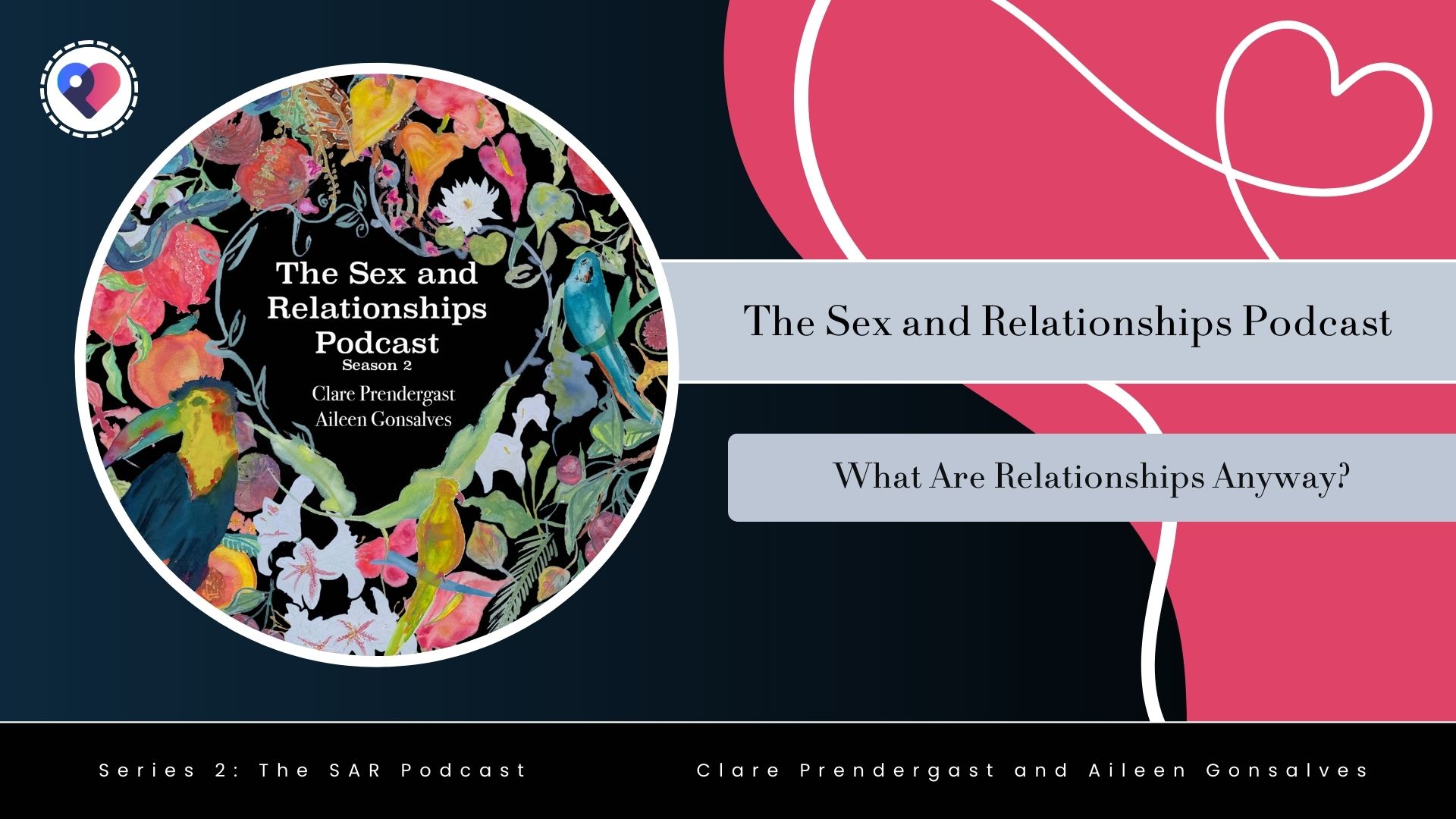
What are relationships anyway?
Relationships – what are they? We often think of relationships as intimate with a partner and yet we actually have hundreds of relationships with friends, family, at work, at play even with nature and beyond. Clare and Aileen kick off the season by discussing the breadth of relationships.
by Thomas Andrew Porteus, MBCS

Children's health
Pearson syndrome: how one family learned to live in the present
Pearson syndrome is a rare and serious mitochondrial disorder that typically affects infants and young children. There is currently no cure, and it is usually life-threatening. We follow one family’s journey of living with the condition, exploring how it shapes their everyday lives, the challenges they face, and what it truly means to cherish every moment.
by Victoria Raw

Infections
Should you and your family get the meningitis vaccination?
Meningitis is a serious condition, but it is not caused by one bug - bacteria, viruses and even fungi can lead to infection. Thankfully, there are meningitis vaccinations available.
by Danny Chadburn

COVID-19
COVID-19: how to support vulnerable friends and family during the coronavirus pandemic
Current coronavirus lockdown measures are especially challenging for older people and those with mental health issues and underlying health conditions. We look at how to support vulnerable loved ones during the COVID-19 pandemic.
by Sally Turner
Related patient information and medicines
Patient information leaflet
BRCA genes
Breast cancer About 13 in 100 women will develop breast can... Some people have a higher risk of developing breast cancer because close members of their family (eg, mother, sister or daughter) have had cancer of the breast or ovary. This is called familial breast cancer (sometimes also called hereditary breast cancer). This risk is higher if a.
Patient information leaflet
Alcohol use disorder
Many people drink alcohol. For some, alcohol is something that they enjoy in moderation. Other people drink alcohol at levels that are likely to lead to physical or mental health problems. Some people can find it very difficult to control, or stop, their drinking. What is alcohol use disorder. Alcohol use disorder means drinking alcohol in a way.
Patient information leaflet
Duchenne muscular dystrophy
This is because of there being two X chromosomes in women: one X chromosome has the 'faulty' DMD gene; the other X chromosome has a normal gene, which compensates for the faulty one. In contrast, boys with the DMD gene do not have a second X chromosome and so they cannot compensate for the faulty gene. Therefore, boys with the DMD gene always have.
Patient information leaflet
Breast cancer facts and risk factors
What are the risk factors for breast cancer. Dr Sarah Jarvis MBE Although breast cancer can develop for no apparent reason, there are certain risk factors which increase the chance that breast cancer will develop. [https://patient.info/health/breast-cancer-leaflet](https://patient.info/health/breast-cancer-leaflet) Most cases of breast cancer.
Patient information leaflet
Anxiety in children
The treatment offered will depend on a number of factors such as their age and... Some treatments are offered by local child mental health services and some might be offered by support organisations such as Barnado's or MIND (a mental health charity). Family therapy The whole family unit is important in this talking therapy. How the family works.
Patient information leaflet
Alpha-1 antitrypsin deficiency
If the balance tips and there is too much activity, lung tissue can start to become damaged by the enzymes. A1AT helps to balance the protease enzymes in the lungs and stop lung damage. What is alpha-1 antitrypsin deficiency. A1AT deficiency is an inherited genetic condition. A genetic condition is one that can be passed on from parents through.
Further reading and references
- caspase recruitment domain family member 14; MedlinePlus, National Library of Medicine.
- Berki DM, Liu L, Choon SE, David Burden A, Griffiths CEM, Navarini AA, Tan ES, Irvine AD, Ranki A, Ogo T, Petrof G, Mahil SK, Duckworth M, Allen MH, Vito P, Trembath RC, McGrath J, Smith CH, Capon F, Barker JN. Activating CARD14 Mutations Are Associated with Generalized Pustular Psoriasis but Rarely Account for Familial Recurrence in Psoriasis Vulgaris. J Invest Dermatol. 2015 Dec;135(12):2964-2970. doi: 10.1038/jid.2015.288. Epub 2015 Jul 23.
- Bertin J, Wang L, Guo Y, Jacobson MD, Poyet JL, Srinivasula SM, Merriam S, DiStefano PS, Alnemri ES. CARD11 and CARD14 are novel caspase recruitment domain (CARD)/membrane-associated guanylate kinase (MAGUK) family members that interact with BCL10 and activate NF-kappa B. J Biol Chem. 2001 Apr 13;276(15):11877-82. doi: 10.1074/jbc.M010512200. Epub 2001 Jan 12.
- Fuchs-Telem D, Sarig O, van Steensel MA, Isakov O, Israeli S, Nousbeck J, Richard K, Winnepenninckx V, Vernooij M, Shomron N, Uitto J, Fleckman P, Richard G, Sprecher E. Familial pityriasis rubra pilaris is caused by mutations in CARD14. Am J Hum Genet. 2012 Jul 13;91(1):163-70. doi: 10.1016/j.ajhg.2012.05.010. Epub 2012 Jun 14.
- Howes A, O'Sullivan PA, Breyer F, Ghose A, Cao L, Krappmann D, Bowcock AM, Ley SC. Psoriasis mutations disrupt CARD14 autoinhibition promoting BCL10-MALT1-dependent NF-kappaB activation. Biochem J. 2016 Jun 15;473(12):1759-68. doi: 10.1042/BCJ20160270. Epub 2016 Apr 12.
- Jordan CT, Cao L, Roberson ED, Duan S, Helms CA, Nair RP, Duffin KC, Stuart PE, Goldgar D, Hayashi G, Olfson EH, Feng BJ, Pullinger CR, Kane JP, Wise CA, Goldbach-Mansky R, Lowes MA, Peddle L, Chandran V, Liao W, Rahman P, Krueger GG, Gladman D, Elder JT, Menter A, Bowcock AM. Rare and common variants in CARD14, encoding an epidermal regulator of NF-kappaB, in psoriasis. Am J Hum Genet. 2012 May 4;90(5):796-808. doi: 10.1016/j.ajhg.2012.03.013. Epub 2012 Apr 19.
- Jordan CT, Cao L, Roberson ED, Pierson KC, Yang CF, Joyce CE, Ryan C, Duan S, Helms CA, Liu Y, Chen Y, McBride AA, Hwu WL, Wu JY, Chen YT, Menter A, Goldbach-Mansky R, Lowes MA, Bowcock AM. PSORS2 is due to mutations in CARD14. Am J Hum Genet. 2012 May 4;90(5):784-95. doi: 10.1016/j.ajhg.2012.03.012. Epub 2012 Apr 19.
- Scudiero I, Zotti T, Ferravante A, Vessichelli M, Vito P, Stilo R. Alternative splicing of CARMA2/CARD14 transcripts generates protein variants with differential effect on NF-kappaB activation and endoplasmic reticulum stress-induced cell death. J Cell Physiol. 2011 Dec;226(12):3121-31. doi: 10.1002/jcp.22667.
Share your thoughts or experiences with others in our patient communities.
Simple access to trusted treatments and health services online.
Common conditions
Get help with common conditions through the NHS, without a GP appointment.





Sign up to the Patient newsletter
Your weekly dose of clear, trustworthy health advice - written to help you feel informed, confident and in control.
By subscribing you accept our Privacy Policy. You can unsubscribe at any time. We never sell your data.