cell division cycle 73
Last updated 23 Jan 2026
Meets Patient’s editorial guidelines
- DownloadDownload
- Share
- Language
- Discussion
- Ask Patient
- Audio Version
- Add to preferred sources on Google
The CDC73 gene provides instructions for making a protein called parafibromin. This protein is found primarily in the nucleus of cells and is likely involved in regulating gene transcription, which is the first step in protein production. Parafibromin functions as a tumour suppressor, which means it keeps cells from growing and dividing (proliferating) too fast or in an uncontrolled way. When parafibromin is found outside the nucleus, it appears to be involved in the organisation of the cell's structural framework (the cytoskeleton).
Video picks for GenesVideo library
Normal function
The CDC73 gene provides instructions for making a protein called parafibromin. This protein is found primarily in the nucleus of cells and is likely involved in regulating gene transcription, which is the first step in protein production. Parafibromin functions as a tumour suppressor, which means it keeps cells from growing and dividing (proliferating) too fast or in an uncontrolled way. When parafibromin is found outside the nucleus, it appears to be involved in the organisation of the cell's structural framework (the cytoskeleton).
Conditions referring to this gene or chromosome
Other names
C1orf28
CDC73_HUMAN
cell division cycle protein 73 homolog
HRPT2
hyperparathyroidism 2 protein
hyrax
HYX
parafibromin
Patient picks for Genes
Allergies, blood and immune system
Polycythaemia rubra vera
Polycythaemia rubra vera (PRV) is a myeloproliferative disorder, which means the bone marrow makes too many blood cells. It is also sometimes just called polycythaemia (PV). There is an abnormally high number of red blood cells in your blood. You may also have an abnormally high number of platelets and white blood cells.
by Dr Hayley Willacy, FRCGP

Cancer
What to expect during a LLETZ procedure for abnormal cells
Post 25, regular cervical screening is part of many people's medical routine. Often, cervical cells are completely normal and no further action is taken; you're usually asked to come back for another smear test in three years time. But in others, abnormal cells are detected and further treatment is needed. One such treatment is the LLETZ. But what is it, how does it work, and what are its side effects?
by Emily Reynolds
Cancer
Stem cell transplant
A stem cell transplant is where blood stem cells (the cells produced by the bone marrow to turn into different types of blood cells) are put back into your body when your bone marrow has been destroyed and cannot make stem cells itself. The bone marrow can be destroyed by diseases such as cancer, chemotherapy or radiotherapy. It is used to increase the chance of a cure or remission if you have a particular type of cancer or blood disorder. It usually involves intense chemotherapy followed by an infusion of stem cells. The treatment requires close nursing and medical care for a number of weeks. Your specialist would advise when the likely benefits of this procedure outweigh the risks.
by Dr Philippa Vincent, MRCGP
Allergies, blood and immune system
Sickle cell disease
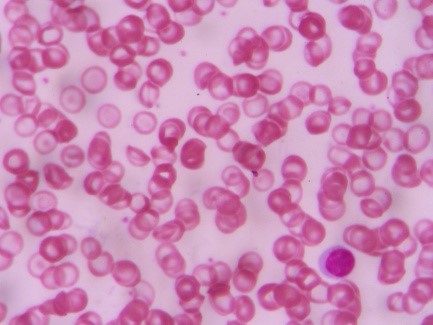
Sickle cell disease (SCD) is a serious, inherited condition affecting the blood and various organs in the body. It affects the red blood cells, causing episodes of 'sickling', which produce episodes of pain and other symptoms. In between episodes of sickling, people with SCD are normally well. Long-term complications can occur. Good treatment, started early in life, can prevent complications. So, early diagnosis and specialist treatment are advised for SCD. Sickle cell trait is not the same as sickle cell disease.
by Dr Hayley Willacy, FRCGP
Children's health
Sickle cell trait
If you inherit a gene from one of your parents, called a sickle cell gene, you have a condition called sickle cell trait. If you inherit a sickle cell gene from both parents, you get a double dose of the sickle cell gene. This causes a condition called sickle cell disease (SCD).
by Dr Sarah Jarvis
Allergies, blood and immune system
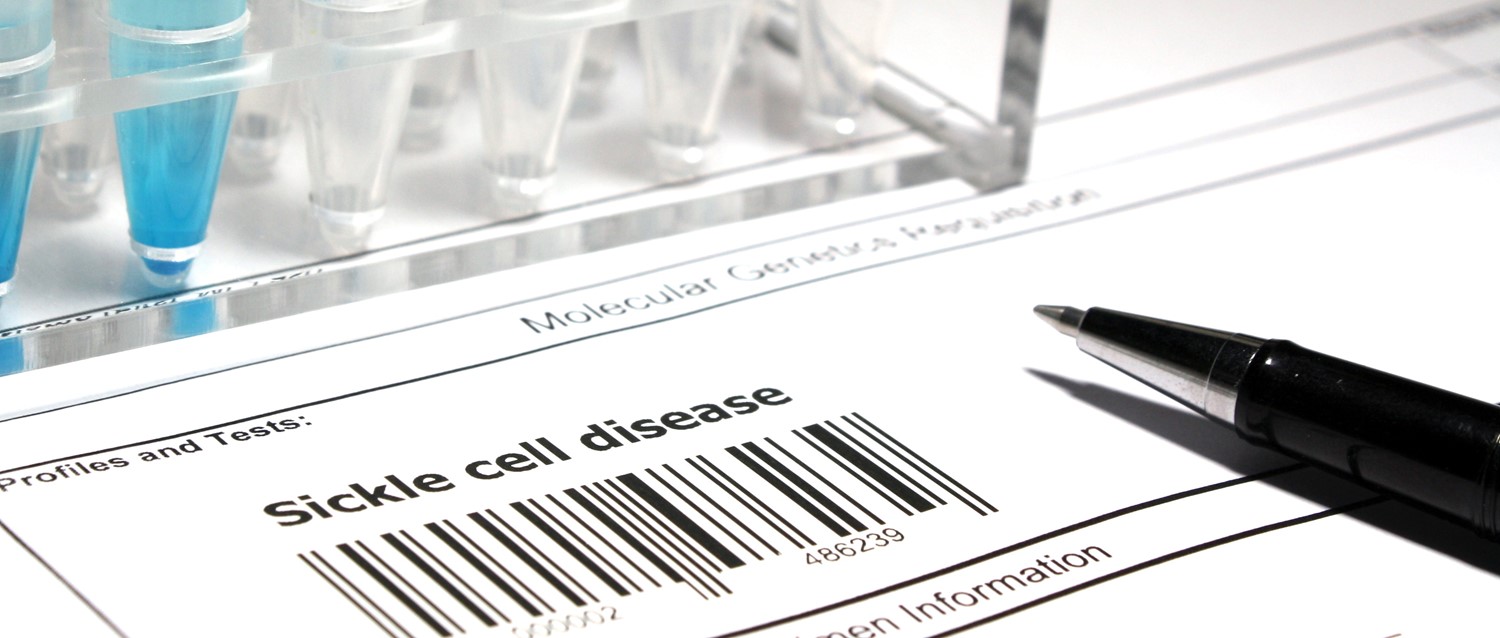
What does the new treatment for sickle cell disease mean for sickle cell patients?
It has been over 20 years since the last breakthrough in the treatment of sickle cell disease. Now a new antibody-based drug has been approved that can significantly reduce the number of episodes of severe pain experienced by patients. What does this step mean for the 15,000 people living with sickle cell disorder in the UK?
by Amberley Davis
Related patient information and medicines

Patient information leaflet
Chemotherapy
Some cancers can be cured with chemotherapy alone. Sometimes chemotherapy is used in addition to another main treatment. For example, you may have surgery to remove a tumour but you may also be given a course of chemotherapy after the surgery. This aims to kill any cancer cells which may have spread away from where the cancer first started (the.

Patient information leaflet
Multiple pregnancy
In a multiple pregnancy, there is more than one baby growing in the womb (uterus) at the same time. Being pregnant with twins is the most common example. If it splits completely into two separate groups of cells very early in this division then identical twin zygotes are formed. Cell division continues until each zygote has become a ball of cells.

Patient information leaflet
Klinefelter's syndrome
Klinefelter's syndrome is a genetic condition that only affects males. What is Klinefelter's syndrome (KS) In general, each cell in your body contains 46 chromosomes arranged in 23 pairs. It usually happens randomly during meiosis. Meiosis is cell division which produces egg and sperm cells (reproductive cells). Because of an error in cell.

Patient information leaflet
Cri du chat syndrome
Cri du chat syndrome is a chromosome problem caused by a missing piece of chromosome 5. The syndrome is called cri du chat (French for cry of the cat) because affected babies often have a high-pitched cry. Because of the head and face abnormalities, serious lung infection (pneumonia) Pneumonia is more common. Understanding chromosomes and cell.

Patient information leaflet
Acute myeloid leukaemia
Acute myeloid leukaemia is where the bone marrow makes large numbers of abnormal immature white blood cells which are derived from a myeloid stem cell. What is acute myeloid leukaemia. Acute myeloid leukaemia (AML) is a condition where the bone marrow makes large numbers of abnormal immature white blood cells which are derived from a myeloid stem.

Patient information leaflet
Gallium scan
A gallium scan uses a radioactive chemical to help create pictures which can show areas of possible infection, injury, inflammation or cancer. It does this by looking for areas where there is rapid cell division within the body. Note : the information below is a general guide only. The arrangements, and the way tests are performed, may vary.
Further reading and references
- cell division cycle 73; MedlinePlus, National Library of Medicine.
- Bradley KJ, Cavaco BM, Bowl MR, Harding B, Cranston T, Fratter C, Besser GM, Conceicao Pereira M, Davie MW, Dudley N, Leite V, Sadler GP, Seller A, Thakker RV. Parafibromin mutations in hereditary hyperparathyroidism syndromes and parathyroid tumours. Clin Endocrinol (Oxf). 2006 Mar;64(3):299-306. doi: 10.1111/j.1365-2265.2006.02460.x.
- Cetani F, Pardi E, Aretini P, Saponaro F, Borsari S, Mazoni L, Apicella M, Civita P, La Ferla M, Caligo MA, Lessi F, Mazzanti CM, Torregossa L, Oppo A, Marcocci C. Whole exome sequencing in familial isolated primary hyperparathyroidism. J Endocrinol Invest. 2020 Feb;43(2):231-245. doi: 10.1007/s40618-019-01107-5. Epub 2019 Sep 5.
- Cetani F, Pardi E, Marcocci C. Update on parathyroid carcinoma. J Endocrinol Invest. 2016 Jun;39(6):595-606. doi: 10.1007/s40618-016-0447-3. Epub 2016 Mar 21.
- English KA, Lines KE, Thakker RV. Genetics of hereditary forms of primary hyperparathyroidism. Hormones (Athens). 2024 Mar;23(1):3-14. doi: 10.1007/s42000-023-00508-9. Epub 2023 Dec 1.
- Fernandez-Ranvier GG, Khanafshar E, Tacha D, Wong M, Kebebew E, Duh QY, Clark OH. Defining a molecular phenotype for benign and malignant parathyroid tumors. Cancer. 2009 Jan 15;115(2):334-44. doi: 10.1002/cncr.24037.
- Figueiredo AA, Saramago A, Cavaco BM, Simoes-Pereira J, Leite V. Familial parathyroid tumours-comparison of clinical profiles between syndromes. J Endocrinol Invest. 2023 Sep;46(9):1799-1806. doi: 10.1007/s40618-023-02032-4. Epub 2023 Feb 13.
- Masi G, Barzon L, Iacobone M, Viel G, Porzionato A, Macchi V, De Caro R, Favia G, Palu G. Clinical, genetic, and histopathologic investigation of CDC73-related familial hyperparathyroidism. Endocr Relat Cancer. 2008 Dec;15(4):1115-26. doi: 10.1677/ERC-08-0066. Epub 2008 Aug 28.
- Newey PJ, Bowl MR, Cranston T, Thakker RV. Cell division cycle protein 73 homolog (CDC73) mutations in the hyperparathyroidism-jaw tumor syndrome (HPT-JT) and parathyroid tumors. Hum Mutat. 2010 Mar;31(3):295-307. doi: 10.1002/humu.21188.
- Newey PJ, Bowl MR, Thakker RV. Parafibromin--functional insights. J Intern Med. 2009 Jul;266(1):84-98. doi: 10.1111/j.1365-2796.2009.02107.x.
- Serrano-Gonzalez M, Shay S, Austin J, Maceri DR, Pitukcheewanont P. A germline mutation of HRPT2/CDC73 (70 G>T) in an adolescent female with parathyroid carcinoma: first case report and a review of the literature. J Pediatr Endocrinol Metab. 2016 Sep 1;29(9):1005-12. doi: 10.1515/jpem-2016-0109.
- Skefos CM, Waguespack SG, Perrier ND, Hu MI. CDC73-Related Disorders. 2008 Dec 31 [updated 2023 Sep 21]. In: Adam MP, Bick S, Mirzaa GM, Wallace SE, Amemiya A, editors. GeneReviews(R) [Internet]. Seattle (WA): University of Washington, Seattle; 1993-2026. Available from http://www.ncbi.nlm.nih.gov/books/NBK3789/
- Tora R, Welch J, Sun J, Agarwal SK, Bell DA, Merino M, Weinstein LS, Simonds WF, Jha S. Phenotypic Profiling and Molecular Mechanisms in Hyperparathyroidism-jaw Tumor Syndrome. J Clin Endocrinol Metab. 2023 Nov 17;108(12):3165-3177. doi: 10.1210/clinem/dgad368.
- Torresan F, Iacobone M. Clinical Features, Treatment, and Surveillance of Hyperparathyroidism-Jaw Tumor Syndrome: An Up-to-Date and Review of the Literature. Int J Endocrinol. 2019 Dec 18;2019:1761030. doi: 10.1155/2019/1761030. eCollection 2019.
- van der Tuin K, Tops CMJ, Adank MA, Cobben JM, Hamdy NAT, Jongmans MC, Menko FH, van Nesselrooij BPM, Netea-Maier RT, Oosterwijk JC, Valk GD, Wolffenbuttel BHR, Hes FJ, Morreau H. CDC73-Related Disorders: Clinical Manifestations and Case Detection in Primary Hyperparathyroidism. J Clin Endocrinol Metab. 2017 Dec 1;102(12):4534-4540. doi: 10.1210/jc.2017-01249.
- Villablanca A, Calender A, Forsberg L, Hoog A, Cheng JD, Petillo D, Bauters C, Kahnoski K, Ebeling T, Salmela P, Richardson AL, Delbridge L, Meyrier A, Proye C, Carpten JD, Teh BT, Robinson BG, Larsson C. Germline and de novo mutations in the HRPT2 tumour suppressor gene in familial isolated hyperparathyroidism (FIHP). J Med Genet. 2004 Mar;41(3):e32. doi: 10.1136/jmg.2003.012369. No abstract available.
- Wang PF, Tan MH, Zhang C, Morreau H, Teh BT. HRPT2, a tumor suppressor gene for hyperparathyroidism-jaw tumor syndrome. Horm Metab Res. 2005 Jun;37(6):380-3. doi: 10.1055/s-2005-870150.
- Westin G. Molecular genetics and epigenetics of nonfamilial (sporadic) parathyroid tumours. J Intern Med. 2016 Dec;280(6):551-558. doi: 10.1111/joim.12458. Epub 2016 Apr 12.
Share your thoughts or experiences with others in our patient communities.
Simple access to trusted treatments and health services online.
Common conditions
Get help with common conditions through the NHS, without a GP appointment.





Sign up to the Patient newsletter
Your weekly dose of clear, trustworthy health advice - written to help you feel informed, confident and in control.
By subscribing you accept our Privacy Policy. You can unsubscribe at any time. We never sell your data.