eukaryotic translation initiation factor 2B subunit alpha
Last updated 18 Aug 2020
Meets Patient’s editorial guidelines
- DownloadDownload
- Share
- Language
- Discussion
- Ask Patient
- Audio Version
- Add to preferred sources on Google
The EIF2B1 gene provides instructions for making one of five parts of a protein called eIF2B, specifically the alpha subunit of this protein. The eIF2B protein helps regulate overall protein production (synthesis) in the cell by interacting with another protein, eIF2. The eIF2 protein is called an initiation factor because it is involved in starting (initiating) protein synthesis.
Video picks for GenesVideo library
Normal function
The EIF2B1 gene provides instructions for making one of five parts of a protein called eIF2B, specifically the alpha subunit of this protein. The eIF2B protein helps regulate overall protein production (synthesis) in the cell by interacting with another protein, eIF2. The eIF2 protein is called an initiation factor because it is involved in starting (initiating) protein synthesis.
Under some conditions, eIF2B increases protein synthesis by helping to recycle molecules called GTP, which carry energy to the initiation factor. Under other conditions, it slows protein synthesis by binding tightly to the initiation factor, which converts the eIF2B protein into an inactive form and prevents recycling of GTP.
Proper regulation of protein synthesis is vital for ensuring that the correct levels of protein are available for the cell to cope with changing conditions. For example, cells must synthesize protein much faster if they are multiplying than if they are in a resting state.
Conditions referring to this gene or chromosome
Other names
EI2BA_HUMAN
EIF-2B
EIF-2Balpha
EIF2B
EIF2BA
eukaryotic translation initiation factor 2B, subunit 1 (alpha, 26kD)
eukaryotic translation initiation factor 2B, subunit 1 alpha, 26kDa
MGC117409
MGC125868
MGC125869
Patient picks for Genes

Cancer
Breast cancer facts and risk factors
Most cases of breast cancer occur by chance. However, breast cancer does occur more often than usual in some families because of their genetic makeup.
by Dr Colin Tidy, MRCGP

Children's health
Alpha-1 antitrypsin deficiency
Alpha-1 antitrypsin deficiency is an inherited genetic condition. A genetic condition is one that can be passed on from parents through genes. In alpha-1 antitrypsin deficiency the result of a genetic abnormality leads to lung and, in some people, liver damage. Lung symptoms are the most common and include shortness of breath, cough and wheezing. Symptoms can worsen over time. At present, there is no cure for alpha-1 antitrypsin deficiency. Treatment aims at slowing down the progression of the disease.
by Dr Philippa Vincent, MRCGP

Heart health and blood vessels
Dilated cardiomyopathy causes: what are the risk factors?
Having dilated cardiomyopathy means that your heart muscle is weakened, which affects how your heart pumps blood around your body. There are a wide range of dilated cardiomyopathy causes, including genetics, other health conditions, alcohol consumption and a poor diet. While we can't control some of these risk factors, we can make positive lifestyle changes to reduce our risk of developing dilated cardiomyopathy.
by Amberley Davis
Treatment and medication
Alpha-blockers
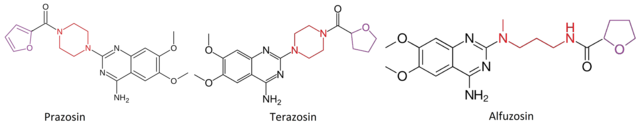
Alpha-blockers are medicines that are mainly used to treat high blood pressure (hypertension) and problems with passing urine in men who have enlargement of the prostate gland. Prostate gland enlargement is also called benign prostatic hyperplasia (BPH).
by Dr Doug McKechnie, MRCGP

Treatment and medication
What factors are causing antimicrobial resistance?
Following a recent study by health economists at the University of Manchester and the University of Southern Denmark, the tremendous pressure GPs are currently working under has been linked to increasing broad-spectrum antibiotic prescribing in England. Because excess antibiotic prescribing has been closely linked to antibiotic resistance, there are concerns that these higher prescribing levels may be contributing to antimicrobial resistance.
by Emily Jane Bashforth

Medicine
Alfacalcidol capsules and drops
Alfacalcidol is a type of vitamin D. You will need to have regular blood tests while you are taking the medicine so that your doctor can adjust your dose. Make sure you know the symptoms of too much calcium in your blood - these are losing your appetite, feeling thirsty, being sick (vomiting), feeling tired and losing weight. Please let your doctor know if you develop these symptoms.
by Michael Stewart, MRPharmS
Related patient information and medicines
Patient information leaflet
Breast cancer facts and risk factors
What are the risk factors for breast cancer. Dr Sarah Jarvis MBE Although breast cancer can develop for no apparent reason, there are certain risk factors which increase the chance that breast cancer will develop. [https://patient.info/health/breast-cancer-leaflet](https://patient.info/health/breast-cancer-leaflet) Most cases of breast cancer.

Patient information leaflet
Causes of cancer
Certain risk factors are known to increase the chance that one or more of your cells will become abnormal and lead to cancer. How does cancer start. The body is made up from millions of tiny cells. Different parts of the body such as organs, bones, muscles, skin and blood are made up from different specialised cells. Most cells have a centre.

Patient information leaflet
Blood clotting tests
Blood clotting tests are used to diagnose and assess bleeding problems and to monitor people who take warfarin or other anticoagulant medicines. You may be advised to have blood clotting tests: If you have a suspected bleeding disorder. For example, if you bleed a lot after cuts, or if you bruise easily. If you have certain liver diseases that can.

Patient information leaflet
Haemophilia
Haemophilia is a rare bleeding disorder that affects your ability to make a clot. The blood contains substances called clotting factors that work with platelets to form a clot. When you injure yourself the clot stops you bleeding. Haemophilia is a condition where there is a deficiency of clotting factors, so people with this condition usually have.

Patient information leaflet
Thalassaemia
What is thalassaemia. Thalassaemia is an inherited (genetic) condition affecting the blood. There are different types of thalassaemia. What causes thalassaemia. The cause is an inherited (genetic) change, involving the genes which tell the body how to make an important chemical called haemoglobin. Haemoglobin is the chemical which carries oxygen.

Patient information leaflet
Liver function tests
If the liver is swollen, through inflammation or disease, it can swell out from under the ribs and make your tummy swollen. Liver function Liver function The liver is a factory for the production and breakdown of carbohydrates, fats, proteins, hormones and other essential body chemicals, and helps dispose of waste products. This work is mainly.
Further reading and references
- eukaryotic translation initiation factor 2B subunit alpha; MedlinePlus, National Library of Medicine.
- Dietrich J, Lacagnina M, Gass D, Richfield E, Mayer-Proschel M, Noble M, Torres C, Proschel C. EIF2B5 mutations compromise GFAP+ astrocyte generation in vanishing white matter leukodystrophy. Nat Med. 2005 Mar;11(3):277-83. doi: 10.1038/nm1195. Epub 2005 Feb 20.
- Eurekah Bioscience: Mechanism of Translation Initiation in Eukaryotes
- Fogli A, Boespflug-Tanguy O. The large spectrum of eIF2B-related diseases. Biochem Soc Trans. 2006 Feb;34(Pt 1):22-9. doi: 10.1042/BST20060022.
- Fogli A, Schiffmann R, Hugendubler L, Combes P, Bertini E, Rodriguez D, Kimball SR, Boespflug-Tanguy O. Decreased guanine nucleotide exchange factor activity in eIF2B-mutated patients. Eur J Hum Genet. 2004 Jul;12(7):561-6. doi: 10.1038/sj.ejhg.5201189.
- Li W, Wang X, Van Der Knaap MS, Proud CG. Mutations linked to leukoencephalopathy with vanishing white matter impair the function of the eukaryotic initiation factor 2B complex in diverse ways. Mol Cell Biol. 2004 Apr;24(8):3295-306. doi: 10.1128/MCB.24.8.3295-3306.2004.
- Molecular Biology of the Cell (fourth edition, 2002): The Phosphorylation of an Initiation Factor Globally Regulates Protein Synthesis
- Pavitt GD. eIF2B, a mediator of general and gene-specific translational control. Biochem Soc Trans. 2005 Dec;33(Pt 6):1487-92. doi: 10.1042/BST0331487.
- Pronk JC, van Kollenburg B, Scheper GC, van der Knaap MS. Vanishing white matter disease: a review with focus on its genetics. Ment Retard Dev Disabil Res Rev. 2006;12(2):123-8. doi: 10.1002/mrdd.20104.
- Scali O, Di Perri C, Federico A. The spectrum of mutations for the diagnosis of vanishing white matter disease. Neurol Sci. 2006 Sep;27(4):271-7. doi: 10.1007/s10072-006-0683-y.
- Scheper GC, Proud CG, van der Knaap MS. Defective translation initiation causes vanishing of cerebral white matter. Trends Mol Med. 2006 Apr;12(4):159-66. doi: 10.1016/j.molmed.2006.02.006. Epub 2006 Mar 20.
- van der Voorn JP, van Kollenburg B, Bertrand G, Van Haren K, Scheper GC, Powers JM, van der Knaap MS. The unfolded protein response in vanishing white matter disease. J Neuropathol Exp Neurol. 2005 Sep;64(9):770-5. doi: 10.1097/01.jnen.0000178446.41595.3a.
- van Kollenburg B, van Dijk J, Garbern J, Thomas AA, Scheper GC, Powers JM, van der Knaap MS. Glia-specific activation of all pathways of the unfolded protein response in vanishing white matter disease. J Neuropathol Exp Neurol. 2006 Jul;65(7):707-15. doi: 10.1097/01.jnen.0000228201.27539.50.
Share your thoughts or experiences with others in our patient communities.
Simple access to trusted treatments and health services online.
Common conditions
Get help with common conditions through the NHS, without a GP appointment.





Sign up to the Patient newsletter
Your weekly dose of clear, trustworthy health advice - written to help you feel informed, confident and in control.
By subscribing you accept our Privacy Policy. You can unsubscribe at any time. We never sell your data.