Leukoencephalopathy with vanishing white matter
Last updated 18 Aug 2020
Meets Patient’s editorial guidelines
- DownloadDownload
- Share
- Language
- Discussion
- Ask Patient
- Audio Version
- Add to preferred sources on Google
Leukoencephalopathy with vanishing white matter is a progressive disorder that mainly affects the brain and spinal cord (central nervous system). This disorder causes deterioration of the central nervous system's white matter, which consists of nerve fibers covered by myelin. Myelin is the fatty substance that insulates and protects nerves.
Video picks for Genetic conditionsVideo library
Description
Leukoencephalopathy with vanishing white matter is a progressive disorder that mainly affects the brain and spinal cord (central nervous system). This disorder causes deterioration of the central nervous system's white matter, which consists of nerve fibers covered by myelin. Myelin is the fatty substance that insulates and protects nerves.
In most cases, people with leukoencephalopathy with vanishing white matter show no signs or symptoms of the disorder at birth. Affected children may have slightly delayed development of motor skills such as crawling or walking. During early childhood, most affected individuals begin to develop motor symptoms, including abnormal muscle stiffness (spasticity) and difficulty with coordinating movements (ataxia). There may also be some deterioration of mental functioning, but this is not usually as pronounced as the motor symptoms. Some affected females may have abnormal development of the ovaries (ovarian dysgenesis). Specific changes in the brain as seen using magnetic resonance imaging (MRI) are characteristic of leukoencephalopathy with vanishing white matter, and may be visible before the onset of symptoms.
While childhood onset is the most common form of leukoencephalopathy with vanishing white matter, some severe forms are apparent at birth. A severe, early-onset form seen among the Cree and Chippewayan populations of Quebec and Manitoba is called Cree leukoencephalopathy. Milder forms may not become evident until adolescence or adulthood, when behavioural or psychiatric problems may be the first signs of the disease. Some females with milder forms of leukoencephalopathy with vanishing white matter who survive to adolescence exhibit ovarian dysfunction. This variant of the disorder is called ovarioleukodystrophy.
Progression of leukoencephalopathy with vanishing white matter is generally uneven, with periods of relative stability interrupted by episodes of rapid decline. People with this disorder are particularly vulnerable to stresses such as infection, mild head trauma or other injury, or even extreme fright. These stresses may trigger the first symptoms of the condition or worsen existing symptoms, and can cause affected individuals to become lethargic or comatose.
Inheritance patterns
The source lists the following possible inheritance patterns: Autosomal recessive. More than one pattern can apply in different cases.
Related genes
Other names
CACH syndrome
Childhood ataxia with central nervous system hypomyelination
Cree leukoencephalopathy
Myelinosis centralis diffusa
Vanishing white matter disease
Vanishing white matter leukodystrophy
Patient picks for Genetic conditions

General health and lifestyle
Book a Pharmacy First online consultation
NHS Pharmacy First is a new scheme from the Government and NHS in England. It allows patients to get treatment, including prescription medications where necessary, for common conditions without t... Through NHS Pharmacy First, My Local Surgery offers fast, free private online consultations with an NHS pharmacist for quick diagnosis and.
by Thomas Andrew Porteus, MBCS

Children's health
Measles is back: why vaccines matter
Vaccines have been at the forefront in recent years, especially after the COVID-19 pandemic. While coronavirus vaccines have dominated the conversation, awareness of others, such as the MMR vaccine, which protects against measles, mumps, and rubella, has quietly declined.
by Victoria Raw

Cancer
Spotting the signs of ovarian cancer: why acting early matters
In the UK, thousands of women are diagnosed with ovarian cancer only after reaching emergency care. Alarmingly, just one in three cases is identified at the earliest stages - when treatment is most effective. We sat down with Jo Stanford, Health Projects Manager and spokesperson for Ovarian Cancer Action, to discuss why so many women are still diagnosed late, the symptoms that should raise concern, and the steps to take if something doesn’t feel right.
by Victoria Raw

Oral and dental care
Is teeth whitening safe?
When it comes to our teeth, many of us feel insecure about our not-so-pearly whites. If you're looking for a brighter smile, you might be exploring teeth whitening options. But is there anything we should know about the safety of teeth whitening?
by Victoria Raw

Drug interactions checker
Can I take Lion's mane and White button together?
There are no known harmful interactions between Lion's Mane (Hericium erinaceus) and White Button mushrooms (Agaricus bisporus). Both are edible fungi that are commonly consumed as food or supplements.

Drug interactions checker
Can I take Shiitake and White button together?
There are no known harmful interactions between shiitake mushrooms and white button mushrooms when eaten as part of a normal diet.
Related patient information and medicines

Patient information leaflet
Nasal congestion
This leaflet deals with the causes and treatment of nasal congestion. Following a review by MHRA - the safety information of all pseudoephedrine-containing medicines will be updated to provide clearer descriptions of these risks and potential risk factors for these conditions for both patients and heal... PRES- also known as reversible posterior.

Patient information leaflet
Decongestants
Dr Krishna Vakharia , 21st February 2024 A note on pseudoephedrine-containing products. Following a review by MHRA - the safety information of all pseudoephedrine-containing medicines will be updated to provide clearer descriptions of these risks and potential risk factors for these conditions for both... PRES- also known as reversible posterior.

Patient information leaflet
Spleen pain
This leaflet gives a brief overview of the spleen and its functions. What is the spleen. The spleen is an organ about the size of a clenched fist found on the left-hand side of your upper tummy (abdomen). Its main functions are to filter your blood, create new blood cells and store platelets. It is similar in structur... The spleen contains two.

Patient information leaflet
The immune system
This leaflet gives a brief overview of the immune system and how it works. A person with a weak immune system might have difficulty fighting off infections. In autoimmune diseases the body is unable to tell what is its own and what is foreign, so it attacks itself. Autoimmune diseases can attack any part of the body - eg, type 1 diabetes.
Patient information leaflet
MRI scan
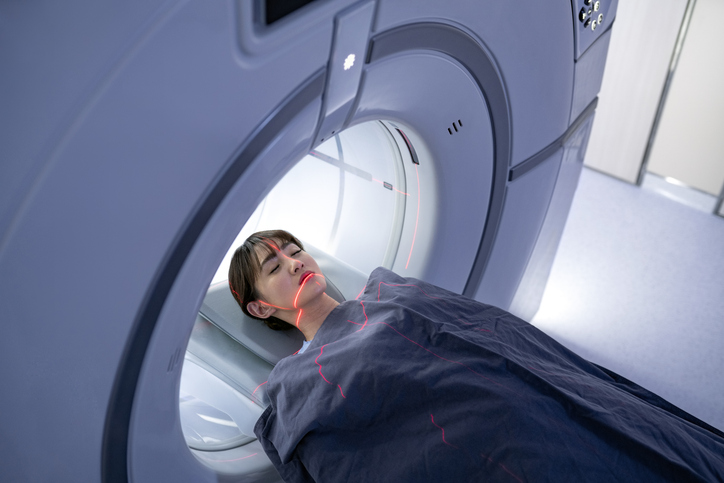
An MRI scan is a safe and painless test that can provide detailed pictures of organs and other structures inside your body. Note : the information below is a general guide only. The arrangements (and the way tests are performed) may vary bet... There is clear contrast between grey and white matter parts of the brain and this makes MRI the best.

Patient information leaflet
Chronic lymphocytic leukaemia
Chronic lymphocytic leukaemia (CLL) is a condition where you have many abnormal B lymphocyte white blood cells. What is chronic lymphocytic leukaemia. Chronic lymphocytic leukaemia (CLL) is a condition where you have many abnormal B lymphocyte white blood cells. The lymphocytes look normal under a microscope but are abnormal as they do not.
Further reading and references
- Leukoencephalopathy with vanishing white matter; MedlinePlus, National Library of Medicine.
- Dietrich J, Lacagnina M, Gass D, Richfield E, Mayer-Proschel M, Noble M, Torres C, Proschel C. EIF2B5 mutations compromise GFAP+ astrocyte generation in vanishing white matter leukodystrophy. Nat Med. 2005 Mar;11(3):277-83. doi: 10.1038/nm1195. Epub 2005 Feb 20.
- Fogli A, Boespflug-Tanguy O. The large spectrum of eIF2B-related diseases. Biochem Soc Trans. 2006 Feb;34(Pt 1):22-9. doi: 10.1042/BST20060022.
- Fogli A, Schiffmann R, Hugendubler L, Combes P, Bertini E, Rodriguez D, Kimball SR, Boespflug-Tanguy O. Decreased guanine nucleotide exchange factor activity in eIF2B-mutated patients. Eur J Hum Genet. 2004 Jul;12(7):561-6. doi: 10.1038/sj.ejhg.5201189.
- Li W, Wang X, Van Der Knaap MS, Proud CG. Mutations linked to leukoencephalopathy with vanishing white matter impair the function of the eukaryotic initiation factor 2B complex in diverse ways. Mol Cell Biol. 2004 Apr;24(8):3295-306. doi: 10.1128/MCB.24.8.3295-3306.2004.
- Pavitt GD. eIF2B, a mediator of general and gene-specific translational control. Biochem Soc Trans. 2005 Dec;33(Pt 6):1487-92. doi: 10.1042/BST0331487.
- Pronk JC, van Kollenburg B, Scheper GC, van der Knaap MS. Vanishing white matter disease: a review with focus on its genetics. Ment Retard Dev Disabil Res Rev. 2006;12(2):123-8. doi: 10.1002/mrdd.20104.
- Scali O, Di Perri C, Federico A. The spectrum of mutations for the diagnosis of vanishing white matter disease. Neurol Sci. 2006 Sep;27(4):271-7. doi: 10.1007/s10072-006-0683-y.
- Scheper GC, Proud CG, van der Knaap MS. Defective translation initiation causes vanishing of cerebral white matter. Trends Mol Med. 2006 Apr;12(4):159-66. doi: 10.1016/j.molmed.2006.02.006. Epub 2006 Mar 20.
- Schiffmann R, Elroy-Stein O. Childhood ataxia with CNS hypomyelination/vanishing white matter disease--a common leukodystrophy caused by abnormal control of protein synthesis. Mol Genet Metab. 2006 May;88(1):7-15. doi: 10.1016/j.ymgme.2005.10.019. Epub 2006 Jan 18.
- Schiffmann R, Moller JR, Trapp BD, Shih HH, Farrer RG, Katz DA, Alger JR, Parker CC, Hauer PE, Kaneski CR, et al. Childhood ataxia with diffuse central nervous system hypomyelination. Ann Neurol. 1994 Mar;35(3):331-40. doi: 10.1002/ana.410350314.
- van der Knaap MS, Fogli A, Boespflug-Tanguy O, Abbink TEM, Schiffmann R. Childhood Ataxia with Central Nervous System Hypomyelination / Vanishing White Matter. 2003 Feb 20 [updated 2019 Apr 4]. In: Adam MP, Bick S, Mirzaa GM, Wallace SE, Amemiya A, editors. GeneReviews(R) [Internet]. Seattle (WA): University of Washington, Seattle; 1993-2026. Available from http://www.ncbi.nlm.nih.gov/books/NBK1258/
- van der Voorn JP, van Kollenburg B, Bertrand G, Van Haren K, Scheper GC, Powers JM, van der Knaap MS. The unfolded protein response in vanishing white matter disease. J Neuropathol Exp Neurol. 2005 Sep;64(9):770-5. doi: 10.1097/01.jnen.0000178446.41595.3a.
- van Kollenburg B, van Dijk J, Garbern J, Thomas AA, Scheper GC, Powers JM, van der Knaap MS. Glia-specific activation of all pathways of the unfolded protein response in vanishing white matter disease. J Neuropathol Exp Neurol. 2006 Jul;65(7):707-15. doi: 10.1097/01.jnen.0000228201.27539.50.
Share your thoughts or experiences with others in our patient communities.
Simple access to trusted treatments and health services online.
Common conditions
Get help with common conditions through the NHS, without a GP appointment.





Sign up to the Patient newsletter
Your weekly dose of clear, trustworthy health advice - written to help you feel informed, confident and in control.
By subscribing you accept our Privacy Policy. You can unsubscribe at any time. We never sell your data.