fibroblast growth factor 8
Last updated 10 Apr 2023
Meets Patient’s editorial guidelines
- DownloadDownload
- Share
- Language
- Discussion
- Ask Patient
- Audio Version
- Add to preferred sources on Google
The FGF8 gene provides instructions for making a protein called fibroblast growth factor 8 (FGF8). This protein is part of a family of proteins called fibroblast growth factors that are involved in many processes, including cell division, regulation of cell growth and maturation, and development before birth. FGF8 attaches (binds) to another protein called fibroblast growth factor receptor 1 (FGFR1) on the cell surface, which triggers a cascade of chemical reactions inside the cell.
Video picks for GenesVideo library
Normal function
The FGF8 gene provides instructions for making a protein called fibroblast growth factor 8 (FGF8). This protein is part of a family of proteins called fibroblast growth factors that are involved in many processes, including cell division, regulation of cell growth and maturation, and development before birth. FGF8 attaches (binds) to another protein called fibroblast growth factor receptor 1 (FGFR1) on the cell surface, which triggers a cascade of chemical reactions inside the cell.
Starting before birth, the signals triggered by FGF8 and FGFR1 play a critical role in the formation, survival, and movement (migration) of certain nerve cells (neurons) in the brain. In particular, this signaling appears to be essential for neurons that produce a hormone called gonadotropin-releasing hormone (GnRH). GnRH controls the production of several other hormones that direct sexual development before birth and during puberty. These hormones are important for the normal function of the ovaries in women and the testes in men. FGF8 and FGFR1 also play a role in a group of nerve cells that are specialized to process smells (olfactory neurons). These neurons migrate from the developing nose to a structure at the front of the brain called the olfactory bulb, which is critical for the perception of odors.
The FGF8 protein is also found in other parts of the developing embryo, including other areas of the brain and the limbs, heart, ears, and eyes. Researchers suspect that it may be involved in the normal formation and development of these structures as well.
Conditions referring to this gene or chromosome
Other names
AIGF
androgen-induced growth factor
FGF-8
fibroblast growth factor 8 (androgen-induced)
HBGF-8
heparin-binding growth factor 8
HH6
KAL6
Patient picks for Genes

Children's health
Restricted growth
Dwarfism is a medical or genetic condition which causes people to have restricted growth so that they are shorter than average. Specifically, people with dwarfism grow no higher than 4 ft 10 ins (147 cm). It can be due to literally hundreds of different causes, so the term actually includes many different medical conditions. The cause and type of dwarfism will therefore affect the outlook and problems that may be associated with it. The most common condition causing dwarfism is achondroplasia.
by Dr Hayley Willacy, FRCGP

Heart health and blood vessels
Dilated cardiomyopathy causes: what are the risk factors?
Having dilated cardiomyopathy means that your heart muscle is weakened, which affects how your heart pumps blood around your body. There are a wide range of dilated cardiomyopathy causes, including genetics, other health conditions, alcohol consumption and a poor diet. While we can't control some of these risk factors, we can make positive lifestyle changes to reduce our risk of developing dilated cardiomyopathy.
by Amberley Davis
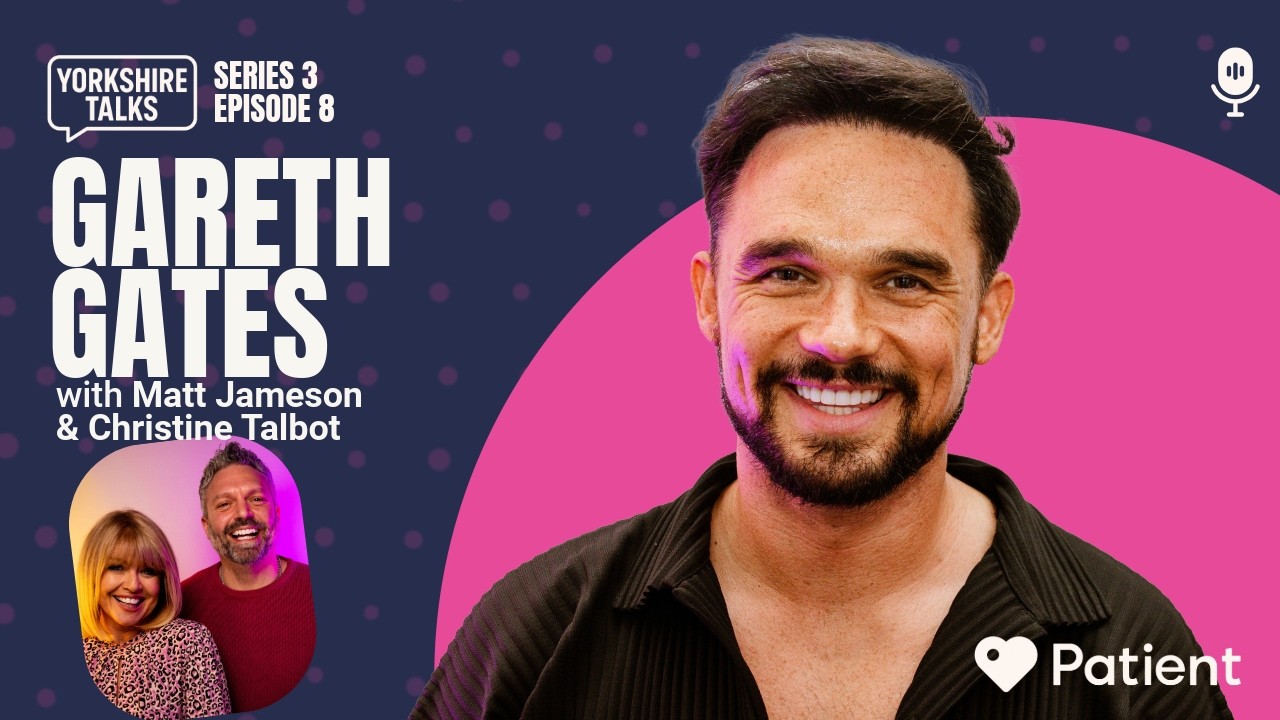
Yorkshire talks series 3
Gareth Gates: "I believed I was defective — my stammer was my superpower" | Yorkshire Talks
In our final episode of Series Three, our Yorkshire Talks guest is former Pop Idol star, producer and performer Gareth Gates. Bradford lad Gareth was first interviewed by Christine for a YTV talent show for young people nearly 30 years ago — so this episode was a bit of a reunion. Now all grown up, Gareth joins Matt and Christine to talk openly and honestly about his journey: from being bullied at school and living with a debilitating stammer, to reaching the final of the very first Pop Idol and having his whole life changed overnight. Gareth explains how taking part in the McGuire Programme has helped him manage his stammer, and how his experiences have shaped the work he does today. He also chats about his role in Boyband in the Buff, currently touring, his journey into becoming a music producer and entrepreneur, and his exciting new project — Speechless, a musical about stammering, due to hit the stage next year. Now a dad himself, with a daughter the same age he was when he first found fame, Gareth reflects on the last few decades with warmth, honesty and plenty of Yorkshire humour. 🎙️ It's a fascinating, funny and incredibly inspiring conversation — one you won't want to miss. If you enjoy the episode, don't forget to LIKE, SUBSCRIBE and leave us a comment. Follow Gareth: 📸 Instagram: @gareth_gates See Gareth on tour: 🎭 Boyband in the Buff is currently on tour. Find tour dates here: [paste official tour dates link] See Gareth in Beauty and the Beast: ✨ Gareth stars as the Beast in Beauty and the Beast at the Britannia Pier, Great Yarmouth, 8–31 December: britannia-pier.co.uk Follow the hosts: Matt Jameson: @matt_d_jameson Christine Talbot: @christineetalbot Yorkshire Talks is presented by Christine Talbot and Matt Jameson, and produced by Simon Fogal at Chapter 81 Studios in Leeds. Proudly sponsored by Patient.info.

Cancer
Breast cancer facts and risk factors
Most cases of breast cancer occur by chance. However, breast cancer does occur more often than usual in some families because of their genetic makeup.
by Dr Colin Tidy, MRCGP

Diet and nutrition
Biotin: do vitamins for hair growth really work?
If you are interested in hair growth supplements, then chances are you've heard of biotin. In recent years, this vitamin has grown in popularity and is widely available in the cosmetic industry. What exactly is biotin, and can it really promote longer, healthier hair?
by Amberley Davis

Treatment and medication
What factors are causing antimicrobial resistance?
Following a recent study by health economists at the University of Manchester and the University of Southern Denmark, the tremendous pressure GPs are currently working under has been linked to increasing broad-spectrum antibiotic prescribing in England. Because excess antibiotic prescribing has been closely linked to antibiotic resistance, there are concerns that these higher prescribing levels may be contributing to antimicrobial resistance.
by Emily Jane Bashforth
Related patient information and medicines
Patient information leaflet
Localised scleroderma
Generalised morphoea symptoms This is a rare type where there are more plaques spread around different areas of the body. Causes of localised scleroderma The cause is not clear. What is known is that cells called fibroblasts make too much of a protein called collagen. The collagen gets deposited in the skin, causing scarring and thickening.

Patient information leaflet
Chronic sinusitis
Other medical conditions Sometimes, chronic sinusitis can develop as a result of another medical condition. Examples include: Cystic fibrosis Cystic fibrosis , a genetic condition which causes thick mucus that is difficult to clear from the lungs, sinuses, and elsewhere. Granulomatosis with polyangiitis Granulomatosis with polyangiitis , a rare.

Patient information leaflet
Breast cancer
...er-leaflet](https://patient.info/health/breast-cancer-leaflet) Follow Patient: Website: [https://patient.info/](https://patient.info/) Facebook: [https://www.facebook.com/patient](https://www.facebook.com/patient) Twitter: [https://twitter.com/patient](https://twitter.com/patient) Pinterest:.

Patient information leaflet
Turner syndrome
Each ovary is about the size of a large marble. The ovaries normally make eggs (ova) and various female hormones - in particular, oestrogen. Almost all girls with Turner syndrome have ovaries that do not work properly. As a result, they May not go through puberty. May have breasts which do not develop properly. May not ever get a period, and are.
Patient information leaflet
Diabetic retinopathy
Stage 2: pre-proliferative retinopathy Pre-proliferative retinopathy is m... There are signs of blood flow becoming restricted but not yet showing new blood vessels growing (see below). Stage 3: proliferative retinopathy Proliferative retinopathy is the advanced diabetic retinopathy that occurs when damaged blood vessels in the retina make.

Patient information leaflet
Throat cancer
(The throat is usually sprayed with a local anaesthetic before use of a nasal endoscope, so that the procedure i... Dr Krishna Vakharia, 16th October 2023 The National Institute for Health and Care Excellence (NICE) has recommended that a person should receive a diagnosis or ruling out of cancer within 28 days of being referred urgently by their.
Further reading and references
- fibroblast growth factor 8; MedlinePlus, National Library of Medicine.
- Falardeau J, Chung WC, Beenken A, Raivio T, Plummer L, Sidis Y, Jacobson-Dickman EE, Eliseenkova AV, Ma J, Dwyer A, Quinton R, Na S, Hall JE, Huot C, Alois N, Pearce SH, Cole LW, Hughes V, Mohammadi M, Tsai P, Pitteloud N. Decreased FGF8 signaling causes deficiency of gonadotropin-releasing hormone in humans and mice. J Clin Invest. 2008 Aug;118(8):2822-31. doi: 10.1172/JCI34538.
- Gemel J, Gorry M, Ehrlich GD, MacArthur CA. Structure and sequence of human FGF8. Genomics. 1996 Jul 1;35(1):253-7. doi: 10.1006/geno.1996.0349.
- Trarbach EB, Abreu AP, Silveira LF, Garmes HM, Baptista MT, Teles MG, Costa EM, Mohammadi M, Pitteloud N, Mendonca BB, Latronico AC. Nonsense mutations in FGF8 gene causing different degrees of human gonadotropin-releasing deficiency. J Clin Endocrinol Metab. 2010 Jul;95(7):3491-6. doi: 10.1210/jc.2010-0176. Epub 2010 May 12.
Share your thoughts or experiences with others in our patient communities.
Simple access to trusted treatments and health services online.
Common conditions
Get help with common conditions through the NHS, without a GP appointment.





Sign up to the Patient newsletter
Your weekly dose of clear, trustworthy health advice - written to help you feel informed, confident and in control.
By subscribing you accept our Privacy Policy. You can unsubscribe at any time. We never sell your data.