hemoglobin subunit beta
Last updated 3 Apr 2025
Meets Patient’s editorial guidelines
- DownloadDownload
- Share
- Language
- Discussion
- Ask Patient
- Audio Version
- Add to preferred sources on Google
The HBB gene provides instructions for making a protein called beta-globin. Beta-globin is a component (subunit) of a larger protein called hemoglobin, which is located inside red blood cells. In adults, hemoglobin typically consists of four protein subunits: two subunits of beta-globin and two subunits of a protein called alpha-globin, which is produced from another gene called HBA. Each of these protein subunits is attached (bound) to an iron-containing molecule called heme; the iron in the center of each heme can bind to one oxygen molecule. The hemoglobin within red blood cells binds to oxygen molecules in the lungs. The red blood cells then travel through the bloodstream and deliver oxygen to tissues throughout the body.
Video picks for GenesVideo library
Normal function
The HBB gene provides instructions for making a protein called beta-globin. Beta-globin is a component (subunit) of a larger protein called hemoglobin, which is located inside red blood cells. In adults, hemoglobin typically consists of four protein subunits: two subunits of beta-globin and two subunits of a protein called alpha-globin, which is produced from another gene called HBA. Each of these protein subunits is attached (bound) to an iron-containing molecule called heme; the iron in the center of each heme can bind to one oxygen molecule. The hemoglobin within red blood cells binds to oxygen molecules in the lungs. The red blood cells then travel through the bloodstream and deliver oxygen to tissues throughout the body.
Conditions referring to this gene or chromosome
Other names
beta globin
beta-globin
HBB_HUMAN
hemoglobin beta gene
hemoglobin, beta
hemoglobin--beta locus
Patient picks for Genes
Drug interactions checker
Can I take Betahistine and Citalopram together?
There are no known significant interactions between betahistine and citalopram. It is generally considered safe to take these two medicines together.
Treatment and medication
Extended-spectrum beta-lactamases
Extended-spectrum beta-lactamases (ESBLs) have so far only been reported in certain bacteria called Gram-negative bacterial infections.
by Dr Colin Tidy, MRCGP

Treatment and medication
Beta-blockers
Beta-blockers are medicines that are used to treat a variety of conditions. Their full correct name is beta-adrenoceptor blocking medicines (or beta-adrenergic blocking agents), but they are commonly just called beta-blockers.
by Dr Rosalyn Adleman, MRCGP

Treatment and medication
Do beta blockers help with anxiety symptoms?
Whether you had sweaty palms before an exam or a racing heart before a driving test, we’ve all experienced the symptoms of anxiety from time to time. These physical reactions can be hard to cope with - especially if you need to perform under pressure - but medication called beta blockers can help provide some relief.
by Lydia Smith

Medicine
Labetalol - a beta-blocker
Take labetalol tablets twice daily, with something to eat. Treatment with labetalol tablets is often long-term. Continue to take your doses regularly unless your doctor tells you to stop. Common side effects of labetalol include dizziness, sleepiness, headache, feeling sick or being sick, and cold fingers and toes.
by Michael Stewart, MRPharmS
Medicine
Nebivolol - a beta-blocker
Take nebivolol once each day. The most common side-effects are tiredness, headache, stomach upset, and feeling short of breath. Treatment with nebivolol is usually long-term. Continue to take the tablets regularly - do not stop without speaking with your doctor first, as this can cause problems.
by Michael Stewart, MRPharmS
Related patient information and medicines
Patient information leaflet
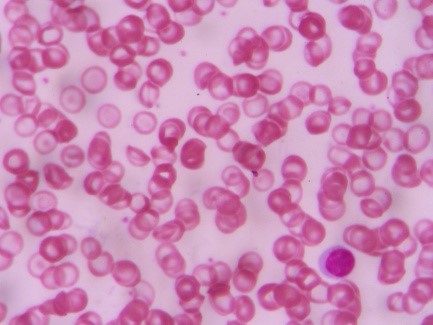
Sickle cell disease
SCD is now one of the most common inherited conditions in babies born in the UK. ServiceUpsellPlaceholder What causes sickle cell disease. The c... The medical shorthand for this is haemoglobin SS (or HbSS). Other types of SCD involve one sickle cell gene plus another abnormal haemoglobin gene of a different type. These include: haemoglobin SC;.

Patient information leaflet
Sickle cell trait
If you inherit a gene from one of your parents, called a sickle cell gene, you have a condition called sickle cell trait. You inherit haemoglobin genes from both parents. ... Examples of these interacting genes are HbC, beta thalassaemia, Hb Lepore and HbO Arab. The result of these genes is that an important body chemical called haemoglobin is.

Patient information leaflet
Thalassaemia
What causes thalassaemia. The cause is an inherited (genetic) change, involving the genes which tell the body how to make an important chemical called haemoglobin. Haemoglobin is the chemical which carries oxygen in the blood - it is the one which gives blood its red colour. Haemoglobin is located in cells called red blood cells which are part of.

Patient information leaflet
Blood tests
One drop of blood contains ... A constant new supply of red blood cells is needed to replace old cells that break down. Millions of red blood cells are made each day. Red cells contain a chemical called haemoglobin. This binds to oxygen and takes oxygen from the lungs to all parts of the body. White cells (leukocytes) There are different types of.

Patient information leaflet
Gilbert's syndrome
The condition is... What is bilirubin. Bilirubin is constantly being made. It is a breakdown product of haemoglobin. Haemoglobin is a chemical that is in red blood cells and carries oxygen to the tissues. Many red blood cells break down each day releasing haemoglobin, and bilirubin is one of the waste products. Bilirubin is carried in the.
Patient information leaflet
Pregnancy screening tests
This test checks for antibodies to German measles (the rubella virus) R... If antibodies are present it means that you are immune to this infection. If you are not immune, when you are pregnant you should keep away from anyone who may have rubella and consider being immunised. Haemoglobin disorders. The blood test can detect if you're a carrier of.
Further reading and references
- hemoglobin subunit beta; MedlinePlus, National Library of Medicine.
- Ashley-Koch A, Yang Q, Olney RS. Sickle hemoglobin (HbS) allele and sickle cell disease: a HuGE review. Am J Epidemiol. 2000 May 1;151(9):839-45. doi: 10.1093/oxfordjournals.aje.a010288.
- Bellelli A, Brunori M, Miele AE, Panetta G, Vallone B. The allosteric properties of hemoglobin: insights from natural and site directed mutants. Curr Protein Pept Sci. 2006 Feb;7(1):17-45. doi: 10.2174/138920306775474121.
- Cohen AR, Galanello R, Pennell DJ, Cunningham MJ, Vichinsky E. Thalassemia. Hematology Am Soc Hematol Educ Program. 2004:14-34. doi: 10.1182/asheducation-2004.1.14.
- Cromer MK, Camarena J, Martin RM, Lesch BJ, Vakulskas CA, Bode NM, Kurgan G, Collingwood MA, Rettig GR, Behlke MA, Lemgart VT, Zhang Y, Goyal A, Zhao F, Ponce E, Srifa W, Bak RO, Uchida N, Majeti R, Sheehan VA, Tisdale JF, Dever DP, Porteus MH. Gene replacement of alpha-globin with beta-globin restores hemoglobin balance in beta-thalassemia-derived hematopoietic stem and progenitor cells. Nat Med. 2021 Apr;27(4):677-687. doi: 10.1038/s41591-021-01284-y. Epub 2021 Mar 18.
- do Nascimento TS, Pereira RO, de Mello HL, Costa J. Methemoglobinemia: from diagnosis to treatment. Rev Bras Anestesiol. 2008 Nov-Dec;58(6):651-64. doi: 10.1590/s0034-70942008000600011. English, Portuguese.
- Flatz G, Sanguansermsri T, Sengchanh S, Horst D, Horst J. The 'hot-spot' of Hb E [beta26(B8)Glu-->Lys] in Southeast Asia: beta-globin anomalies in the Lao Theung population of southern Laos. Hemoglobin. 2004 Aug;28(3):197-204. doi: 10.1081/hem-120040334.
- Fu XH, Liu DP, Liang CC. Chromatin structure and transcriptional regulation of the beta-globin locus. Exp Cell Res. 2002 Aug 1;278(1):1-11. doi: 10.1006/excr.2002.5555.
- Lattanzi A, Camarena J, Lahiri P, Segal H, Srifa W, Vakulskas CA, Frock RL, Kenrick J, Lee C, Talbott N, Skowronski J, Cromer MK, Charlesworth CT, Bak RO, Mantri S, Bao G, DiGiusto D, Tisdale J, Wright JF, Bhatia N, Roncarolo MG, Dever DP, Porteus MH. Development of beta-globin gene correction in human hematopoietic stem cells as a potential durable treatment for sickle cell disease. Sci Transl Med. 2021 Jun 16;13(598):eabf2444. doi: 10.1126/scitranslmed.abf2444.
- Mahajan MC, Weissman SM. Multi-protein complexes at the beta-globin locus. Brief Funct Genomic Proteomic. 2006 Mar;5(1):62-5. doi: 10.1093/bfgp/ell001. Epub 2006 Feb 22.
- Nagel RL, Steinberg MH. Role of epistatic (modifier) genes in the modulation of the phenotypic diversity of sickle cell anemia. Pediatr Pathol Mol Med. 2001 Mar-Apr;20(2):123-36.
- Panigrahi I, Agarwal S. Genetic determinants of phenotype in beta-thalassemia. Hematology. 2008 Aug;13(4):247-52. doi: 10.1179/102453308X316031.
- Park KW. Sickle cell disease and other hemoglobinopathies. Int Anesthesiol Clin. 2004 Summer;42(3):77-93. doi: 10.1097/00004311-200404230-00008. No abstract available.
- Sadelain M, Rivella S, Lisowski L, Samakoglu S, Riviere I. Globin gene transfer for treatment of the beta-thalassemias and sickle cell disease. Best Pract Res Clin Haematol. 2004 Sep;17(3):517-34. doi: 10.1016/j.beha.2004.08.002.
- Schechter AN. Hemoglobin research and the origins of molecular medicine. Blood. 2008 Nov 15;112(10):3927-38. doi: 10.1182/blood-2008-04-078188.
- Stuart MJ, Nagel RL. Sickle-cell disease. Lancet. 2004 Oct 9-15;364(9442):1343-60. doi: 10.1016/S0140-6736(04)17192-4.
- Thein SL. Genetic insights into the clinical diversity of beta thalassaemia. Br J Haematol. 2004 Feb;124(3):264-74. doi: 10.1046/j.1365-2141.2003.04769.x. No abstract available.
- Thom CS, Dickson CF, Gell DA, Weiss MJ. Hemoglobin variants: biochemical properties and clinical correlates. Cold Spring Harb Perspect Med. 2013 Mar 1;3(3):a011858. doi: 10.1101/cshperspect.a011858.
Share your thoughts or experiences with others in our patient communities.
Simple access to trusted treatments and health services online.
Common conditions
Get help with common conditions through the NHS, without a GP appointment.





Sign up to the Patient newsletter
Your weekly dose of clear, trustworthy health advice - written to help you feel informed, confident and in control.
By subscribing you accept our Privacy Policy. You can unsubscribe at any time. We never sell your data.