integrin subunit alpha 2b
Last updated 11 Apr 2023
Meets Patient’s editorial guidelines
- DownloadDownload
- Share
- Language
- Discussion
- Ask Patient
- Audio Version
- Add to preferred sources on Google
The ITGA2B gene provides instructions for making one part, the alphaIIb subunit, of a receptor complex called integrin alphaIIb/beta3 (αIIbβ3), which is found on the surface of small cells called platelets. Platelets circulate in blood and are an essential component of blood clots. The alphaIIb subunit attaches (binds) to the beta3 subunit, which is produced from the ITGB3 gene, to form integrin αIIbβ3. It is estimated that 80,000 to 100,000 copies of integrin αIIbβ3 are present on the surface of each platelet.
Video picks for GenesVideo library
Normal function
The ITGA2B gene provides instructions for making one part, the alphaIIb subunit, of a receptor complex called integrin alphaIIb/beta3 (αIIbβ3), which is found on the surface of small cells called platelets. Platelets circulate in blood and are an essential component of blood clots. The alphaIIb subunit attaches (binds) to the beta3 subunit, which is produced from the ITGB3 gene, to form integrin αIIbβ3. It is estimated that 80,000 to 100,000 copies of integrin αIIbβ3 are present on the surface of each platelet.
During clot formation, integrin αIIbβ3 binds to a protein called fibrinogen. Attachment of integrin αIIbβ3 from adjacent platelets to the same fibrinogen protein helps platelets cluster together (platelet cohesion) to form a blood clot. Blood clots protect the body after injury by sealing off damaged blood vessels and preventing further blood loss. Integrin αIIbβ3 can also bind other proteins on platelets and in blood as well as proteins within the intricate lattice that forms in the space between cells (extracellular matrix) to ensure proper clot formation and promote wound healing.
Conditions referring to this gene or chromosome
Other names
alphaIIb protein
CD41
CD41B
GP2B
GPIIb
integrin alpha 2b
integrin alpha-IIb preproprotein
integrin, alpha 2b (platelet glycoprotein IIb of IIb/IIIa complex, antigen CD41)
integrin, alpha-2B
platelet fibrinogen receptor, alpha subunit
platelet glycoprotein IIb
platelet membrane glycoprotein IIb
Patient picks for Genes
Medicine
Phenoxybenzamine - an alpha-blocker
Adults will normally start with one capsule a day. This dose may then be increased over the next few days. It is common to feel dizzy or light-headed initially. This should soon settle. You may be given other medicines to take alongside phenoxybenzamine.
by Michael Stewart, MRPharmS
Treatment and medication
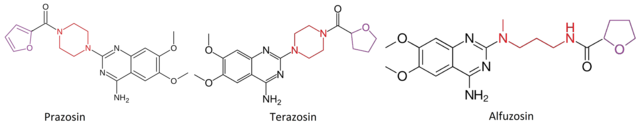
Alpha-blockers
Alpha-blockers are medicines that are mainly used to treat high blood pressure (hypertension) and problems with passing urine in men who have enlargement of the prostate gland. Prostate gland enlargement is also called benign prostatic hyperplasia (BPH).
by Dr Doug McKechnie, MRCGP

Children's health
Alpha-1 antitrypsin deficiency
Alpha-1 antitrypsin deficiency is an inherited genetic condition. A genetic condition is one that can be passed on from parents through genes. In alpha-1 antitrypsin deficiency the result of a genetic abnormality leads to lung and, in some people, liver damage. Lung symptoms are the most common and include shortness of breath, cough and wheezing. Symptoms can worsen over time. At present, there is no cure for alpha-1 antitrypsin deficiency. Treatment aims at slowing down the progression of the disease.
by Dr Philippa Vincent, MRCGP
Medicine
Indoramin - an alpha-blocker
Indoramin is prescribed for two different medical conditions: 20 mg strength tablets are prescribed for men with prostate problems, and 25 mg strength tablets are prescribed for people with high blood pressure. You are advised not to drink alcohol while you are on indoramin. Do not drive and do not use tools or machines if you feel tired or dizzy.
by Michael Stewart, MRPharmS

Medicine
Prazosin - an alpha-blocker
Your first dose of prazosin may make you feel dizzy or faint, or start sweating. Take your first dose at bedtime and remain lying down until these symptoms have completely passed. Prazosin can cause dizziness which may affect your ability to drive. Make sure your reactions are normal before you drive and before you use tools or machines.
by Michael Stewart, MRPharmS
Medicine
Alfacalcidol capsules and drops
Alfacalcidol is a type of vitamin D. You will need to have regular blood tests while you are taking the medicine so that your doctor can adjust your dose. Make sure you know the symptoms of too much calcium in your blood - these are losing your appetite, feeling thirsty, being sick (vomiting), feeling tired and losing weight. Please let your doctor know if you develop these symptoms.
by Michael Stewart, MRPharmS
Related patient information and medicines

Patient information leaflet
Peyronie's disease
Peyronie's disease causes a curved or bent penis. It is caused by scar tissue forming along the shaft of the penis. Medicines injected into the scar tissue Various different medicatio... An example is verapamil, which can dampen down the scar tissue and can help it flatten out. Interferon alfa-2b has been shown to work well when injected into the.

Patient information leaflet
Restless legs syndrome
(Idiopathic means of unknown cause.). Symptoms tend to become slowly worse over the years. It is thought that the cause may be a slight lack of, or imbalance of, some brain chemicals (neurotransmitters), especially one called dopamine. It is not known why this should occur. There may be some genetic factor, as primary RLS runs in some families..

Patient information leaflet
Liver function tests
What is a liver function test. Liver function tests are a type of blood test. A small amount of blood is taken from a vein in your arm. Liver function tests measure a series of chemicals which relate to the way the liver works. They include substances that are made in the liver or affected by the health of the liver cells, chemicals which are.

Patient information leaflet
Can I take Rivaroxaban and Tamsulosin together?
However, both medicines can occasionally cause dizziness or lightheadedness,... Taking them together might slightly increase the chance of feeling faint. Why this happens Rivaroxaban is an anticoagulant (blood thinner) and tamsulosin is an alpha-blocker used for prostate symptoms. They are processed by different pathways in the liver and do not.

Patient information leaflet
Can I take Guanfacine and Tizanidine together?
It can also significantly slow your heart rate. Why this happens Both guanfacine and tizanidine are 'alpha-2 agonists'. This means they work in a similar way to relax blood vessels and slow down the nervous system. D... Always consult your GP, pharmacist, or another qualified healthcare professional before making decisions about your medications..
Patient information leaflet
Biological medicines for rheumatoid arthritis
Biological medicines mimic substances produced by the human body, such as antibodies. They are made by living organisms such as cloned human white blood cells. This is unlike most medicines which are made by chemical processes. What else are biological medicines used to treat. Biological medicines are also used to treat other conditions - for.
Further reading and references
- integrin subunit alpha 2b; MedlinePlus, National Library of Medicine.
- Kunishima S, Kashiwagi H, Otsu M, Takayama N, Eto K, Onodera M, Miyajima Y, Takamatsu Y, Suzumiya J, Matsubara K, Tomiyama Y, Saito H. Heterozygous ITGA2B R995W mutation inducing constitutive activation of the alphaIIbbeta3 receptor affects proplatelet formation and causes congenital macrothrombocytopenia. Blood. 2011 May 19;117(20):5479-84. doi: 10.1182/blood-2010-12-323691. Epub 2011 Mar 31.
- Nurden AT, Fiore M, Nurden P, Pillois X. Glanzmann thrombasthenia: a review of ITGA2B and ITGB3 defects with emphasis on variants, phenotypic variability, and mouse models. Blood. 2011 Dec 1;118(23):5996-6005. doi: 10.1182/blood-2011-07-365635. Epub 2011 Sep 13.
- Nurden AT, Pillois X, Fiore M, Alessi MC, Bonduel M, Dreyfus M, Goudemand J, Gruel Y, Benabdallah-Guerida S, Latger-Cannard V, Negrier C, Nugent D, Oiron RD, Rand ML, Sie P, Trossaert M, Alberio L, Martins N, Sirvain-Trukniewicz P, Couloux A, Canault M, Fronthroth JP, Fretigny M, Nurden P, Heilig R, Vinciguerra C. Expanding the Mutation Spectrum Affecting alphaIIbbeta3 Integrin in Glanzmann Thrombasthenia: Screening of the ITGA2B and ITGB3 Genes in a Large International Cohort. Hum Mutat. 2015 May;36(5):548-61. doi: 10.1002/humu.22776.
- Nurden AT, Pillois X, Fiore M, Heilig R, Nurden P. Glanzmann thrombasthenia-like syndromes associated with Macrothrombocytopenias and mutations in the genes encoding the alphaIIbbeta3 integrin. Semin Thromb Hemost. 2011 Sep;37(6):698-706. doi: 10.1055/s-0031-1291380. Epub 2011 Nov 18.
- Pillitteri D, Pilgrimm AK, Kirchmaier CM. Novel Mutations in the GPIIb and GPIIIa Genes in Glanzmann Thrombasthenia. Transfus Med Hemother. 2010;37(5):268-277. doi: 10.1159/000320258. Epub 2010 Sep 15.
Share your thoughts or experiences with others in our patient communities.
Simple access to trusted treatments and health services online.
Common conditions
Get help with common conditions through the NHS, without a GP appointment.





Sign up to the Patient newsletter
Your weekly dose of clear, trustworthy health advice - written to help you feel informed, confident and in control.
By subscribing you accept our Privacy Policy. You can unsubscribe at any time. We never sell your data.