molybdenum cofactor synthesis 1
Last updated 18 Aug 2020
Meets Patient’s editorial guidelines
- DownloadDownload
- Share
- Language
- Discussion
- Ask Patient
- Audio Version
- Add to preferred sources on Google
The MOCS1 gene provides instructions for making two different proteins, MOCS1A and MOCS1B. Both are involved in the formation (biosynthesis) of a molecule called molybdenum cofactor. Specifically, MOCS1A and MOCS1B perform the first of a series of reactions that produce the cofactor, although the function of MOCS1B in this process is not understood. Molybdenum cofactor, which contains the element molybdenum, is essential to the function of several enzymes called sulfite oxidase, aldehyde oxidase, xanthine dehydrogenase, and mitochondrial amidoxime reducing component (mARC). These enzymes help break down (metabolize) different substances in the body, some of which are toxic if not metabolized.
Video picks for GenesVideo library
Normal function
The MOCS1 gene provides instructions for making two different proteins, MOCS1A and MOCS1B. Both are involved in the formation (biosynthesis) of a molecule called molybdenum cofactor. Specifically, MOCS1A and MOCS1B perform the first of a series of reactions that produce the cofactor, although the function of MOCS1B in this process is not understood. Molybdenum cofactor, which contains the element molybdenum, is essential to the function of several enzymes called sulfite oxidase, aldehyde oxidase, xanthine dehydrogenase, and mitochondrial amidoxime reducing component (mARC). These enzymes help break down (metabolize) different substances in the body, some of which are toxic if not metabolized.
Conditions referring to this gene or chromosome
Other names
cell migration-inducing gene 11 protein
MIG11
migration-inducing gene 11 protein
MOCOD
MOCODA
MOCS1A enzyme
molybdenum cofactor biosynthesis protein 1
molybdenum cofactor biosynthesis protein A
molybdenum cofactor synthesis-step 1 protein A-B
Patient picks for Genes

PID Q&A
Does PID cause bleeding?
Dr Sarah Jarvis MBE Symptoms may develop quickly. You can become quite ill over a few days. Sometimes symptoms are mild and develop slowly. For example, you may just have a mild abdominal pain that may 'grumble on' for weeks. In some cases no symptoms develop and you do not know that you are infected. However, you are still at risk of complications even if you have no symptoms at first. [https://patient.info/health/pelvic-pain-in-women/pelvic-inflammatory-disease#nav-1](https://patient.info/health/pelvic-pain-in-women/pelvic-inflammatory-disease#nav-1)
by Dr Sarah Jarvis

STI
How do you get genital warts?
Dr Sarah Jarvis MBE The virus is passed on by sexual contact. You need close skin-to-skin contact to pass on the virus. This means that you do not necessarily need to have penetrative sex to pass on infection. Sharing sex toys may also pass on infection. Very rarely, anogenital warts may be passed on from hand warts. They may also rarely be passed on to a baby when a woman gives birth. [https://patient.info/health/sexually-transmitted-infections-leaflet/anogenital-warts#nav-1](https://patient.info/health/sexually-transmitted-infections-leaflet/anogenital-warts#nav-1)
by Dr Sarah Jarvis
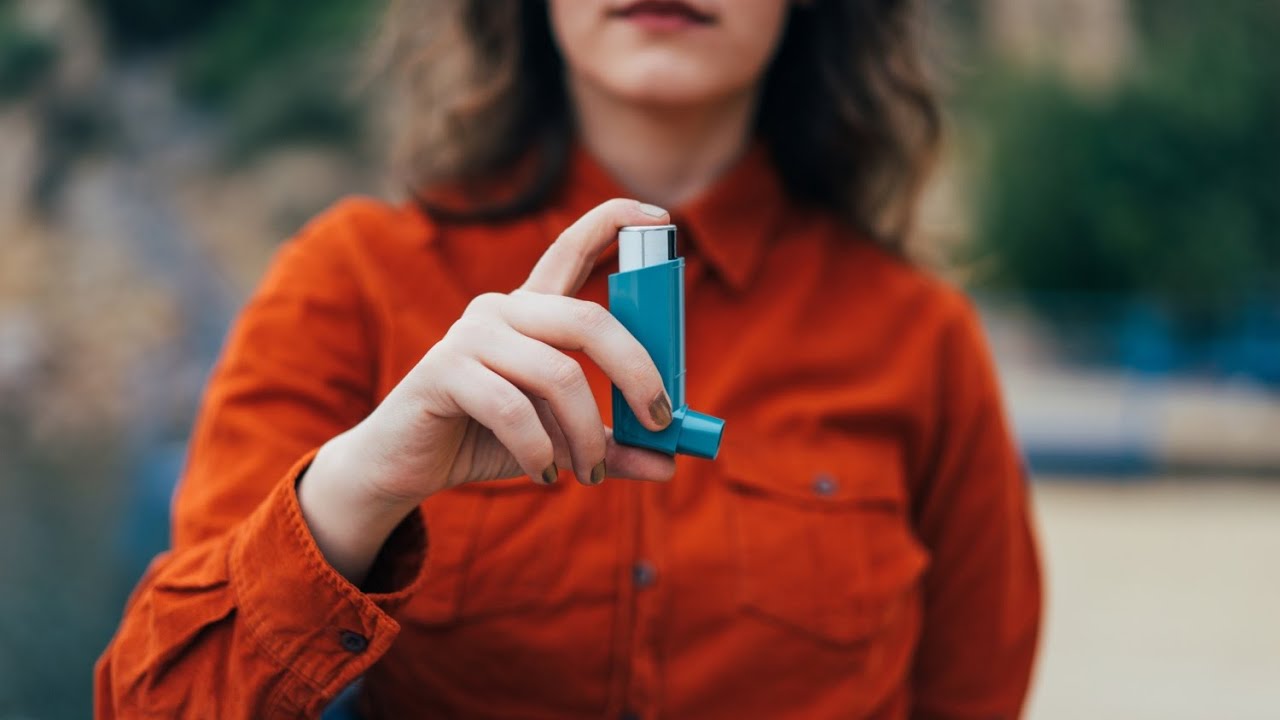
Asthma & COPD
How do I know if I have asthma?
Dr Sarah Jarvis MBE The common symptoms are cough and wheeze. You may also become breathless and develop a feeling of chest tightness. Symptoms can range from mild to severe between different people and at different times in the same person. Each episode of symptoms may last just an hour or so, or persist for days or weeks unless treated. [https://patient.info/health/asthma-leaflet#nav-1](https://patient.info/health/asthma-leaflet#nav-1)
by Dr Sarah Jarvis

Heart conditions
How to perform CPR
Without #CPR, your chance of dying dramatically increases after cardiac arrest. By learning CPR, you can become a hero and save someone else's life. Minutes spent learning CPR can mean a lifetime saved. The British Heart Foundation's RevivR campaign puts this power in your hands. Taking its free 15-minute online CPR course means you could be ready to act in an emergency: [https://revivr.bhf.org.uk/?_gl=1*fkc6u0*_gcl_au*ODQxNTE0NjAzLjE3MjM0NjU0MjM.*_ga*MTk4MDI3MTAyMC4xNzIzNDY1NDI0*_ga_L1TRS9RE0M*MTcyMzQ2NzQyOC4yLjAuMTcyMzQ2NzQyOC42MC4wLjA](https://revivr.bhf.org.uk/?_gl=1*fkc6u0*_gcl_au*ODQxNTE0NjAzLjE3MjM0NjU0MjM.*_ga*MTk4MDI3MTAyMC4xNzIzNDY1NDI0*_ga_L1TRS9RE0M*MTcyMzQ2NzQyOC4yLjAuMTcyMzQ2NzQyOC42MC4wLjA). Visuals: Ben Hudson

Risks of diabetes
How can I avoid getting a hypo?
Dr Sarah Jarvis MBE Hypoglycaemia, or low blood sugar, is often known as a 'hypo'. It can make you feel unwell and affect your ability to drive. Simple steps will reduce the risk, and allow you to treat a hypo early, before it causes more serious complications. For more information, go to [https://patient.info/health/type-1-diabetes/features/how-low-blood-sugar-is-dangerous](https://patient.info/health/type-1-diabetes/features/how-low-blood-sugar-is-dangerous)
by Dr Sarah Jarvis

UTI Q&A
Can you get a UTI on your period?
Dr Sarah Jarvis MBE Lower urinary tract symptoms (LUTS) are common in women of all ages, especially between the ages of 40-60. For many women, the symptoms come and go. But for some women, the symptoms are ongoing and interfere with normal life. [https://patient.info/health/lower-urinary-tract-symptoms-in-women-luts#nav-1](https://patient.info/health/lower-urinary-tract-symptoms-in-women-luts#nav-1)
by Dr Sarah Jarvis
Related patient information and medicines
Patient information leaflet
Cervical insufficiency and suture
This is to try to prevent late miscarriage or premature birth in women who are felt to be at high risk of cervical insufficiency. This information is about cervical insufficiency and cervical suture. It may be helpful when planning to become pregnant and there has previously been a problem with cervical insufficiency. Or, if there was a late.

Patient information leaflet
Wilson's disease
Wilson's disease is a genetic disorder in which copper builds up in the body, mainly in the liver and brain. Without any treatment, the build-up of copper can cause serious symptoms. Treatment is with medication to remove the excess copper and/or to prevent a further build-up of copper. What is Wilson's disease. Wilson's disease is a condition.

Patient information leaflet
Kidney stones
Kidney stones are hard stones that can form in the kidney, in the tube (the ureter) draining urine from the kidney, or in the bladder. Renal (kidney) stones with indication of size Renal calculi Our kidneys remove many different chemicals from our body. This is really important to keep us healthy. These chemicals are passed from our kidneys to our.

Patient information leaflet
Glycogen storage disorders
Glycogen storage disorders are a group of inherited diseases. They result from a problem with one of the proteins (known as enzymes) involved in the conversion of glucose to glycogen, or the breakdown of glycogen back into glucose. They mostly tend to affect your liver and muscles. Most are diagnosed in childhood. Symptoms include weakness,.
Patient information leaflet
Giant Cell Arteritis
What is giant cell arteritis. Giant cell arteritis (GCA), also known as temporal arteritis, is a condition which causes inflammation on the inside of some blood vessels (arteries). It is called 'giant cell' because abnormal large cells develop in the wall of these inflamed arteries. The arteries affected are those which supply blood to the head..

Patient information leaflet
Haemophilia
Clotting factors are present in the blood and are responsible for forming blood clots in response to an injury. Haemophilia B is the more common problem and is due to a deficiency of clotting factor IX. Haemophilia A is due to a deficiency of clotting factor VIII. By and large, haemophilia B tends to be less severe than haemophilia A but they are.
Further reading and references
- molybdenum cofactor synthesis 1; MedlinePlus, National Library of Medicine.
- Leimkuhler S, Charcosset M, Latour P, Dorche C, Kleppe S, Scaglia F, Szymczak I, Schupp P, Hahnewald R, Reiss J. Ten novel mutations in the molybdenum cofactor genes MOCS1 and MOCS2 and in vitro characterization of a MOCS2 mutation that abolishes the binding ability of molybdopterin synthase. Hum Genet. 2005 Oct;117(6):565-70. doi: 10.1007/s00439-005-1341-9. Epub 2005 Jul 14.
- Mendel RR. The molybdenum cofactor. J Biol Chem. 2013 May 10;288(19):13165-72. doi: 10.1074/jbc.R113.455311. Epub 2013 Mar 28.
- Reiss J, Johnson JL. Mutations in the molybdenum cofactor biosynthetic genes MOCS1, MOCS2, and GEPH. Hum Mutat. 2003 Jun;21(6):569-76. doi: 10.1002/humu.10223.
Share your thoughts or experiences with others in our patient communities.
Simple access to trusted treatments and health services online.
Common conditions
Get help with common conditions through the NHS, without a GP appointment.





Sign up to the Patient newsletter
Your weekly dose of clear, trustworthy health advice - written to help you feel informed, confident and in control.
By subscribing you accept our Privacy Policy. You can unsubscribe at any time. We never sell your data.