Parkinsonism associated deglycase
Last updated 17 Jul 2023
Meets Patient’s editorial guidelines
- DownloadDownload
- Share
- Language
- Discussion
- Ask Patient
- Audio Version
- Add to preferred sources on Google
The PARK7 gene provides instructions for making the DJ-1 protein. This protein is found in many tissues and organs, including the brain. Studies indicate that the DJ-1 protein has several functions, although none are fully understood. One of the protein's functions may be to help protect cells, particularly brain cells, from oxidative stress. Oxidative stress occurs when unstable molecules called free radicals accumulate to levels that can damage or kill cells. Additionally, the DJ-1 protein may serve as a chaperone molecule that helps fold newly produced proteins into the proper 3-dimensional shape and helps refold damaged proteins. Like other chaperone molecules, the DJ-1 protein may assist in delivering selected proteins to proteasomes, which are structures within cells that break down unneeded molecules. Researchers suggest that the DJ-1 protein may also play a role in activities that produce and process RNA, a chemical cousin of DNA.
Video picks for GenesVideo library
Normal function
The PARK7 gene provides instructions for making the DJ-1 protein. This protein is found in many tissues and organs, including the brain. Studies indicate that the DJ-1 protein has several functions, although none are fully understood. One of the protein's functions may be to help protect cells, particularly brain cells, from oxidative stress. Oxidative stress occurs when unstable molecules called free radicals accumulate to levels that can damage or kill cells. Additionally, the DJ-1 protein may serve as a chaperone molecule that helps fold newly produced proteins into the proper 3-dimensional shape and helps refold damaged proteins. Like other chaperone molecules, the DJ-1 protein may assist in delivering selected proteins to proteasomes, which are structures within cells that break down unneeded molecules. Researchers suggest that the DJ-1 protein may also play a role in activities that produce and process RNA, a chemical cousin of DNA.
Conditions referring to this gene or chromosome
Other names
DJ-1
DJ1
PARK7_HUMAN
Parkinson disease (autosomal recessive, early onset) 7
parkinson protein 7
Patient picks for Genes

Brain and nerves
What is vascular parkinsonism and what are the other types of parkinsonism
Parkinsonism is a general term that is used to describe a set of movement problems similar to those seen in Parkinson’s disease. There are a number of possible causes but the most common cause of parkinsonism is Parkinson's disease. Parkinsonism can cause severe problems with basic everyday activities.
by Dr Colin Tidy, MRCGP
Travel and vaccinations
What side effects are associated with the yellow fever vaccine?
Yellow fever is endemic to many countries in Latin America and Africa and can often be fatal. Vaccination is currently the best protection against this deadly disease - but what are the risks?
by Léa Surugue
Preventative health
Looking at the Moon
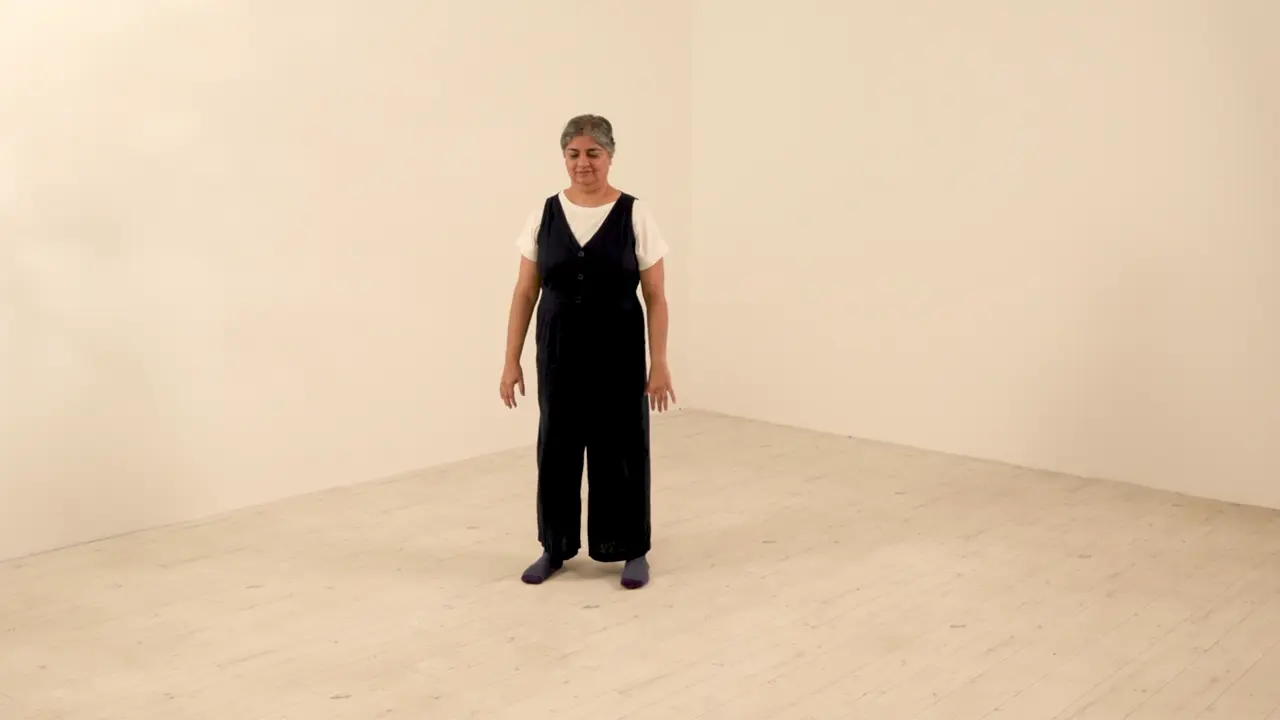
Feet are wider than hip distance and toes are slightly pointed out. Both arms lift as you turn from the waist to lift your arms and look at the moon behind you; as you do so the back heel can lift. As you inhale, lower your arms and come back to centre. I like to imagine that I can carry the light of the moon across the still waters of a lake. This form with its deep back rotation is linked with the water element and its associated organ and meridian system of the kidneys.

Preventative health
Looking at the Moon Seated
Sit toward the front of the chair with your feet flat on the floor, slightly wider than hip-distance apart, and toes pointing comfortably forward. Keep the spine long and knees soft. Lift both arms and, turning gently from the waist, move the arms as if reaching to look at the moon behind you. As you turn, you can subtly lift the heels or simply imagine the rising motion. Inhale as you lower the arms and return to centre, maintaining length through the spine. Imagine carrying the light of the moon across the still waters of a lake. This gentle twisting movement, with its deep rotation, is associated with the Water element and the Kidneys, supporting circulation, grounding, and a sense of calm and reflection.

Rashes
What could this rash be? (Adults)
Dr Sarah Jarvis MBE Some rashes (especially dark red or purple rashes that don't fade with pressure) may need urgent medical treatment as they can be associated with meningitis and blood infection (septicaemia). For more information, go to [https://patient.info/health/skin-rashes](https://patient.info/health/skin-rashes)
by Dr Sarah Jarvis

Children's health
More evidence that social media is associated with teenage depression
Researchers have found a link between social media usage and teenage depression.
by Ashwin Bhandari
Related patient information and medicines

Patient information leaflet
Antipsychotic medicines
Weight gain may increase the risk of de... This appears to be a particular problem with some of the atypical antipsychotics - notably, clozapine and olanzapine. Movement disorders develop in some cases. These include: Parkinsonism - this can cause symptoms similar to those that occur in people with Parkinson's disease Parkinson's disease - for.

Patient information leaflet
Apathy
Apathy is also associated with various other conditions, including various types of dementia Memory loss and dementia , Parkinson's disease Parkinson's disease and multiple sclerosis Multiple sclerosis , and following a stroke Stroke. Diagnosing apathy The diagnosis of apathy is made by a health professional based on: Your medical and medication.

Patient information leaflet
Dystonia
A dystonia is a lasting or frequently recurring and unwanted (involuntary) muscle contraction. It can affect one or more muscles in the body. Th... Secondary dystonia Secondary means the dystonia has been caused by another condition or by something which has happened to you. It is not caused by your genetic make-up. Some neurological conditions.

Patient information leaflet
Absence seizures
Absence seizures usually occur only in children and young people. Most people with this type of epilepsy grow out of it by the time they are adults. This leaflet discusses only the type of epilepsy with typical absence seizures. There are other types of 'atypical' absence seizures not dealt with in this leaflet. What is an absence seizure. Absence.

Patient information leaflet
Can I take Colecalciferol and Esomeprazole together?
Simply search for your medicines to see potential interactions and w... Disclaimer This information is for general educational purposes only and should not be relied upon as a substitute for professional medical advice. Always consult your GP, pharmacist, or another qualified healthcare professional before making decisions about your medications..

Patient information leaflet
Cri du chat syndrome
Cri du chat syndrome is a chromosome problem caused by a missing piece of chromosome 5. The syndrome is called cri du chat (French for cry of the cat) because affected babies often have a high-pitched cry. Not all babies with the missing piece of chromosome 5 will develop cri du chat syndrome. Cri du chat syndrome may cause a variety of.
Further reading and references
- Parkinsonism associated deglycase; MedlinePlus, National Library of Medicine.
- Abou-Sleiman PM, Healy DG, Quinn N, Lees AJ, Wood NW. The role of pathogenic DJ-1 mutations in Parkinson's disease. Ann Neurol. 2003 Sep;54(3):283-6. doi: 10.1002/ana.10675.
- Abou-Sleiman PM, Healy DG, Wood NW. Causes of Parkinson's disease: genetics of DJ-1. Cell Tissue Res. 2004 Oct;318(1):185-8. doi: 10.1007/s00441-004-0922-6. Epub 2004 Jun 26.
- Bonifati V, Oostra BA, Heutink P. Linking DJ-1 to neurodegeneration offers novel insights for understanding the pathogenesis of Parkinson's disease. J Mol Med (Berl). 2004 Mar;82(3):163-74. doi: 10.1007/s00109-003-0512-1. Epub 2004 Jan 8.
- Bonifati V, Rizzu P, van Baren MJ, Schaap O, Breedveld GJ, Krieger E, Dekker MC, Squitieri F, Ibanez P, Joosse M, van Dongen JW, Vanacore N, van Swieten JC, Brice A, Meco G, van Duijn CM, Oostra BA, Heutink P. Mutations in the DJ-1 gene associated with autosomal recessive early-onset parkinsonism. Science. 2003 Jan 10;299(5604):256-9. doi: 10.1126/science.1077209. Epub 2002 Nov 21.
- da Costa CA. DJ-1: a newcomer in Parkinson's disease pathology. Curr Mol Med. 2007 Nov;7(7):650-7. doi: 10.2174/156652407782564426.
- Kahle PJ, Waak J, Gasser T. DJ-1 and prevention of oxidative stress in Parkinson's disease and other age-related disorders. Free Radic Biol Med. 2009 Nov 15;47(10):1354-61. doi: 10.1016/j.freeradbiomed.2009.08.003. Epub 2009 Aug 14.
- Miller DW, Ahmad R, Hague S, Baptista MJ, Canet-Aviles R, McLendon C, Carter DM, Zhu PP, Stadler J, Chandran J, Klinefelter GR, Blackstone C, Cookson MR. L166P mutant DJ-1, causative for recessive Parkinson's disease, is degraded through the ubiquitin-proteasome system. J Biol Chem. 2003 Sep 19;278(38):36588-95. doi: 10.1074/jbc.M304272200. Epub 2003 Jul 8.
- Nuytemans K, Theuns J, Cruts M, Van Broeckhoven C. Genetic etiology of Parkinson disease associated with mutations in the SNCA, PARK2, PINK1, PARK7, and LRRK2 genes: a mutation update. Hum Mutat. 2010 Jul;31(7):763-80. doi: 10.1002/humu.21277.
- Taira T, Saito Y, Niki T, Iguchi-Ariga SM, Takahashi K, Ariga H. DJ-1 has a role in antioxidative stress to prevent cell death. EMBO Rep. 2004 Feb;5(2):213-8. doi: 10.1038/sj.embor.7400074. Epub 2004 Jan 23.
- Zhou W, Zhu M, Wilson MA, Petsko GA, Fink AL. The oxidation state of DJ-1 regulates its chaperone activity toward alpha-synuclein. J Mol Biol. 2006 Mar 3;356(4):1036-48. doi: 10.1016/j.jmb.2005.12.030. Epub 2005 Dec 27.
Share your thoughts or experiences with others in our patient communities.
Simple access to trusted treatments and health services online.
Common conditions
Get help with common conditions through the NHS, without a GP appointment.





Sign up to the Patient newsletter
Your weekly dose of clear, trustworthy health advice - written to help you feel informed, confident and in control.
By subscribing you accept our Privacy Policy. You can unsubscribe at any time. We never sell your data.