propionyl-CoA carboxylase subunit alpha
Last updated 18 Aug 2020
Meets Patient’s editorial guidelines
- DownloadDownload
- Share
- Language
- Discussion
- Ask Patient
- Audio Version
- Add to preferred sources on Google
The PCCA gene provides instructions for making part of an enzyme called propionyl-CoA carboxylase, specifically, the alpha subunit of this enzyme. Six alpha subunits come together with six beta subunits (produced from the PCCB gene) to form a functioning enzyme. The alpha subunit also includes a region for binding to the B vitamin biotin.
Video picks for GenesVideo library
Normal function
The PCCA gene provides instructions for making part of an enzyme called propionyl-CoA carboxylase, specifically, the alpha subunit of this enzyme. Six alpha subunits come together with six beta subunits (produced from the PCCB gene) to form a functioning enzyme. The alpha subunit also includes a region for binding to the B vitamin biotin.
Propionyl-CoA carboxylase plays a role in the normal processing of proteins. It carries out a particular step in the breakdown of several protein building blocks (amino acids) called isoleucine, methionine, threonine, and valine. Propionyl-CoA carboxylase also helps break down certain types of lipids (fats) and cholesterol. First, several chemical reactions convert the amino acids, lipids, or cholesterol to a molecule called propionyl-CoA. Using biotin, propionyl-CoA carboxylase then converts propionyl-CoA to a molecule called methylmalonyl-CoA. Additional enzymes break down methylmalonyl-CoA into other molecules that are used for energy.
Conditions referring to this gene or chromosome
Other names
PCCA_HUMAN
PCCase alpha subunit
propionyl CoA carboxylase, alpha polypeptide
propionyl Coenzyme A carboxylase, alpha polypeptide
propionyl-CoA carboxylase alpha subunit
propionyl-CoA:carbon dioxide ligase alpha subunit
Patient picks for Genes
Treatment and medication
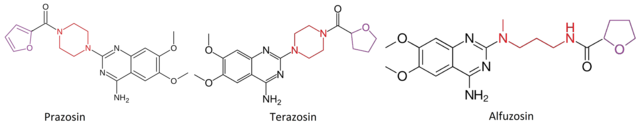
Alpha-blockers
Alpha-blockers are medicines that are mainly used to treat high blood pressure (hypertension) and problems with passing urine in men who have enlargement of the prostate gland. Prostate gland enlargement is also called benign prostatic hyperplasia (BPH).
by Dr Doug McKechnie, MRCGP
Medicine
Alfacalcidol capsules and drops
Alfacalcidol is a type of vitamin D. You will need to have regular blood tests while you are taking the medicine so that your doctor can adjust your dose. Make sure you know the symptoms of too much calcium in your blood - these are losing your appetite, feeling thirsty, being sick (vomiting), feeling tired and losing weight. Please let your doctor know if you develop these symptoms.
by Michael Stewart, MRPharmS

Children's health
Alpha-1 antitrypsin deficiency
Alpha-1 antitrypsin deficiency is an inherited genetic condition. A genetic condition is one that can be passed on from parents through genes. In alpha-1 antitrypsin deficiency the result of a genetic abnormality leads to lung and, in some people, liver damage. Lung symptoms are the most common and include shortness of breath, cough and wheezing. Symptoms can worsen over time. At present, there is no cure for alpha-1 antitrypsin deficiency. Treatment aims at slowing down the progression of the disease.
by Dr Philippa Vincent, MRCGP

Heart health and blood vessels
Coarctation of the aorta
Coarctation of the aorta is a type of congenital heart disease where there is a narrowing in part of the aorta, the main artery that leaves the left side of the heart.
by Dr Toni Hazell, FRCGP

Medicine
Phenoxybenzamine - an alpha-blocker
Adults will normally start with one capsule a day. This dose may then be increased over the next few days. It is common to feel dizzy or light-headed initially. This should soon settle. You may be given other medicines to take alongside phenoxybenzamine.
by Michael Stewart, MRPharmS

Medicine
Doxazosin - an alpha-blocker
Take doxazosin once each day. Take your first dose at bedtime. As your body is getting used to doxazosin you may feel dizzy or light-headed when standing up or sitting up quickly - getting up more slowly will help. Do not drive and do not use tools or machines if you feel tired or dizzy.
by Michael Stewart, MRPharmS
Related patient information and medicines

Patient information leaflet
Mucolytics
The term 'expectorant' is a general term used to describe a type of cough medicine which reduces the thickness or s... Mucolytics work by breaking down the structure of the molecules that form the mucus. Types of mucolytics There are a number of mucolytics available to prescribe in the UK. These include carbocisteine Carbocisteine and erdosteine.

Patient information leaflet
Can I take Guanfacine and Tizanidine together?
It can also significantly slow your heart rate. Why this happens Both guanfacine and tizanidine are 'alpha-2 agonists'. This means they work in a similar way to relax blood vessels and slow down the nervous system. W... Always consult your GP, pharmacist, or another qualified healthcare professional before making decisions about your medications..

Patient information leaflet
Liver function tests
The most likely cause of any particular patte... Almost any pattern of liver function test abnormality can be caused by medicines (including over-the-counter medications), by herbal remedies and traditional medicines from other cultures, and by poisonous substances. Many liver conditions cause no symptoms, at least at first; so, if you have.

Patient information leaflet
Enlarged prostate
Symptoms do not always become worse. They may even improve. Medicines The decision to treat with medicines usually depends on how much bother the symptoms are causing you. There are two groups of medicines that may help: Alpha-blockers. 5-alpha reductase inhibitors. Medicines do not cure the problem, nor do they usually make symptoms go.

Patient information leaflet
Restless legs syndrome
No treatment may be needed if symptom... Medication can ease symptoms if the condition is distressing. What is restless legs syndrome. Restless legs syndrome (RLS) is sometimes called Willis-Ekbom disease after the doctors who first described it. It is a condition where you have an urge to move your legs. This is usually caused by an uncomfortable.

Patient information leaflet
Thalassaemia
Thalassaemia is an inherited condition affecting the blood. There are different types, which vary from a mild condition to a serious or life-threatening condition. For the more severe forms of thalassaemia, modern treatment gives a good outlook, but lifelong monitoring and treatment are needed. Haemoglobin is made out of different parts. The main.
Further reading and references
- propionyl-CoA carboxylase subunit alpha; MedlinePlus, National Library of Medicine.
- Desviat LR, Perez B, Perez-Cerda C, Rodriguez-Pombo P, Clavero S, Ugarte M. Propionic acidemia: mutation update and functional and structural effects of the variant alleles. Mol Genet Metab. 2004 Sep-Oct;83(1-2):28-37. doi: 10.1016/j.ymgme.2004.08.001.
- Gupta D, Bijarnia-Mahay S, Kohli S, Saxena R, Puri RD, Shigematsu Y, Yamaguchi S, Sakamoto O, Gupta N, Kabra M, Thakur S, Deb R, Verma IC. Seventeen Novel Mutations in PCCA and PCCB Genes in Indian Propionic Acidemia Patients, and Their Outcomes. Genet Test Mol Biomarkers. 2016 Jul;20(7):373-82. doi: 10.1089/gtmb.2016.0017. Epub 2016 May 26.
- Kraus JP, Spector E, Venezia S, Estes P, Chiang PW, Creadon-Swindell G, Mullerleile S, de Silva L, Barth M, Walter M, Walter K, Meissner T, Lindner M, Ensenauer R, Santer R, Bodamer OA, Baumgartner MR, Brunner-Krainz M, Karall D, Haase C, Knerr I, Marquardt T, Hennermann JB, Steinfeld R, Beblo S, Koch HG, Konstantopoulou V, Scholl-Burgi S, van Teeffelen-Heithoff A, Suormala T, Ugarte M, Sperl W, Superti-Furga A, Schwab KO, Grunert SC, Sass JO. Mutation analysis in 54 propionic acidemia patients. J Inherit Metab Dis. 2012 Jan;35(1):51-63. doi: 10.1007/s10545-011-9399-0. Epub 2011 Oct 27.
- Perez B, Desviat LR, Rodriguez-Pombo P, Clavero S, Navarrete R, Perez-Cerda C, Ugarte M. Propionic acidemia: identification of twenty-four novel mutations in Europe and North America. Mol Genet Metab. 2003 Jan;78(1):59-67. doi: 10.1016/s1096-7192(02)00197-x.
Share your thoughts or experiences with others in our patient communities.
Simple access to trusted treatments and health services online.
Common conditions
Get help with common conditions through the NHS, without a GP appointment.





Sign up to the Patient newsletter
Your weekly dose of clear, trustworthy health advice - written to help you feel informed, confident and in control.
By subscribing you accept our Privacy Policy. You can unsubscribe at any time. We never sell your data.