prion protein (Kanno blood group)
Last updated 28 Jun 2024
Meets Patient’s editorial guidelines
- DownloadDownload
- Share
- Language
- Discussion
- Ask Patient
- Audio Version
- Add to preferred sources on Google
The PRNP gene provides instructions for making a protein called prion protein (PrP), which is active in the brain and several other tissues. Although the precise function of this protein is unknown, researchers have proposed that it play a role in several important processes. These include the transport of copper into cells and the protection of brain cells (neurons) from injury (neuroprotection). Studies have also suggested that PrP plays a role in the formation of synapses, which are the junctions between neurons where cell-to-cell communication occurs.
Video picks for GenesVideo library
Normal function
The PRNP gene provides instructions for making a protein called prion protein (PrP), which is active in the brain and several other tissues. Although the precise function of this protein is unknown, researchers have proposed that it play a role in several important processes. These include the transport of copper into cells and the protection of brain cells (neurons) from injury (neuroprotection). Studies have also suggested that PrP plays a role in the formation of synapses, which are the junctions between neurons where cell-to-cell communication occurs.
Different forms of PrP have been identified. The normal version is often designated PrPC to distinguish it from abnormal forms of the protein, which are generally designated PrPSc.
Conditions referring to this gene or chromosome
Other names
PRIP
PrP
Patient picks for Genes
Allergies, blood and immune system
What is blood?
Blood is made up of liquid (plasma) and various different types of cells. An average-sized man has about 5-6 litres of blood in his body; a woman has slightly less. Blood has many different functions - detailed below.
by Dr Jacqueline Payne, FRCGP

Tests and investigations
Blood tests
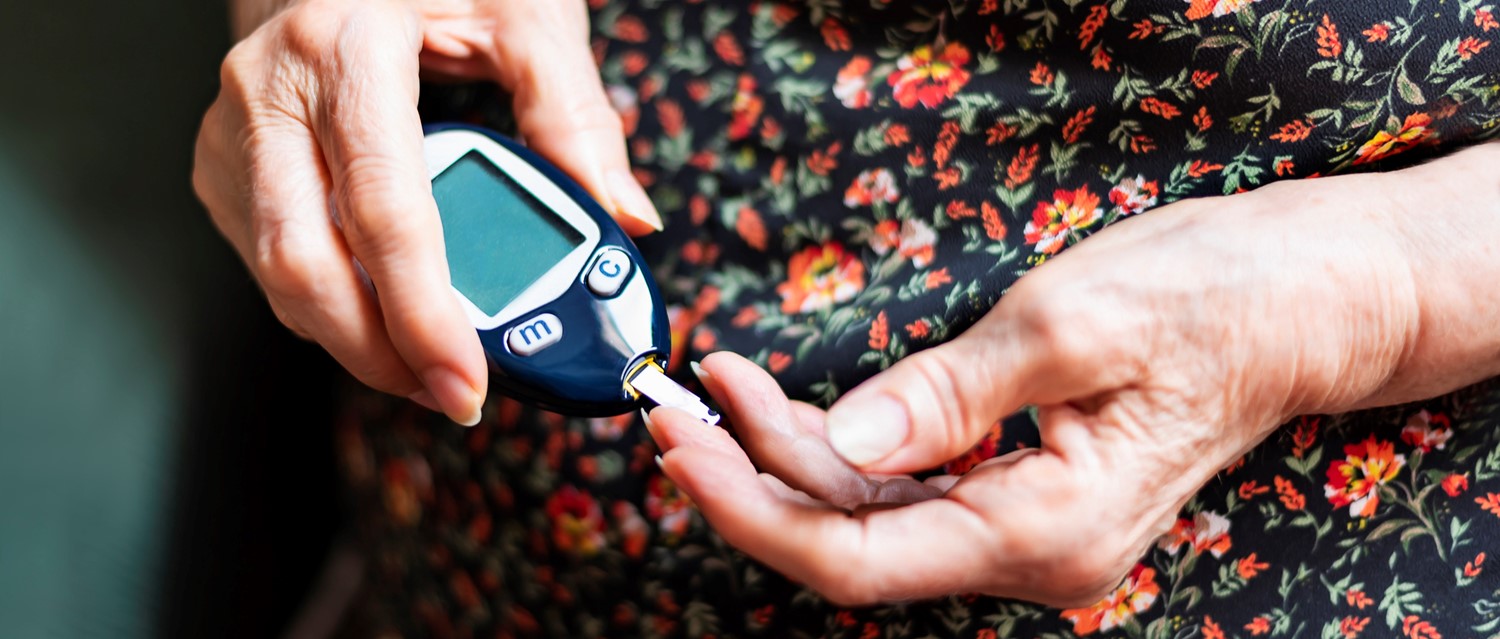
The main reasons to know your blood group are if you need to have a blood transfusion or if you are pregnant. You cannot request a blood test just to know your blood group on the NHS.
by Dr Hayley Willacy, FRCGP

Tests and investigations
Blood groups and types
ABO and rhesus are both types of antigens found on the surface of red blood cells. There are lots of other types but these are the most important.
by Dr Rosalyn Adleman, MRCGP

Cancer
Blood test may detect ovarian cancer two years earlier
Researchers have developed a screening test which could detect a type of ovarian cancer up to two years earlier than current tests.
by Milly Evans
Tests and investigations
Blood tests to detect inflammation
If you have inflammation in a part of your body then certain types of extra protein are often released from the site of inflammation and circulate in the bloodstream. Healthcare professionals use a blood test for inflammation to assess if any inflammation is happening in a person's body. The tests are not very specific and many different types of conditions can affect the blood result. More investigations may be needed to sort out the exact cause of the problem.
by Dr Colin Tidy, MRCGP

Diet and nutrition
Plant-based proteins could help prevent high blood pressure
Eating a greater amount of minimally processed plant-based proteins - such as beans, nuts and lentils - may lower your chance of developing high blood pressure, according to new research.
by Laura Williamson
Related patient information and medicines
Patient information leaflet
Blood tests
The main reasons to know your blood group are if you need to have a blood transfusion or if you are pregnant. You cannot request a blood test just to know your blood group on the NHS. What is blood made up of. Blood cells These can be seen under a microscope and make up about 40% of the blood's volume. Blood cells are made in the bone marrow by.
Patient information leaflet
Blood groups and types
ABO and rhesus are both types of antigens found on the surface of red blood cells. There are lots of other types but these are the most important. The main reasons to know your blood group are if you need to have a blood transfusion or if you are pregnant. What is a blood group. Red blood cells (erythrocytes) have certain proteins on their.

Patient information leaflet
Coombs test
A Coombs test is a type of blood test. It is named after the person who invented it, Dr Robin Coombs. There are two types of Coombs test. What is a Coombs test. However, in some conditions, known as autoimmune diseases, your own body can destroy your own red blood cells. Transfusion reaction Human blood is grouped by the different types of.
Patient information leaflet
Porphyria
The porphyrias are a group of disorders in which there is a problem with the production of haem (also spelled heme) within the body. Haem is used to make haemoglobin in red blood cells. There are seven different types of porphyria and in most cases they run in families (are inherited). It is important that the type of porphyria that you have.
Patient information leaflet
Blood tests to detect inflammation
If you have inflammation in a part of your body then certain types of extra protein are often released from the site of inflammation and circulate in the bloodstream. Healthcare professionals use a blood test for inflammation to assess if any inflammation is happening in a person's body. ... In this way they are used as markers of inflammation..
Patient information leaflet
Myeloma
Myeloma is a cancer that affects cells, called plasma cells, in the bone marrow. Dr Krishna Vakharia , 10th April 2025 The National Institute for Health and Care Excellence (NICE) has updated its guidance on assessment for myeloma in all ages including those under 60 years of age if they have persistent bone pain, especially back pain, or an.
Further reading and references
- prion protein (Kanno blood group); MedlinePlus, National Library of Medicine.
- Caughey B, Baron GS. Prions and their partners in crime. Nature. 2006 Oct 19;443(7113):803-10. doi: 10.1038/nature05294.
- Collinge J. Molecular neurology of prion disease. J Neurol Neurosurg Psychiatry. 2005 Jul;76(7):906-19. doi: 10.1136/jnnp.2004.048660.
- Grubenbecher S, Stuve O, Hefter H, Korth C. Prion protein gene codon 129 modulates clinical course of neurological Wilson disease. Neuroreport. 2006 Apr 3;17(5):549-52. doi: 10.1097/01.wnr.0000209006.48105.90.
- Harris DA, True HL. New insights into prion structure and toxicity. Neuron. 2006 May 4;50(3):353-7. doi: 10.1016/j.neuron.2006.04.020.
- Imran M, Mahmood S. An overview of human prion diseases. Virol J. 2011 Dec 24;8:559. doi: 10.1186/1743-422X-8-559.
- Merle U, Stremmel W, Gessner R. Influence of homozygosity for methionine at codon 129 of the human prion gene on the onset of neurological and hepatic symptoms in Wilson disease. Arch Neurol. 2006 Jul;63(7):982-5. doi: 10.1001/archneur.63.7.982.
- Moore RC, Xiang F, Monaghan J, Han D, Zhang Z, Edstrom L, Anvret M, Prusiner SB. Huntington disease phenocopy is a familial prion disease. Am J Hum Genet. 2001 Dec;69(6):1385-8. doi: 10.1086/324414. Epub 2001 Oct 9.
- Papassotiropoulos A, Wollmer MA, Aguzzi A, Hock C, Nitsch RM, de Quervain DJ. The prion gene is associated with human long-term memory. Hum Mol Genet. 2005 Aug 1;14(15):2241-6. doi: 10.1093/hmg/ddi228. Epub 2005 Jun 29.
- Paucar M, Xiang F, Moore R, Walker R, Winnberg E, Svenningsson P. Genotype-phenotype analysis in inherited prion disease with eight octapeptide repeat insertional mutation. Prion. 2013 Nov-Dec;7(6):501-10. doi: 10.4161/pri.27260. Epub 2013 Nov 25.
- Perez VP, Coitinho AS. Implications of prion protein biology. Curr Neurovasc Res. 2006 Aug;3(3):215-23. doi: 10.2174/156720206778018785.
- Prusiner SB. Shattuck lecture--neurodegenerative diseases and prions. N Engl J Med. 2001 May 17;344(20):1516-26. doi: 10.1056/NEJM200105173442006. No abstract available.
- Zerr I, Schmitz M. Genetic Prion Disease. 2003 Mar 27 [updated 2021 Jan 7]. In: Adam MP, Bick S, Mirzaa GM, Wallace SE, Amemiya A, editors. GeneReviews(R) [Internet]. Seattle (WA): University of Washington, Seattle; 1993-2026. Available from http://www.ncbi.nlm.nih.gov/books/NBK1229/
Share your thoughts or experiences with others in our patient communities.
Simple access to trusted treatments and health services online.
Common conditions
Get help with common conditions through the NHS, without a GP appointment.





Sign up to the Patient newsletter
Your weekly dose of clear, trustworthy health advice - written to help you feel informed, confident and in control.
By subscribing you accept our Privacy Policy. You can unsubscribe at any time. We never sell your data.