RAB27A, member RAS oncogene family
Last updated 18 Aug 2020
Meets Patient’s editorial guidelines
- DownloadDownload
- Share
- Language
- Discussion
- Ask Patient
- Audio Version
- Add to preferred sources on Google
The RAB27A gene provides instructions for making a protein that is involved in a process called vesicle trafficking, which moves proteins and other molecules within cells in sac-like structures called vesicles. Although the Rab27a protein is found in cells and tissues throughout the body, it appears to be most critical in pigment-producing cells called melanocytes and in certain immune system cells.
Video picks for GenesVideo library
Normal function
The RAB27A gene provides instructions for making a protein that is involved in a process called vesicle trafficking, which moves proteins and other molecules within cells in sac-like structures called vesicles. Although the Rab27a protein is found in cells and tissues throughout the body, it appears to be most critical in pigment-producing cells called melanocytes and in certain immune system cells.
In melanocytes, the Rab27a protein helps transport structures called melanosomes. These structures produce a pigment called melanin, which is the substance that gives skin, hair, and eyes their colour (pigmentation). Rab27a interacts with proteins produced from the MLPH and MYO5A genes to form a complex that transports melanosomes to the outer edges of melanocytes. From there, the melanosomes are transferred to other types of cells, where they provide the pigment needed for normal hair, skin, and eye coloring.
The Rab27a protein also plays an important role in immune system cells called T-lymphocytes. These cells recognise and attack foreign invaders, such as viruses and bacteria, to prevent infection and illness. Specifically, Rab27a is involved in cytotoxic granule exostosis, which is the process by which T-lymphocytes release cell-killing (cytotoxic) compounds to destroy foreign invaders.
Conditions referring to this gene or chromosome
Other names
GS2
GTP-binding protein Ram
HsT18676
rab-27
RAB27
RAM
ras-related protein Rab-27A
RB27A_HUMAN
Patient picks for Genes
Infections
Viral rashes
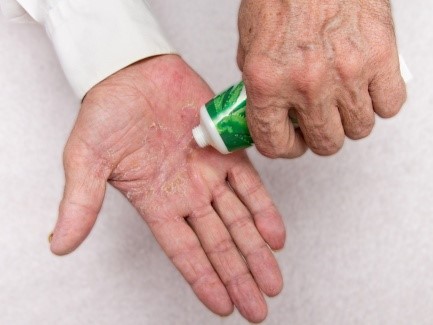
Many viral infections can cause a rash in addition to other symptoms. Rashes are very common with viral infections, especially in young children. It is very important to make sure the rash is not part of a serious infection - eg, meningococcal infection which is a bacterial infection and can be associated with meningitis.
by Dr Toni Hazell, FRCGP
COVID-19
COVID-19: how to support vulnerable friends and family during the coronavirus pandemic
Current coronavirus lockdown measures are especially challenging for older people and those with mental health issues and underlying health conditions. We look at how to support vulnerable loved ones during the COVID-19 pandemic.
by Sally Turner
Podcasts
The parental minefield
How often have you said something quite ordinary to a parent, or they’ve said something to you and suddenly the room feels like it’s about to explode? Welcome to the parental nightmare. It’s not just about conflict, it’s about what’s hidden underneath these relationships – family secrets, unspoken stories, patterns of behaviour passed from one generation to the next. In this episode Clare and Aileen explore the complex, often lifelong, relationship we have with our parents and discuss practical strategies to help you navigate this important relationship.
by Thomas Andrew Porteus, MBCS
Skin, nail and hair health
Bowen's disease
Bowen's disease is a very early form of skin cancer. It causes one or more small patches of scaly red skin. It occurs when skin cancer cells grow in the outer layer of the skin, but don't spread any deeper into the skin, or elsewhere in the body. Because these cancer cells stay in the outer layer of the skin, they don't cause serious problems in themselves. However, over time, there is a chance that these cells can develop into a different type of skin cancer, which can cause problems. So, Bowen's disease is generally treated to stop this happening. Close follow-up is needed after treatment to check for any return (recurrence) of Bowen's disease.
by Dr Doug McKechnie, MRCGP
COVID-19
How to meet friends and family safely outdoors
Across the UK, lockdowns are easing and we're allowed to see friends and family outside (and indoors too if you live in England or Scotland). But that doesn't mean the risk of spreading COVID-19 has vanished; you still need to take precautions to keep yourself and your loved ones safe.
by Andrea Downey

Mental health
Not quite 'back to normal': a guide to post-pandemic family healing
When news broke in late 2019 of a virus spreading rapidly across the globe, the word ‘unprecedented’ quickly became part of everyday vocabulary in the months that followed. The outbreak of Covid-19 marked the world’s most significant public health crisis in at least a century, shaking the foundations of the one place we usually feel most secure - the home. It is no surprise that years of disrupted routines have left a lasting mark on the family unit. From the sudden loss of support networks to the blurring of boundaries between home, school, and work, the pandemic reshaped how families function. We spoke with a psychotherapist to explore these long-term psychological ripples and why reflecting on that period is essential for understanding - and healing - the family dynamic today.
by Victoria Raw
Related patient information and medicines

Patient information leaflet
Breast cancer facts and risk factors
What are the risk factors for breast cancer. Dr Sarah Jarvis MBE Although breast cancer can develop for no apparent reason, there are certain risk factors which increase the chance that breast cancer will develop. [https://patient.info/health/breast-cancer-leaflet](https://patient.info/health/breast-cancer-leaflet) Most cases of breast cancer.
Patient information leaflet
Rheumatoid arthritis
Rheumatoid arthritis causes inflammation, pain, and swelling of joints. Treatments include disease-modifying medicines to suppress inflammation, which can prevent or delay the progression of the disease, and medication to ease pain. Rheumatoid arthritis treatment Standards of care you should expect The National Institute for Health and Care.
Patient information leaflet
Viral rashes
Many viral infections can cause a rash in addition to other symptoms. Rashes are very common with viral infections, especially in young children. It is very important to make sure the rash is not part of a serious infection - eg, meningococcal infection which is a bacterial infection and can be associated with meningitis. If you or your child.

Patient information leaflet
Breast cancer in men
We think of breast cancer as a disease of women because it is usually women who are affected. However, breast cancer can develop occasionally in men too. Whatever your gender, it is very important to see a doctor as soon as possible if you develop a lump in your breast. What is breast cancer. Cancer is a condition where cells multiply abnormally,.

Patient information leaflet
Retinoblastoma
This leaflet describes retinoblastoma. Most commonly, it affects children aged under 2, including newborn babies. It is a tumour of the nerve layer of the retina, which is the light-sensitive membrane at the b... Siblings of an affected child in a family in which no other family members have had the disease have only a small risk of disease. See.

Patient information leaflet
Domestic violence
Domestic violence or abuse takes many forms. It can be physical, emotional or psychological, sexual, financial or related to cultural practices. Sadly this is the everyday experience of ... How can I get help and support. Domestic violence is an abuse of human rights, an abuse that occurs within a relationship where there should be love and trust..
Further reading and references
- RAB27A, member RAS oncogene family; MedlinePlus, National Library of Medicine.
- Anikster Y, Huizing M, Anderson PD, Fitzpatrick DL, Klar A, Gross-Kieselstein E, Berkun Y, Shazberg G, Gahl WA, Hurvitz H. Evidence that Griscelli syndrome with neurological involvement is caused by mutations in RAB27A, not MYO5A. Am J Hum Genet. 2002 Aug;71(2):407-14. doi: 10.1086/341606. Epub 2002 Jun 7.
- Bahadoran P, Busca R, Chiaverini C, Westbroek W, Lambert J, Bille K, Valony G, Fukuda M, Naeyaert JM, Ortonne JP, Ballotti R. Characterization of the molecular defects in Rab27a, caused by RAB27A missense mutations found in patients with Griscelli syndrome. J Biol Chem. 2003 Mar 28;278(13):11386-92. doi: 10.1074/jbc.M211996200. Epub 2003 Jan 16.
- Bizario JC, Feldmann J, Castro FA, Menasche G, Jacob CM, Cristofani L, Casella EB, Voltarelli JC, de Saint-Basile G, Espreafico EM. Griscelli syndrome: characterization of a new mutation and rescue of T-cytotoxic activity by retroviral transfer of RAB27A gene. J Clin Immunol. 2004 Jul;24(4):397-410. doi: 10.1023/B:JOCI.0000029119.83799.cb.
- Durmaz A, Ozkinay F, Onay H, Tombuloglu M, Atay A, Gursel O, Peker E, Atmaca M, Genel F, Bozabali S, Akin H, Ozkinay C. Molecular analysis and clinical findings of Griscelli syndrome patients. J Pediatr Hematol Oncol. 2012 Oct;34(7):541-4. doi: 10.1097/MPH.0b013e31826781ad.
- Menasche G, Pastural E, Feldmann J, Certain S, Ersoy F, Dupuis S, Wulffraat N, Bianchi D, Fischer A, Le Deist F, de Saint Basile G. Mutations in RAB27A cause Griscelli syndrome associated with haemophagocytic syndrome. Nat Genet. 2000 Jun;25(2):173-6. doi: 10.1038/76024.
- Van Gele M, Dynoodt P, Lambert J. Griscelli syndrome: a model system to study vesicular trafficking. Pigment Cell Melanoma Res. 2009 Jun;22(3):268-82. doi: 10.1111/j.1755-148X.2009.00558.x. Epub 2009 Feb 25.
Share your thoughts or experiences with others in our patient communities.
Simple access to trusted treatments and health services online.
Common conditions
Get help with common conditions through the NHS, without a GP appointment.





Sign up to the Patient newsletter
Your weekly dose of clear, trustworthy health advice - written to help you feel informed, confident and in control.
By subscribing you accept our Privacy Policy. You can unsubscribe at any time. We never sell your data.