SH3 and multiple ankyrin repeat domains 3
Last updated 18 Aug 2020
Meets Patient’s editorial guidelines
- DownloadDownload
- Share
- Language
- Discussion
- Ask Patient
- Audio Version
- Add to preferred sources on Google
The SHANK3 gene provides instructions for making a protein that is found in many of the body's tissues but is most abundant in the brain. The SHANK3 protein plays a role in the functioning of synapses, which are the connections between nerve cells (neurons) where cell-to-cell communication occurs. Within synapses, the SHANK3 protein acts as a scaffold that supports the connections between neurons, ensuring that the signals sent by one neuron are received by another.
Video picks for GenesVideo library
Normal function
The SHANK3 gene provides instructions for making a protein that is found in many of the body's tissues but is most abundant in the brain. The SHANK3 protein plays a role in the functioning of synapses, which are the connections between nerve cells (neurons) where cell-to-cell communication occurs. Within synapses, the SHANK3 protein acts as a scaffold that supports the connections between neurons, ensuring that the signals sent by one neuron are received by another.
The SHANK3 protein is also involved in the formation and maturation of dendritic spines. Dendrites are specialized extensions from neurons that are essential for the transmission of nerve impulses. Dendritic spines are small outgrowths from dendrites that further help transmit nerve impulses and increase communication between neurons.
Conditions referring to this gene or chromosome
Other names
proline-rich synapse-associated protein 2
ProSAP2
SPANK-2
Patient picks for Genes

Tests and investigations
CT scan
Note: the information below is a general guide only. The arrangements, and the way tests are performed, may vary between different hospitals. Always follow the instructions given by your doctor or local hospital.
by Dr Rachel Hudson, MRCGP
Cancer
Bowel cancer
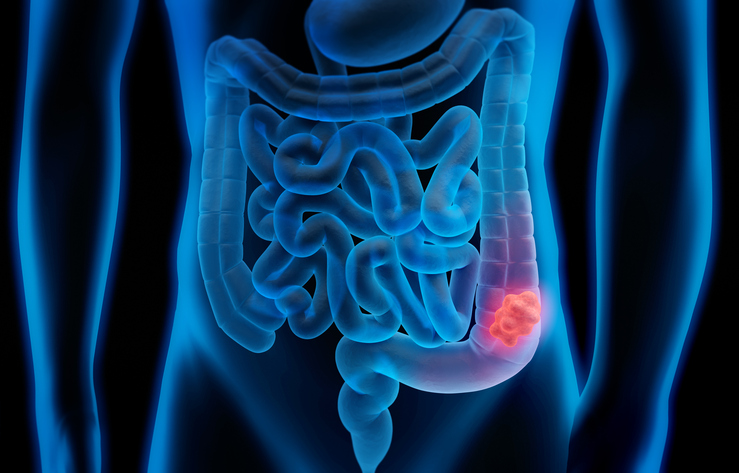
Colon cancer and rectal cancer (also called colorectal cancer) are common in the UK. The colon and rectum are parts of your bowel. Most cases occur in people aged over 50. If bowel cancer is diagnosed at an early stage, there is a good chance of a cure. In general, the more advanced the cancer (the more it has grown and spread), the less chance that treatment will be curative. However, treatment can often slow the progress of the cancer.
by Dr Doug McKechnie, MRCGP
Bones, joints and muscles
Axial spondyloarthritis
Axial spondyloarthritis (also known as axSpA or axial SpA) is a painful, chronic arthritis that mainly affects the joints of the spine, and also the joints connecting each side of the base of the spine with the pelvis (sacroiliac joints). It can also affect other joints in the body, as well as tendons and ligaments. It is divided into: 1) Ankylosing spondylitis. 2) Non radiographic axial spondyloarthritis.
by Dr Philippa Vincent, MRCGP

Allergies, blood and immune system
Sjögren's syndrome
Sjögren's syndrome is an autoimmune disease that causes the glands that produce tears and saliva to stop working. It is a life-long condition but treatments can help control symptoms such as dry eyes and dry mouth.
by Dr Doug McKechnie, MRCGP

Heart health and blood vessels
What happens to your blood pressure when you're not measuring it?
Think about the last time you had your blood pressure checked. Perhaps you were sitting in your GP's surgery, waiting for the cuff to inflate. Seconds later, two numbers appeared on the screen. Those numbers provide useful information about your blood pressure at that moment. But blood pressure changes throughout the day and night. Some people even have higher readings at the GP's surgery than at home - known as white coat hypertension - while others have normal readings in the surgery but higher blood pressure elsewhere (masked hypertension).
by Hilo
Podcasts
From bliss to blame
Have you ever found yourself thinking, ‘What on earth was I doing? This person is all wrong for me’, when only a few months ago they seemed perfect? How did that feeling of bliss when you’re finishing each other’s sentences and laughing at the same jokes turn to irritation, resentment and blaming them for everything that’s wrong? Clare and Aileen help you understand the natural cycle from falling-in-love bliss to relationship blame, why it happens, and how to navigate your way through it.
by Thomas Andrew Porteus, MBCS
Related patient information and medicines

Patient information leaflet
Check your medicines for interactions
Use this medicine and drug interaction checker to see whether your medicines, supplements, vitamins, foods, or certain health conditions may interact with each other. It can help you understand potential risks, avoid unwanted side effects, and decide when it’s important to speak to a pharmacist, GP, or other healthcare professional. The tool is.

Patient information leaflet
Can I take Carbocisteine and Omega-3 together?
There are no known interactions between carbocisteine and omega-3 supplements. Omega-3 fatty acids are nutrients used by the body for various functions, including heart and brain health. Our Medicines Interaction Checker helps you check whether your prescriptions, over-the-counter medicines, and supplements are safe to take together. Simply search.
Patient information leaflet
CT scan
Note : the information below is a general guide only. The arrangements, and the way tests are performed, may vary between different hospitals. Always follow the instructions given by your doctor or local hospital. In particular, it can give good pictures of soft tissues of the body which do not show on ordinary X-ray pictures. CT stands for.
Patient information leaflet
Bowel cancer
Colon cancer and rectal cancer (also called colorectal cancer) are common in the UK. What is bowel cancer? | Patient Explainers Colon cancer and rectal cancer (also called colorectal cancer) are common in the UK. Dr Krishna Vakharia , 16th October 2023 The National Institute for Health and Care Excellence (NICE) has recommended that a person.

Patient information leaflet
Can I take Codeine and Morphine together?
Taking codeine and morphine together significantly increases the risk of serious side effects, including extreme sleepiness, dizziness, and dangerous breathing problems. Because both drugs are strong painkillers from the same family (opioids), they 'stack' on top of each other, which can lead to an accidental overdose. Why this happens Both.

Patient information leaflet
Can I take Aspirin and Lansoprazole together?
Lansoprazole is actually beneficial when taken with aspirin. Using other medicines Taking multiple medicines. Our Medicines Interaction Checker helps you check whether your prescriptions, over-the-counter medicines, and supplements are safe to take together. Simply search for your medicines to see potential interactions and what to do about them..
Further reading and references
- SH3 and multiple ankyrin repeat domains 3; MedlinePlus, National Library of Medicine.
- Boeckers TM, Bockmann J, Kreutz MR, Gundelfinger ED. ProSAP/Shank proteins - a family of higher order organizing molecules of the postsynaptic density with an emerging role in human neurological disease. J Neurochem. 2002 Jun;81(5):903-10. doi: 10.1046/j.1471-4159.2002.00931.x.
- Bonaglia MC, Giorda R, Mani E, Aceti G, Anderlid BM, Baroncini A, Pramparo T, Zuffardi O. Identification of a recurrent breakpoint within the SHANK3 gene in the 22q13.3 deletion syndrome. J Med Genet. 2006 Oct;43(10):822-8. doi: 10.1136/jmg.2005.038604. Epub 2005 Nov 11.
- Durand CM, Betancur C, Boeckers TM, Bockmann J, Chaste P, Fauchereau F, Nygren G, Rastam M, Gillberg IC, Anckarsater H, Sponheim E, Goubran-Botros H, Delorme R, Chabane N, Mouren-Simeoni MC, de Mas P, Bieth E, Roge B, Heron D, Burglen L, Gillberg C, Leboyer M, Bourgeron T. Mutations in the gene encoding the synaptic scaffolding protein SHANK3 are associated with autism spectrum disorders. Nat Genet. 2007 Jan;39(1):25-7. doi: 10.1038/ng1933. Epub 2006 Dec 17.
- Gauthier J, Spiegelman D, Piton A, Lafreniere RG, Laurent S, St-Onge J, Lapointe L, Hamdan FF, Cossette P, Mottron L, Fombonne E, Joober R, Marineau C, Drapeau P, Rouleau GA. Novel de novo SHANK3 mutation in autistic patients. Am J Med Genet B Neuropsychiatr Genet. 2009 Apr 5;150B(3):421-4. doi: 10.1002/ajmg.b.30822.
- Leblond CS, Nava C, Polge A, Gauthier J, Huguet G, Lumbroso S, Giuliano F, Stordeur C, Depienne C, Mouzat K, Pinto D, Howe J, Lemiere N, Durand CM, Guibert J, Ey E, Toro R, Peyre H, Mathieu A, Amsellem F, Rastam M, Gillberg IC, Rappold GA, Holt R, Monaco AP, Maestrini E, Galan P, Heron D, Jacquette A, Afenjar A, Rastetter A, Brice A, Devillard F, Assouline B, Laffargue F, Lespinasse J, Chiesa J, Rivier F, Bonneau D, Regnault B, Zelenika D, Delepine M, Lathrop M, Sanlaville D, Schluth-Bolard C, Edery P, Perrin L, Tabet AC, Schmeisser MJ, Boeckers TM, Coleman M, Sato D, Szatmari P, Scherer SW, Rouleau GA, Betancur C, Leboyer M, Gillberg C, Delorme R, Bourgeron T. Meta-analysis of SHANK Mutations in Autism Spectrum Disorders: a gradient of severity in cognitive impairments. PLoS Genet. 2014 Sep 4;10(9):e1004580. doi: 10.1371/journal.pgen.1004580. eCollection 2014 Sep.
- Moessner R, Marshall CR, Sutcliffe JS, Skaug J, Pinto D, Vincent J, Zwaigenbaum L, Fernandez B, Roberts W, Szatmari P, Scherer SW. Contribution of SHANK3 mutations to autism spectrum disorder. Am J Hum Genet. 2007 Dec;81(6):1289-97. doi: 10.1086/522590. Epub 2007 Oct 16.
- Monteiro P, Feng G. SHANK proteins: roles at the synapse and in autism spectrum disorder. Nat Rev Neurosci. 2017 Mar;18(3):147-157. doi: 10.1038/nrn.2016.183. Epub 2017 Feb 9.
- Sala C, Vicidomini C, Bigi I, Mossa A, Verpelli C. Shank synaptic scaffold proteins: keys to understanding the pathogenesis of autism and other synaptic disorders. J Neurochem. 2015 Dec;135(5):849-58. doi: 10.1111/jnc.13232. Epub 2015 Sep 3.
- Uchino S, Waga C. SHANK3 as an autism spectrum disorder-associated gene. Brain Dev. 2013 Feb;35(2):106-10. doi: 10.1016/j.braindev.2012.05.013. Epub 2012 Jun 29.
- Wilson HL, Wong AC, Shaw SR, Tse WY, Stapleton GA, Phelan MC, Hu S, Marshall J, McDermid HE. Molecular characterisation of the 22q13 deletion syndrome supports the role of haploinsufficiency of SHANK3/PROSAP2 in the major neurological symptoms. J Med Genet. 2003 Aug;40(8):575-84. doi: 10.1136/jmg.40.8.575.
Share your thoughts or experiences with others in our patient communities.
Simple access to trusted treatments and health services online.
Common conditions
Get help with common conditions through the NHS, without a GP appointment.





Sign up to the Patient newsletter
Your weekly dose of clear, trustworthy health advice - written to help you feel informed, confident and in control.
By subscribing you accept our Privacy Policy. You can unsubscribe at any time. We never sell your data.