serine peptidase inhibitor Kazal type 5
Last updated 5 Jul 2022
Meets Patient’s editorial guidelines
- DownloadDownload
- Share
- Language
- Discussion
- Ask Patient
- Audio Version
- Add to preferred sources on Google
The SPINK5 gene provides instructions for making a protein called LEKT1. LEKT1 is a type of serine peptidase inhibitor. Serine peptidase inhibitors control the activity of enzymes called serine peptidases, which break down other proteins. LEKT1 is found in the skin and in the thymus, which is a gland located behind the breastbone that plays an important role in the immune system by producing white blood cells called lymphocytes. LEKT1 controls the activity of certain serine peptidases in the outer layer of skin (the epidermis), especially the tough outer surface known as the stratum corneum, which provides a sturdy barrier between the body and its environment. Serine peptidase enzymes are involved in normal skin shedding by helping to break the connections between cells of the stratum corneum. LEKT1 is also involved in normal hair growth, the development of lymphocytes in the thymus, and the control of peptidases that trigger immune system function.
Video picks for GenesVideo library
Normal function
The SPINK5 gene provides instructions for making a protein called LEKT1. LEKT1 is a type of serine peptidase inhibitor. Serine peptidase inhibitors control the activity of enzymes called serine peptidases, which break down other proteins. LEKT1 is found in the skin and in the thymus, which is a gland located behind the breastbone that plays an important role in the immune system by producing white blood cells called lymphocytes. LEKT1 controls the activity of certain serine peptidases in the outer layer of skin (the epidermis), especially the tough outer surface known as the stratum corneum, which provides a sturdy barrier between the body and its environment. Serine peptidase enzymes are involved in normal skin shedding by helping to break the connections between cells of the stratum corneum. LEKT1 is also involved in normal hair growth, the development of lymphocytes in the thymus, and the control of peptidases that trigger immune system function.
Conditions referring to this gene or chromosome
Other names
DKFZp686K19184
FLJ21544
FLJ97536
FLJ97596
FLJ99794
ISK5_HUMAN
LEKTI
LETKI
lympho-epithelial Kazal-type-related inhibitor
lymphoepithelial Kazal-type-related inhibitor
NETS
NS
serine protease inhibitor Kazal-type 5
serine protease inhibitor, Kazal type 5
VAKTI
Patient picks for Genes

Diabetes
Type 2 diabetes treatment
Although diabetes cannot be cured, it can be treated successfully. If a high blood sugar level is brought down to a normal level, your symptoms will ease and your risk of long-term complications will be much lower.
by Dr Doug McKechnie, MRCGP

Tests and investigations
Blood groups and types
ABO and rhesus are both types of antigens found on the surface of red blood cells. There are lots of other types but these are the most important.
by Dr Rosalyn Adleman, MRCGP

Diabetes
Changes in type 2 diabetes care - what it means for you
If you are living with type 2 diabetes your treatment may soon change to be tailored around you and your specific needs - which will help improve your long-term health. Read on to find out what the changes are and what they mean for you.
by Lawrence Higgins

Treatment and medication
ACE inhibitors
ACE inhibitors are medicines that are used mainly in the treatment of high blood pressure (hypertension) and heart failure. They are also used in some people with diabetes, for some forms of kidney disease, and after a heart attack, to help protect the heart. They have a variety of effects on the body. Their ability to relax blood vessels is one of the most important. The side-effects most commonly associated with ACE inhibitors are usually minor. A common side-effect is a persistent dry cough.
by Dr Toni Hazell, FRCGP

Diabetes
MHRA approves teplizumab to delay progression of type 1 diabetes
Teplizumab (Tzield) has been approved by the Medicines and Healthcare products Regulatory Agency (MHRA) to help delay the onset of Stage 3 type 1 diabetes (T1D). Read on to see what this means if you are prescribed teplizumab and what it does for you.
by Lawrence Higgins

Diabetes
Type 2 diabetes
Type 2 diabetes can occur at any age, including during childhood, but it occurs mainly in people aged over 40. The first-line treatment is diet, weight control and physical activity. The good news is that many people can stay well using these lifestyle measures. However if the blood sugar (glucose) level remains high then tablets to reduce the blood glucose level are usually advised. Insulin injections are needed in some cases. Other treatments include reducing blood pressure if it is high, lowering high cholesterol levels, and also other measures to reduce the risk of complications.
by Dr Colin Tidy, MRCGP
Related patient information and medicines
Patient information leaflet
Type 2 diabetes treatment
Managing type 2 diabetes Keeping your blood sugar (glucose) well controlled is key to reducing your risk of long-term complications such as heart, kidney or eye problems. DPP-4 (dipeptidyl peptidase-4) inhibitors - also known as incretin enhancers This group includes alogliptin Alogliptin tablets for diabetes , linagliptin Linagliptin tablets for.

Patient information leaflet
Mouth cancer
. There are around 7,500 cases diagnosed each year in the UK. It is twice as common in men as it is in women. Epidermal growth factor receptor monoclonal antibody (EGFR mAb) is one form of targeted therapy. Cetuximab is an EGFR mAb. Tyrosine kinase inhibitors (TKIs) are another. Immunotherapy is treatment that aims to boost the body's own immune.

Patient information leaflet
Diabetic kidney disease
Diabetic kidney disease is common. Around 30 to 40% of people with diabetes (both type 1 diabetes Type 1 diabetes and type 2 diabetes Type 2 diabetes ) develop some form of diabetic kidney disease. Diabetic kidney disease is actually the most common cause of kidney failure in the UK. Around one in five people needing dialysis have diabetic kidney.

Patient information leaflet
Parkinson's disease
So, if you have PD, you should ensure that ... See the separate leaflets called Melanoma Skin Cancer Melanoma skin cancer and Sun and Sunburn Sun and sunburn for more details. PatientPicksPlaceholder Parkinson's disease stages There are 5 stages of Parkinson's disease, according to the severity of the symptoms: Stage 1 : the earliest stage..

Patient information leaflet
Chronic kidney disease
Guidance now suggests... However, dapagliflozin is not advised for people with stage 5 CKD (and only on the advice of a specialist in people with stage 4 CKD). Dr Krishna Vakharia , 29th January 2024 The National Institute for Health and Care Excellence (NICE) has now recommended empagliflozin as an option for treating CKD in adults. It can only.
Patient information leaflet
Alpha-blockers
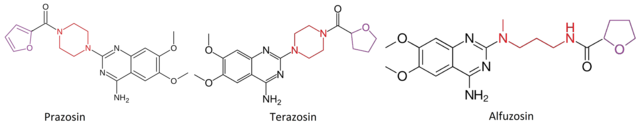
Alpha-blockers are medicines that are mainly used to treat high blood pressure (hypertension) and problems with passing urine in men who have enlargement of the prostate gland. Prostate gland enlargement is also called benign prostatic hyperplasia (BPH). What are alpha-blockers used for. In the past, some alpha-blockers were also used to treat.
Further reading and references
- serine peptidase inhibitor Kazal type 5; MedlinePlus, National Library of Medicine.
- Bitoun E, Chavanas S, Irvine AD, Lonie L, Bodemer C, Paradisi M, Hamel-Teillac D, Ansai S, Mitsuhashi Y, Taieb A, de Prost Y, Zambruno G, Harper JI, Hovnanian A. Netherton syndrome: disease expression and spectrum of SPINK5 mutations in 21 families. J Invest Dermatol. 2002 Feb;118(2):352-61. doi: 10.1046/j.1523-1747.2002.01603.x.
- D'Alessio M, Fortugno P, Zambruno G, Hovnanian A. Netherton syndrome and its multifaceted defective protein LEKTI. G Ital Dermatol Venereol. 2013 Feb;148(1):37-51.
- Hovnanian A. Netherton syndrome: skin inflammation and allergy by loss of protease inhibition. Cell Tissue Res. 2013 Feb;351(2):289-300. doi: 10.1007/s00441-013-1558-1. Epub 2013 Jan 24.
- Lacroix M, Lacaze-Buzy L, Furio L, Tron E, Valari M, Van der Wier G, Bodemer C, Bygum A, Bursztejn AC, Gaitanis G, Paradisi M, Stratigos A, Weibel L, Deraison C, Hovnanian A. Clinical expression and new SPINK5 splicing defects in Netherton syndrome: unmasking a frequent founder synonymous mutation and unconventional intronic mutations. J Invest Dermatol. 2012 Mar;132(3 Pt 1):575-82. doi: 10.1038/jid.2011.366. Epub 2011 Nov 17.
- Liu Q, Xia Y, Zhang W, Li J, Wang P, Li H, Wei C, Gong Y. A functional polymorphism in the SPINK5 gene is associated with asthma in a Chinese Han Population. BMC Med Genet. 2009 Jun 17;10:59. doi: 10.1186/1471-2350-10-59.
- Roelandt T, Thys B, Heughebaert C, De Vroede A, De Paepe K, Roseeuw D, Rombaut B, Hachem JP. LEKTI-1 in sickness and in health. Int J Cosmet Sci. 2009 Aug;31(4):247-54. doi: 10.1111/j.1468-2494.2009.00516.x. Epub 2009 May 13.
- Sprecher E, Chavanas S, DiGiovanna JJ, Amin S, Nielsen K, Prendiville JS, Silverman R, Esterly NB, Spraker MK, Guelig E, de Luna ML, Williams ML, Buehler B, Siegfried EC, Van Maldergem L, Pfendner E, Bale SJ, Uitto J, Hovnanian A, Richard G. The spectrum of pathogenic mutations in SPINK5 in 19 families with Netherton syndrome: implications for mutation detection and first case of prenatal diagnosis. J Invest Dermatol. 2001 Aug;117(2):179-87. doi: 10.1046/j.1523-1747.2001.01389.x.
- Zhao LP, Di Z, Zhang L, Wang L, Ma L, Lv Y, Hong Y, Wei H, Chen HD, Gao XH. Association of SPINK5 gene polymorphisms with atopic dermatitis in Northeast China. J Eur Acad Dermatol Venereol. 2012 May;26(5):572-7. doi: 10.1111/j.1468-3083.2011.04120.x. Epub 2011 May 18.
Share your thoughts or experiences with others in our patient communities.
Simple access to trusted treatments and health services online.
Common conditions
Get help with common conditions through the NHS, without a GP appointment.





Sign up to the Patient newsletter
Your weekly dose of clear, trustworthy health advice - written to help you feel informed, confident and in control.
By subscribing you accept our Privacy Policy. You can unsubscribe at any time. We never sell your data.