signal transducer and activator of transcription 1
Last updated 2 May 2023
Meets Patient’s editorial guidelines
- DownloadDownload
- Share
- Language
- Discussion
- Ask Patient
- Audio Version
- Add to preferred sources on Google
The STAT1 gene provides instructions for making a protein that is involved in multiple immune system functions, including the body's defense against a fungus called Candida. When the immune system recognizes Candida, it generates cells called Th17 cells. These cells produce signaling molecules (cytokines) called the interleukin-17 (IL-17) family as part of an immune process called the IL-17 pathway. The IL-17 pathway creates inflammation, sending other cytokines and white blood cells that fight foreign invaders and promote tissue repair. In addition, the IL-17 pathway promotes the production of certain antimicrobial protein segments (peptides) that control growth of Candida on the surface of mucous membranes.
Video picks for GenesVideo library
Normal function
The STAT1 gene provides instructions for making a protein that is involved in multiple immune system functions, including the body's defense against a fungus called Candida. When the immune system recognizes Candida, it generates cells called Th17 cells. These cells produce signaling molecules (cytokines) called the interleukin-17 (IL-17) family as part of an immune process called the IL-17 pathway. The IL-17 pathway creates inflammation, sending other cytokines and white blood cells that fight foreign invaders and promote tissue repair. In addition, the IL-17 pathway promotes the production of certain antimicrobial protein segments (peptides) that control growth of Candida on the surface of mucous membranes.
The STAT1 protein helps keep the immune system in balance by controlling the IL-17 pathway. When the STAT1 protein is turned on (activated), it blocks (inhibits) this pathway.
In contrast to its inhibitory role in the IL-17 pathway, the STAT1 protein helps promote other immune processes called the interferon-alpha/beta (IFNA/B) and interferon-gamma (IFNG) signaling pathways. The IFNA/B pathway is important in defense against viruses, and the IFNG pathway helps fight a type of bacteria called mycobacteria, which includes the bacterium that causes tuberculosis.
Conditions referring to this gene or chromosome
Other names
IMD31A
IMD31B
IMD31C
ISGF-3
signal transducer and activator of transcription 1, 91kDa
signal transducer and activator of transcription-1
STAT91
transcription factor ISGF-3 components p91/p84
Patient picks for Genes
Pregnancy
Ovulation calculator
Open the ovulation calculator
by Patient infomatics team

Healthy living
Liver disease and alcohol
Alcohol abuse can lead to three main types of liver diseases: fatty liver, hepatitis and 'scarring' of the liver (cirrhosis). It can also lead to other health problems. This leaflet also includes information about non-alcoholic fatty liver disease.
by Dr Doug McKechnie, MRCGP

Pregnancy
Multiple pregnancy
In a multiple pregnancy, there is more than one baby growing in the womb (uterus) at the same time. Being pregnant with twins is the most common example. Both mother and babies need extra monitoring during pregnancy as the risks are higher than in a singleton pregnancy.
by Dr Toni Hazell, FRCGP

Women's health
Endometrial hyperplasia
Endometrial hyperplasia is a thickening of the womb (uterus) lining. The womb lining is called the endometrium. Hyperplasia means over ("hyper" in Latin) growth ("plasia" in Latin).
by Dr Philippa Vincent, MRCGP

Pregnancy
Cervical insufficiency and suture
Cervical insufficiency (sometimes called cervical incompetence) occurs when the neck of the womb (the cervix) softens, shortens and opens without any other symptoms of labour. This may be in the second trimester or early in the third, leading to premature delivery of the baby. Cervical suture - also called cervical cerclage or cervical stitch - is a stitch placed in/around the cervix. This is to try to prevent late miscarriage or premature birth in women who are felt to be at high risk of cervical insufficiency.
by Dr Hayley Willacy, FRCGP
Healthy living
Glucose Ketone Index (GKI) calculator
Open GKI calculator Want to track your level of ketosis? Use our Glucose Ketone Index (GKI) calculator to assess your metabolic state. Whether you're following a ketogenic diet for weight loss, diabetes management, or therapeutic reasons, this tool gives you a clearer picture of your current glucose–ketone balance.
by Patient infomatics team
Related patient information and medicines

Patient information leaflet
Nerve conduction studies
Nerve conduction studies help to test how well and how fast nerves conduct electrical signals. Note : the information below is a general guide only. The arrangements, and the way tests are performed, may vary between different hospitals. Always follow the instructions given by your doctor or local hospital. What are nerve conduction studies. Nerve.

Patient information leaflet
Check your medicines for interactions
Use this medicine and drug interaction checker to see whether your medicines, supplements, vitamins, foods, or certain health conditions may interact with each other. It can help you understand potential risks, avoid unwanted side effects, and decide when it’s important to speak to a pharmacist, GP, or other healthcare professional. The tool is.

Patient information leaflet
Hearing loss of older people
Most people over the age of 60 develop some hearing loss. The severity can vary greatly from person to person. Hearing aids and equipment to help when you have hearing loss can make a big difference to your quality of life. If you are concerned about your hearing, don't suffer in silence - discuss this with your doctor. What is presbyacusis..
Patient information leaflet
MRCP scan
An MRCP scan is a scan that uses magnetic resonance imaging to produce pictures of your liver, bile ducts, gallbladder and pancreas. Note : the information below is a general guide only. The arrangements, and the way tests are performed, may vary between different hospitals. Always follow the instructions given by your doctor or local hospital..
Patient information leaflet
Electroencephalograph
An electroencephalograph is a useful test to help diagnose epilepsy. It records the electrical activity of the brain. However, a normal result does not rule out epilepsy. Note : the information below is a general guide only. The arrangements, and the way tests are performed, may vary between different hospitals. Always follow the instructions.
Patient information leaflet
MRI scan
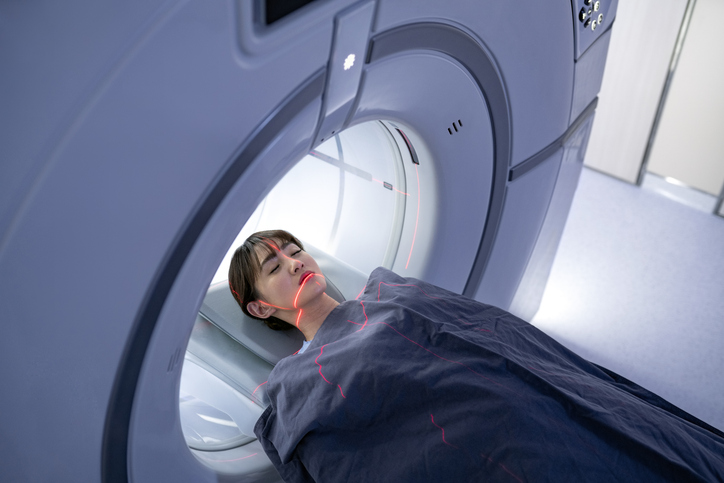
An MRI scan is a safe and painless test that can provide detailed pictures of organs and other structures inside your body. Note : the information below is a general guide only. The arrangements (and the way tests are performed) may vary between different hospitals. Always follow the instructions given by your doctor or local hospital. These are.
Further reading and references
- signal transducer and activator of transcription 1; MedlinePlus, National Library of Medicine.
- Boisson-Dupuis S, Kong XF, Okada S, Cypowyj S, Puel A, Abel L, Casanova JL. Inborn errors of human STAT1: allelic heterogeneity governs the diversity of immunological and infectious phenotypes. Curr Opin Immunol. 2012 Aug;24(4):364-78. doi: 10.1016/j.coi.2012.04.011. Epub 2012 May 30.
- Depner M, Fuchs S, Raabe J, Frede N, Glocker C, Doffinger R, Gkrania-Klotsas E, Kumararatne D, Atkinson TP, Schroeder HW Jr, Niehues T, Duckers G, Stray-Pedersen A, Baumann U, Schmidt R, Franco JL, Orrego J, Ben-Shoshan M, McCusker C, Jacob CM, Carneiro-Sampaio M, Devlin LA, Edgar JD, Henderson P, Russell RK, Skytte AB, Seneviratne SL, Wanders J, Stauss H, Meyts I, Moens L, Jesenak M, Kobbe R, Borte S, Borte M, Wright DA, Hagin D, Torgerson TR, Grimbacher B. The Extended Clinical Phenotype of 26 Patients with Chronic Mucocutaneous Candidiasis due to Gain-of-Function Mutations in STAT1. J Clin Immunol. 2016 Jan;36(1):73-84. doi: 10.1007/s10875-015-0214-9. Epub 2015 Nov 25.
- Liu L, Okada S, Kong XF, Kreins AY, Cypowyj S, Abhyankar A, Toubiana J, Itan Y, Audry M, Nitschke P, Masson C, Toth B, Flatot J, Migaud M, Chrabieh M, Kochetkov T, Bolze A, Borghesi A, Toulon A, Hiller J, Eyerich S, Eyerich K, Gulacsy V, Chernyshova L, Chernyshov V, Bondarenko A, Grimaldo RM, Blancas-Galicia L, Beas IM, Roesler J, Magdorf K, Engelhard D, Thumerelle C, Burgel PR, Hoernes M, Drexel B, Seger R, Kusuma T, Jansson AF, Sawalle-Belohradsky J, Belohradsky B, Jouanguy E, Bustamante J, Bue M, Karin N, Wildbaum G, Bodemer C, Lortholary O, Fischer A, Blanche S, Al-Muhsen S, Reichenbach J, Kobayashi M, Rosales FE, Lozano CT, Kilic SS, Oleastro M, Etzioni A, Traidl-Hoffmann C, Renner ED, Abel L, Picard C, Marodi L, Boisson-Dupuis S, Puel A, Casanova JL. Gain-of-function human STAT1 mutations impair IL-17 immunity and underlie chronic mucocutaneous candidiasis. J Exp Med. 2011 Aug 1;208(8):1635-48. doi: 10.1084/jem.20110958. Epub 2011 Jul 4.
- Mizoguchi Y, Tsumura M, Okada S, Hirata O, Minegishi S, Imai K, Hyakuna N, Muramatsu H, Kojima S, Ozaki Y, Imai T, Takeda S, Okazaki T, Ito T, Yasunaga S, Takihara Y, Bryant VL, Kong XF, Cypowyj S, Boisson-Dupuis S, Puel A, Casanova JL, Morio T, Kobayashi M. Simple diagnosis of STAT1 gain-of-function alleles in patients with chronic mucocutaneous candidiasis. J Leukoc Biol. 2014 Apr;95(4):667-76. doi: 10.1189/jlb.0513250. Epub 2013 Dec 16.
- Smeekens SP, van de Veerdonk FL, Kullberg BJ, Netea MG. Genetic susceptibility to Candida infections. EMBO Mol Med. 2013 Jun;5(6):805-13. doi: 10.1002/emmm.201201678. Epub 2013 Apr 30.
- Soltesz B, Toth B, Shabashova N, Bondarenko A, Okada S, Cypowyj S, Abhyankar A, Csorba G, Tasko S, Sarkadi AK, Mehes L, Rozsival P, Neumann D, Chernyshova L, Tulassay Z, Puel A, Casanova JL, Sediva A, Litzman J, Marodi L. New and recurrent gain-of-function STAT1 mutations in patients with chronic mucocutaneous candidiasis from Eastern and Central Europe. J Med Genet. 2013 Sep;50(9):567-78. doi: 10.1136/jmedgenet-2013-101570. Epub 2013 May 24.
- Toubiana J, Okada S, Hiller J, Oleastro M, Lagos Gomez M, Aldave Becerra JC, Ouachee-Chardin M, Fouyssac F, Girisha KM, Etzioni A, Van Montfrans J, Camcioglu Y, Kerns LA, Belohradsky B, Blanche S, Bousfiha A, Rodriguez-Gallego C, Meyts I, Kisand K, Reichenbach J, Renner ED, Rosenzweig S, Grimbacher B, van de Veerdonk FL, Traidl-Hoffmann C, Picard C, Marodi L, Morio T, Kobayashi M, Lilic D, Milner JD, Holland S, Casanova JL, Puel A; International STAT1 Gain-of-Function Study Group. Heterozygous STAT1 gain-of-function mutations underlie an unexpectedly broad clinical phenotype. Blood. 2016 Jun 23;127(25):3154-64. doi: 10.1182/blood-2015-11-679902. Epub 2016 Apr 25.
- Yamazaki Y, Yamada M, Kawai T, Morio T, Onodera M, Ueki M, Watanabe N, Takada H, Takezaki S, Chida N, Kobayashi I, Ariga T. Two novel gain-of-function mutations of STAT1 responsible for chronic mucocutaneous candidiasis disease: impaired production of IL-17A and IL-22, and the presence of anti-IL-17F autoantibody. J Immunol. 2014 Nov 15;193(10):4880-7. doi: 10.4049/jimmunol.1401467. Epub 2014 Oct 6.
Share your thoughts or experiences with others in our patient communities.
Simple access to trusted treatments and health services online.
Common conditions
Get help with common conditions through the NHS, without a GP appointment.





Sign up to the Patient newsletter
Your weekly dose of clear, trustworthy health advice - written to help you feel informed, confident and in control.
By subscribing you accept our Privacy Policy. You can unsubscribe at any time. We never sell your data.