tumour protein p63
Last updated 18 Aug 2020
Meets Patient’s editorial guidelines
- DownloadDownload
- Share
- Language
- Discussion
- Ask Patient
- Audio Version
- Add to preferred sources on Google
The TP63 gene provides instructions for making a protein called tumour protein p63 (also known simply as p63). The p63 protein functions as a transcription factor, which means it attaches (binds) to certain regions of DNA and controls the activity of particular genes.
Video picks for GenesVideo library
Normal function
The TP63 gene provides instructions for making a protein called tumour protein p63 (also known simply as p63). The p63 protein functions as a transcription factor, which means it attaches (binds) to certain regions of DNA and controls the activity of particular genes.
The p63 protein interacts with other proteins to turn many different genes on and off at different times. The action of p63 helps regulate numerous cell activities, including cell growth and division (proliferation), cell maintenance, the process by which cells mature to carry out specific functions (differentiation), the ability of cells to stick to one another (cell adhesion), and the orderly self-destruction of cells (apoptosis).
The p63 protein plays a critical role in early development. It is especially important for the normal development of ectodermal structures, such as the skin, hair, teeth, and nails. Studies suggest that it also plays essential roles in the development of the limbs, facial features, urinary system, and other organs and tissues. In addition to its roles in development, the p63 protein appears to be necessary for the maintenance of various cells and tissues later in life.
Conditions referring to this gene or chromosome
Other names
AIS
amplified in squamous cell carcinoma
chronic ulcerative stomatitis protein
CUSP
KET
NBP
p40
p51
p51A
p51B
p53CP
p63
P63_HUMAN
p73L
TP53CP
TP53L
TP73L
transformation-related protein 63
tumour protein 63
tumour protein p53-competing protein
Patient picks for Genes

Kidney and urinary tract
Proteinuria
Proteins are molecules that are found in almost every part of the body, including in the blood. The kidneys normally have a filter which stops protein from entering the urine, except in very tiny amounts; however, kidney problems can cause higher levels of protein to be found in the urine.
by Dr Doug McKechnie, MRCGP

Diet and nutrition
10 sources of plant-based protein for bone health
Plant-based diets are growing in popularity. People choose this way of eating for various reasons - to boost their health, help animals, and protect the environment. But switching to a plant-based diet may mean you're missing out on vital, bone-friendly nutrients. One of these is protein.
by Victoria Raw
Allergies, blood and immune system
Cow's milk protein allergy
Cow's milk protein allergy is one of the most common food allergies seen in children. It is most commonly seen during the first year of life. Many children who have been allergic to cow's milk protein become tolerant to it by the time they are 5 years old.
by Dr Hayley Willacy, FRCGP

Diet and nutrition
How a protein-packed breakfast can boost your health
When we think of breakfast, we often picture a bowl of cornflakes with milk. While it’s a classic morning staple, it might not be the most effective way to start your day, as it lacks protein. Adding more protein to your breakfast can boost your energy levels and help keep you feeling full for longer.
by Victoria Raw

Cancer
Wilms' tumour
A Wilms' tumour is a type of kidney cancer that usually affects young children. Wilms' tumours can appear in older children and adults but this is very rare. A Wilms' tumour is also known as a nephroblastoma Wilm's tumour is the most common type of kidney cancer in children but is very rare. About 80 children are diagnosed with a Wilms' tumour each year in the UK. The most common symptom is a swollen tummy (abdomen). The treatment for Wilms' tumour usually includes surgery and may also include chemotherapy and radiotherapy. The outcome (prognosis) for Wilms' tumour is usually very good for all children with a Wilms' tumour. Most children diagnosed with Wilms' tumour will survive long-term.
by Dr Colin Tidy, MRCGP

Cancer
Brain tumours
This leaflet aims to give a brief overview of the various types of brain tumours. The treatment and survival rates vary greatly, depending on factors such as the type of tumour and the location in the brain.
by Dr Toni Hazell, FRCGP
Related patient information and medicines

Patient information leaflet
Myeloma
Dr Krishna Vakharia , 10th April 2025 The National Institute for Health and Care Excellence (NICE) has updated its guidance on assessment for myeloma in all age... Dr Krishna Vakharia , 16th October 2023 The National Institute for Health and Care Excellence (NICE) has recommended that a person should receive a diagnosis or ruling out of cancer.

Patient information leaflet
Liver function tests
Your liver is having t... The bile drainage from your liver is blocked - for example, by a gallstone Cholecystitis. There is a swelling inside your liver (for example, an abscess or a tumour). You have an underlying condition that affects the liver's production and storage abilities (for example, Wilson's disease , haemochromatosis.
Patient information leaflet
Pituitary gland disorders
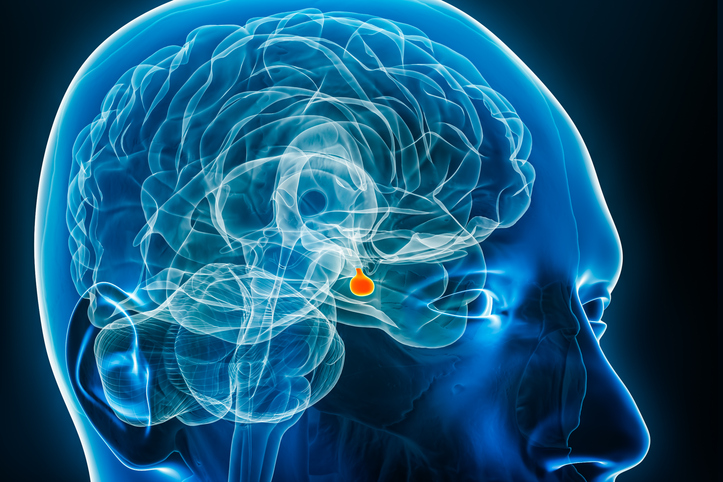
This leaflet gives a brief overview of the pituitary gland and the hormones it makes. The pituitary gland is found at the base of the brain and is 'pea-sized'. The pituitary gland is an overall controller of a number of other glands in the body, overseeing the function of these organs through hormones. Some of the pituitary gland disorders.

Patient information leaflet
Salivary gland disorders
Most stones occur in the tube (duct) which runs from the submandibular gland under the jaw. Stones block the duct, causing a backlog of saliva behind them, which results in a swelling. Salivary gland tumours When cells multiply out of normal control anywhere in the body, they cause a tumour which can be cancerous Cancer or non-cancerous. Tumours.

Patient information leaflet
BRCA genes
There are a few known gene changes (mutations) that can increase the risk of certain cancers, and tests available for some of them, including BRCA1 and BRCA2 gene mutations. The BRCA1 and BRCA2 genes normally protect against certain cancers, particularly breast cancer and ovarian cancer. If there is a mutation in one of these genes then this may.

Patient information leaflet
Eye problems
They are rare. However, they include melanoma (which typically affects the choroid layer and is usually a tumour of later life) and retinoblastoma. It is the most common primary malignant eye tumour in adults. 98% of all cases occur in ethnically white races. Most often it has symptoms which don't show (it is asymptomat... The majority of patients.
Further reading and references
- tumour protein p63; MedlinePlus, National Library of Medicine.
- Celli J, Duijf P, Hamel BC, Bamshad M, Kramer B, Smits AP, Newbury-Ecob R, Hennekam RC, Van Buggenhout G, van Haeringen A, Woods CG, van Essen AJ, de Waal R, Vriend G, Haber DA, Yang A, McKeon F, Brunner HG, van Bokhoven H. Heterozygous germline mutations in the p53 homolog p63 are the cause of EEC syndrome. Cell. 1999 Oct 15;99(2):143-53. doi: 10.1016/s0092-8674(00)81646-3.
- Koster MI. p63 in skin development and ectodermal dysplasias. J Invest Dermatol. 2010 Oct;130(10):2352-8. doi: 10.1038/jid.2010.119. Epub 2010 May 6.
- McGrath JA, Duijf PH, Doetsch V, Irvine AD, de Waal R, Vanmolkot KR, Wessagowit V, Kelly A, Atherton DJ, Griffiths WA, Orlow SJ, van Haeringen A, Ausems MG, Yang A, McKeon F, Bamshad MA, Brunner HG, Hamel BC, van Bokhoven H. Hay-Wells syndrome is caused by heterozygous missense mutations in the SAM domain of p63. Hum Mol Genet. 2001 Feb 1;10(3):221-9. doi: 10.1093/hmg/10.3.221.
- Rinne T, Bolat E, Meijer R, Scheffer H, van Bokhoven H. Spectrum of p63 mutations in a selected patient cohort affected with ankyloblepharon-ectodermal defects-cleft lip/palate syndrome (AEC). Am J Med Genet A. 2009 Sep;149A(9):1948-51. doi: 10.1002/ajmg.a.32793.
- Rinne T, Brunner HG, van Bokhoven H. p63-associated disorders. Cell Cycle. 2007 Feb 1;6(3):262-8. doi: 10.4161/cc.6.3.3796. Epub 2007 Feb 3.
- Rinne T, Clements SE, Lamme E, Duijf PH, Bolat E, Meijer R, Scheffer H, Rosser E, Tan TY, McGrath JA, Schalkwijk J, Brunner HG, Zhou H, van Bokhoven H. A novel translation re-initiation mechanism for the p63 gene revealed by amino-terminal truncating mutations in Rapp-Hodgkin/Hay-Wells-like syndromes. Hum Mol Genet. 2008 Jul 1;17(13):1968-77. doi: 10.1093/hmg/ddn094. Epub 2008 Mar 25.
- Sutton VR, van Bokhoven H. TP63-Related Disorders. 2010 Jun 8 [updated 2021 Apr 1]. In: Adam MP, Bick S, Mirzaa GM, Wallace SE, Amemiya A, editors. GeneReviews(R) [Internet]. Seattle (WA): University of Washington, Seattle; 1993-2026. Available from http://www.ncbi.nlm.nih.gov/books/NBK43797/
- van Bokhoven H, Hamel BC, Bamshad M, Sangiorgi E, Gurrieri F, Duijf PH, Vanmolkot KR, van Beusekom E, van Beersum SE, Celli J, Merkx GF, Tenconi R, Fryns JP, Verloes A, Newbury-Ecob RA, Raas-Rotschild A, Majewski F, Beemer FA, Janecke A, Chitayat D, Crisponi G, Kayserili H, Yates JR, Neri G, Brunner HG. p63 Gene mutations in eec syndrome, limb-mammary syndrome, and isolated split hand-split foot malformation suggest a genotype-phenotype correlation. Am J Hum Genet. 2001 Sep;69(3):481-92. doi: 10.1086/323123. Epub 2001 Jul 17.
- Yang A, Kaghad M, Wang Y, Gillett E, Fleming MD, Dotsch V, Andrews NC, Caput D, McKeon F. p63, a p53 homolog at 3q27-29, encodes multiple products with transactivating, death-inducing, and dominant-negative activities. Mol Cell. 1998 Sep;2(3):305-16. doi: 10.1016/s1097-2765(00)80275-0.
Share your thoughts or experiences with others in our patient communities.
Simple access to trusted treatments and health services online.
Common conditions
Get help with common conditions through the NHS, without a GP appointment.





Sign up to the Patient newsletter
Your weekly dose of clear, trustworthy health advice - written to help you feel informed, confident and in control.
By subscribing you accept our Privacy Policy. You can unsubscribe at any time. We never sell your data.