thyroid stimulating hormone receptor
Last updated 18 Aug 2020
Meets Patient’s editorial guidelines
- DownloadDownload
- Share
- Language
- Discussion
- Ask Patient
- Audio Version
- Add to preferred sources on Google
The TSHR gene provides instructions for making a protein, known as a receptor, that attaches (binds) to a hormone called thyroid stimulating hormone (TSH). This receptor spans the membrane of certain cells (called follicular cells) in the thyroid gland, a butterfly-shaped tissue in the lower neck. A large part of the receptor sits on the outer surface of the cell (extracellular), and a small portion is retained inside the cell (intracellular). Thyroid stimulating hormone binds to the extracellular portion of the receptor like a key fitting into a lock, activating a series of reactions that control development of the thyroid gland and its functions. Among its functions, the thyroid gland produces iodine-containing hormones (thyroid hormones), which help regulate growth, brain development, and the rate of chemical reactions in the body (metabolism).
Video picks for GenesVideo library
Normal function
The TSHR gene provides instructions for making a protein, known as a receptor, that attaches (binds) to a hormone called thyroid stimulating hormone (TSH). This receptor spans the membrane of certain cells (called follicular cells) in the thyroid gland, a butterfly-shaped tissue in the lower neck. A large part of the receptor sits on the outer surface of the cell (extracellular), and a small portion is retained inside the cell (intracellular). Thyroid stimulating hormone binds to the extracellular portion of the receptor like a key fitting into a lock, activating a series of reactions that control development of the thyroid gland and its functions. Among its functions, the thyroid gland produces iodine-containing hormones (thyroid hormones), which help regulate growth, brain development, and the rate of chemical reactions in the body (metabolism).
Conditions referring to this gene or chromosome
Other names
LGR3
thyrotropin receptor
TSH Receptors
TSHR_HUMAN
Patient picks for Genes

Hormones
How to tell if you have an underactive thyroid
Hypothyroidism - an underactive thyroid gland - can result in everything from weight gain to depression, and according to the NHS affects one in 70 women and one in 1,000 men. We talk to a GP about effective diagnosis and treatment.
by Julian Turner

Hormones
Pituitary gland disorders
This leaflet gives a brief overview of the pituitary gland and the hormones it makes. The pituitary gland is found at the base of the brain and is 'pea-sized'. The pituitary gland is an overall controller of a number of other glands in the body, overseeing the function of these organs through hormones.
by Dr Hayley Willacy, FRCGP
Men's health
Is 'male menopause' real?
Menopause is a natural stage of life that women go through as they age. During this time, their reproductive hormone levels fluctuate and gradually decline, causing a range of physical and emotional symptoms. But can men experience something similar? Often referred to as ‘male menopause’, hormonal changes as men get older can also affect their health and wellbeing. We explore the symptoms, causes, and science behind 'male menopause' and why it deserves more attention.
by Victoria Raw
Hormones
Underactive thyroid gland
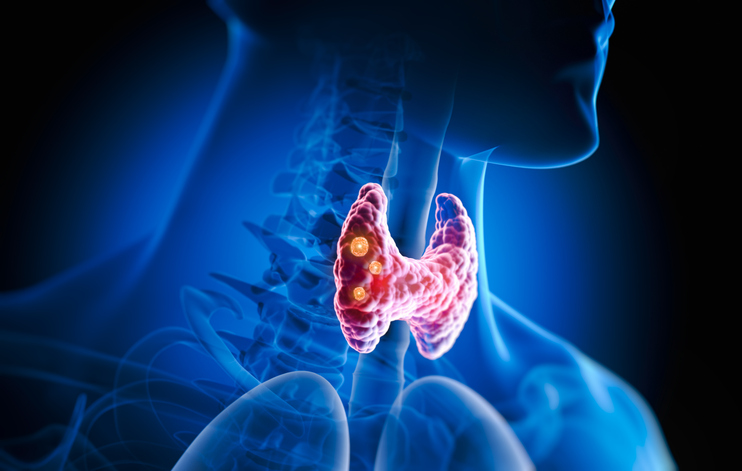
If you have an underactive thyroid gland, the condition is called hypothyroidism. In hypothyroidism, there is a reduced level of thyroid hormone in the body. This can cause various symptoms, the most common being tiredness, weight gain, constipation, aches, dry skin, lifeless hair and feeling cold. Treatment usually involves taking a daily tablet of thyroid hormone to replace the missing thyroxine. Treatment works very well for most people with hypothyroidism but is required for life.
by Dr Colin Tidy, MRCGP
Tests and investigations
Thyroid function tests
Thyroid function tests are blood tests which help to check the function of your thyroid gland. They are mainly used to detect an underactive thyroid gland (hypothyroidism) and an overactive thyroid gland (hyperthyroidism). Lots of basic information about the thyroid gland can be found in the separate leaflet called Thyroid Problems (also including Parathyroid Glands). This leaflet will only deal with the blood test that measures how your thyroid is working, not the specific diseases, such as Graves' disease, that affect the thyroid. Note: the information below is a general guide only. The arrangements, and the way tests are performed, may vary between different hospitals. Someone can have their thyroid function test in one hospital and it could give slightly different results to having it measured in another hospital. It is important to interpret the results of your thyroid function test with the doctor who requested them - so if the test was requested by your GP, they will give you the result. If it was requested by a hospital consultant, you need to get the result from them and your GP will not have it.
by Dr Toni Hazell, FRCGP

Hormones
The importance of a healthy thyroid
The little gland at the front of your neck, about the same shape and position of a bow tie, is constantly balancing how fast your body ticks over. Too much and you go into overdrive; too little and your world becomes sluggish.
by Dr Sarah Jarvis
Related patient information and medicines
Patient information leaflet
Pituitary gland disorders
This leaflet gives a brief overview of the pituitary gland and the hormones it makes. The pituitary gland is found at the base of the brain and is 'pea-sized'. Men also have prolactin but its function is not understood well. Thyroid-stimulating hormone (TSH) Thyroid gland TSH stimulates the thyroid gland to produce its own hormones,.
Patient information leaflet
Underactive thyroid gland
If you have an underactive thyroid gland, the condition is called hypothyroidism. In hypothyroidism, there is a reduced level of thyroid hormone in the body. Neck cross-section showing the thyroid gland Cross section of neck showing the thyroid gland The thyroid gland is located in the neck and produces thyroid hormones. Thyroid hormones are.
Patient information leaflet
Thyroid function tests
Thyroid function tests are blood tests which help to check the function of your thyroid gland. A thyroid function test is a blood test measuring the levels of the hormones made by your thyroid gland. The test also checks the level of a hormone made by the pituitary gland in your brain, which acts on your thyroid gland. The two hormones, thyroxine.

Patient information leaflet
Can I take Ashwagandha and Oestrogel pump-pack together?
Why this happens Ashwagandha is thought to have 'pro-oestrogenic' properties, meaning it may stimulate oestrogen receptors or increase the production of precursors to oestrogen. When used with Hormone Replacement Therapy (HRT) Hormone replacement therapy (HRT) like Oestrogel, this could lead to an additive effect, resulting ... Important.

Patient information leaflet
Thyroid and parathyroid problems
This leaflet gives a brief overview of the thyroid and parathyroid glands and the common medical problems which can occur with these. What are the thyroid and parathyroid glands. Both the thyroid and parathyroid glands are endocrine glands. This means they make and release (secrete) hormones. Hormones are chemicals which are produced by the body.

Patient information leaflet
Can I take Ashwagandha and Magnesium together?
Important precautions Autoimmune diseases Ashwagandha can stimulate the immune system, which may worsen symptoms of autoimmune conditions or interfere with immunosuppressant medications Thyroid disorders (hyperthyroidism) Ashwagandha may increase thyroid hormone levels; this can be dangerous for people with overactive thyroids or those taking.
Further reading and references
- thyroid stimulating hormone receptor; MedlinePlus, National Library of Medicine.
- Abramowicz MJ, Duprez L, Parma J, Vassart G, Heinrichs C. Familial congenital hypothyroidism due to inactivating mutation of the thyrotropin receptor causing profound hypoplasia of the thyroid gland. J Clin Invest. 1997 Jun 15;99(12):3018-24. doi: 10.1172/JCI119497.
- Bas VN, Cangul H, Agladioglu SY, Kendall M, Cetinkaya S, Maher ER, Aycan Z. Mild and severe congenital primary hypothyroidism in two patients by thyrotropin receptor (TSHR) gene mutation. J Pediatr Endocrinol Metab. 2012;25(11-12):1153-6. doi: 10.1515/jpem-2012-0211.
- Biebermann H, Schoneberg T, Krude H, Schultz G, Gudermann T, Gruters A. Mutations of the human thyrotropin receptor gene causing thyroid hypoplasia and persistent congenital hypothyroidism. J Clin Endocrinol Metab. 1997 Oct;82(10):3471-80. doi: 10.1210/jcem.82.10.4286.
- Cangul H, Aycan Z, Saglam H, Forman JR, Cetinkaya S, Tarim O, Bober E, Cesur Y, Kurtoglu S, Darendeliler F, Bas V, Eren E, Demir K, Kiraz A, Aydin BK, Karthikeyan A, Kendall M, Boelaert K, Shaw NJ, Kirk J, Hogler W, Barrett TG, Maher ER. TSHR is the main causative locus in autosomal recessively inherited thyroid dysgenesis. J Pediatr Endocrinol Metab. 2012;25(5-6):419-26. doi: 10.1515/jpem-2012-0053.
- Cangul H, Saglam H, Saglam Y, Eren E, Dogan D, Kendall M, Tarim O, Maher ER, Barrett TG. An essential splice site mutation (c.317+1G>A) in the TSHR gene leads to severe thyroid dysgenesis. J Pediatr Endocrinol Metab. 2014 Sep;27(9-10):1021-5. doi: 10.1515/jpem-2014-0048.
- Castro I, Lima L, Seoane R, Lado-Abeal J. Identification and functional characterization of two novel activating thyrotropin receptor mutants in toxic thyroid follicular adenomas. Thyroid. 2009 Jun;19(6):645-9. doi: 10.1089/thy.2009.0002.
- Davies TF, Ando T, Lin RY, Tomer Y, Latif R. Thyrotropin receptor-associated diseases: from adenomata to Graves disease. J Clin Invest. 2005 Aug;115(8):1972-83. doi: 10.1172/JCI26031.
- Gozu H, Avsar M, Bircan R, Sahin S, Ahiskanali R, Gulluoglu B, Deyneli O, Ones T, Narin Y, Akalin S, Cirakoglu B. Does a Leu 512 Arg thyrotropin receptor mutation cause an autonomously functioning papillary carcinoma? Thyroid. 2004 Nov;14(11):975-80. doi: 10.1089/thy.2004.14.975.
- Park SM, Chatterjee VK. Genetics of congenital hypothyroidism. J Med Genet. 2005 May;42(5):379-89. doi: 10.1136/jmg.2004.024158.
- Refetoff S. Resistance to thyrotropin. J Endocrinol Invest. 2003 Aug;26(8):770-9. doi: 10.1007/BF03347364.
- Russo D, Costante G, Bruno R, Sponziello M, Tamburrano G, Dima M, Sacco R, Giacomelli L, Durante C, Filetti S. TSH receptor extracellular region mutations in thyroid functioning nodules: further evidence for the functional role of this region in the receptor activation. Endocrine. 2011 Dec;40(3):492-4. doi: 10.1007/s12020-011-9525-7. Epub 2011 Aug 24. No abstract available.
Share your thoughts or experiences with others in our patient communities.
Simple access to trusted treatments and health services online.
Common conditions
Get help with common conditions through the NHS, without a GP appointment.





Sign up to the Patient newsletter
Your weekly dose of clear, trustworthy health advice - written to help you feel informed, confident and in control.
By subscribing you accept our Privacy Policy. You can unsubscribe at any time. We never sell your data.