WD repeat domain 35
Last updated 8 May 2023
Meets Patient’s editorial guidelines
- DownloadDownload
- Share
- Language
- Discussion
- Ask Patient
- Audio Version
- Add to preferred sources on Google
The WDR35 gene (also known as IFT121) provides instructions for making a protein that is involved in the formation and maintenance of cilia, which are microscopic, finger-like projections that stick out from the surface of cells. Cilia participate in signaling pathways that transmit information within and between cells and are important for the development and function of many types of cells and tissues, including cells in the kidneys and liver and the light-sensitive tissue at the back of the eye (the retina). Cilia also play a role in the development of the bones, although the mechanism is not well understood.
Video picks for GenesVideo library
Normal function
The WDR35 gene (also known as IFT121) provides instructions for making a protein that is involved in the formation and maintenance of cilia, which are microscopic, finger-like projections that stick out from the surface of cells. Cilia participate in signaling pathways that transmit information within and between cells and are important for the development and function of many types of cells and tissues, including cells in the kidneys and liver and the light-sensitive tissue at the back of the eye (the retina). Cilia also play a role in the development of the bones, although the mechanism is not well understood.
The movement of substances within cilia and similar structures called flagella is known as intraflagellar transport. This process is essential for the assembly and maintenance of these cell structures. During intraflagellar transport, cells use molecules called IFT particles to carry materials to and from the tips of cilia. Each IFT particle is made up of two groups of IFT proteins: complex A and complex B. The protein produced from the WDR35 gene forms part of IFT complex A (IFT-A). During intraflagellar transport, this complex carries materials from the tip to the base of cilia.
The IFT-A complex is essential for proper regulation of the Sonic Hedgehog signaling pathway, which is important for the growth and maturation (differentiation) of cells and the normal shaping (patterning) of many parts of the body, especially during embryonic development. The exact role of the complex in this pathway is unclear.
Conditions referring to this gene or chromosome
Other names
CED2
IFT121
IFTA1
intraflagellar transport protein 121 homolog
KIAA1336
MGC33196
naofen
WDR35_HUMAN
Patient picks for Genes

Pregnancy
How to cope with repeated pregnancy loss
Having a miscarriage can be a devastating experience which brings a range of difficult feelings, from shock and grief to loss and anxiety. For some women, the next pregnancy will be successful. But for others, miscarriage happens time and time again. Around one in 100 women experience repeated pregnancy loss, defined as the loss of three or more pregnancies in a row.
by Lydia Smith

Mental health
Work, rest, repeat: How to break the burnout cycle
Feeling tired after a long day isn’t usually a cause for concern - especially if you take time to recover. But what happens when long hours and little rest start to add up? We spoke to a GP to explain the health hazards of overworking and share tips to prevent burnout and illness.
by Victoria Raw

Healthy living
Walk, jog, repeat: what is Jeffing?
No, it’s not about perfecting your best Jeff Goldblum impression, and it’s not a quirky new social media challenge either. Jeffing is actually a fitness method created in the 1970s by Olympian Jeff Galloway. Also known as the run-walk-run method, Jeffing combines running with short walking breaks to make exercise easier and more manageable. We spoke with an expert to break down what it’s all about and if it’s actually good for your health and fitness.
by Victoria Raw

Preventative health
Elephant Walk
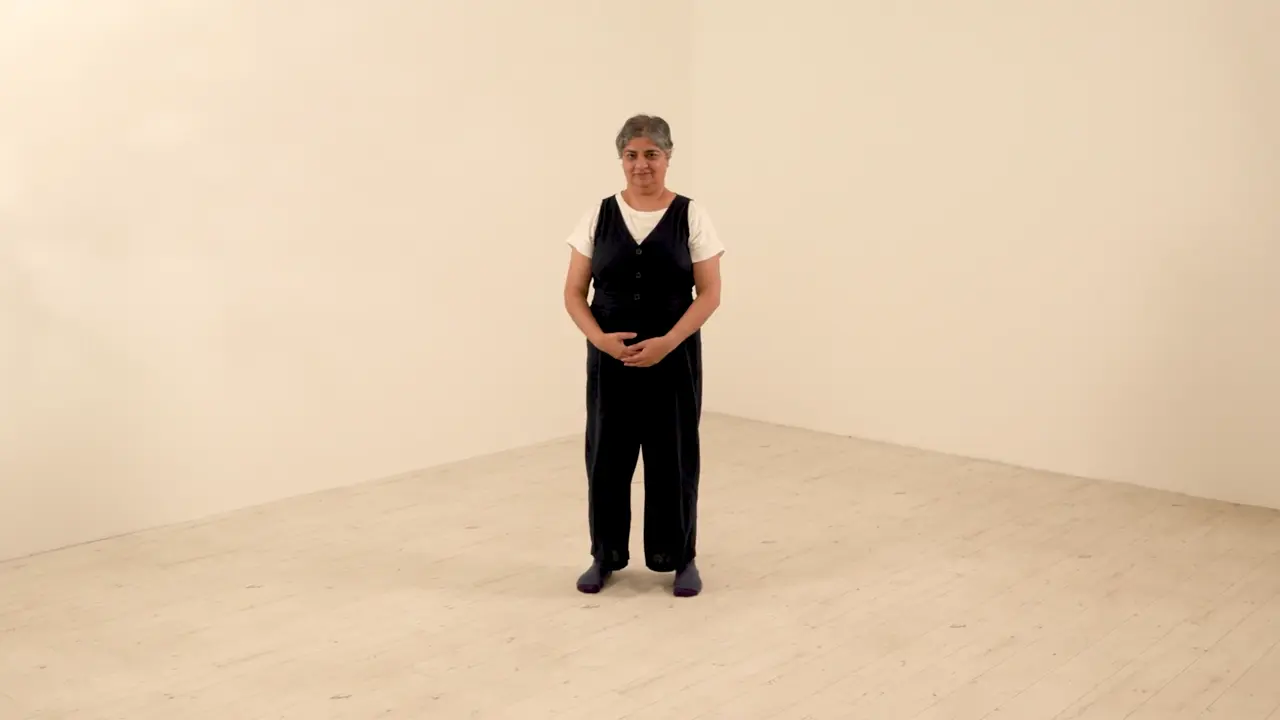
The Elephant Walk is a balance and mobility exercise that engages the core, legs, and hips while improving coordination and stability. Step your right foot forward and hinge at the hips, reaching your left hand toward your right knee as your left leg lifts slightly behind you. Keep your core engaged and move only as far as you can maintain balance. Return to standing, bringing your hand and foot back to the starting position, then repeat on the other side. This exercise enhances balance, control, and functional movement through the hips and core.
Preventative health
Settling Breath
Bring the feet hip distance wide. The arms are by your side, palms facing out. As you inhale your arms float up to your side and overhead. As you exhale, palms face down towards the earth and you draw your arms and hands down in front of the body. You repeat this three times and each time your intention changes. The first time you are clearing out what no longer serves you from the form of your body, the sedond time you are filling with energy and intention and the third time you are sealing what you filled into your body.

Preventative health
Drawing Bow & Arrow Fly
Settle into horse stance, feet wide and knees softly bent. Bring the hands into gentle fists in front of the chest, elbows relaxed. Extend the left arm and open the hand into an “L” shape with the thumb and index finger while the other three fingers curl inward. The left arm reaches out as though holding the bow. Keeping the knees bent, let the right fist remain in front of the chest, then draw the right elbow straight back along a clean line, as if pulling a bowstring. Turn the head and gaze through the space between the left thumb and index finger. With a steady exhale, “release” the arrow. Repeat to the other side, maintaining the rootedness of the legs and the spaciousness of the chest. Traditionally, this form is said to regulate the Wood, Metal, and Fire elements, supporting the Liver, Lungs, and Heart meridians. It helps open the chest, strengthen the back and legs, and cultivate clear focus—beneficial for vision, direction, and the sense of moving toward one’s aims.
Related patient information and medicines
Patient information leaflet
Pneumothorax
A pneumothorax is sometimes called a "collapsed lung" and it describes the condition in which air has become trapped next to a lung. Many cases occur without warning, particularly in healthy young men. Some develop as a complication of a chest injury or a lung disease. The most common symptom is a sudden sharp chest pain followed by pains on.
Patient information leaflet
Cardiac enzymes
Cardiac enzymes are substances released by the heart muscle when it is injured - for example, during a heart attack or a severe case of angina. A heart attack (myocardial infarction) can present in many ways, the most common of which is chest pain. Taking blood tests for heart enzymes can help medical professionals to diagnose a heart attack. What.

Patient information leaflet
Diabetes and pregnancy
Dr Partha Kar If the diabetes is not well controlled during the pregnancy this may cause harm for both you and your baby. Gestational diabetes mellitus (GDM) is the name for diabetes which starts for the first time during pregnancy and which usually resolves soon after giving birth. Risk factors for gestational diabetes Gestational diabetes is.

Patient information leaflet
Endometrial hyperplasia
Some women may have an unusual vaginal discharge. In some women there may be no symptoms, and the hyperplasia may be picked up whilst having tests for other reasons. ServiceUpsellPlaceholder What causes endometrial hyperplasia. Endometrial hyperplasia is caused by an excess of the hormone oestrogen, which is not balanced by the progesterone.
Patient information leaflet
Pleural effusion
A pleural effusion is a collection of fluid next to the lung. There are various causes. The effusion may cause you to become breathless. The fluid can be drained if necessary. Treatment is mainly aimed at the underlying cause. What is a pleural effusion. Lungs and airways with pleura Lungs and airways with pleura A pleural effusion means that.

Patient information leaflet
Cystic fibrosis
Cystic fibrosis is an inherited disease which mainly affects the lungs and pancreas but can involve other organs. Symptoms usually begin in early childhood and include persistent cough, wheeze, repeated chest infections, difficulty digesting food and general ill health. Treatments include antibiotics, physiotherapy, medicines for thinning mucus,.
Further reading and references
- WD repeat domain 35; MedlinePlus, National Library of Medicine.
- Bacino CA, Dhar SU, Brunetti-Pierri N, Lee B, Bonnen PE. WDR35 mutation in siblings with Sensenbrenner syndrome: a ciliopathy with variable phenotype. Am J Med Genet A. 2012 Nov;158A(11):2917-24. doi: 10.1002/ajmg.a.35608. Epub 2012 Sep 17.
- Liem KF Jr, Ashe A, He M, Satir P, Moran J, Beier D, Wicking C, Anderson KV. The IFT-A complex regulates Shh signaling through cilia structure and membrane protein trafficking. J Cell Biol. 2012 Jun 11;197(6):789-800. doi: 10.1083/jcb.201110049.
- Mill P, Lockhart PJ, Fitzpatrick E, Mountford HS, Hall EA, Reijns MA, Keighren M, Bahlo M, Bromhead CJ, Budd P, Aftimos S, Delatycki MB, Savarirayan R, Jackson IJ, Amor DJ. Human and mouse mutations in WDR35 cause short-rib polydactyly syndromes due to abnormal ciliogenesis. Am J Hum Genet. 2011 Apr 8;88(4):508-15. doi: 10.1016/j.ajhg.2011.03.015.
- Tan W, Lin A, Keppler-Noreuil K. Cranioectodermal Dysplasia. 2013 Sep 12 [updated 2022 Dec 15]. In: Adam MP, Bick S, Mirzaa GM, Wallace SE, Amemiya A, editors. GeneReviews(R) [Internet]. Seattle (WA): University of Washington, Seattle; 1993-2026. Available from http://www.ncbi.nlm.nih.gov/books/NBK154653/
Share your thoughts or experiences with others in our patient communities.
Simple access to trusted treatments and health services online.
Common conditions
Get help with common conditions through the NHS, without a GP appointment.





Sign up to the Patient newsletter
Your weekly dose of clear, trustworthy health advice - written to help you feel informed, confident and in control.
By subscribing you accept our Privacy Policy. You can unsubscribe at any time. We never sell your data.