What are the pros and cons of direct-to-consumer genetic testing?
Meets Patient’s editorial guidelines
- DownloadDownload
- Share
- Language
- Discussion
- Ask Patient
- Audio Version
- Add to preferred sources on Google
Direct-to-consumer genetic testing offers a way for you to learn about your genetic information without involving a doctor. Although there are potential benefits to direct-to-consumer genetic testing, the testing also has limitations. Here are some pros and cons to consider before undergoing direct-to-consumer genetic testing.
Video picks for Understanding geneticsVideo library
Overview
Direct-to-consumer genetic testing offers a way for you to learn about your genetic information without involving a doctor. Although there are potential benefits to direct-to-consumer genetic testing, the testing also has limitations. Here are some pros and cons to consider before undergoing direct-to-consumer genetic testing.
Pros:
DNA samples are collected easily at home and can be mailed or shipped directly to the company.
Direct-to-consumer genetic testing can provide personalized information about disease risk, ancestry, and specific health traits.
Direct-to-consumer genetic testing does not require approval from a healthcare provider or a health insurance company.
Direct-to-consumer genetic testing may be less expensive than obtaining genetic testing through a healthcare provider.
The results are provided directly to you and are not placed in your medical record (unless you share the results with your healthcare provider).
Test results may encourage healthier lifestyle choices.
Cons:
Many health conditions and physical traits are caused by a combination of genetic, lifestyle, and environmental factors. Direct-to-consumer genetic testing companies only look at the genetic component.
Direct-to-consumer genetic testing companies may test for only a few of the many genetic variants that contribute to a specific disease or trait. Receiving results based on incomplete information can provide false reassurance.
Direct-to-consumer genetic testing generally cannot predict whether or not you will develop a particular disease with certainty.
There is currently limited oversight or regulation of direct-to-consumer genetic testing companies and the third-party services that offer to analyze and interpret your genetic information.
The results from direct-to-consumer genetic testing typically need to be confirmed with additional testing ordered through a healthcare professional.
Direct-to-consumer genetic testing companies may not provide healthcare professionals who can answer questions about your results.
Genetic privacy may be compromised if these companies sell or share your genetic information or if a database is hacked or breached. Similarly, if a direct-to-consumer genetic testing company changes ownership, goes out of business, or declares bankruptcy, your genetic information may be transferred or sold.
Direct-to-consumer genetic testing companies may be required to disclose genetic information to law enforcement officials.
Receiving unexpected information about your health, family relationships, or ancestry may be upsetting.
Because relatives share genetic information, your results may have implications for other members of your family.
The results of genetic testing may impact your ability to obtain life, disability, or long-term care insurance.
Assessing your overall health and your risk of developing specific health problems in the future can be complicated. Direct-to-consumer genetic testing provides some information about your health, but it does not provide a complete picture. It is important to understand what these tests can and cannot tell you before undergoing direct-to-consumer testing.
Patient picks for Understanding genetics

Cancer
What are the signs of prostate cancer?
In the UK, prostate cancer is the most common cancer in men and is responsible for 12,300 deaths a year. Depending on how the cancer cells grow, you may or may not develop noticeable signs of prostate cancer. To give yourself the best chance of diagnosis and survival, it's important to be aware of the key signs, and also to attend regular GP check-ups once you hit your forties.
by Lynn Stephen

Podcasts
Beyond human
Have you’ve ever felt transformed after a walk by the sea or in the woods? Have you’ve ever found yourself reaching for the biscuit tin when anxious rather than hungry, or noticed how your pet knows when you are feeling low? This podcast is for you. Clare and Aileen take you on a tour of some of those relationships we often don’t think about but matter deeply. From pets and nature to time, food and even life and the divine, these relationships have the ability to shape our lives, comfort us, challenge us and sometimes reveal parts of ourselves we didn’t know were there.
by Thomas Andrew Porteus, MBCS
Podcasts
Me and myself
In this episode, Clare and Aileen turn their attention to what they describe as the primary relationship - the relationship we have with ourselves - and why it is so often the one we neglect, misunderstand or actively sideline.
by Thomas Andrew Porteus, MBCS

Podcasts
Coming, ready or not
Is sex over too quickly? If orgasm comes too soon - known as rapid or premature ejaculation - it doesn’t have to be game over. Clare and Janet explore why it happens and what can help.
by Thomas Andrew Porteus, MBCS

Podcasts
The Big O... Oh No!
Clare and Janet discuss orgasms - and what can help if it isn’t happening for you or your partner. Also the myths surrounding female orgasm. Do you really know what the clitoris looks like?!
by Thomas Andrew Porteus, MBCS
Podcasts
Surviving holidays
Holidays, thanksgiving, Christmas, birthdays - those special, wonderful moments we dream of. But if you’ve ever walked away from a Christmas dinner or a family holiday wondering what on earth went wrong - this podcast is for you.
by Thomas Andrew Porteus, MBCS
Related patient information and medicines

Patient information leaflet
Genetic testing
Genetic testing is a type of medical test that identifies changes in chromosomes, genes or proteins. Genetic tests examine a person's DNA in a variety of ways to assess a person's genetic health. Genes are short sections of DNA and each chromosome contains hundreds to thousands of genes. Genetic counselling may include information about: The.
Patient information leaflet
Muscular dystrophy
If you or a family member have MD, you will usually be offered tests and specialist advice from a doctor who specialises in diagnosing genetic conditions (a geneticist). The sample is examined under the microscope and the muscle... Genetic analysis Genetic testing - this involves testing a person's DNA using a blood sample. Genetic testing can.

Patient information leaflet
Cystic fibrosis
Cystic fibrosis is an inherited disease which mainly affects the lungs and pancreas but can involve other organs. Genetic test A genetic test can confirm the diagnosis Genetic testing. Some cells are either scra... If it is high then a sweat test and genetic test can be done to confirm the diagnosis. Genetic counselling for cystic fibrosis People.
Patient information leaflet
Huntington's disease
Huntington's disease is a genetically inherited condition that causes parts of the brain and nervous system to stop working properly over time. It is a slowly progressive condition that interferes with the movements of your body, thinking and judgement, and can lead to a change in your behaviour. The symptoms occur because of damage and death of.

Patient information leaflet
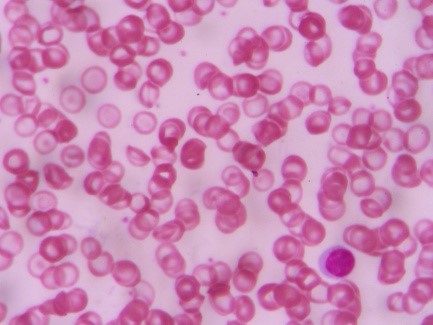
Thalassaemia
For the more severe forms of thalassaemia, modern treatment gives a good outlook, but lifelong monitoring and treatment are needed. Haemoglobin is located in cells called red blood cells which are part of the blood. The main parts are called alpha chains and beta chains which are put together to make the haemoglobin molecule. In thalassaemia, part.
Patient information leaflet
Sickle cell disease
Sickle cell disease (SCD) is a serious, inherited condition affecting the blood and various organs in the body. It affects the red blood cells, causing episodes of 'sickling', which produce episodes of pain and other symptoms. In bet... This can diagnose most cases of sickle cell trait and sickle cell disease (SCD). Sometimes, the result is.
Further reading and references
- What are the pros and cons of direct-to-consumer genetic testing?; MedlinePlus, National Library of Medicine.
Share your thoughts or experiences with others in our patient communities.
Simple access to trusted treatments and health services online.
Common conditions
Get help with common conditions through the NHS, without a GP appointment.





Sign up to the Patient newsletter
Your weekly dose of clear, trustworthy health advice - written to help you feel informed, confident and in control.
By subscribing you accept our Privacy Policy. You can unsubscribe at any time. We never sell your data.