How do geneticists indicate the location of a gene?
Meets Patient’s editorial guidelines
- DownloadDownload
- Share
- Language
- Discussion
- Ask Patient
- Audio Version
- Add to preferred sources on Google
Geneticists use maps to describe the location of a particular gene on a chromosome. One type of map uses the cytogenetic location to describe a gene’s position. The cytogenetic location is based on a distinctive pattern of bands created when chromosomes are stained with certain chemicals. Another type of map uses the molecular location, which is a precise description of a gene's position on a chromosome. The molecular location is based on the sequence of DNA building blocks (nucleotides) that make up the chromosome.
Video picks for Understanding geneticsVideo library
Overview
Geneticists use maps to describe the location of a particular gene on a chromosome. One type of map uses the cytogenetic location to describe a gene’s position. The cytogenetic location is based on a distinctive pattern of bands created when chromosomes are stained with certain chemicals. Another type of map uses the molecular location, which is a precise description of a gene's position on a chromosome. The molecular location is based on the sequence of DNA building blocks (nucleotides) that make up the chromosome.
Cytogenetic location
Geneticists use a standardized way of describing a gene's cytogenetic location. In most cases, the location describes the position of a particular band on a stained chromosome:
17q12
It can also be written as a range of bands, if less is known about the exact location:
17q12-q21
The combination of numbers and letters provide a gene's “address” on a chromosome. This address is made up of several parts:
The chromosome on which the gene can be found. The first number or letter used to describe a gene's location represents the chromosome. Chromosomes 1 through 22 (the autosomes) are designated by their chromosome number. The sex chromosomes are designated by X or Y.
The arm of the chromosome. Each chromosome is divided into two sections (arms) based on the location of a narrowing (constriction) called the centromere. By convention, the shorter arm is called p, and the longer arm is called q. The chromosome arm is the second part of the gene's address. For example, 5q is the long arm of chromosome 5, and Xp is the short arm of the X chromosome.
The position of the gene on the p or q arm. The position of a gene is based on a distinctive pattern of light and dark bands that appear when the chromosome is stained in a certain way. The position is usually designated by two digits (representing a region and a band), which are sometimes followed by a decimal point and one or more additional digits (representing sub-bands within a light or dark area). The number indicating the gene position increases with distance from the centromere. For example: 14q21 represents position 21 on the long arm of chromosome 14. 14q21 is closer to the centromere than 14q22.
Sometimes, the abbreviations “cen” or “ter” are also used to describe a gene's cytogenetic location. “Cen” indicates that the gene is very close to the centromere. For example, 16pcen refers to the short arm of chromosome 16 near the centromere. “Ter” stands for terminus, which indicates that the gene is very close to the end of the p or q arm. For example, 14qter refers to the tip of the long arm, or the very end, of chromosome 14.
Molecular location
The Human Genome Project, an international research effort completed in 2003, determined the sequence of nucleotides for each human chromosome. This sequence information allows researchers to provide a more specific address than the cytogenetic location for many genes. A gene’s molecular address pinpoints the location of that gene in terms of nucleotides. It describes the gene’s precise position on a chromosome and indicates the size of the gene. Knowing the molecular location also allows researchers to determine exactly how far a gene is from other genes on the same chromosome.
Different groups of researchers often present slightly different values for a gene’s molecular location. Researchers interpret the sequence of the human genome using a variety of methods, which can result in small differences in a gene’s molecular address.
Patient picks for Understanding genetics
Podcasts
Surviving holidays
Holidays, thanksgiving, Christmas, birthdays - those special, wonderful moments we dream of. But if you’ve ever walked away from a Christmas dinner or a family holiday wondering what on earth went wrong - this podcast is for you.
by Thomas Andrew Porteus, MBCS

Healthy living
Basal metabolic rate (BMR) calculator
Open the BMR calculator.
by Patient infomatics team

General health and lifestyle
Ideas, Concerns and Expectations - a guide to filling in your GP’s online form
Booking a GP appointment has changed. Instead of waiting on the phone line at 8am, many people now complete an online consultation form through their practice website. At first glance, it may feel like another bureaucratic hurdle. But in fact, these forms are designed to help you, and your GP team, get to the heart of your problem more quickly. The way you fill them in makes a real difference. When you provide clear, thoughtful information, it not only helps the practice decide whether something is urgent, but also ensures you are directed to the right person in the wider primary care team. That might be your GP - but it could just as easily be a nurse, a pharmacist, a physiotherapist, or another professional who can meet your needs sooner. One of the simplest tools to guide you is known as Ideas, Concerns and Expectations, or ICE.
by Thomas Andrew Porteus, MBCS
Bones, joints and muscles
Scoliosis and kyphosis
Scoliosis is a back condition that causes the (back) spine to curve to the side - either left or right. Most cases develop in children between the ages of 9 and 14 years during the growth spurt of puberty. Scoliosis is usually mild and needs no treatment. For more severe cases treatments include specific exercises, a back brace or occasionally surgery to straighten the spine. A very pronounced front-to-back curve is called a kyphosis, which does not usually need treatment.
by Dr Colin Tidy, MRCGP

Podcasts
Me and myself
In this episode, Clare and Aileen turn their attention to what they describe as the primary relationship - the relationship we have with ourselves - and why it is so often the one we neglect, misunderstand or actively sideline.
by Thomas Andrew Porteus, MBCS
Yorkshire talks series 3
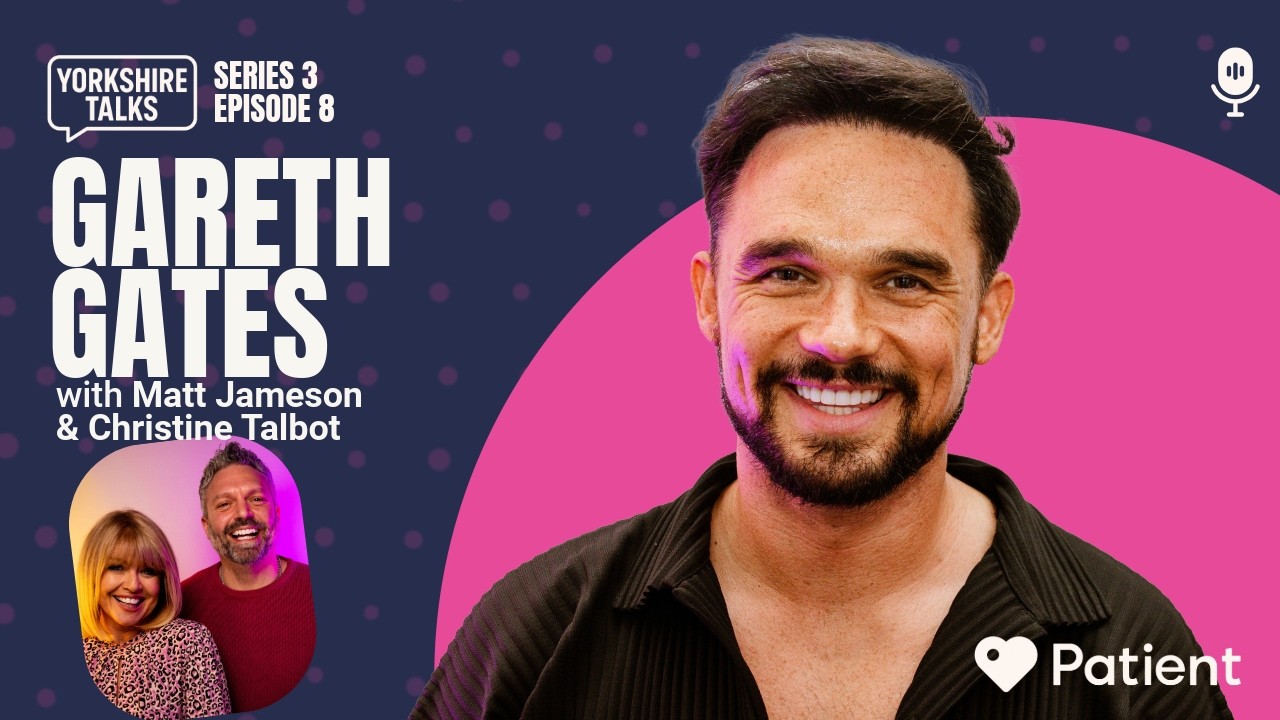
Gareth Gates: "I believed I was defective — my stammer was my superpower" | Yorkshire Talks
In our final episode of Series Three, our Yorkshire Talks guest is former Pop Idol star, producer and performer Gareth Gates. Bradford lad Gareth was first interviewed by Christine for a YTV talent show for young people nearly 30 years ago — so this episode was a bit of a reunion. Now all grown up, Gareth joins Matt and Christine to talk openly and honestly about his journey: from being bullied at school and living with a debilitating stammer, to reaching the final of the very first Pop Idol and having his whole life changed overnight. Gareth explains how taking part in the McGuire Programme has helped him manage his stammer, and how his experiences have shaped the work he does today. He also chats about his role in Boyband in the Buff, currently touring, his journey into becoming a music producer and entrepreneur, and his exciting new project — Speechless, a musical about stammering, due to hit the stage next year. Now a dad himself, with a daughter the same age he was when he first found fame, Gareth reflects on the last few decades with warmth, honesty and plenty of Yorkshire humour. 🎙️ It's a fascinating, funny and incredibly inspiring conversation — one you won't want to miss. If you enjoy the episode, don't forget to LIKE, SUBSCRIBE and leave us a comment. Follow Gareth: 📸 Instagram: @gareth_gates See Gareth on tour: 🎭 Boyband in the Buff is currently on tour. Find tour dates here: [paste official tour dates link] See Gareth in Beauty and the Beast: ✨ Gareth stars as the Beast in Beauty and the Beast at the Britannia Pier, Great Yarmouth, 8–31 December: britannia-pier.co.uk Follow the hosts: Matt Jameson: @matt_d_jameson Christine Talbot: @christineetalbot Yorkshire Talks is presented by Christine Talbot and Matt Jameson, and produced by Simon Fogal at Chapter 81 Studios in Leeds. Proudly sponsored by Patient.info.
Related patient information and medicines

Patient information leaflet
Genetic testing
Genetic testing is a type of medical test that identifies changes in chromosomes, genes or proteins. Genetic tests examine a person's DNA in a variety of ways to assess a person's genetic health. Note : the information below is a general guide only. Different types of cells form the different structures of the b... A gene is the basic unit of your.
Patient information leaflet
Cri du chat syndrome
Because of the head and face abnormalities, serious lung infection (pneumonia) Pneumonia is more common. Understanding chromosomes and cell division Chromosomes are found in the centre (nucleus) of a cell. They carry genetic information in the form of genes. 'Genetic' means that the condition is passed on through families by special codes called.
Patient information leaflet
Muscular dystrophy
Other people in the family can also be tested to see if they have a muscular dystrop... Muscular dystrophy (MD) is the name given to a group of disorders which cause progressive muscle weakness (meaning it gets worse over time). There are many different types of MD. The cause is an abnormal or 'faulty' gene. Genes are made from a biological.

Patient information leaflet
Cystic fibrosis
Cystic fibrosis is an inherited disease which mainly affects the lungs and pancreas but can involve other organs. Cystic fibrosis is a condition which mainly affects the lungs and pancreas but can affect other parts of the body, ... The handling of sodium and chloride may only be mildly affected in these cases. Cystic fibrosis is a genetic.
Patient information leaflet
Huntington's disease
Huntington's disease is a genetically inherited condition that causes parts of the brain and nervous system to stop working properly over time. It is a slowly progressive condition that interferes with the movements of your body, thinking and judgement, and can lead to a change in your behaviour. The symptoms occur bec... ServiceUpsellPlaceholder.
Patient information leaflet
Osler-Weber-Rendu syndrome
Osler-Weber-Rendu syndrome is a disorder of the blood vessels that can cause excessive bleeding. Osler-Weber-Rendu syndrome is inherited, which means it is passed down through families. Scientists have identified four genes involved in this condition. Tests to diagnose Osler-Webe... Genetic testing Genetic testing is used to look for changes in.
Further reading and references
- How do geneticists indicate the location of a gene?; MedlinePlus, National Library of Medicine.
Share your thoughts or experiences with others in our patient communities.
Simple access to trusted treatments and health services online.
Common conditions
Get help with common conditions through the NHS, without a GP appointment.





Sign up to the Patient newsletter
Your weekly dose of clear, trustworthy health advice - written to help you feel informed, confident and in control.
By subscribing you accept our Privacy Policy. You can unsubscribe at any time. We never sell your data.