If a genetic disorder runs in my family, what are the chances that my children will have the condition?
Meets Patient’s editorial guidelines
- DownloadDownload
- Share
- Language
- Discussion
- Ask Patient
- Audio Version
- Add to preferred sources on Google
When a genetic disorder is diagnosed in a family, family members often want to know the likelihood that they or their children will develop the condition. This can be difficult to predict in some cases because many factors influence a person's chances of developing a genetic condition. One important factor is how the condition is inherited. For example:
Video picks for Understanding geneticsVideo library
Overview
When a genetic disorder is diagnosed in a family, family members often want to know the likelihood that they or their children will develop the condition. This can be difficult to predict in some cases because many factors influence a person's chances of developing a genetic condition. One important factor is how the condition is inherited. For example:
Autosomal dominant inheritance: A person affected by an autosomal dominant disorder has a 50 percent chance of passing the altered gene to each child. The chance that a child will not inherit the altered gene is also 50 percent. However, in some cases an autosomal dominant disorder results from a new (de novo) variant that occurs during the formation of egg or sperm cells or early in embryonic development. In these cases, the child's parents are unaffected, but the child may pass on the condition to his or her own children.
Autosomal recessive inheritance: Two unaffected people who each carry one copy of the altered gene for an autosomal recessive disorder (carriers) have a 25 percent chance with each pregnancy of having a child affected by the disorder. The chance with each pregnancy of having an unaffected child who is a carrier of the disorder is 50 percent, and the chance that a child will not have the disorder and will not be a carrier is 25 percent. If only one parent is a carrier of the altered gene and the other parent does not carry the variant, none of their children will develop the condition, and the chance with each pregnancy of having an unaffected child who is a carrier is 50 percent.
X-linked dominant inheritance: The chance of passing on an X-linked dominant condition differs between men and women because men have one X chromosome and one Y chromosome, while women have two X chromosomes. A man passes on his Y chromosome to all of his sons and his X chromosome to all of his daughters. Therefore, the sons of a man with an X-linked dominant disorder will not be affected, but all of his daughters will inherit the condition. A woman passes on one or the other of her X chromosomes to each child. Therefore, a woman with an X-linked dominant disorder has a 50 percent chance of having an affected daughter or son with each pregnancy.
X-linked recessive inheritance: Because of the difference in sex chromosomes, the probability of passing on an X-linked recessive disorder also differs between men and women. The sons of a man with an X-linked recessive disorder will not be affected, and his daughters will carry one copy of the altered gene. With each pregnancy, a woman who carries an altered gene for X-linked recessive has a 50 percent chance of having sons who are affected and a 50 percent chance of having daughters who carry one copy of the altered gene. Females with one gene variant associated with an X-linked recessive disorder typically have no or very mild signs or symptoms of the condition.
X-linked: Because the inheritance pattern of many X-linked disorders is not clearly dominant or recessive, some experts suggest that conditions be considered X-linked rather than X-linked dominant or X-linked recessive.
As above, the probability of passing on an X-linked disorder differs between men and women. The sons of a man with an X-linked disorder will not be affected, but all of his daughters will inherit the altered gene and may develop signs and symptoms of the condition. A woman passes on one or the other of her X chromosomes to each child. Therefore, with each pregnancy, a woman with an X-linked disorder has a 50 percent chance of having a child with the altered gene. An affected daughter may have milder signs and symptoms than an affected son.Y-linked inheritance: Because only males have a Y chromosome, only males can be affected by and pass on Y-linked disorders. All sons of a man with a Y-linked disorder will inherit the condition from their father.
Codominant inheritance: In codominant inheritance, each parent contributes a different version of a particular gene, and both versions influence the resulting genetic trait. The chance of developing a genetic condition with codominant inheritance, and the characteristic features of that condition, depend on which versions of the gene are passed from parents to their child.
Mitochondrial inheritance: Mitochondria, which are the energy-producing centers inside cells, each contain a small amount of DNA. Disorders with mitochondrial inheritance result from variants in mitochondrial DNA. Although these disorders can affect both males and females, only females can pass variants in mitochondrial DNA to their children. A woman with a disorder caused by changes in mitochondrial DNA will pass the variants to all of her daughters and sons, but the children of a man with such a disorder will not inherit the variant.
It is important to note that the chance of passing on a genetic condition applies equally to each pregnancy. For example, if a couple has a child with an autosomal recessive disorder, the chance of having another child with the disorder is still 25 percent (or 1 in 4). Having one child with a disorder does not “protect” future children from inheriting the condition. Conversely, having a child without the condition does not mean that future children will definitely be affected.
Although the chances of inheriting a genetic condition appear straightforward, factors such as a person's family history and the results of genetic testing can sometimes modify those chances. In addition, some people with a disease-causing variant never develop any health problems or may experience only mild symptoms of the disorder. If a disease that runs in a family does not have a clear-cut inheritance pattern, predicting the likelihood that a person will develop the condition can be particularly difficult.
Estimating the chance of developing or passing on a genetic disorder can be complex. Genetics professionals can help people understand these chances and help them make informed decisions about their health.
Patient picks for Understanding genetics
Children's health
Dyspraxia
Developmental co-ordination disorder (DCD), also known as dyspraxia, is a common condition which mainly affects motor co-ordination - the way the body organises and carries out movement-related tasks. It can also affect other activities, including speech. Dyspraxia occurs in children and adults. Dyspraxia means poor co-ordination, but the term 'dyspraxia' is widely used to describe developmental dyspraxia in children. Health professionals now call this development co-ordination disorder, to distinguish it from similar problems (also called dyspraxia) caused by other medical conditions - for example, movement problems after head injury or stroke. However, in this leaflet we will use the commonly used term 'dyspraxia' to refer to childhood DCD. Additionally, dyspraxia in children is sometimes referred to by health professionals as 'specific developmental disorder of motor function' (SDDMF).
by Dr Toni Hazell, FRCGP
Bones, joints and muscles
Scoliosis and kyphosis
Scoliosis is a back condition that causes the (back) spine to curve to the side - either left or right. Most cases develop in children between the ages of 9 and 14 years during the growth spurt of puberty. Scoliosis is usually mild and needs no treatment. For more severe cases treatments include specific exercises, a back brace or occasionally surgery to straighten the spine. A very pronounced front-to-back curve is called a kyphosis, which does not usually need treatment.
by Dr Colin Tidy, MRCGP
Yorkshire talks series 3
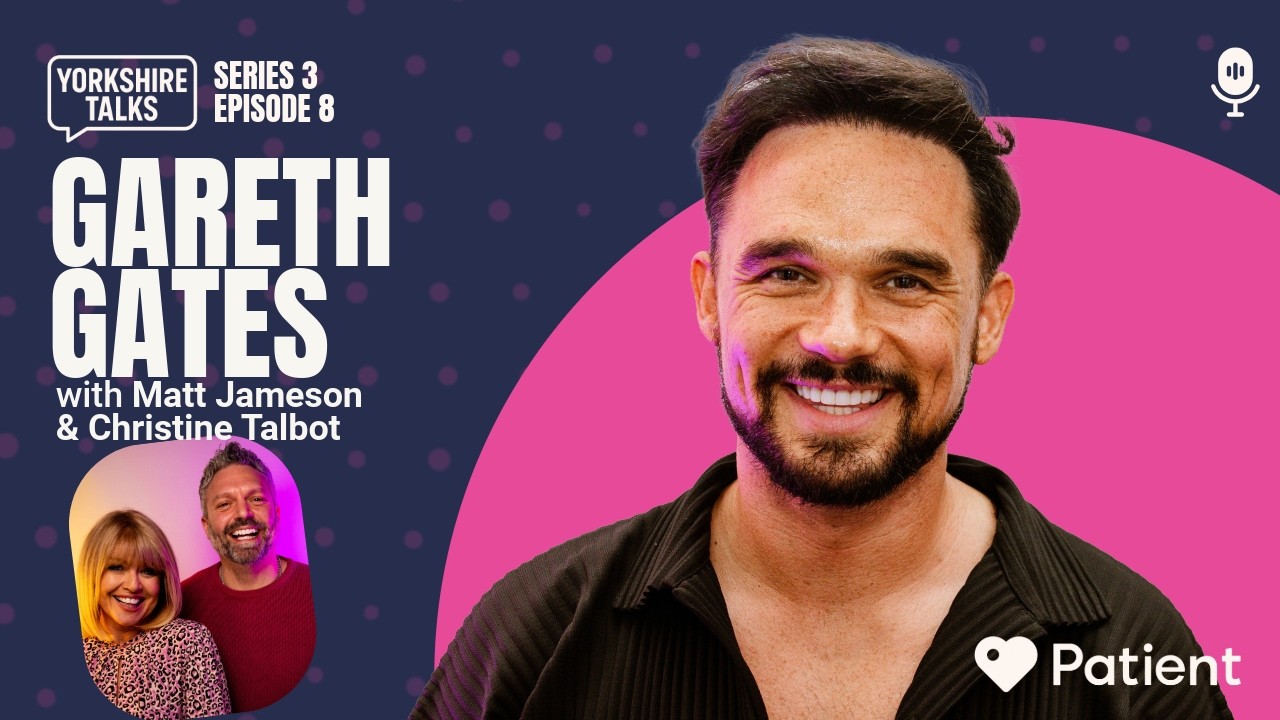
Gareth Gates: "I believed I was defective — my stammer was my superpower" | Yorkshire Talks
In our final episode of Series Three, our Yorkshire Talks guest is former Pop Idol star, producer and performer Gareth Gates. Bradford lad Gareth was first interviewed by Christine for a YTV talent show for young people nearly 30 years ago — so this episode was a bit of a reunion. Now all grown up, Gareth joins Matt and Christine to talk openly and honestly about his journey: from being bullied at school and living with a debilitating stammer, to reaching the final of the very first Pop Idol and having his whole life changed overnight. Gareth explains how taking part in the McGuire Programme has helped him manage his stammer, and how his experiences have shaped the work he does today. He also chats about his role in Boyband in the Buff, currently touring, his journey into becoming a music producer and entrepreneur, and his exciting new project — Speechless, a musical about stammering, due to hit the stage next year. Now a dad himself, with a daughter the same age he was when he first found fame, Gareth reflects on the last few decades with warmth, honesty and plenty of Yorkshire humour. 🎙️ It's a fascinating, funny and incredibly inspiring conversation — one you won't want to miss. If you enjoy the episode, don't forget to LIKE, SUBSCRIBE and leave us a comment. Follow Gareth: 📸 Instagram: @gareth_gates See Gareth on tour: 🎭 Boyband in the Buff is currently on tour. Find tour dates here: [paste official tour dates link] See Gareth in Beauty and the Beast: ✨ Gareth stars as the Beast in Beauty and the Beast at the Britannia Pier, Great Yarmouth, 8–31 December: britannia-pier.co.uk Follow the hosts: Matt Jameson: @matt_d_jameson Christine Talbot: @christineetalbot Yorkshire Talks is presented by Christine Talbot and Matt Jameson, and produced by Simon Fogal at Chapter 81 Studios in Leeds. Proudly sponsored by Patient.info.
Senior health
Diogenes syndrome
Diogenes syndrome is uncommon but can be easily missed, especially in an elderly person living on their own. People with Diogenes syndrome often cause problems for neighbours because of hoarding and neglect, and so aren't always treated with compassion. In any case, they are usually very reluctant to ask for help.
by Dr Colin Tidy, MRCGP

Podcasts
The parental minefield
How often have you said something quite ordinary to a parent, or they’ve said something to you and suddenly the room feels like it’s about to explode? Welcome to the parental nightmare. It’s not just about conflict, it’s about what’s hidden underneath these relationships – family secrets, unspoken stories, patterns of behaviour passed from one generation to the next. In this episode Clare and Aileen explore the complex, often lifelong, relationship we have with our parents and discuss practical strategies to help you navigate this important relationship.
by Thomas Andrew Porteus, MBCS
Podcasts
Me and myself
In this episode, Clare and Aileen turn their attention to what they describe as the primary relationship - the relationship we have with ourselves - and why it is so often the one we neglect, misunderstand or actively sideline.
by Thomas Andrew Porteus, MBCS
Related patient information and medicines

Patient information leaflet
Huntington's disease
Huntington's disease is a genetically inherited condition that causes parts of the brain and nervous system to stop working properly over time. Huntington's disease is a genetically inherited condition that gradually damages brain function. Huntington's disease is caused by a defective gene that you inherit from your parents. Huntington's disease.

Patient information leaflet
Marfan syndrome
Marfan syndrome (named after Dr Antoine Marfan, the French doctor who first described it in 1896) is a genetic disorder which people are born with and which lasts lifelong. You may have a history of Marfan syndrome in your family. If you have Marfan syndrome, you have a 50:50 chance of passing on the condition to each of your children. If you have.

Patient information leaflet
Cystic fibrosis
... When two people who carry the cystic fibrosis gene have a child, there is a: 1 in 4 chance that the child will have cystic fibrosis (by inheriting the cystic fibrosis gene from both parents). 2 in 4 chance that the child will not have cystic fibrosis but will be a carrier (by inheriting a cystic fibrosis gene from one parent but the normal.

Patient information leaflet
Glycogen storage disorders
Glycogen storage disorders are a group of inherited diseases. They result from a problem with one of the proteins (known as enzymes) involved in the conversion of glucose to glycogen, or th... Glycogen storage disorders are inherited. Glycogen storage disorders are hereditary conditions that run in families. If someone else in your family has a.

Patient information leaflet
Genetic testing
Genetic testing is a type of medical test that identifies changes in chromosomes, genes or proteins. Testing can also determine whether a person will develop a genetic disorder, such as haemochromatosis Haemochromatosis , b... People in families at high risk for a genetic disease have to live with uncertainty about their future and their.

Patient information leaflet
Ehlers-Danlos syndrome
The Ehlers-Danlos syndromes (EDS) are a group of conditions that affect the stretchiness and strength of supporting tissues in the body, including skin, joints, blood vessels and internal organs. What are the Ehlers-Danlos syndromes. The Ehlers Danlos syndromes (EDS) are a group of conditions which are usually (although not always) inherited from.
Further reading and references
- If a genetic disorder runs in my family, what are the chances that my children will have the condition?; MedlinePlus, National Library of Medicine.
Share your thoughts or experiences with others in our patient communities.
Simple access to trusted treatments and health services online.
Common conditions
Get help with common conditions through the NHS, without a GP appointment.





Sign up to the Patient newsletter
Your weekly dose of clear, trustworthy health advice - written to help you feel informed, confident and in control.
By subscribing you accept our Privacy Policy. You can unsubscribe at any time. We never sell your data.