Can changes in noncoding DNA affect health and development?
Meets Patient’s editorial guidelines
- DownloadDownload
- Share
- Language
- Discussion
- Ask Patient
- Audio Version
- Add to preferred sources on Google
It is well established that changes in genes can alter a protein’s function in the body, potentially causing health problems. Scientists have determined that changes in regions of DNA that do not contain genes (noncoding DNA) can also lead to disease.
Video picks for Understanding geneticsVideo library
Overview
It is well established that changes in genes can alter a protein’s function in the body, potentially causing health problems. Scientists have determined that changes in regions of DNA that do not contain genes (noncoding DNA) can also lead to disease.
Many regions of noncoding DNA play a role in the control of gene activity, meaning they help determine when and where certain genes are turned on or off. Other regions of noncoding DNA are important for protein assembly. By altering one of these regions, a variant (also known as a mutation) in noncoding DNA can turn on a gene and cause a protein to be produced in the wrong place or at the wrong time. Alternatively, a variant can reduce or eliminate the production of an important protein when it is needed. Not all changes in noncoding DNA have an impact on health, but those that alter the pattern of a critical protein can disrupt normal development or cause a health problem.
Variants in noncoding DNA have been linked to several types of cancer and developmental disorders such as isolated Pierre Robin sequence. This condition is caused by changes in regions of noncoding DNA that act as enhancer elements. Enhancers attach proteins that help turn on particular genes. The enhancers altered in isolated Pierre-Robin sequence control the activity of the SOX9 gene.
In addition to enhancer elements, variants in noncoding DNA can disrupt other regulatory elements. These other elements include promoters, where proteins that turn on genes attach; insulators, where proteins that help shape the activity of genes in different ways attach; and silencers, where proteins that turn off genes attach.
Some regions of noncoding DNA provide instructions for making certain kinds of RNA molecules that play roles in regulating gene activity or assembling proteins. Variants that interrupt these functional RNA molecules, such as transfer RNAs, microRNAs, or long noncoding RNAs, have also been implicated in disease.
The same types of genetic changes that occur in genes or that alter the structure of chromosomes can affect health and development when they occur in noncoding DNA. These alterations include changes in single DNA building blocks (substitution variants), insertions, deletions, duplications, and translocations. Noncoding DNA variants can be inherited from a parent or acquired during a person’s life.
Much is still unknown about how to identify regions of noncoding DNA that have a function in cells and the roles such regions play. As a result, linking genetic changes in noncoding DNA to their effects on certain genes and to health conditions is difficult. The roles of noncoding DNA and the effects that genetic changes in noncoding DNA have on the body are growing areas of research.
Patient picks for Understanding genetics

Healthy living
How modern life affects your weight - beyond diet and exercise
If our bodies are designed to regulate our weight, why are more people living with obesity than ever before? Our genes haven't changed significantly over recent decades, but our environment, lifestyles, and individual biology all influence how our bodies regulate hunger, burn energy, and store fat. Understanding these factors can help explain why managing weight is more difficult for some people than others, even when they're trying to make healthier choices.
by Dr Caroline Butler
Cancer
Liver cancer deaths are rising - what you need to know
Liver cancer deaths have risen by more than a quarter over the past decade. That’s why we’re helping raise awareness of liver cancer alongside Liver UK. We want more people to recognise the symptoms and understand the risk factors, so they can take action early.
by Claire Kenny

General health and lifestyle
How your height affects your health
I have an admission to make - I'm short. Not the kind of short where you can stand ramrod straight and fit in - even in heels, there are 10-year-olds I have to look up to. I've never minded that much - my mother constantly reminded me in my teens that tall women's options for boyfriends were much more limited than mine.
by Dr Sarah Jarvis

Diet and nutrition
How gut bacteria affect mood, focus and brain health
There is emerging scientific evidence that the gut microbiome can influence brain health - from mood and focus to neurological diseases such as multiple sclerosis and Parkinson's. We ask the experts about this link and how best to look after the gut bacteria to support brain health.
by Sally Turner

Signs and symptoms
Why am I so tired in winter? When seasonal fatigue could mean something more
As summer fades into autumn and winter draws closer, we often feel more tired and less energetic. Shorter days and reduced daylight can affect our sleep patterns, mood, and energy levels. However, while seasonal changes may play a part, winter fatigue isn’t always down to the colder weather. From lifestyle habits and nutritional deficiencies to underlying health conditions, there are several other factors that could leave you feeling worn out. We explore some potential causes of winter tiredness that may have nothing to do with the changing seasons.
by Victoria Raw
Cancer
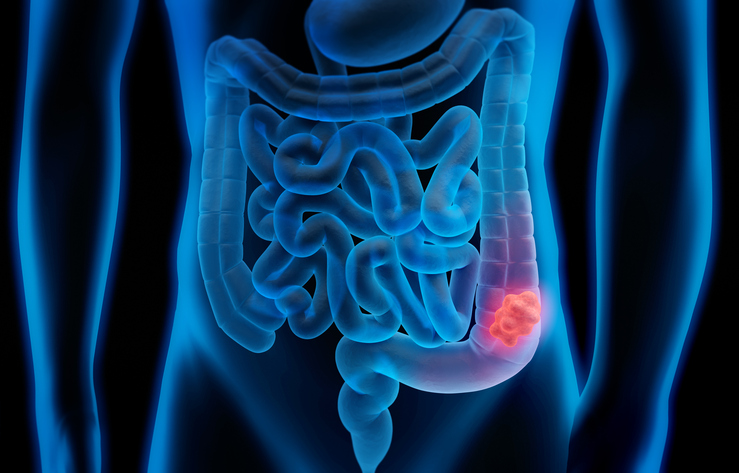
Bowel cancer
Colon cancer and rectal cancer (also called colorectal cancer) are common in the UK. The colon and rectum are parts of your bowel. Most cases occur in people aged over 50. If bowel cancer is diagnosed at an early stage, there is a good chance of a cure. In general, the more advanced the cancer (the more it has grown and spread), the less chance that treatment will be curative. However, treatment can often slow the progress of the cancer.
by Dr Doug McKechnie, MRCGP
Related patient information and medicines

Patient information leaflet
Restricted growth
Dwarfism is a medical or genetic condition which causes people to have restricted growth so that they are shorter than average. Dwarfism is due to a genetic or medical condition, and there are hundreds of causes. In a genetic cause there is a change (mutation) in the genes that form the code in our body's cells upon which all our physical.

Patient information leaflet
Duchenne muscular dystrophy
It is a genetic condition and can be inherited. Boys with Duchenne muscular dystrophy should have regular reviews and physiot... They are likely to need increasing help and treatments. Duchenne muscular dystrophy (DMD) is an inherited (genetic) condition which affects muscle strength and function. It causes progressive muscle weakness and is a.
Patient information leaflet
Surviving adolescence
This leaflet is adapted from a leaflet provided by the Royal College of Psychiatrists, the professional body responsible for education, training, setting and raising standards in psychiatry. Adolescence is the transitional stage from childhood to adulthood that occurs between ages 13 and 19 years. The teenage years can be a very difficult.
Patient information leaflet
Dyspraxia
Developmental co-ordination disorder (DCD), also known as dyspraxia, is a common condition which mainly affects motor co-ordination - the way the body organises and carries out movement-related tasks. It can also affect other activities, including speech. Dyspraxia occurs in children and adults. Dyspraxia means poor co-ordination, but the term.

Patient information leaflet
Adrenarche
This leaflet was originally provided by Miriam Leach (written when a 4th year MB ChB student at Manchester University), used here with permission. What is adrenarche. Adrenarche (ad-ren-ar-ke) is known to be an ordinary bodily process that happens to boys and girls as they begin to make the transition to being a teenager. When does adrenarche.
Patient information leaflet
Treating newborn health problems
Treatment depends on the problem, but the conditions being screened for are all ones for which there is a treatment if they are picked up. What happens if there is a problem. For most babies, of course, all tests are deliciously normal. All the conditions being checked for are uncommon. Some examples are briefly explained below Conditions picked.
Further reading and references
- Can changes in noncoding DNA affect health and development?; MedlinePlus, National Library of Medicine.
- Scacheri CA, Scacheri PC. Mutations in the noncoding genome. Curr Opin Pediatr. 2015 Dec;27(6):659-64. doi: 10.1097/MOP.0000000000000283. Review. PubMed: 26382709; Free full text from PubMed Central: PMC5084913.
- Chatterjee S, Ahituv N. Gene Regulatory Elements, Major Drivers of Human Disease. Annu Rev Genomics Hum Genet. 2017 Aug 31;18:45-63. doi: 10.1146/annurev-genom-091416-035537. Epub 2017 Apr 7. Review. PubMed: 28399667.
- Gordon CT, Attanasio C, Bhatia S, Benko S, Ansari M, Tan TY, Munnich A, Pennacchio LA, Abadie V, Temple IK, Goldenberg A, van Heyningen V, Amiel J, FitzPatrick D, Kleinjan DA, Visel A, Lyonnet S. Identification of novel craniofacial regulatory domains located far upstream of SOX9 and disrupted in Pierre Robin sequence. Hum Mutat. 2014 Aug;35(8):1011-20. doi: 10.1002/humu.22606.
Share your thoughts or experiences with others in our patient communities.
Simple access to trusted treatments and health services online.
Common conditions
Get help with common conditions through the NHS, without a GP appointment.





Sign up to the Patient newsletter
Your weekly dose of clear, trustworthy health advice - written to help you feel informed, confident and in control.
By subscribing you accept our Privacy Policy. You can unsubscribe at any time. We never sell your data.